history
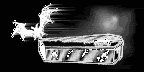

Many cultures have developed
folk beliefs to explain the natural phenomena associated with death and
disease. The folk belief in vampires, found in many cultures, incorporates
interpretations of death and disease. The vampire image found in contemporary
Euroamerican culture is based solely on Bram Stoker's Dracula , an image
that varies significantly from historic European and American vampiric
folk beliefs. Eighteenth century European peasants believed that the appearance
of the vampire in the grave meant that the vampire was
draining life from the living.
We now know these changes to be the result of postmortem decompositio.
Further, the high number of deaths resulting from disease epidemics were
also blamed on vampires.
To stop the epidemic, vampires
were sought out and "killed" by various methods . The term vampirism has
also entered the psychiatric literature to explain pathologic behaviors
similar to those of the mythical vampire, particularly ingestion of blood
and necrophagic and cannibalistic activities. The clinical manifestation
of erythropoietic protoporphyria, also known as Gunther's Disease, and
its variants have also been cited as an
explanation for the vampire belief.
This autosomal dominant disorder causes increased excretion of protoporphyrin
and results in redness of the eyes and skin, a receding of the upper lip,
and cracking of the skin when exposed to sunlight. American vampire folk
beliefs, which were particularly strong in 19th century New England, contained
some European features. The New England folklore is consistent in its incorporation
of tuberculosis and examination of the body of the vampire for putative
signs of life. Following the death of a family member from consumption
, other family members began to show the signs of tuberculosis infection.
According to the New England folk belief, the "wasting away" of these family
members was attributed to the recently deceased consumptive, who returned
from the dead as a vampire to drain the life from the surviving relatives.
The apotropaic remedy used to kill the vampire was to exhume the body of
the supposed vampire and, if the body was un-decomposed, remove and burn
the blood-filled heart or the entire body. It stands to reason that the
bioarcheological evidence of the vampire belief should be located in 19th
century New England
cemeteries. This report
presents the analysis and interpretation of the grave of a supposed vampire
from 19th century Connecticut, emphasizing the effect of the vampire folk
belief on the bioarcheological record. This report also shows the importance
of using historic documentation in the interpretation of skeletal information.
SKELETAL EVIDENCE
The Walton Cemetery, Griswold,
Connecticut, an abandoned 18th-19th century Euroamerican rural farm family
burial ground,The pathological conditions observed in the burials from
the Walton Cemetery reflect lives of physical labor, including osteoarthritis
and an unhealed femoral neck fracture in an elderly female. One case of
particularly heavy dental calculus was observed. The complete skeleton
of a 50- to 55-year-old male interred in a stone-lined grave is of particular
interest for this report. Two observations regarding this skeleton are
of note: 1) the postmortem rearrangement of the skeletal remains, and 2)
paleopathological evidence of a probable pulmonary tuberculosis infection.
Upon opening the grave, the skull and femora were found in a
"skull and crossbones" orientation
on top of the ribs and vertabrae, which were also found in disarray. On
the coffin lid, an arrangement of tacks spelled the initials "JB-55", presumably
the initials and age at death of this individual. Pathological conditions
evident in this skeleton included healed fractures and active infectious
processes. Healed fractures were observed on the lateral half of the right
clavicle, the right eighth rib, and the left second rib. Mild osteoarthritis
was seen in most large joints and most lower vertabrae. Some lower vertabrae
also exhibited Schmorl's nodes. The articular surface of the left femoral
medial condyle presented an area of crenulated bone 30 mm in diameter probably
traumatic in origin. Focal lytic activity had destroyed
an area of bone approximately
40 mm in diameter at the articulations of the left metatarsals and cuneiforms.
Periostitis was present on the distal half of the left tibia and the distal
two thirds of the left fibula. Periostatic lesions of the left second,
third, and fourth ribs were also observed. These lesions were whitish-gray
and pitted in appearance, and were located on the visceral rib surface
near the rib head adjacent to the pleura. The lesions, respectively 30
mm, 35 mm, and 25 mm in length, comprise an area of approximately 30 cm
mediolaterally and 45 cm superiorly-inferiorly when considered in anatomical
position. The lesions are similar to those described by Kelley and Micozzi
as most likely being associated with primary pulmonary tuberculosis.
Differential diagnoses for rib
lesions include typhoid, pyogenic osteomyelitis, syphilis, pleuritis, and
other types of non-specific chronic respiratory disease. If the rib and
foot lesions are taken as one entity, an additional differential diagnosis
is blastomycosis, although this fungus is not normally found in Connecticut.
Periostitic reaction resulting
from the fracture of the left second rib can be ruled out because the healed
fracture shows no osseous activity around the fracture site, which is located
11 cm from the lesion. Regardless of the specific infectious etiology of
pulmonary disease in this individual, symptoms of a chronic pulmonary
infection severe enough
to induce rib lesions would have probably included coughing, expectoration
of mucous, and aches and pains of the chest. Such symptoms, if not actually
caused by pulmonary tuberculosis, would likely have been interpreted as
consumption by 19th century rural New Englanders. No other cases of tuberculosis
were noted in the remains from the cemetery. Two burials are believed to
be related to "JB."
Both burials, a 45- to 55-year-old
female and a 13- to 14-year-old subadult, were buried in a manner similar
to "JB" and had the initials "IB-45" and "NB-13" spelled, respectively,
in tacks on the coffin lid.
THE VAMPIRE BELIEF
To date, 12 historic accounts documenting
vampire beliefs and activities in 18th and 19th century New England have
been located. These accounts are found in southern and western Rhode Island,
central-southern Vermont, southeastern Massachusetts, and eastern Connecticut,
and range in time from the late 1700s to the late 1800s. Eleven of the
12 accounts denote consumption as the cause of death of the vampire and
any deceased relatives. The New England vampire belief in based on a folk
interpretation of the physical appearance of the tuberculosis victim and
the transmission of tuberculosis. As the name consumption implies, the
disease caused sufferers to "waste away" and "lose flesh," despite the
fact that they remained active, desirous of sustenance, and maintained
a fierce will to live. This dichotomy of desire and "wasting away" is reflected
in the vampire folk belief: The vampire's desire for "food" forces it to
feed off living relatives, who suffer a similar "wasting away." The vampire
folklore tradition is also consistent with modern knowledge of the transmission
of tuberculosis. Many of the historic accounts indicate that family members
living in close association became infected with the disease before or
soon after the death of the "vampire." Tuberculosis is notorious for being
transmitted between individuals of different generations living under crowded
conditions, a situation common in rural 19th century New England farming
communities. Seasonal periods of low nutrition and the unsanitary conditions
of 18th and 19th century farming compounds increased the opportunity for
transmission of tuberculosis between family members. Although there is
no evidence of tuberculosis in the remaining
Walton cemetery skeletons,
an 1801 narrative of Griswold history indicates that during the 25 years
preceding the account "consumptions have proved to be mortal to a number".
KILLING THE VAMPIRE
The method of dispatching a vampire,
also known as an apotropaic remedy, centers around the destruction of the
vampire's body. In the New England folklore, if blood is found in the heart
of the exhumed vampire, the apotropaic remedy was to burn the heart, in
the process ridding the family of the vampire's actions. Most
historic accounts indicate
that upon exhuming the vampire, the body was found undecomposed and that
blood was present in the heart. Barber's examination of the vampire belief
in Europe indicates that the appearance of a vampire in the grave is attributable
to the process of postmortem decomposition. In the present case, however,
the action is focused on the skeletal remains. Taphonomically, the physical
arrangement of the skeletal remains in the grave indicates that no soft
tissue had been present at the time of rearrangement; no heart remained
in the body. We hypothesize that, in the absence of a heart to be burned,
the apotropaic remedy was the place the bones in a "skull and crossbones"
arrangement. In support of this hypothesis, we note that decapitation was
a common European method of dispatching a dead vampire, and that the Celts
and Neolithic Egyptians were known to separate the head from the body,
supposedly to prevent the dead from doing harm.
HISTORICAL EVIDENCE
The final piece of evidence is
this historic newspaper account: "In the May 20, 1854 issue of the Norwich
Courier, there is an account of an incident that occurred at Jewett, a
city in that vicinity. About eight
years previously, Horace
Ray of Griswold had died of consumption. Afterwards, two of his children--grown-up
sons--died of the same disease, the last one dying about 1852. Not long
before the date of the newspaper the same fatal disease had seized another
son, whereupon it was determined to exhume
the bodies of the two brothers
and burn them, because the dead were supposed to feed upon the living;
and so long as the dead body in the grave remained undecomposed, either
wholly or in part, the surviving members of the family must continue to
furnish substance on which the dead body could feed. Acting
under the influence of this
strange superstition, the family and friends of the deceased proceeded
to the burial ground on June 8, 1854, dug up the bodies of the deceased
brothers, and burned them on the spot." This account places the vampire
belief in the Jewett City/Griswold area just after the time span of the
Griswold
cemetery. The excellent
preservation of the vampire skeleton indicates that it was probably buried
toward the latter time period for the cemetery, thus placing the internment
of this individual close to the time of the above
account. The town of Griswold
was settled just after 1812, in part by emigrants from Western Rhode Island,
who were, according to local tradition, uneducated and "vicious". Note
in Table 1 that several vampire accounts are also located in Western Rhode
Island. The Rhode Island belief was examined by Stetson, who relates that
the Rhode Islanders he interviewed did not consider their practice to be
vampirism but rather believed it was a way to protect living relatives
from potential vampiristic actions of a deceased consumptive.
CONCLUSIONS
We present the following explanation
for the bioarcheological and paleopathological evidence found in the grave
in the Walton Cemetery. An adult male died of either tuberculosis or a
pulmonary infection interpreted as tuberculosis by his family. Several
years after the burial, one or more of his family members contracted tuberculosis.
They attributed their disease to the fact that J.B. had returned from the
dead to "feed" upon them. To stop the progress of their disease, the body
of the consumptive J.B. was exhumed so that the heart could be
burned. Upon opening the
grave, the family saw that the heart had decomposed. With no heart to burn,
the bones of the chest were disrupted and the skull femora placed in a
"skull and crossbones" position. This interpretation is based on three
pieces of evidence: 1) the postmortem rearrangement of skeletal
elements; 2) paleopathological
evidence of tuberculosis or a chronic pulmonary infection producing similar
physical manifestations; and 3) an historical account of the vampire folk
belief from the same time and place as the skeleton under examination.