 |
|
|
|
|
|
|
|
|
|
|
|
|
|
|
|
|
|
|
|
|
|
|
|
|
|
|
|
|
|
|
|
|
|
|
|
|
|
|
|
|
|
|
|
|
|
|
|
|
|
|
|
|
|
|
|
|
|
|
|
|
|
|
|
|
|
|
|
|
|
|
|
|
|
|
|
|
|
A Guide for High School Women on Becoming an Engineer |
|
|
|
From High School To Career |
|
|
| As you probably have already heard, engineering is one of the few professions that allows you to make a good salary after only four years of college. However, engineering has a lot more to offer than money. As an engineer you have a vast potential for growth and a wide variety of opportunities (inside and outside of the engineering field). A degree in engineering can easily lead to a career that you will enjoy for the rest of your life. |
|
|
| Presently, the engineering field is male dominated. The percentages of women are increasing, though, because women like you possess all of the qualities necessary to become successful engineers. |
|
|
| This web page is designed to give you some idea of the road that you must travel if you are thinking of becoming an engineer, but remember this is only one source of information. Use as many sources (teachers, parents, guidance counselors, books) as possible to make your decisions. |
|
|
|
ENGINEERING - WHAT IS IT? |
|
|
| Engineering is putting scientific knowledge into a wide variety of practical uses. An engineer, however, is not the same as a scientist. Engineers have a background in math and science, as would a chemist or physicist, but apply these basic principles to practical problems in some type of industry. A scientist is not as application-oriented as an engineer and is more dedicated to the understanding of these basic principles. Essentially, engineers solve problems using math and science in innovative ways. |
|
|
|
INDICATORS OF A POTENTIAL ENGINEER |
|
|
| Now, you have some idea of what an engineer is, but you are still in high school. Actually becoming an engineer is still many years away. This general definition of an engineer cannot help you to decide if you want to go into engineering. The problem is that you have to decide NOW (or soon) what you will happy doing many years from now. What characteristics that you possess now indicate that you would be a good engineer? |
|
|
| Potential engineers usually demonstrate the following qualities in high school. |
|
|
|
The enjoy solving problems in math and science. (Try not to equate your enjoyment of the subject matter to the teacher or your grade.)
They are logical andanswer-oriented.
They enjoy lab work and group work. |
|
|
|
If you have any or all of the characteristics, then engineering may be the field for you. |
|
|
|
START NOW!! |
|
|
|
As a high school student you have to start to prepare yourself to become an engineer. |
|
|
|
Take as many math and science courses as you can.
Gain experience with computers
Don't neglect your English and foreign language classes. They are important and may be required for admission to college.
Get involved in some extracurricular activities.You don't have to be a bookworm to be an engineer, and you will gain organizational and teamwork experience.
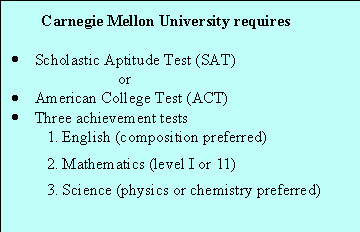
Take the standardized tests required for application to college. |
|
|
|
 |
|
|
|
Apply to schools with good engineering programs.
Visit schools that you may wish to attend. You will be able to make a better informed decision. |
|
|
|
THINGS TO EXPECT ALONG THE WAY |
|
|
| You've finally graduated from high school and you had a great summer, but before you know it tomorrow is your first day of college. Although you can begin to prepare yourself for college while you are still in high school, there are many things about college, especially when you major in engineering, that are different from high school. This section identifies some of these differences so that you can prepare yourself in advance. If you have advance warning, dealing with these differences is easier. |
|
|
| MALE-FEMALE RATIO |
|
|
| One major difference that is frequently an issue in engineering classes is that there always seem to be more men than women. Although the amount of women is always increasing, men still outnumber women. To give you an idea of what the class ratios will be, as of January 1992 at Carnegie Mellon University, the percentage of sophomore women in each major (you don't have to choose a major until your sophomore year) is shown below. These percentages will vary at other schools. |
|
|
|
Type of Engineering |
|
Female % of Class |
|
Male % of Class |
|
|
|
Chemical |
|
35% |
|
65% |
|
|
|
Civil |
|
23% |
|
77% |
|
|
|
Electrical & Computer |
|
7% |
|
93% |
|
|
|
|
|
Mechanical |
|
8% |
|
92% |
|
|
|
Materials Science |
|
6% |
|
94% |
|
|
| The high male-female ratio in engineering should not be a deterrent from pursuing engineering. When a senior mechanical engineer was asked to state what problems she had encountered as female undergraduate, she said, I don't think that there is a problem. Although one undergraduate electrical engineer admitted to being slightly intimidated by the large number of men in her classes, she had experienced no major problems simply because she was a woman. A male engineering student stated that he chose lab/study partners based on ability, not on gender. |
|
|
| TYPE OF COURSEWORK |
|
|
| During the first year all engineers take basically the same classes. Usually at the end of your freshman year, you decide what type of engineer you want to be. In the following years, students begin to move away from these core engineering classes and take classes in their specific major. You will also have the opportunity to take additional technical courses as well as humanities and social science electives. |
|
|
| DIFFICULTY OF COURSEWORK |
|
|
| College level courses, in general, move at a faster pace than your high school classes. ;Although college courses are more challenging and demanding, the sense of achievement upon completion of the course is proportional to the amount of work put into the class. |
|
|
| INDEPENDENCE |
|
|
| College life offers you more independence than in high school. Although freedom helps you to grow as a person, you must motivate yourself to do your work. Many freshmen have a difficult time adjusting to this freedom. |
|
|
| MISCONCEPTIONS |
|
|
| There are some common misconceptions about engineers such as |
|
|
|
engineers are nerds
all engineers are shy
you have to be super-smart to be an engineer
engineers have no outside interests. |
|
|
| These statements are no more true for engineers than they are for the population in general. Engineers are people just like you. |
|
|
|
DECIDING WHAT TYPE OF ENGINEER |
|
|
|
YOU WANT TO BE |
|
|
| At the end of your freshman year in college, you will have to decide specifically what type of engineer you want to be. Talking to people (other students, professors, engineers) is a great way to get an idea of what each type of engineer can do. However, to get you started here are some basic explanations of some of the different types of engineering. |
|
|
| BIOMEDICAL ENGINEERING |
|
|
| Engineers are trained to apply techniques of mathematics and science to solving problems in medicine and biology. Engineers investigate genetic engineering, tumor biology, cellular processes, design and materials of prosthetic devices, new ways of taking images of the human body, and a wide range of other aspects of both biology and other engineering disciplines. |
|
|
| CHEMICAL ENGINEERING |
|
|
| These engineers must apply the principles of both mathematics and chemistry to solve problems, create materials, and design complex chemical systems. Chemical engineers create drug delivery systems, numerical models for atmospheric pollution problems, as well as magnetic and electronic materials. ;Not only do chemical and petroleum manufacturers employ them, but chemical engineers also find work in firms that produce drugs, plastics, paints, magnetic tapes, and synthetic fuels. |
|
|
| CIVIL ENGINEERING |
|
|
| The roads, dams, bridges, water treatment plants and all other public projects that affect society's daily life are developed by civil engineers. Civil engineers also perform the structural design and analysis of buildings, such as skyscrapers. Other areas of civil engineering include construction project management, construction automation, environmental engineering, traffic analysis, and mechanics of materials. |
|
|
| ELECTRICAL AND COMPUTER ENGINEERING |
|
|
| Electrical engineers explore electrical phenomena, such as determining the best methods of getting information from one place to another, and building robots that can electronically sense their surroundings. Computer engineers are involved with digital technologies like computer hardware and the development of more efficient circuitry on silicon computer chips. |
|
|
| ENGINEERING AND PUBLIC POLICY |
|
|
| This field addresses the need to inform engineers and scientists of the social, political, and economic impact that their work will create. It deals with energy and environmental systems, information technologies, technology-related issues on international peace and security, and the advancement of analytical tools and methodologies. |
|
|
| MECHANICAL ENGINEERING |
|
|
| Mechanical engineers work with about anything that has integrated, moveable parts. They draw on knowledge from every other branch of engineering and work on a variety of projects: automobile transmissions, oil pipelines, solar heating systems, factory assembly lines, designing prosthetic devices, as well as manufacturing techniques and quality control, just to name a few. |
|
|
| MATERIALS SCIENCE AND ENGINEERING |
|
|
| Engineers in this field develop new ways to produce and process materials such as metals, ceramics, glasses, polymers, and semiconductors. They study how materials react under various conditions and contribute to the development of innovative products like ceramic parts for automobile engines, heat shields on space vehicles, and medical prosthetic devices. |
|
|
|
WHAT HAPPENS AFTER |
|
|
|
I GRADUATE FROM COLLEGE? |
|
|
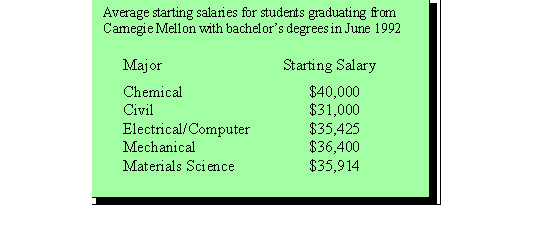
| After four years, you graduate from college with a bachelor's of science (BS) degree in a particular type of engineering. You have many opportunities upon graduation. |
|
|
| EMPLOYMENT: YOU COULD GET A JOB IN ... |
|
|
|
Sales
Production
Research
Design
Product Management
Consulting |
|
|
|
 |
|
|
| FURTHER EDUCATION |
|
|
| Besides preparing you for a job, an engineering degree gives you a good background for several types of further education. Many graduating engineers go on to school either immediately following graduation or after working for a couple of years. Having a bachelor's degree in a certain type of engineering does not mean that you have to continue your education in the same major. |
|
|
|
Some of the opportunities in higher education are . . . |
|
|
|
law school
medical school
business school
graduate school in a technical major other than your own |
|
|
|
KEEP IN MIND ... |
|
|
| Engineering offers you a potential for growth and provides you with a climate where innovative, talented and dedicated young people have an opportunity to achieve success. Although there is a higher percentage of men than women in engineering, the ratios are shifting. Women have attributes to make good engineers. If you have an indication that you would want to be an engineer, you should not hesitate to pursue your interests. Hopefully, this web page will make the very beginning of your career in engineering a little easier. |
|
|
|
|
|
| This Web Page was produced based on a booklet developed by |
|
|
|
 |
|
|
|
SOCIETY OF WOMEN ENGINEERS
Carnegie Mellon University Student Chapter
Doherty Hall 2313
5000 Forbes Avenue
Pittsburgh, PA 15213-3890
(412) 268-2521 |
|
|
|
|
BACK |
|
|
|
|