 |
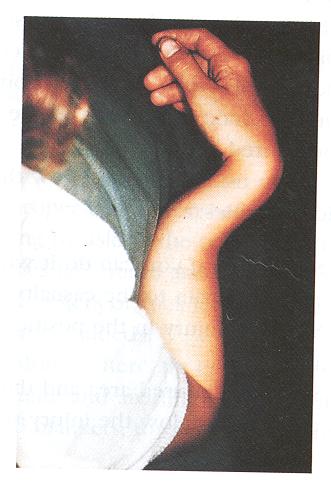
| Fractured Arm |
|
| Closed Compound Fractgure |
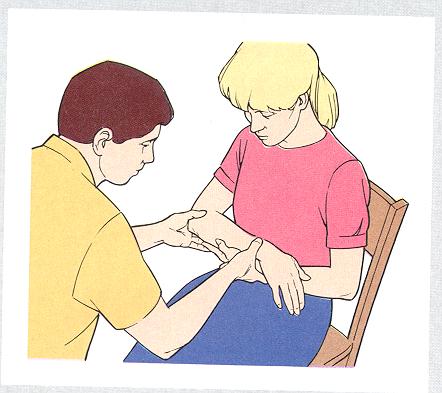
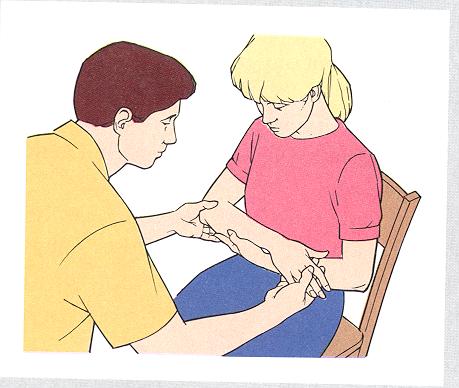
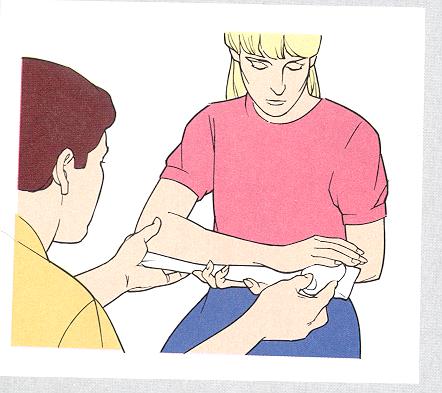
| Applying a Rigid Splint |
 |
 |
 |
 |
 |
| -picture -application of a splint -application of a sling |
| Support the limb -support the arm above and below the injury. If possible, have casualty or bystander help you. |
| Check Circulation -Check the fingers for colour and warmth -Remove any rings the personis wearing -Ask the person about any feelings of numbness in the fingertips |
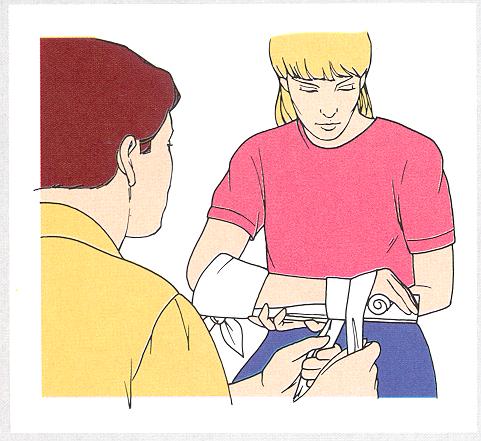
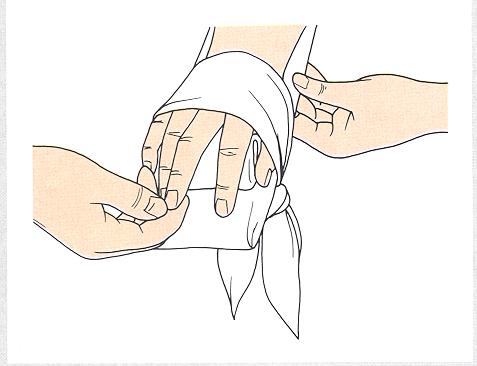
| Apply a rigid splint -Place padded splint under injured forearm -Have casualty or bystander hold splint in place -Place a soft object in palm of casualty's hand to keep it in a natural position |
| Secure the splint in place -Secure the splint above and below the injury with bandages or roller bandages. -If bandages are used, tie ends together on underside of splint, leaving fractured area uncovered. |
| Check Circulation -Check fingers for colour and warmth Ask about any numbness in the finger tips Splint should fit snugly but no so tightly that blood flow to hand is impaired If fingers are bluish or cold or if the person feels a tingling, loosen splint |
| Applying a Sling and a Binder |
 |
 |
 |
 |
 |
 |
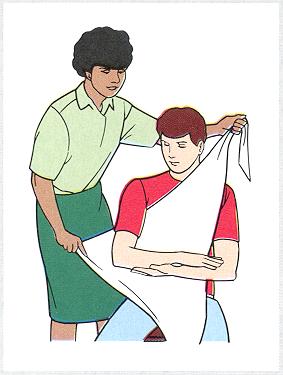
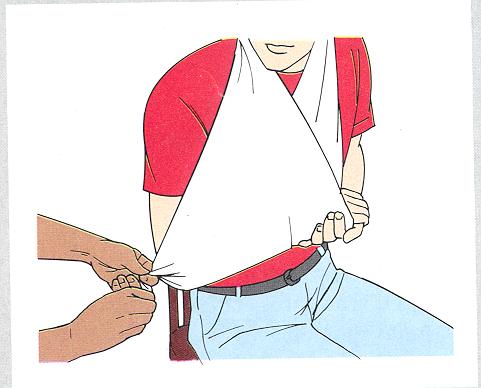
| Position the triangular bandage -Have casualty or bystander support injured arm -Thread one end of bandage under injured arm, across chest, and over unijured shoulder -Position point of bandage at elbow on the injure extremity. Try to position the elbow at 90 degrees if an elbow injury is not suspected. |
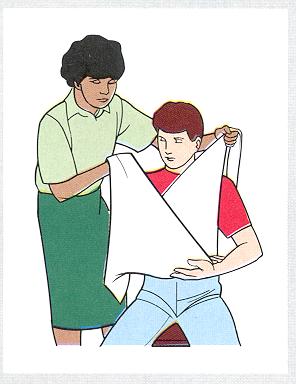
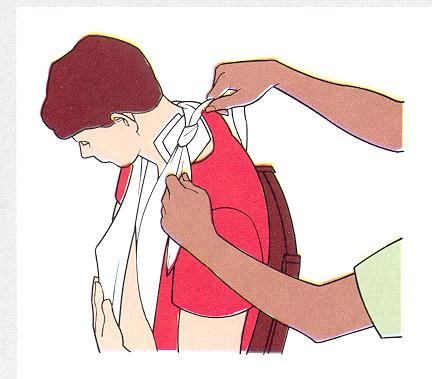
| Tie the ends -Bring other end across chest and over opposite shoulder -Tie ends at side of neck opposite injury -Place a pad under the knot |
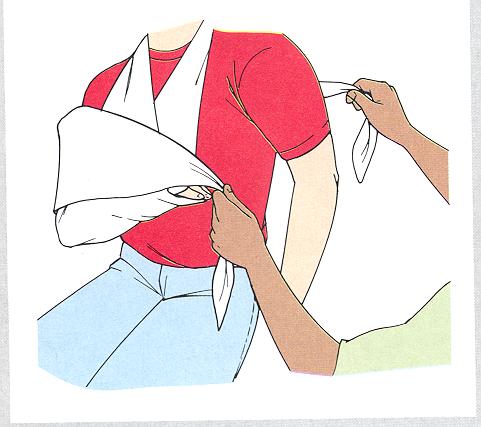
| Secure bandage at elbow -Tie or pin the point of sling at elbow, if possible |
| Secure arm to chest -Tie a broad bandage from injured side around the chest, avoiding the injury site -Tie ends on opposite side under uninjured arm -Place pad under knot |
 |