Shattered World - A Worse
World War : Part 47
August 26th 1948 to September 30th 1948
Captain Anthony Knight piloted
his massive bomber with the confidence of many hours of flight experience. The
massive prop and jet powered bomber was a beast to fly but Anthony loved her
none-the-less. Everyone in the squadron believed firmly that they were going to
end the war against Japan with their lumbering
giants. Each of the bombers could carry several atomic bombs or an ungodly
amount of conventional bombs and their flight ceiling would make them safe from
most Japanese defenses, or so intelligence claimed anyway.
42,000 feet below the desert of
the American southwest could have been the surface of the moon. His squadron,
the first B-34 squadron to be declared operational, was making the first leg of
a journey that would take to them to a brand new SBC airbase in the northern Philippines. The massive bomber was still highly secret and they’d scheduled the
first flight to arrive at a desert airbase north of Los Angeles in the early pre-dawn
hours of the night. He was due to begin his descent into southern California in fifteen minutes. Soon
he would be flying his bomber over the vast distances of the Pacific Ocean and then over the still largely
untouched home islands of Japan.
Five hundred pound bombs exploded all around a Free French outpost in
the eastern outskirts of Algiers. Much of the city was already in ruins as flight after flight of
German and Italian bombers droned overhead at will. Amidst the smoking ruins
Pierre Maigny stared nervously east, scanning the horizon for signs of enemy
movement. An Italian infantry division had begun taking up positions
immediately east of the city and they were expected to begin probing into the
area any time now.
He’d
already spotted a few Italian soldiers skulking into the area and a few bursts
from the outpost’s machine gunners had sent the intruders scurrying back to the
east. Unfortunately those intruders had apparently relayed the position of the
outpost up the Axis chain of command…and thus the bombs rained down. Pierre was used to the
sounds and concussion of exploding bombs. He’d fought in France from the fall of Paris to the hasty retreat through Iberia. He’d fought the hapless Italians in Tunisia for years before the Germans came and forced the Free French to
withdraw. He’d narrowly avoided being caught in the Tunis pocket back
then….and found himself trapped in the Algiers pocket today.
At
least he wasn’t alone. De Gaulle himself was leading the city’s defense from a
bunker in the center of the Free French capitol, and the main bulk of the Free
French army was here as well. They would not give up the city easily. Sudden
movement caught Pierre’s attention then, men moving in zigzag patterns down the road from
out of the east. Many men, not a scouting party this time. Artillery began
falling around the outpost a moment later and Pierre had to scream his
loudest to sound the alarm over the thunderous roar of the detonating shells.
Pierre
brought his M1 carbine to his shoulder and began firing at the incoming troops,
ignoring the impacting shells around him as best he could. He thought one of
the falling enemy might have come from his weapon but
the outpost’s two machine gunners could have just as easily accounted for the
kill. As he fired round after round into the oncoming soldiers Pierre heard the
radio man speaking coordinates into the radio. Not long after artillery began
impacting on the advancing enemy, forcing them to stop their advance and take
cover.
The Free French artillery fell for
another minute and then stopped, leaving the area oddly silent for an awkward
moment. Then the Italians began lifting themselves up and jogging hunched over
towards the bombed out house that was now a Free French outpost.
Machine
gun and rifle fire, the tatatattat of assault rifles set to full automatic
fire. Apparently the Italians had been equipped with the newer German assault
rifles. The machine gun to Pierre’s left went silent, its gunner struck through the crown of his head
despite the helmet he’d been wearing. Leaving his own carbine behind, Pierre crawled over to the
machine gun and manned it, sending streams of bullets towards the Italians. On
they came, a fairly large push was in the works then. Pierre was beginning to
consider whether to flee the outpost when new bursts of rifle fire arose to his
left and right. Those were M1’s for sure, reinforcements! Free French soldiers
began arriving to form a line to the left and right of the outpost, and more
artillery fell among the Italians.
Ten
minutes later the outpost was the center of a coherent line, complete with the
beginnings of fox holes. The Italians, apparently realizing that Pierre and his
comrades were not going to simply melt away, began to withdraw to the east
under the cover of a screen of their own artillery. More Free French troops
came forward along with carts full of supplies. Pierre found himself digging a
fox hole, one among dozens. Acrid smoke rose all around,
artillery hurtled overhead in both directions, the freight-train shrieks
putting everyone on edge. Axis bombers passed overhead intent on targets deeper
in the city. The battle lines in Algiers were being
set.
August 26th 1948
In
Southern China U.S. forces have destroyed a Japanese Army of 175,000 men around
the southern Chinese city of Nanning, taking most of the army as POWs.
It is the largest mass surrender in the history of the Japanese Army. To the
northeast Patton’s armored spearheads have pocketed another Japanese Army of
some 100,000 in the city of Guicheng. The Japanese, reeling from the
fast blows of the U.S. Army and unable to stem U.S. domination of the air, are hurriedly
executing total scorched earth policies while withdrawing their surviving
forces in the region towards recently constructed lines of defense south of
Liuzhou and west of Wuzhou. Across southern China, Chinese guerillas are engaged in
an open and large scale rebellion against Japanese forces, further sapping the
Japanese ability to wage war in China while also interfering in
Japanese total scorched earth activities.
In Northern China the Japanese position is equally
as dire. Beijing has been surrounded by the Red Army and 90,000 Japanese troops
have been pocketed in that city. To the east Soviet forces have captured Hohhot. Japanese forces in northern China are falling back to a line of
defense along the Yellow river. As in the south, Japanese forces are waging a brutal
campaign of total scorched earth but are running into the fierce resistance of
a general Chinese uprising backed by Chinese nationalist elements. Red Army
forces are pushing forward so rapidly and aggressively that there is doubt in
the Japanese high command as to whether a coherent defensive front can be
formed at all in the area even with the natural barrier of the Yellow river to aid them.
{* I’m using the term ‘total scorched earth’ to describe a
very intense form of scorched earth strategy being used in the Shattered World
timeline. This strategy involves the wholesale use of chemical and bio weapons
and the outright large-scale killing of local populations in addition to
the ‘normal’ tactics of scorched earth as employed in our timeline. This form
of warfare has reached levels of mayhem and insanity never approached in our timeline, I’ll be using this term in the future to convey
this level of scorched earth policy.
As of part 47, total scorched earth has been used only by
the Japanese in coastal Siberia and in southern and
northern China.
The policy was not fully carried out in Manchuria since
the Japanese collapse there was so swift and unexpected. Germany
has not yet done total scorched earth on the eastern front as a general policy
although the fighting there has been quite sufficient to mimic its effects *}
August 28th 1948
Despite
fierce Japanese resistance and very heavy casualties U.S. forces have reached the outskirts
of Taipei on the island of Formosa. The U.S. has achieved total control of the
seas and skies of Formosa and Japanese forces all around
the populated western part of the island are coming under relentless
conventional, chemical, and napalm bombardment from naval ships, artillery, and
bombers. This, in addition to the ever present threat of a nuclear attack, has
crushed Japanese morale on the island and paralyzed their transportation
systems in the theatre.
September 1st 1948
In Libya
Germany’s Army Group Africa continues to hold a defensive line well east of Benghazi. Entrenched from Mekili to Derna German
anti-tank infantry have held stoically in the face of multiple large British
armored attacks, using anti-tank rockets to throw back the British pushes with
heavy losses in tanks. This has allowed Guderian to launch many small counter
attacks to keep the British from massing too much armor at any single point.
However, the German infantry are becoming exhausted while the panzer units have
used up most of their reserves.. Guderian has begun
considering a strategic withdrawal back to Benghazi where his supply lines will be
dramatically shortened.
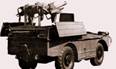
German truck-mounted guided ATM
system
September
2nd
Britain launches 200 Goddard V ballistic
missiles towards the oil fields at Baku. While most of the missiles hit
nothing at all, a few of them manage to cause light damage to several different
facilities. Back in Europe, Britain launches another 200 of the
missiles towards several major German cities in northwest Germany. Actual damage is very light
although the effect on civilian morale in western Germany is significant. From now on, Britain will be able to retaliate against
the German ‘Rain of Steel’, missile by missile.
September 4th 1948
Germany unleashes its plan to relieve the
200,000 German soldiers trapped in the Orel pocket. The Soviets have been
expecting a German breakout attempt and have reinforced the area south of Orel. The Germans have massed strong
panzer armies north of Kursk and east of Bryansk. In addition, the 1st
SS paratrooper division and its newly acquired 500 helicopters will play a key
role in the operation. The Germans have been fortunate with unusually dry
weather holding into early September. The heavy rains of early August have
ended and the ground on the eastern front is relatively dry.
Otto Skorzeny’s initial bold plan for a
breakout operation has been folded into a larger campaign much different in
nature. The German operation is in fact more than a simple breakout attempt, it is a gamble to link with their forces around Orel and pocket Soviet forces south of
that city. The strategy is a classic pincer movement. German forces massed east
of Bryansk and north of Kursk will both drive towards a point northeast
of Orel where they hope to link up and
surround 400,000 Soviet troops.
The
operation starts at dawn when the diversionary attacks are initiated. German
forces trapped in the Orel pocket use much of their precious
artillery ammunition in a massive bombardment before launching a fierce attack south
into Soviet lines. At the same time, elements of the 1st SS
paratrooper division are flown directly into Zmiyevka. This town straddles a
rail line south of Orel and is home to a major Red Army
head quarters and fuel depot. The Soviets were expecting paratroopers to arrive
via inaccurate para-drop on slow and vulnerable transport planes. Instead, 500
helicopters fly largely undetected at very low level in the night and deliver
the entire 5000 man force directly into the city over a period of several
hours.
The Luftwaffe makes a large surge in the area and despite
effective Red Air force resistance enough confusion is
caused to allow the helicopters to fly into and out of Soviet held territory largely
unmolested. The German paratroopers capture the city and the Red Army head
quarters and fuel depot within after hours of confused and deadly fighting.
With the town secured and the rail line through it very much blocked, the
paratroopers settle in to hold the city against already developing Soviet
counter attacks.
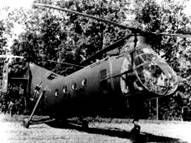
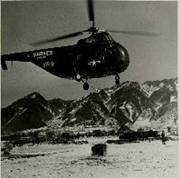
German
helicopter at a staging area west of Orel
September 6th 1948
With
German forces pushing South out of the Orel pocket at a slow pace and SS
paratroopers still holding Zmiyevka the Soviet forces South of Orel are shifting
to block the developing German breakout attempt and are already preparing to
unleash a massive counter-attack of their own. Now, in the early dawn hours,
the real German offensive is unleashed.
Panzer divisions swarm east and north from Bryansk and Kursk in a large scale offensive.
Soviet forces are caught preparing for offensive operations but still put up a
stiff resistance from the beginning. Both German pincers make disappointing
gains and suffer higher than expected losses on the first day of the operation.
But, undaunted, they prepare to continue their push forward the next day. The
Germans know that 200,000 of their fellow soldiers will be lost to the Soviets
forever if they fail.
September 7th 1948
The
Persian offensive into breakaway, fascist, Iran has ground to a halt just
southeast of the Iranian capitol of Zanjan. The Persian soldiers are as ill
trained as their Iranian opponents no better armed. The Iranians are well dug
into Great War style belts of simple bunkers, trench lines, and mine fields.
British air power has not been enough to help the Persians achieve a break
through of the Iranian lines.
September 9th 1948
Axis
lines in Libya are beginning to buckle and
Guderian is preparing to withdraw west to Benghazi.
September 11th 1948
The
fighting around Orel on the eastern front has become a
deadly slugging match with both sides suffering massive losses. The unusually
dry weather has allowed both sides to launch fierce armored attacks and these
thrusts have frequently slammed head on into each other. The Germans have lost
nearly 500 panzers since September 4th while the Soviets have lost a
staggering 950 tanks. For both sides the losses are too much to bear, but
neither side is willing to withdraw from the field. The battle of Orel rages on.
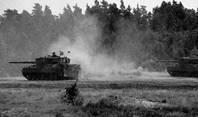
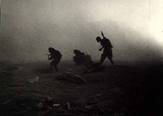
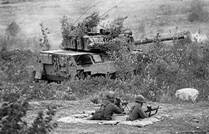
German forces in action around Orel
The German pincer attacks designed to pocket
Soviet forces south of Orel have been a dismal failure. Neither
attack ever gained much momentum due to the sheer ferocity and size of the Red
Army’s counter attacks. However, the two German thrusts have succeeded as
gigantic diversions, siphoning off enough strength to allow German forces
inside the Orel pocket to slog their way south
towards safety. Indeed, elements of the 1st SS panzer army(pocketed in Orel earlier) have nearly succeeded in
breaking a corridor out of the pocket – much to the surprise of the German and
Soviet high commands.
Meanwhile, north of Orel Otto Skorzeny’s
daring helicopter assault has been a catastrophe for the 1st SS
paratrooper division. While the helicopters were able to initially deliver the
troops on target they were unable to sustain a reliable re-supply effort – nor
was the Luftwaffe able to do so. In addition, the helicopters were unable to
deliver heavy weapons of any sort. As a result, the SS paratroopers have been
wiped out nearly to the last man, with very few prisoners taken. Skorzeny
himself is MIA and presumed dead. The attack succeeded in throwing the Soviets
off balance but little else was achieved.
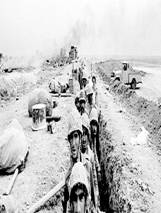
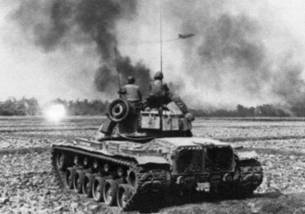
Soviet forces in action around Orel
September 13th 1948
Britain is forced to further cut back on
rations in the British Isles due to a tightening of the German submarine blockade. The
Kriegsmarine now has several hundred of their latest submarines prowling the
North and South
Atlantic,
The speed, firepower, and stealth of the latest German submarines has foiled
the massive ASW efforts of the Royal Navy. Both Britain and the United States are working on improved ASW
technologies but they are still a year or more from fielding the new hardware.
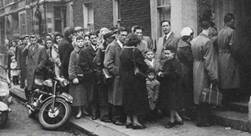
British subjects
line up for rations
September 14th 1948
German
Army Group Africa begins a delicate withdrawal west towards Benghazi, leaving a thin screen of German
and Italian infantry to cover the withdrawal. The British, sensing victory in
the air, press forward with all available reserves.
September 15th 1948
British
armored divisions crack through the Axis rear guards and begin driving west in
hot pursuit of Army Group Africa. Guderian’s carefully planned strategic
withdrawal rapidly degenerates into a headlong retreat as Axis forces seek to
reach Benghazi before being surrounded and destroyed by the pursuing British.
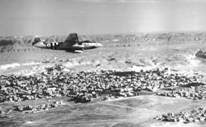
RAF jet over central Libya
September 16th 1948
Italian
troops probing into central Algeria overrun a Free French
concentration camp in the desert. The camp is home to some 20,000 diseased and
starving walking-skeletons. The prisoners are all young Algerian men rounded up
since the failed Muslim uprising of the previous year. In addition to the
20,000 survivors, the Italians discover mass graves containing thousands of
corpses; those dead of disease, starvation and bullet wounds to a lesser
degree. The Italians, with enthusiastic German backing, invite the
International Red Cross to the scene and immediately begin to use the discovery
as a potent propaganda weapon.
The British, themselves ruling over much
of the Muslim world, are forced to condemn the Free French atrocities and
demand explanations from the Free French authorities.
September 18th 1948
The Red
Army has reached the Yellow River in northern China and has already established
several bridge heads across the river. The Soviet forces have paused to rest
and finish off pockets of resistance in their rear. Beijing, the largest such
pocket of resistance, is being ground into dust as the Soviets saturate the
Japanese garrison there with massive and sustained conventional and chemical
bombardment. Chinese civilian losses across northern China are running into the hundreds of
thousands.
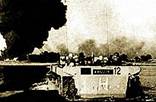
A Soviet APC crosses the Yellow
River in northern China
In Southern China, the Japanese army of
100,000 holding out around Guicheng has been destroyed after two weeks of
sustained pressure from the U.S. Patton’s armored forces are now driving due
east towards the Chinese coast and meeting little effective Japanese
resistance. Another U.S. Army is driving due north and linking up with Chinese
Nationalist forces as it goes.
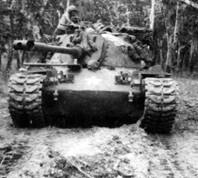
U.S. forces
operating in southern China
Japanese resistance in China is effectively melting away and
the Japanese high command, desperate to regain a hold of the situation, orders
all Japanese forces in China to fall back to major coastal
cities. If they cannot hold China then, they reason, they can at
least keep it from being a spring board for an invasion of the home islands.
September 21st 1948
An
advanced prototype of the U.S.’s deadly new ‘Eagle’ jet fighter
flies from a top secret U.S. airbase in Nevada. Mass production is slated to
begin by the end of the year.
September 22nd 1948
The Free
French position in Algiers has become extremely dire. Axis
air and naval forces have now established a tight blockade of the city and the
Free French are running critically low on fuel, ammunition, and food. Italian
infantry are pushing into the city itself and German mechanized forces have
pushed out to expand Axis control of the area all around Algiers. There is now little hope of
escape for the Free French army and government.
September 24th 1948
Army
Group Africa reaches a series of light
defensive lines 30 kilometers east of Benghazi where Italian reinforcements have
already taken up position.
September 25th 1948
British
forces slam into Axis positions east of Benghazi and very nearly manage to
outflank Axis forces with a sharp southern thrust by a particularly aggressive
British commander. The Germans narrowly manage to repel the southern thrust and
at the end of the day Army Group Africa has held a line roughly 25 kilometers
east of Benghazi. Now the supply situation has reversed with the British
relying on long lines of supply back to Gazala while Axis Army Group Africa
receives fresh supplies and reinforcements directly from ships docked at Benghazi.
September 26th 1948
800
British B-31 and Lancaster bombers devastate the Turkish
city of Istanbul. Some 250,000 civilians are killed or wounded and a
massive firestorm consumes a large portion of the city. The Turkish air force
has been virtually destroyed in the past month by aggressive British fighter
sweeps and the Luftwaffe refuses to stray from its bases closer to the vital oil
fields of Baku. The British bombing campaign against Turkey has been remorseless. The goal is
nothing less than to use terror to force a Turkish withdrawal from the Axis
Powers. Despite the massive damage being done to its large cities, Turkey stubbornly refuses to give in. Germany is preparing to send many modern
radar-guided AAA and missile systems along with advisors to Turkey in an effort to counter the
British “air pirates”.
September 27th 1948
After
Churchill phones De Gaulle to inform him that “military necessities” were
forcing him to divert reinforcements bound for Free French North Africa, De Gaulle angrily hangs up on
the British Prime Minister and picks up another phone. “Do it” he says bitterly
into the phone, speaking to the foreign minister of Free France in a loud voice
to make himself clear over the sounds of impacting shells and bombs overhead. Brushing
dust from his uniform, De Gaulle slams down the phone and turns to face his top
commanders.
Free France has been in secret negotiations
with Italy via diplomatic staff in Latin America for several months.
At 11:59 PM the guns fall silent all around
besieged Algiers. Free French Radio announces that Free France has
withdrawn from the Alliance for Democracy and formally signed
an armistice with Italy and Germany. The terms of the armistice are
simple. Free France will be recognized as a free and
independent nation by the Axis Powers and will be allowed to establish
diplomatic, economic, and cultural contacts with the French people in Europe. Algiers will be declared a free city and
the Free French capitol will move to Casablanca. Italy will take possession of eastern Algeria and Free France will retain
possession of western Algeria, with Algiers under joint occupation.
{* - Churchill
had been convinced by his commanders in Libya that the forces being sent to
Free French north Africa would be better used in Libya to help break Army Group
Africa.
- De Gaulle has been angry with the British
since they allowed Vietnam to be declared an independent
state in the Alliance for Democracy. The ongoing lack
of British reinforcements and the series of recent events helped him make his
final decision to withdraw from the war.
- Axis motivations for ending the fighting
with Free France are two fold. Having captured eastern Algeria and isolating Algiers the Axis have solidified their
domination of the western Mediterranean already. Axis forces driving into Algeria are exhausted and a build up for
a renewed offensive would take time and more important it would take resources
away from the desperate fighting in Libya. Hitler and Mussolini reason that
they can conquer the rest of Free French North Africa after dealing with the
British to the east. *}
September 28th 1948
World
reaction to the Free French announcement ranges from shock and disbelief to
jubilation. British and American newspapers deride and mock De Gaulle as a pawn
of Hitler and Mussolini while Churchill privately rails against the “French
stab in the back”. In Italy and Germany there is an outpouring of
excitement not seen since the fall of Greece. Hitler boasts that “the tide of
the war has shifted clearly to our favor”.
Free French naval ships serving with the
British in the eastern Mediterranean begin heading for the port of Beirut in Free French territory. The
British briefly consider boarding and capturing the Free French ships, or
sinking them, but reject the notion after considering the possibility of having
to fight the Free French in addition to the Germans and Italians in the Mediterranean.
September 29th 1948
Rommel’s
victorious, exhausted, and now quite famous 8th panzer army begins
moving east to reinforce Guderian’s lines at Benghazi as the Italians settle in to
occupy eastern Algeria.
September 30th 1948
In Britain, Prime Minister Winston Churchill
has been coming under heavy criticism from all sides. Despite the recent
marginal success in Libya, the Free French withdrawal from
the war is the final blow to Churchill’s leadership. Unable to form a
government that will serve under him he resigns his post late in the day.

British PM Winston Churchill
announces his resignation
A world away, a pillar of fire blooms over
the Wotje Atoll in the Marshall Islands
All around the fireball and developing mushroom cloud U.S. and Japanese
aircraft clash in a swarming dance of death. Many planes tumble through the air
helplessly, the pilots blinded by the flash of the atomic explosion or the
planes themselves broken by the blast wave. The U.S.
carrier aircraft outnumber their Japanese opponents and one by one the
remaining Japanese aircraft are shot out of the sky or are forced to flee for
the safety of a Japanese airbase on another island.
An SBC
B-31 bomber has dropped a 30 kiloton atomic bomb on a major Japanese airbase on
the Marshall Islands,
utterly destroying the hangars, barracks, and heavily damaging the airfield
itself. The Japanese have heavily fortified the Marshall
Islands as part of their strategy to
hold the central Pacific. The atomic strike at Wotje Atoll represents the
beginning of a major U.S. campaign
in the central Pacific.
TO BE CONTINUED…