Shattered World - A Worse World War : Segment 46.2
July 27th 1948 to August 15th 1948
The Soviet Union releases video and photographs revealing the “horrific acts against humanity” carried out by Japanese scientists on Chinese civilians and prisoners of war in several bio-warfare research facilities. Japan and Germany denounce the “lies and absurdities of Red propaganda”. The collapse of Manchuria occurred so quickly that the Japanese were not able to totally evacuate their bio-warfare research facilities and instead resorted to simply evacuating their scientific personnel back to the home islands and burning as much paperwork and other evidence as they could as Soviet forces approached.
The British open up their offensive in Libya with a massive artillery and rocket attack that lasts some eight hours in the grand tradition of the Great War. There is no subtlety here, the front is narrow and the British are looking to leverage their advantage in numbers and raw firepower. Although neither side gains complete air superiority, both sides manage to get medium and heavy bombers over the front and bombs falls by the hundreds and thousands as the night sky is lit up by the awesome display of firepower. The barrage ends at dawn and British and Imperial infantry move forward along with armor, mobile artillery, and armored troop carriers of all types. German and Italian infantry counter with guided and non-guided anti-tank rockets as well as plenty of their own artillery and rocket support. Both sides are largely equipped with assault rifles and constant tatter of small arms fills the air amidst the deeper backdrop of exploding bombs and artillery shells.
|
By noon the British have pushed the first line of German/Italian troops back by about a kilometer but the Axis forces retreat in good order following Guderian’s carefully crafted plan of battle. By the end of the day the British have advanced nearly two kilometers into the Axis lines but at a heavy price in men and vehicles. At the same time that the British are crashing into the Axis lines in Libya, Rommel’s panzers are crossing their line of departure in Algeria in a bold gamble to knock the Free French out of the war once and for all. Rommel has chosen surprise over brute power and his panzers dash ahead without any pre-bombardment whatsoever. The French, though ready for the attack, are poorly equipped and low in morale after the disaster of Tunisia. Free French strong points in narrow passes and other rugged terrain are hammered by German and Italian bombers of all types and small teams of German commandoes leap ahead in small groups to neutralize Free French strong points using helicopter transport for insertion in the Free French rear areas. The day ends with the Free French in headlong retreat and Rommel’s panzers dashing directly west like a dagger aimed at Algiers and Oran. |
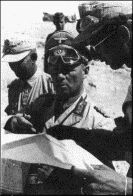
General Rommel |
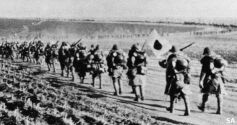
Retreating Japanese Soldiers |
On the other side of the world U.S. Marines have now fully secured several beach heads on western Formosa and are beginning to probe inland in the face of fierce Japanese resistance. The U.S. has total air superiority over the island and is using it to relentlessly pound Japanese defensive works, troop concentrations, and anything moving on the ground. Entrenched Japanese 88mm anti-tank guns, modeled after the German ‘88’, as well as infantry with cheap copies of the American ‘bazooka’, are exacting a heavy toll on the Pershing I and late-model Sherman tanks that the Marines are using. Meanwhile, in the Pentagon the U.S. high command is debating when and where to use the two atomic bombs they have at their disposal. |
British and U.S. forces in Malaysia reach the northernmost line of Japanese defenses about twenty kilometers north of Singapore. The Japanese have built an extensive network of defenses on Singapore’s northern flank, with some four major lines of defense and lesser defensive works in between these. The Japanese also have Shinden jet fighters, and older prop fighters, operating out of Singapore to deny the allies air superiority. Factoring in the large Japanese fleet at anchor there as well, Singapore appears to be impregnable to any conceivable attack. The allies have already decided to simply isolate Singapore rather than assaulting it, and thus rather than attacking British and U.S. forces begin digging their own defensive works opposite the Japanese positions north of Singapore. Both sides are settling in for a long siege here. Singapore will become hell on earth for its large and helpless civilian population.
The great Eastern front has come to a staggering, lurching, halt as both sides are beyond their logistical and strategic breaking points on this huge theatre and early rains have turned the earth into mud. Their reserves exhausted, and supply lines awash in mud, the two sides have settled into digging in from the Baltic coast to the Black Sea. The now mostly static front runs from the East Prussian and Polish frontiers and then to the southeast across the devastated Ukrainian countryside and down to the Black Sea coast. The Germans also hold a shrinking pocket immediately around Orel which even Hitler is beginning to admit privately may be an army lost.
But the German High Command has a renewed hope to relieve Orel and its 100,000+ trapped German soldiers. It seems that SS-Obergruppenfuhrer Otto Skorzeny has a plan.
The RAF stages its first attempt at a large-scale raid on the Baku oil fields and it is a disaster of epic proportions. German and Turkish radar guided flak, anti-aircraft missiles, and jet and prop interceptors of all types shred the British raiding force to pieces over eastern Turkey. The British lose some 50 fighters and nearly 75 bombers and few aircraft ever reach Baku. Those that do reach Baku drop their bomb loads to little effect before making the desperate dash for home. Many damaged British B-31’s end up being forced to land in Soviet territory. The crews will be returned to Britain eventually but the B-31 bombers will never be seen again.
The RAF, in after-action planning, decides that Baku is not yet in reach. Instead, they decide that a pro-longed campaign will be required to wear down the Turkish and German air forces in the theatre. It is high time, they decide, that Turkey begin to pay the price for its membership in the Axis Powers. Not all Turkish airspace is as defended as the eastern approaches to Baku.
|
The Persian invasion of Iran continues to make steady, if slow, progress. The small RAF contingent operating out of Persia has total air superiority over Iran allowing flights of aging Lancaster bombers from RAF bases in Iraq to relentlessly carpet bomb entrenched Iranian positions. Persian infantry, advancing with tactics reminiscent of the Great War, grind forward through the rubble left behind by the carpet bombing. The fanatical Islamic/fascist Iranian government has succeeded in framing the invasion as a “War Against Islam by the Imperialist West” and the Iranians are fighting tenaciously but are simply being over powered by means of direct brute force. |
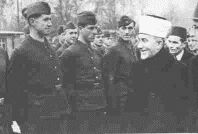
Persian Volunteers |
After pausing to reinforce and consolidate its gains, the U.S. is ready to resume its push into southern China. The campaign begins with a massive surge of U.S. aircraft that quickly overwhelms the last strong Japanese fighter squadrons in China. With the skies quickly cleared, U.S. heavy and medium bombers of all types proceed to literally blast a hole in the Japanese lines with a titanic conventional bombing attack that wipes out five miles of Japanese trench and bunker positions. Patton’s armored divisions, chomping at the bit to be turned lose, proceed to strike directly through this blasted region with the vaunted seventh cavalry leading the charge with its Shermans and light tank-killers probing ahead through the cratered landscape.
The heavier Pershing and Pershing 2 tanks of the powerful armored divisions shrug aside the light Japanese tanks that manage to come against them late in the afternoon and smash into strong Japanese infantry positions about ten miles into the Japanese lines. It is here that Patton’s advance is held in check to some degree and the Japanese manage to form a new, secondary, line of defense. The Japanese have placed 88mm anti-tank cannons in strong bunker positions all around their rear areas in anticipation of a rapid American breakout. These strong points, together with heavy use of Mustard gas and simple bazooka-like anti-tank rockets, slow down the American armor and force Patton to let his mechanized infantry push ahead in search of another breakout point. But there are other ways to achieve breakouts as well, and the president of the United States doesn’t want to see a long and bloody campaign in southern China – especially not with the Soviets ready to drive south from Manchuria any day now, and especially not with an election coming up.
“Use the bomb” Dewey tells the Joint Chiefs, over riding their own wishes to hold the bombs in reserve in case things get bogged down on Formosa. “Use both the damn bombs then” the president vents in frustration after an hour long argument among his cabinet. “What’s the point in having the damn things if we’re not going to use them?” he concludes, before retiring for the night. With the issue decided, it is now up to the Pentagon to decide where best to use them. On the phone from his head quarters in Indo-China, Patton has some ideas about that. There is a Chinese city serving as a major strong point for the Japanese army in southern China and Patton does not want to assault it directly.
In Moscow, Beria is viewing the events in southern China with some concern. He had been hoping that the Americans would be timid and allow the Red Army to sweep south and gobble up China. But Patton, even though he’d been slowed down after quick initial gains, was not one to be timid. And he had the favor of the American people. The danger, it suddenly occurred to him, was that he himself was being too timid. The thought had barely had time to form before his hand was reaching for the phone at his desk.
Soviet forces in Manchuria renew their offensive ahead of schedule, prompted by the American invasion to the south. The race to “liberate” China is now afoot, and the question is how far south will the Red Army meet up with their Americans “allies”? The Soviet offensive starts with a series of stutters as the local commanders had been planning on at least two more weeks of preparations. Nevertheless, the Japanese forces opposing them are extremely weak and the stutters won’t take long to evolve into strides. The Red Army in Manchuria is on the move.
With Soviet forces to the north beginning to pick up their rate of advance into northern China, the U.S. detonates an atomic bomb over a particularly strong Japanese strong point on the front in southern China. The bomb, delivered by a heavily escorted B-31 bomber, is a 20 kiloton device and wipes part of the Chinese city of Ningming off the map(killing some 75,000 Chinese and wounding many more as it would later be estimated) to the dismay of the Nationalist Chinese government who immediately issues a strong condemnation of the atomic strike. The U.S. places the blame on Japan for “not allowing the civilian population to evacuate from the city which had become part of the front lines”. Nonetheless, the atomic bomb achieves its desired effects in wiping out a major Japanese Army head quarters and logistical center and after waiting several hours to “let the atomic dust settle” as Patton puts it, U.S. armored divisions are cutting through the Japanese lines near Ningming and penetrating deep into southern China.
In Tokyo, the Japanese Army issues orders to initiated pre-laid plans for a “total scorched earth” campaign in China. Anything of any potential value to the Soviets, western allies, or future Chinese government is to be “wiped from the face of the Earth” as one Japanese official puts it. In addition, some 5000 U.S. prisoners of war are immediately executed after the atomic strike on Ningming “to punish those cowards who would use weapons of mass evil” as Japanese radio phrases it.
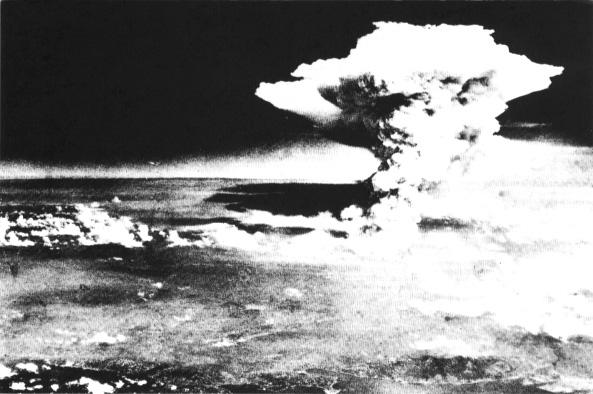
A 20 kiloton atomic bomb detonates over Japanese Army Headquarters in Ningming, Southern China.
75,000 Chinese civilians die, many more are wounded. Japanese defenses in the region are thrown into disarray
|
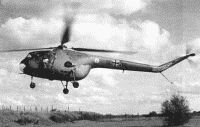
“They want twenty four of my helicopters?” the young German officer said into the radio, his voice a tone of pure disbelief. What would he tell the commanders in the field when they called for wounded to be evacuated from the front the next time fighting flared up? Sorry, Colonel, but some idiot from Berlin has gotten the idea to requisition all of my god damn helicopters. “You cannot possibly be serious!” he continued, very nearly shouting into the microphone. “Oh, the Obergruppenfuhrer is deadly serious. Herr Skorzeny always gets what he wants” the staff officer on the other end of the radio said calmly. Skorzeny! The man was a legend in the German Army, a legend around the world for his exploits. Rumors placed him in nearly every major German victory from Paris to Warsaw, and he had supposedly engineered the coup in Baghdad that had prolonged the fighting there while the Luftwaffe established itself in Turkey. Winner of the Knights Cross two times over, and many other medals as well. He was a genuine hero of the Reich. Why does he want my helicopters? |
|
Shrugging his shoulders, he prepared to give the news to his staff and the crews. What Berlin wanted it would have, of course. That was the way of things. Twenty four of the 7th panzer army’s precious new helicopters were going….somewhere for Otto Skorzeny. This better damn well be worth the hell I’m gonna catch from the front.
TO BE CONTINUED in Segment 46.3
.

