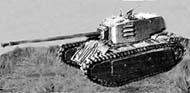
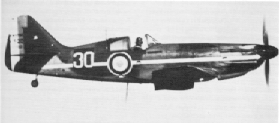
French B2 'Defender' in action northwest of Orleans
June 17th 1945
French forces which have been re-organizing south and west of Orleans open a small counter thrust in an attempt to isolate the German forces battling inside Orleans. The attack is short on armor and air support but succeeds in surprising the Germans. By the end of the day French forces are beginning to cut into the German supply lines north of Orleans.
June 19th 1945
German forces in Orleans are forced to withdraw due to the success of the recent French thrust. The French have succeeded in gaining themselves a few days to further prepare defenses along the Loire.
June 21st 1945
In the north of France Cherbourg falls to advancing German forces. Brest is coming under heavy artillery and air bombardment but a stubborn French and British garrison is determined to hold the port for as long as possible. Some 190,000 French and British soldiers have been cornered in the port city.
June 25th 1945
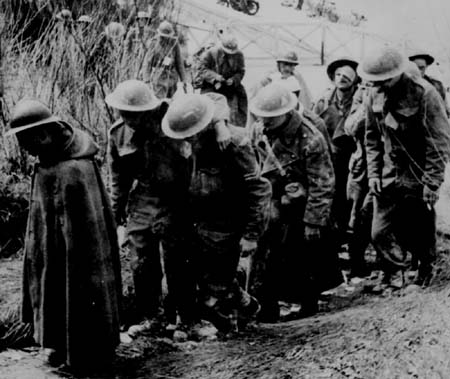
In eastern France German forces capture Dijon and are approaching Pontarlier along the Swiss border. French forces in the area, mainly elements that managed to evacuate the Maginot line, are fortifying along the rivers Seine and Rhone.
June 28th 1945
The last and most fanatical French defenders in Paris, in the very heart of the city, are forced to withdraw into the subway and sewer tunnels to continue a bitter resistance. Most of the city is now rubble and in German hands. The Germans have lost tens of thousands dead and many more injured in taking the city. The French suffer similar casualties.
July 1st 1945
Brest falls after days of sustained and massive rocket, artillery, and air bombardment and then direct assault by German infantry. German air superiority has prevented the Royal Navy from conducting an evacuation and 100,000 additional French and British prisoners fall into German hands. The last Alliance resistance in France north of the Loire has collapsed. The Germans now hold the entire channel coast.
July 3rd 1945
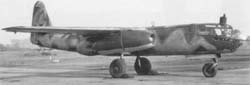
Germany officially forms the first all jet-bomber squadron, composed of the Arado 246g medium bomber. Variants of these jet-bombers are also being used by Germany for air reconnaissance over the skies of France, Britain, and Norway because they can outrun every Alliance aircraft except for the British Meteor jet. Goering orders the commander of this new squadron to prepare for operations over France and Britain. A heavier, four engine, version of this jet bomber is also in development but is months away from mass production.
{* The Arado 246g is essentially the 234b of OTL(produced towards the end of the war) with more powerful and more reliable jet engines to increase its top speed, armament capacity, and reliability. It also has much improved landing gear and doesn’t need the rocket-assisted takeoff of the 234b because the jet engines on the 246g are more powerful than those of the 234b of OTL *}
July 9th 1945
After weeks of sluggish advances German forces occupy Tretten in central Norway. Rena, to the east of Tretten, still holds but is under threat from cautiously advancing German forces. The British have sent an extra division of regular infantry and alpine forces to try and bolster the Norwegian defense. The government of Norway has relocated to Narvik in the far north of the country. The Soviets have covertly begun to supply the Norwegian government with small arms and supplies at the request of the Alliance.
July 13th 1945
The last coordinated resistance in Paris collapses. The Luftwaffe bombs central London setting parts of the city's heart ablaze. However, the RAF with the aid of its Meteor jet fighter downs dozens of Luftwaffe bombers. The RAF has been consolidating its strength in southern England at the expense of fewer sorties over northern France.
July 16th 1945
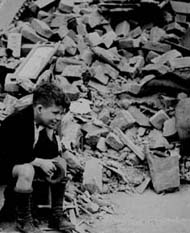
Italian planes hammer Malta in the largest raid on the tiny island to date. Italian submarines and aircraft have largely succeeded in blockading the island and the British garrison there is running low on food, water, and other supplies.
July 20th 1945
After three weeks of consolidating their gains and bringing their supply lines forward the Germans are ready to resume their campaign in France. Rommel's 4th panzer army has been transferred from the recently conquered channel coast to positions west and south of Paris. 4th panzer army will cover the right flank of a massive new thrust mainly led by 5th and 6th panzer armies. 5th and 6th are to drive south, bypassing Orleans, towards Vichy while smashing up the French rear in the progress. 2nd and 3rd panzer armies will advance from recently captured Dijon to the south and east to link up with Italian forces and capture Lyons.
The French have been preparing the defense of the southern half of the country for a month now. Their last remaining true field armies are a shadow of their former selves but their commanders are not ready to give up yet. The most mobile and veteran of their forces are stationed well south of the Loire as a mobile reserve to block German breakthroughs across that river. The other concentration of French strength is southeast of Lyons where the French are making the Italians pay heavily for every foot of ground gained. French forces aside from these two areas of strength are little more than hastily called up reservist infantry with aging equipment pulled from armories across the south of France. With northern France in German hands and the western Mediterranean largely blockaded by the Italians, there is little hope of reinforcement from abroad. The only portion of the French coast open to Alliance shipping is the Bay of Biscay on the west coast but this is infested with German submarines. Despite this danger the Royal Navy is getting through many convoys of supplies - but with heavy losses of shipping.
In the morning hours the renewed German offensive begins. On all fronts the Germans have secured bridgeheads across the key rivers that mark the French lines of defense. By noon German armored elements are across these bridgeheads and cutting through static French infantry lines. German mobile artillery and tactical air forces are pinning the French infantry in place.
July 22nd 1945
Due to heavy and unsustainable aircraft losses over the British Isles Goering calls a halt to all offensive Luftwaffe activity over the British Isles. Instead, Goering will attempt to meet Hitler's demands for 'demoralization' of the British population with attacks by A-2b and A-3 ballistic missiles.
July 24th 1945
40km south of Orleans French and German armored elements come into contact and begin a sustained engagement. The French fight gallantly and the exchange of tank losses is roughly even. By the end of the day the battle remains stalemated. 5th and 6th panzer armies have been brought to a halt northeast of the river Cher. To the west Rommel has been having more success. Despite his orders to serve merely as a western flank guard for the thrust into central France, Rommel has taken the initiative and swung into a full offensive posture after French forces defending the Loire in his sector melt before his panzer spearheads. Rommel sends a communiqué to Army Group B headquarters in Paris that reads in part "...I am driving the French before me, they are not willing or able to engage my panzers. I believe I can be in Rayan in a week" To the east 2nd and 3rd panzer armies are driving southeast at a rate of 20km a day. Leading elements of 2nd panzer army are within 30km of Lyons. The French are holding in the center of France but the western and eastern parts of the country are in a full rout.
August 2nd 1945
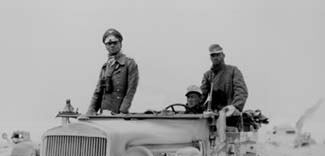
German panzergrenadiers enter the outskirts of Rayan on the west coast of France. Rommel has driven leading elements of his 4th panzer army in a headlong long rush penetrating 30km to the south of Angouleme. Rommel has his sights set on seizing Bordeaux and thus rupturing the entire French western flank, his panzer spearheads are within 50km of the city.
In the central part of France Briare has fallen and Orleans is now under siege. French forces are holding a line from Tours to the southwest and are blunting German breakthrough attempts with small but focused counter attacks. What remains of the French air force is throwing the last of its strength to hold the skies over this region and are managing to keep the Luftwaffe from maintaining air superiority. 2nd and 3rd panzer armies are now west and east of Lyons and maneuvering to encircle the city. German and Italian forces have linked up to the north of Grenoble. The French government has now withdrawn to Marseilles and is split between those for and against asking for terms of an armistice.
August 4th 1945
Due to the stunning speed of Rommel's panzers Bordeaux falls without a shot being fired despite French plans to make it a fortress in the defense of western France. In the east Lyons has been surrounded and German infantry are already in the outskirts of the city.
In Alexandria elements of the French fleet sortie alongside the British eastern Mediterranean fleet and begin steaming west in an effort to draw the Italian navy into open battle.
August 6th 1945
Lyons falls after the mayor declares it a 'free city' and convinces the demoralized and exhausted defenders to lay down their arms. The mayor will forever be remembered as the 'Traitor of Lyons'.
With Bordeaux, Rayan, and Angouleme in hand Rommel sends his panzers streaking directly east in hopes of reaching Vichy and trapping the French armies that are still fighting hard south of Orleans
August 7th 1945
De Gaulle launches a coup in Marseilles after the government decides to ask for armistice terms. Hard-line anti-Fascist elements in the French military seize key communication points and armories in what remains under French control. By the end of the day much of the government leadership is under arrest and De Gaulle declares the 'Provisional Government of Free France'. He promises new elections 'once the country has been restored from the grip of the fascist Axis Powers'. The civilian population of Free France largely supports De Gaulle and the military's action but a sizeable minority begin openly cooperating with the Germans and opposing the continuation of the war '...as the elected government had called for before being toppled".
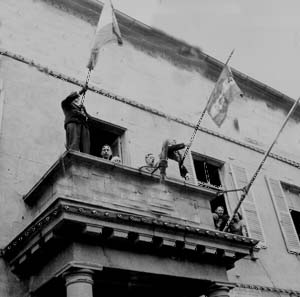
In Britain the reaction is mixed. The war-hawks applaud De Gaulle while a strange Alliance of pro-fascists and labor decry the undemocratic events in their French ally. Churchill, trying to ride the fence, calls on De Gaulle's regime to 'oppose the Axis but return to their democratic traditions with all haste'.
In the United States the events in France come as a shock. It is the first outward sign that France is truly on the verge of collapse - thus making the Germans the soon-to-be masters of all Europe. For the first time the full reality of what is happening in Europe is beginning to hit the American public. A bill that has been floating around the U.S. congress that would supply massive arms and supplies on credit to the Alliance nations is about to gain strength.
August 11th 1945
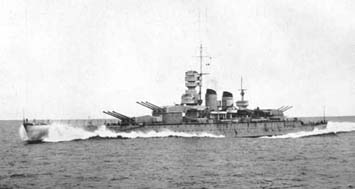
After the Alliance eastern Mediterranean fleet bombards the eastern coast of Sicily the Italian fleet finally comes out to meet the Alliance force. In the Battle of the Tyrrhenian Sea an eight hour naval battle is fought. British carrier aircraft are mostly kept at bay by Italian aircraft based out of Sicily and southern Italy thus making the battle a classic WWI style surface engagement. The two fleets are roughly equal in size and both sides fight stubbornly. In the end the superior training of the Royal Navy turns the tide of battle. The Italians loose two battleships, several cruisers, and several destroyers and other lesser ships. The battered Italian fleet manages to break off the engagement and withdraws northeast towards the Italian coast. The British lose two cruisers and a destroyer while the French lose a heavy cruiser and several lesser ships. The Alliance fleet, satisfied that it has broken the offensive capacity of the Italian fleet, withdraws to the east.
August 13th 1945
Limoges has fallen to Rommel's eastward streaking 4th panzer army and there is little to stop him from reaching Vichy. De Gaulle reluctantly orders the French forces based around Tours and south of Orleans to withdraw to the south before they are trapped in a huge pocket. The 500,000 French soldiers and 400 tanks still fighting there begin an organized withdrawal.
August 15th 1945
A large British squadron teeming with anti-submarine destroyers moves out of the straight of Gibraltar in an effort to break the Italian domination of the western Mediterranean. This region is swarming with Italian and German submarines as well as Italian aircraft operating out of Libya and Sicily. In Libya the number of Italian troops has reached nearly 500,000 while the number of British troops in Egypt has remained at about 80,000. French North Africa has several divisions of native troops and about 40,000 French regulars at hand. The French Foreign Legion is also based out of French North Africa. French and RAF aircraft are supporting the Royal Navy's push into the western Mediterranean with sorties from French North Africa as well as southern France itself.
August 20th 1945
German troops enter Vichy but the 500,000 French soldiers that had been battling in central France have already passed through the city and withdrawn towards the south and west. Several small French attacks into Rommel's northern flank slowed down 4th panzer army enough to allow the escape. The Germans now hold a front from Bordeaux in the west to Grenoble in the east. De Gaulle is planning to make another stand, this time in the south of France. De Gaulle now realizes that France proper is lost - His aim is to hold long enough to allow an organized withdrawal of the French military government and remaining organized forces to French North Africa before the Italians move against the vulnerable French African possessions. He plans to do this by evacuating through Alliance-held Spain to Portugal and from there by sea to French North Africa.
August 22nd 1945
In Norway Rena finally falls after a long and gallant defense by combined Norwegian, British, and French forces. Germany's advance in Norway has stalled just south of Kyam in the center of the country. The Royal Navy has successfully blocked the Kriegsmarine from operating of Norway's long northwest coast and the addition of British alpine and regular infantry and Soviet supplies has bolstered the Alliance defense there. The German general staff is content for the moment to hold the south of Norway while concentrating on operations in France. Hitler, for his part, is also more concerned with finishing off France.
August 24th 1945
With German forces advancing on a broad front deeper and deeper into southern France and the French defenses crumbling everywhere De Gaulle orders a general withdrawal of the remaining French army towards Spain for an evacuation via Portugal. The remnants of the French air force begin mounting a last series of sorties against Italian airfields in Sicily and airfields in fascist-held southeastern Spain before flying to French North Africa.
Mussolini orders Italian forces to move against Tunisia, he wants to grab as much of Northwest Africa as he can before large numbers of French forces begin arriving from the ongoing evacuation through Portugal.
August 28th 1945
The last organized French forces cross into Alliance-held northern Spain. In all, some 450,000 French soldiers have escaped into Spain but they had to destroy most of their heavy equipment. This evacuation will become known as 'The Great Trek'. De Gaulle has already firmly established his Free French regime in Algiers and is organizing the moving of 450,000 French soldiers from the Iberian peninsula to northwest Africa.
August 29th 1945
Due to France's bitter resistance, and the existence of a stable free French government in Algiers, Hitler decides to permanently annex northern and central France rather than occupy these areas solely for the duration of the war. Germany will directly annex northern and central France as a semi-autonomous province of the Reich to be governed by the Wehrmacht until a civilian regime can be firmly established. Southern France will be divided between two new fascist puppet states with the rest going to Italy and also Spain once Franco is placed back in power there.
September 1st 1945
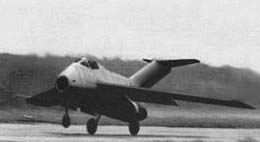
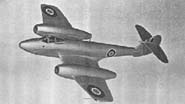
Germany begins mass production of its second jet interceptor, the Focke-Wulf TA-190b 'Predator'. This plane has better performance than the already excellent Me-275 and far outclasses the British Meteor jet fighter. Britain is progressing with new jet designs that are better than the Meteor but they remain at the design/prototype stage. The U.S. also remains far behind Germany in jet technology and doesn't yet have an operational jet aircraft in any numbers.
{* Jet development in the U.S. has been _much_ slower than in OTL due to the prolonged isolationism. The German TA-190b jet fighter mentioned above is essentially a refined version of the TA-183 design 3(which never left the drawing boards in OTL) with more reliable jet engines. It is equivalent to early 50's jet fighters of OTL in terms of flight performance. In OTL the Soviets based their early Mig designs around this jet * }
September 2nd 1945
The U.S. Congress passes a bill calling for massive delivery of arms and supplies to the nations of the Alliance for Democracy. President Dewey, riding a wave of decreased isolationism in the U.S., signs the bill calling it a signal that the U.S. will be 'an armory for Democracy'. Most in the U.S. are still staunchly opposed to entering the war directly but the Axis Powers are now most definitely seen as an enemy of the free world, including the United States.
September 3rd 1945
Italy launches an invasion of French North Africa with roughly 250,000 troops and 300 tanks crossing the frontier into Tunisia. Italian aircraft hammer airfields in Tunisia and Algeria severely damaging the airfields and destroying many French aircraft which have been arriving from France itself.
German troops arrive at the French Mediterranean coast in three separate places and have reached the Spanish border. German propaganda boasts of the 'Great French defeat' and calls on 'Frenchmen everywhere to lay down their arms'. In a defiant broadcast from Algiers De Gaulle calls on the French people to '...resist with every fiber of your being. Vive la France!'