| Day 2 - Arras to Courcelles-au-Bois |
| Gommecourt to Courcelles-au-Bois |
| It's quite easy to get carried away showing examples of cemeteries and gravestones - the area is literally overrun with them. My goal is to try to avoid doing this, and just provide examples where they are relevant to the message I'm trying to convey at the time. Suffice to say that around almost every bend we encountered yet another cemetery (or a War Graves Commission sign indicating directions to one). They hit with the desired impact. Loss of life on this scale is simply too hard to envisage or comprehend. That it endured for 4 years through trench warfare that saw the same land within a 2 or 3 mile boundary being gained and lost several times and with such waste of human life just leaves the whole event bearing an enormous question mark at the end of an equally-sized 'Why'. |
 |
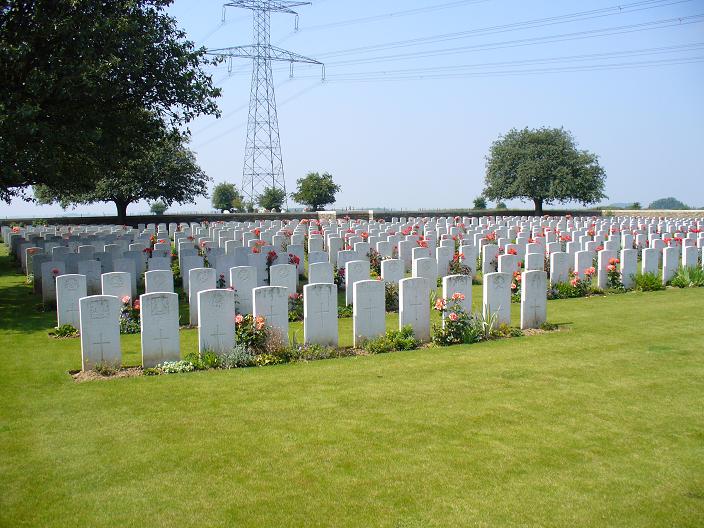 |
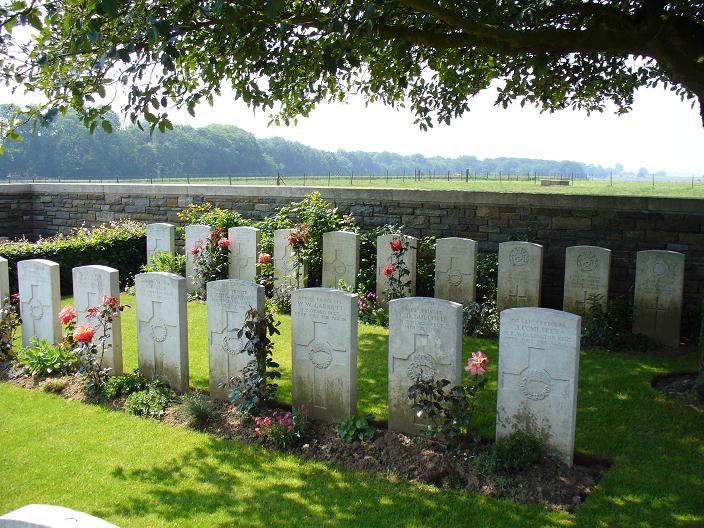
| I am bringing this up now, as our day's cycling brought us into the Western Front and battlefield region proper, starting in the north with the village of Gommecourt. Gommecourt was a disaster, with massive casualties on the first day, the hesitancy from one commanding officer, Major General Stuart-Wortley, ending in his dismissal. The attack was planned as a diversion to draw German troops away from the main attacks further south, and resulted in a total loss of nearly 7,000 men on the one day. Consult the Battlefield map via the link above for more details. There are 3 war cemeteries in Gommecourt - I decided to display two photos of Gommecourt New Cemetery which was created by consolidating the graves from several smaller cemeteries, and contains the graves of mainly British troops plus also around 60 New Zealand and 1 Australian casualty. Strangely peaceful now, it is difficult to imagine how the terrain must have looked 90 years ago. It says a lot for the War Graves Commission and the present-day relatives of those who died that the graves are so well kept. Every cemetery we came across was as well looked after as the one shown here. |
| Gommecourt New Cemetery |
| We Stopped for lunch at the nearby village of Foncquevillers. As with many places that became difficult for British troops to pronounce, at the time of WW1 this village became known as 'Funky Villas'. Not much to hold the description of being 'funky' today (oh, all right, the church does look a bit funky), although the meal we had was reasonable enough! Not far now, however, to Courcelles-au-Bois and L'Amartinierre (click). In fact we arrived earlier than expected and spent an hour or so resting on the village green (a small public plot of grass and trees) while we waited for our hosts to return home (having told them we would be arriving later when booking our room). Last time we came to The Somme we were caught out by the lack of restaurants and the Bastille day holiday - so this B&B with its kitchen facility seemed the ideal choice. |
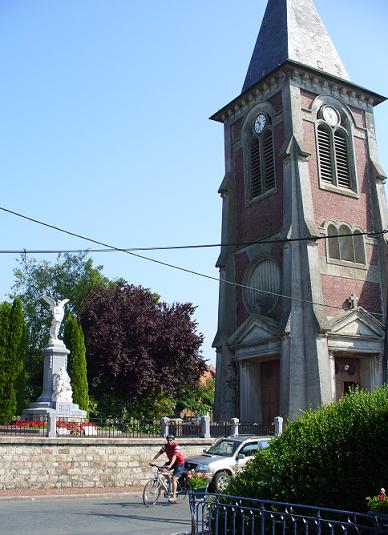 |
| Funky Villas Church |