|
KTEL = bus system
OTE = Greek Telecom/tions
ELTA = Post Office
|
Local products
Taste the local
dishes:
Patatato = kid
with potatoes and
Kalogiros= eggpland
with meat and
cheese, Kakavia,
fish soup, the local
mushrooms cooked
in various ways
and black bread.
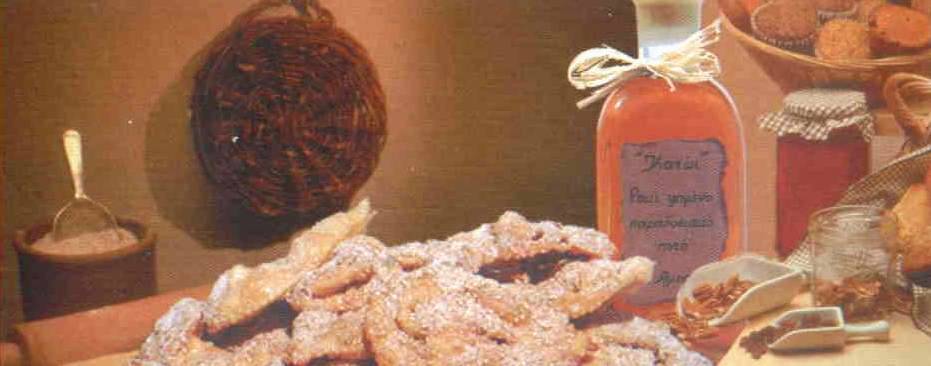
From sweets try
Pasteli= sesame
with honey served
in lemon leaves
often offered to
guests in weddings
and christening
ceremonies,
diples, mountain
honey, "spoon
sweets" and "sweet"
"cheese.
Famous are the
Rakomelo =
honey boiled in
Raki drink, roasted
Raki and straw wine.
|
Festivals:
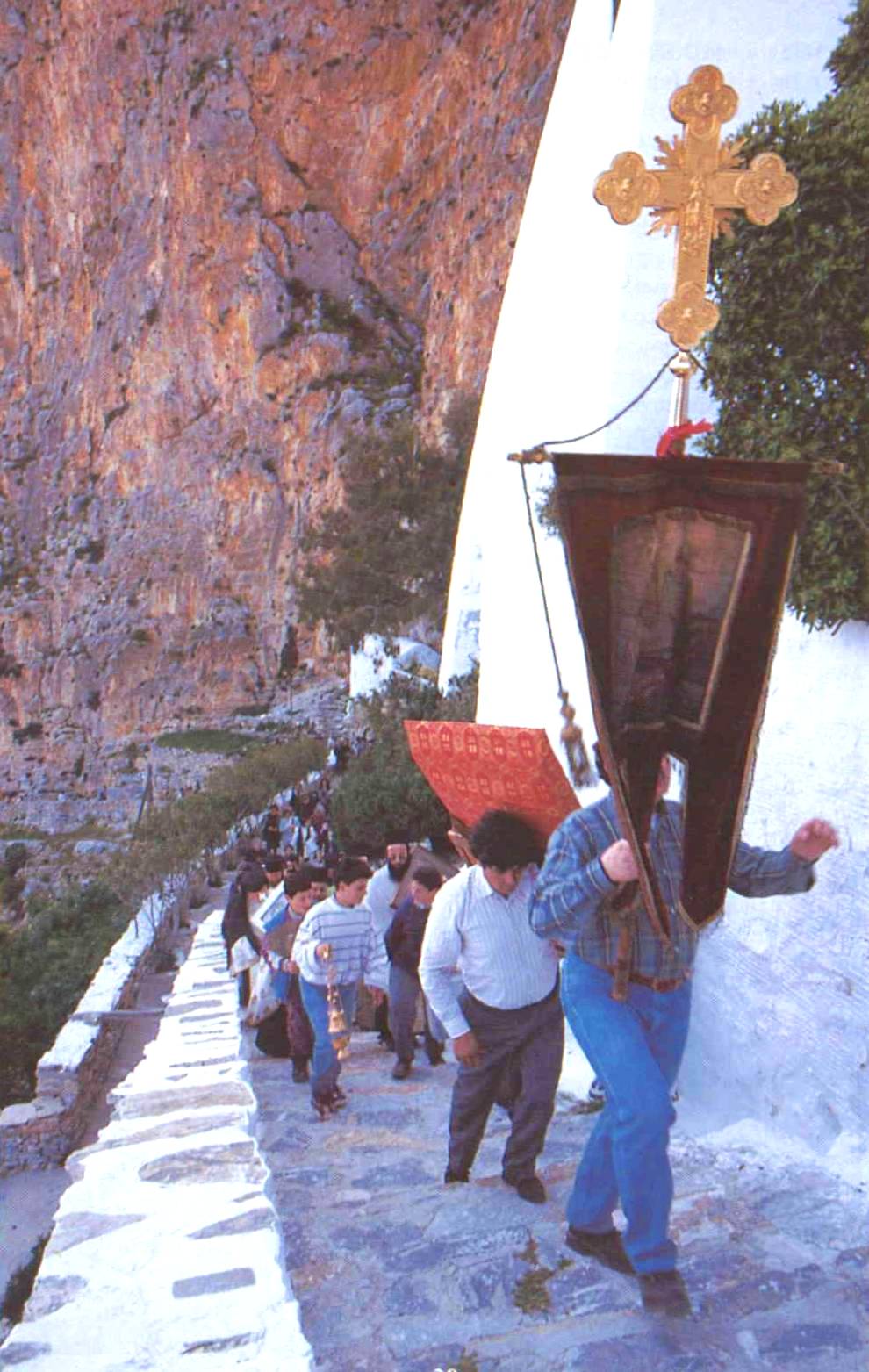
21 November
Festival in the
monastery of
Chozoviotissa.
The locals offer
fried codfish and
other fish
25 March
Festival for Virgin
Mary in Katapola.
The second day of
Easter there is
a litany of the
Virgin's icon.
1 July
Festival at the
church of Agii
Anargiri where
Patatato and tripe
is served.
26 July
Festival of Santa
Paraskevi in
Kolofana village.
People eat the
"Patatato".
6 August
Festival of Christ
with traditional
music.
14 September
The Day of the Cross
in Aegiali the
festival of the
farmers with music
and traditional
food (kid in red
sauce and rice).
|
Camping:
Amorgos
tel: 22850-71257
|
How to get there:
By boat from
Piraeus
tel: 210-4226000
By boat from
Rafina
tel: 22940-22300
|
Travel
Agencies:
Synodinos Travel
Tel: 22850-71035
22850-71201
Mystis Tours
Tel: 22850-71409
Aegialis Tours
Tel: 22850-73394
Nautilos
Tel: 22850-73032
Prekas
Tel: 22850-71256
|
Useful
telephone
numbers:
Centre of Health
tel: 22850-71207
22850-73222
22850-72250
Police
Tel: 22850-71210
22850-73320
Katapola Port
Tel: 22850-71400
22850-71259
Town Hall
Tel: 22850-71246
OTE
Tel: 22850-71399
ELTA
Tel: 22850-71250
|
Direct dialing codes:
For all over the
island 22850
 |
|
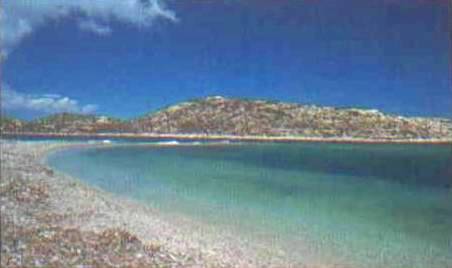
The blue island
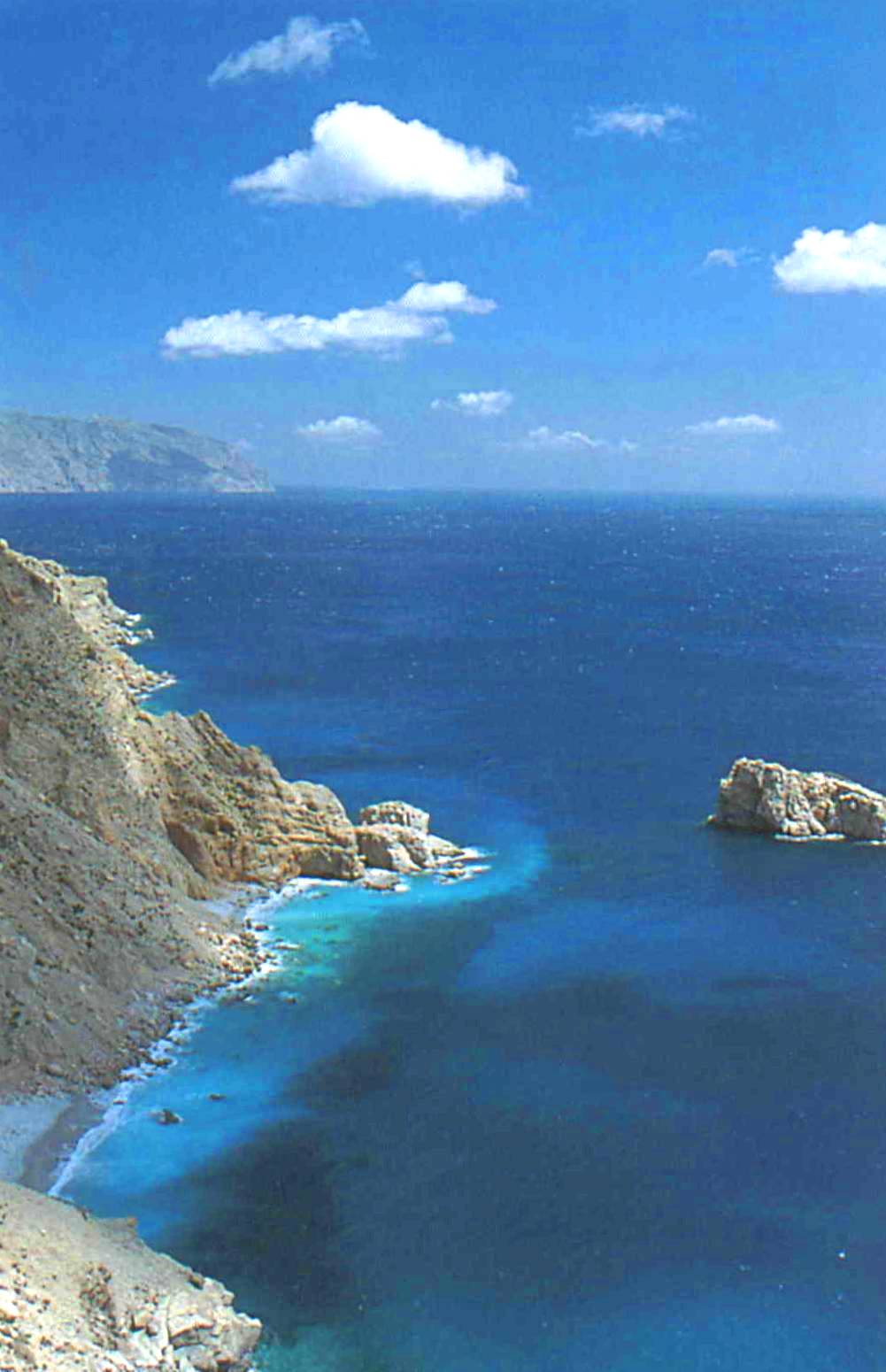
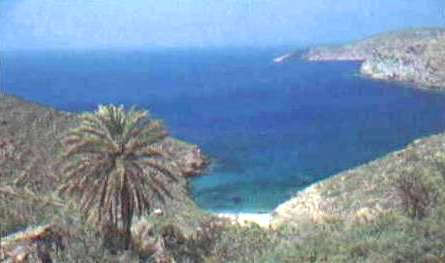
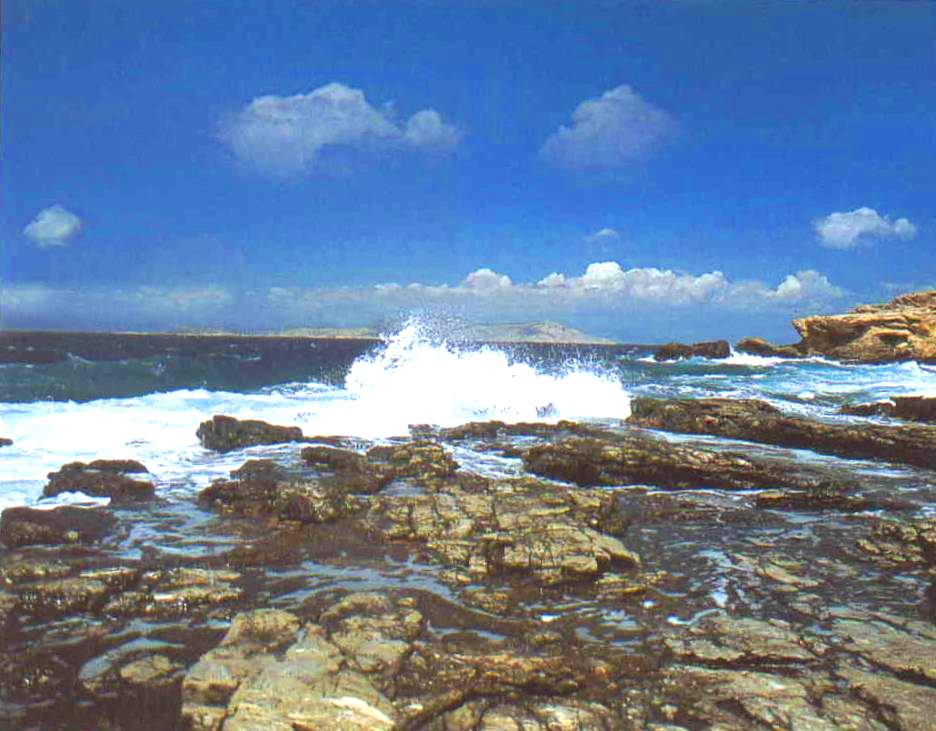
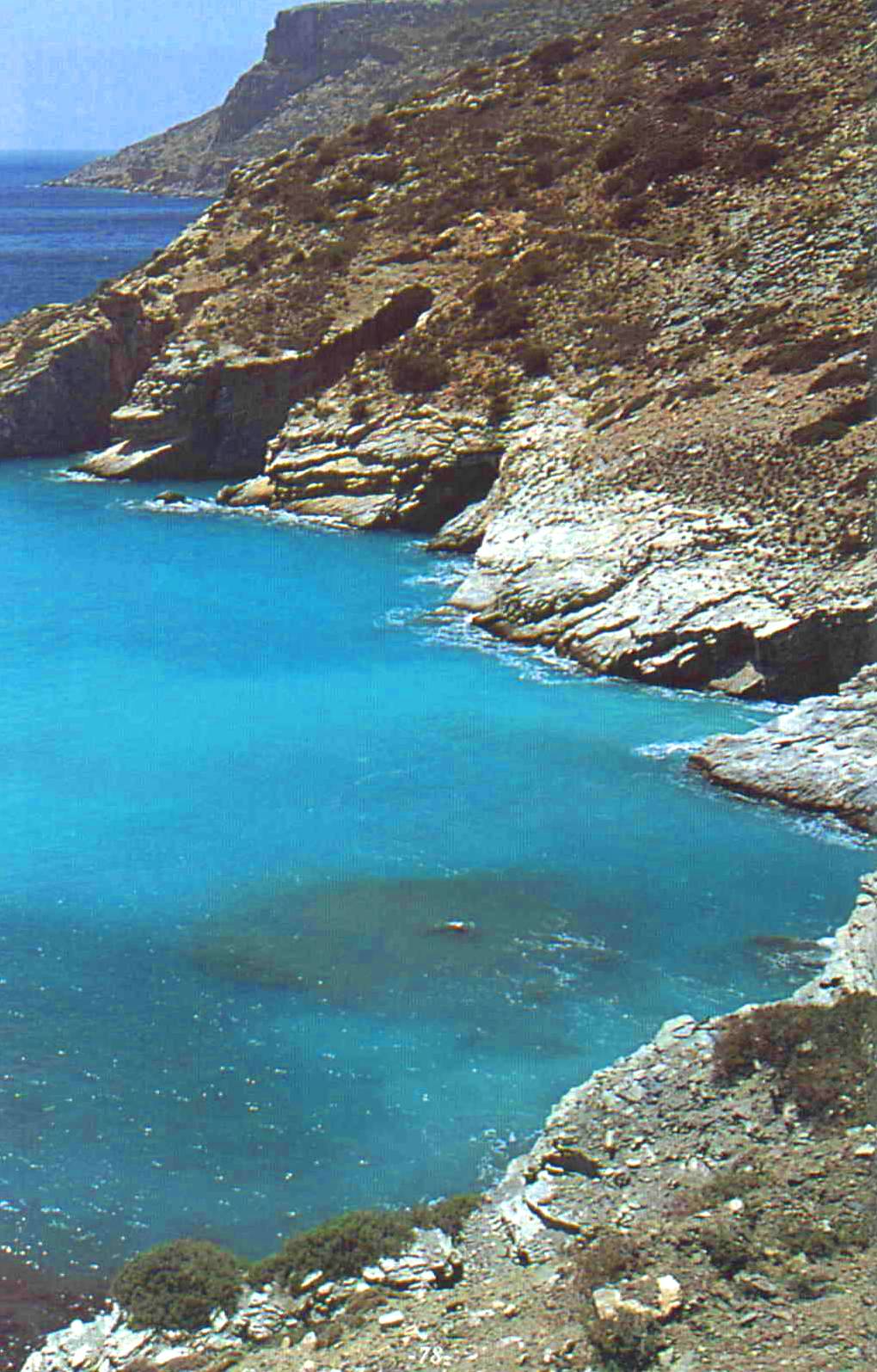
Amorgos is an island of 134 sq. km., 138 nautical miles away from Piraeus. Due to its variety in landscape it presents calm sandy beaches on the west shores and wild vertical cliffs leading to the sea on the east shores. It is a calm serene island suitable for relaxing vacations far away from the noise of the mainstream turism. With its crystal clear waters and the deep blue colour Amorgos was chosen to be the filming location for "The big blue", an excellent movie by Luc Besson. The island compines both natural beauty and cultural heritage as it was an important centre of civilization during the Cycladic era. It is inhabited since 4.000 BC. Excavations all over the island have revealed lots of temples, graveyards, statues, statuettes, religious objects and tools. Most of them today are exhibited in the museums of Oxford, Munich and Louvre. In antiquity very famous were the very fine thin vails of Amorgos and a red painting substance made from a plant found localy. Until the 18th century AD it was exported to Alexandria and England.
|
| Amorgos or Chora |
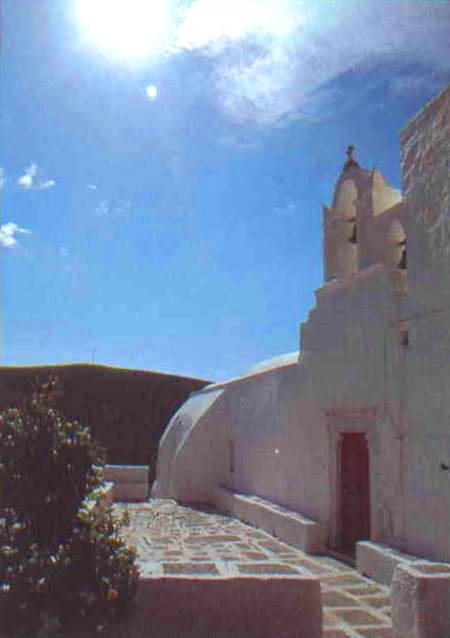
Chora (or Amorgos) is the capital of the island of Amorgos. Its small white washed houses with pots of basil on the windows, small white yards covered in vines, seeing to narrow stone streets create a typical cycladitic atmosphere. Chora is a small city that "hypernates" during winder and sees most of its action during summer when it gets transformed into a vibrant touristic center. The most characteristic landmark of Chora is the rock with the castle that poses over the city. On top of the hill, overlooking the romantic arches and narrow streets of Chora, there are a few, abandoned now, typical cycladic windmills. In the middle of the city there is the central square named Loza after the latin word for market loggia, the Gavras' mansion, now an arcaelogical museum, and all over the place a number of postbyzantine churches. There is also the tiny churche of Agios Fanourios, the smallest church in the world.
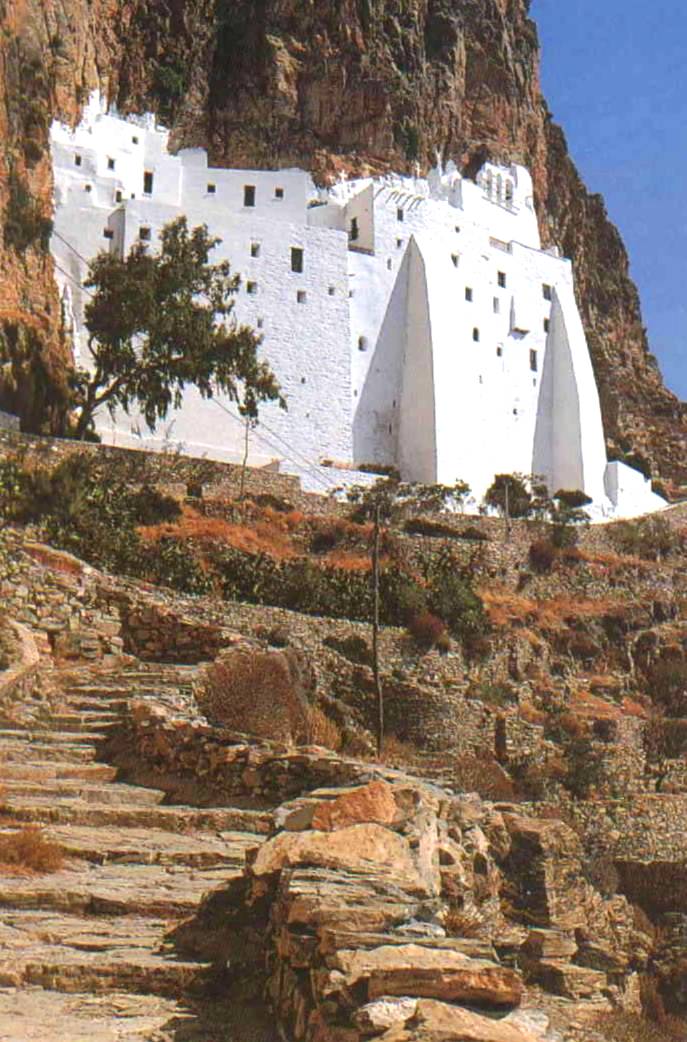
South of Chora there is the churche of St. George Varsamitis, a sacret place with an old spring of holy water (!). There used to be a water oracle as well. But probably the most renounced place in Amorgos is north west of Chora, the monastery of Chozoviotissa. It is a beautiful white stracture built on the side of a vertical cliff overlooking the "big blue" and it is one of the most photographed places in Greece. The foundation of the manastery in the 9th century AD by the Byzantine Emperor Alexios Komninos is attributed to a miracle. People say that one night a light appeared in the dark sea. As it was approaching the shore the locals that had gathered to see what was going on managed to destinguish a boat approaching. Initially the got alarmed as they thought it was a pirate boat since pirate attacks were very common those days. That is the reason why most of the old island vilages are built high up in the mountains. After a while, and when the boat reached the shore and as there was no one to be seen coming out of the boat the locals approached causiusly. Inside, right next to a flame there was the miraculous icon of Our Lady Chozoviotissa, painted by apostle Lucas. It is named like that because it was originally send in Greece by a woman from Chozovo in Minor Asia. The locals attempted to built a churce in honour of Virgin Mary in that shore but in some mysterious way all work would collapse every night. In desperation a priest kneeled on the sand to pray and somehow he saw a nail on the cliff that a builder was using to hang his bag from.
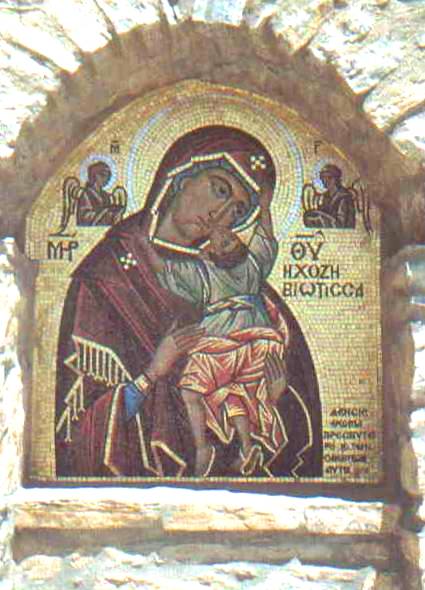 He thought it was a symbolic event and he directed the building of the church on the side of the cliff which it is said to be the oldest part of the monastery. People say that the original nail stayed in place for 900 years until 1956 when the monastery was about to be demolished. That was percieved as a bad sign and fortunately the monastery was saved. The legend says that the boat carring the icon is kept in a secret cell somewhere in the monastery which can be tottaly isolated when the monks move its portable wooden stairs. Near the entrance there are two icons of Virgin Mary: one is the famous Chozoviotissa icon and the other one that is known as the "Mistress" or the "Black-eyed Virgin". The very beach where the icon was found is the beach of Santa Anna with sand and thin pebbles, one of the best places for swimming on the island. For those with a boat near Santa Anna beach are the rocks of Small and Big Biocastro where one can enjoy swimming and sunbathing in private.
|
| The rest of the island |
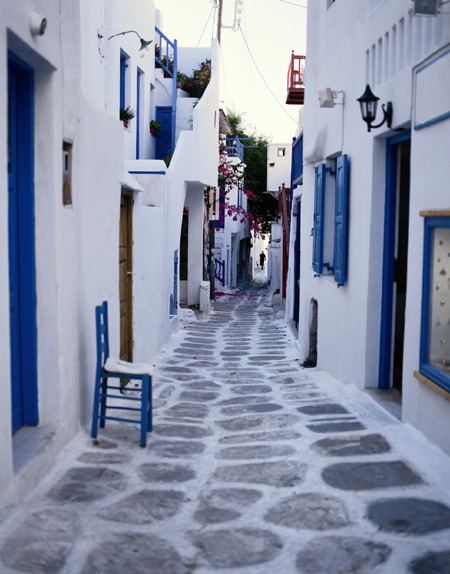
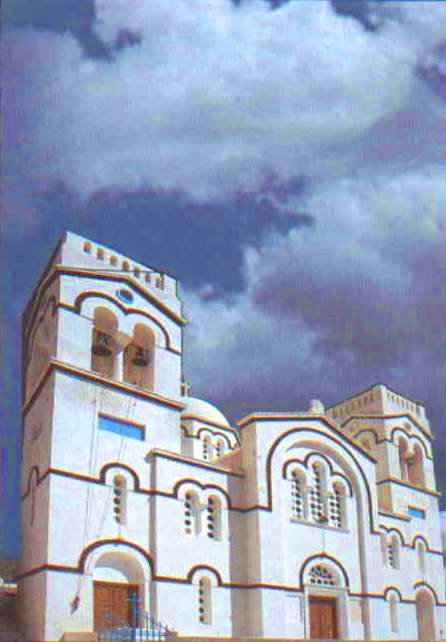
Aegiali, 17 km. north of Chora, is the second port of Amorgos after Katapola with lots of traffic. It has 430 residents who live in the three white picturesque villages of Aegiali: Lagada, Tholaria and Potamos. These villages are so beautiful that someone wrote that going to Amorgos without visiting Lagada and Tholaria is like going to Athens without visiting the Acropolis. In Tholaria, where not only houses are painted white but very often the streets themselfs, women use to paint flowers on the stones of the streets with asbestus. Among the many churches and monasteries of the area noatble are the churche of Holy Trinity built on the rock with a view to the Aegiali bay and the church of St. John the Theologian built on top of an ancient temple.
Katapola is the main port of the island with 380 residents. It consists from the villages of Katapola, Rachidi and Xilokeratidi. Nearby there are the ruins of ancient Minoa where one can see the remants of the stadium, gymnasium and the temple of Dionisos -which has excellent view. In 2.000 BC, when the Minoic civilization was at its peak and the Cycladic had long decayed, Minoa was the summer resort of King Minoas of Crete. In Katapola one can also find the interesting churche of Our Lady Katapoliani which was built on the site of the temple of Apollo.
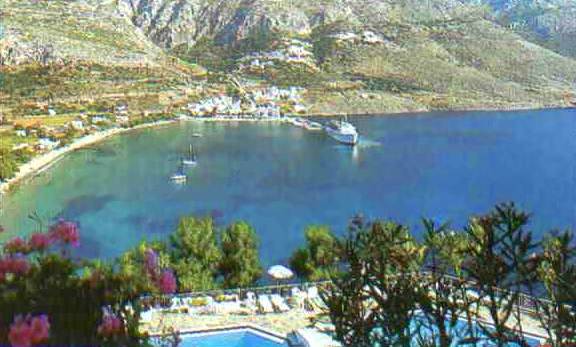
Arkesini is another village which is considered to be one of the most beautiful of the island. It has traditional houses, narrow streets and areas with olive trees and other fruit trees.
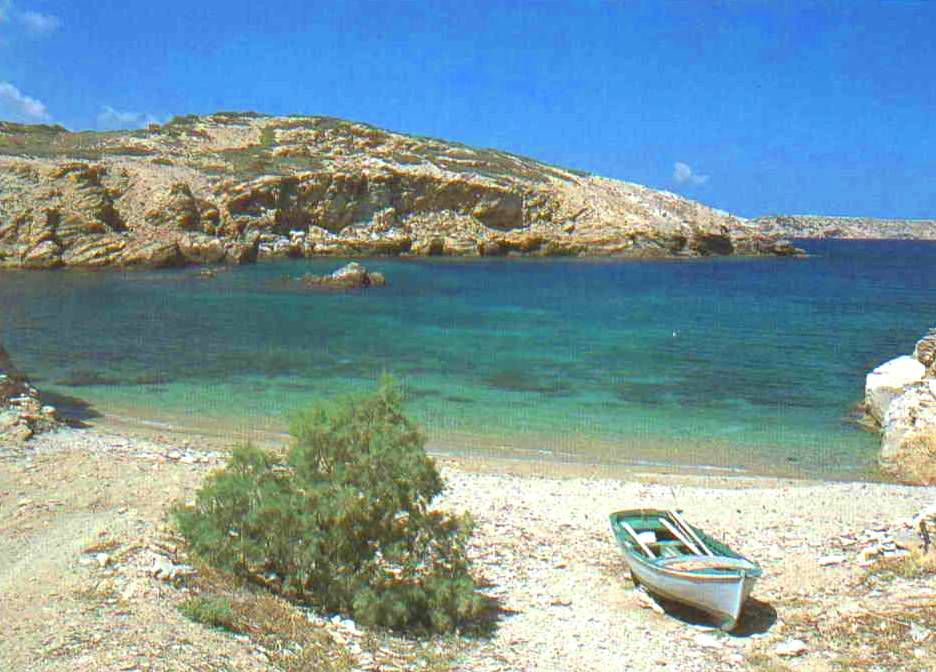
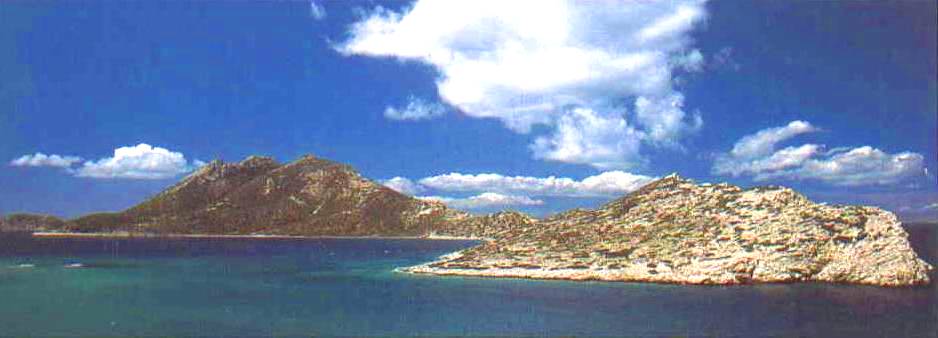
Around Amorgos there is a number of small desert islands where one can visit by boat for some privacy. South west there is Anidros, close to Aegiali the islet of Nikouria with the church of Panagia Nikouriani and remants of an ancient coin factory, the islet of Grabonisi, the islet of Gramboussa with a beautiful beach, Psalida and Petalida.
|
|
|
|