


Logo 1994-Present |
101st Season First Game Played: April 25, 1901 |
Manager: Phil Garner 2000- Stadium: Comerica Park 2000- Address: 2100 Woodward Avenue Detroit, MI 48201 Phone: (313) 471-2000 Web: http://www.tigers.mlb.com Nickname: Named after the black & orange striped socks they wore in their early years Logo: A Tiger on the prowl crawling out of an old English style blue D. Colors: Dark Blue, Orange, and White Managerial History: George Stallings 1901 Frank Dwyer 1902 Ed Barrow 1903-1904 Bobby Lowe 1904 Hugh Jennings 1907-1920 Ty Cobb 1921-1926 George Moriarty 1927-1928 Bucky Harris 1929-1933 Del Baker 1933 Mickey Cocherane 1934-1938 Del Baker 1938-1942 Steve O'Neill 1943-1948 Red Rolfe 1949-1952 Fred Hutchinson 1952-1954 Bucky Harris 1955-1956 Jack Tighe 1957-1958 Bill Norman 1958-1959 Jimmy Dykes 1959 Billy Hitchcock 1960 Joe Gordon 1960 Bob Scheffing 1961-1963 Chuck Dressen 1963-1966 Frank Staff 1966 Bob Swift 1966 Mayo Smith 1967-1970 Billy Martin 1971-1973 Joe Schultz 1973 Ralph Houk 1974-1978 Les Moss 1978 Dick Tracewski 1979 Sparkey Anderson 1979-1995 Buddy Bell 1996-1998 Larry Parish 1998-1999 Phil Garner 2000-Present Stadium History: Bennett Park 1901-1911 Tiger Stadium* 1912-1999 Comerica Park 2000-Present *-Known as Navin Field 1912-1937 Briggs Stadium 1938-1960 All-Star Games Hosted: (3) 1941, 1951, 1971 World Champions: (4) 1935, 1945, 1968, 1984 World Series: (9) 1907, 1908, 1909, 1934, 1935, 1940, 1945, 1968, 1984 Division Champions: (3) 1971, 1984, 1987 Wild Card: None Retired Numbers: (5) 2 Charlie Gehringer 2B 1924-1942 5 Hank Greenberg 1B 1930, 33-41, 45-46 6 Al Kaline OF 1953-1974 16 Hal Newhouser LHP 1939-1953 23 Willie Horton OF 1963-1977 42 Jackie Robinson (Retired by MLB) Hall of Famers: (20) Sparkey Anderson MGR 1979-1995 Earl Averill OF 1939-1940 Jim Bunning RHP 1955-1963 Ty Cobb OF 1905-1926 Mickey Cocherane C 1934-1937 Sam Crawford 1903-1917 Larry Doby OF 1959 Charlie Gehringer 2B 1924-1942 Hank Greenberg 1B 1930, 33-41, 45-46 Bucky Harris MGR 1929-1933, 1955 Harry Heilmann OF 1914-1929 Waite Hoyt RHP 1930-1931 Hugh Jennings 1B 1907-1909, 1912, 1918 Al Kaline OF 1953-1974 George Kell 3B 1946-1952 Heinie Manush OF 1923-1927 Eddie Matthews 1B 1967-1968 Hal Newhouser LHP 1939-1953 Al Simmons OF 1936 Sam Thompson OF 1906 All-Star Game MVP: None Manager of the Year: (2) 1984 Sparkey Anderson 1987 Sparkey Anderson Rookie of the Year: (3) 1953 Harvey Keunn SS 1976 Mark Fidrych RHP 1978 Lou Whitaker 2B Hank Aaron Award: None Cy Young: (3) 1968 Denny McLain RHP* 1969 Denny McLain RHP (Co-Winner) 1984 Willie Hernadez LHP* (Reliever) *-Also won MVP MVP: (9) 1911 Ty Cobb OF* 1934 Mickey Cocherane C 1935 Hank Greenberg 1B 1937 Charlie Gehringer 2B 1940 Hank Greenberg 1B 1944 Hal Newhouser LHP 1945 Hal Newhouser LHP 1968 Denny McLain RHP** 1984 Willie Hernandez LHP** *-First Award Winner **-Also Won Cy Young ALCS MVP: (1) 1984 Kirk Gibson OF World Series MVP: (2) 1968 Mickey Lolich LHP 1984 Alan Trammell SS No Hitters: (5) 7/4/1912 George Mullin 5/15/1952 Virgil Trucks 9/28/1952 Virgil Trucks 7/20/1958 Jim Bunning 4/7/1984 Jack Morris Best Season: 1984 (104-58) Worst Season: 1996 (53-109) Historical Moments: 1901: On April 24, 1901, the Tigers prepared to take to the field for their first official American League game. A standing room only crowd was anticipated at Bennett Park, but unpredictable weather postponed the opening by a day. The next day in front of 10,000 fans, the Tigers entered the ninth inning trailing Milwaukee, 13-4. A series of hits and miscues followed, moving the score to 13-12 with two runners on. With two out, Tiger Frank "Pop" Dillon faced reliever Bert Husting, and the lefthanded hitter rapped a two-run double to complete a 14-13 comeback win. The Tigers would go on to finish their inagural season in 3rd place with a 74-62 record. 1905: On August 30th Tyrus Raymond Cobb made his Major League debut with Tigers. Over the next 22 years he would be a fixture in the Tigers lineup setting many different records along the way and earning the reputation as the dirtiest player that ever lived. The Georgia Peach as he was known would sharpen his spikes before each game and slide feet up with the intent of drawing blood from opposing players. Cobb would also constantly get in fights with both teammates an opponent and would be the most hated player in baseball. 1907: With a .350 batting average Ty Cobb wins the first of 9 straight batting titles. The Tigers also see the emergence of two individuals, neither of them players, who would both play significant roles in turning the fortunes of the young Tigers. One was Frank Navin, who began as a bookkeeper with the franchise in 1902 before acquiring a full half interest ownership in the club and becoming team president. After Ban Johnson's retirement in 1927, Navin came to be regarded by many as the most powerful man in the American League. The other was Hughie Jennings, a keen judge of talent who would lead the club to three consecutive league championships as one of the most colorful managers in major league history. That same 1907 season, the Tigers won their first pennant, taking the American League by one and one-half games with a mark of 92-58. However, the Tigers would go on to be swept in 4 straight after tying the first game of the World Series against the Cubs. Among the disappointments is Ty Cobb who only hits .200 in the Series. 1908: Thanks to Ty Cobb taking his second straight batting title, along with winning the RBI crown the Tigers win 90 games and win their second straight pennant by only a half a game. In the World Series the Tigers face the Cubs for the second year in a row. However like the previous year the Tigers don't put up much of a fight winning only 1 game and being shut out in the final two. Cobb does put up better numbers with a .368 average including 4 hits in the Tigers lone Game 3 win. 1909: Ty Cobb leads the way again capturing the Triple Crown, and leading the Tigers to a 98-54 record for the 3rd straight Al Pennant. In the World Series the Tigers face the Pittsburgh Pirates who are lead by Honus Wagner, who is as close to a polar opposite to Cobb as they come. This would set the stage for one of the best early World Series. The Pirates take game 1 thanks to a game saving catch by Tommy Leach. The Tigers would bounce back to take Game 2 in a game highlighted by Ty Cobb's steal of home. In Game 3 the Pirates led by Honus Wganer's 3 hits and RBI hold off the Tigers late rally to take a 2-1 series lead. The Tigers would even the series in Game 4 thanks to George Mullins shutout. However the Tigers would face the brink after Fred Clarke's 3-run Homer broke open a tie game in Game 5. The Tigers would bounce back once again to force the first Game 7 in World Series history. However it was not meant to be as the Bucs scored 8 runs and the Tigers walked the plank for the 3rd year in arow. 1910: In one of the strangest races for the batting title ever Ty Cobb battles Cleveland's Nap Lajoie to the final ay of the season. To add extra drama the Chalmer's Automobile Company promised a car to the winner. With the Tigers out of the Pennant race Cobb decides to sit out the final games of the season thinking his crown was safe at .385. However Lajoie benefited from the hatred of Cobb and reached base every time in a double header against the St. Louis Browns. However one of the hits was ruled an error and Cobb held on to the batting title by 1 thousandth of a point. However, Chalmer's gives both players a new car. 1911: There would be no doubt to the 1911 batting champion as Ty Cobb would bat a personal best .420 to win his 5th consecutive batting title. 1912: The Tigers begin play in their new stadium named after Frank Navin. The Stadium would change names, but would remain the home of the Tigers for the next 87 years. 1912: At a game in New York in May Ty Cobb receives his typical heckling but this time goes in the stands to attack a fan who referred to him as a "half-nigger". Cobb beats the fan relentlessly, and when he is finally pulled away it is learned that the fan has no hands as was virtually defenseless to Cobb's attack. In response the American League suspends Cobb indecently for his vicious attack. Cobb's Tiger teammates feeling he was in the right for being called such an insult decided to strike in protest of Cob's suspension. With the players all walking out in support of Cobb the team is forced to field a bunch of players from a sandlot. The sandlot players lose to the Philadelphia Athletics 24-2 and the Tigers players are ordered back and suspended by the American League. Cobb would eventually return after a week and would go on to win his 6th straight batting title with a .410 average. 1915: Despite Ty Cobb winning the last of his 9 straight batting titles, and 100 wins the Tigers could not win the AL Pennant and come up a disappointing 2 and half games short of the eventual World Champion Boston Red Sox. 1917-1919: After missing out on the 1916-batting crown with a .371 average Ty Cobb bounces back to win the next 3 to give him a record 12 overall, and 12 in 13 years. Despite this the Tigers fail to even come close in their pursuit for the AL Championship. 1921: In his first year as player-manager Ty Cobb hits an impressive .389, but loses the batting crown to teammate Harry Heilmann. However, it does not translate into wins and the Tigers finish in 6th with a 71-82 record. 1922: With a .401 batting average Ty Cobb hits over .400 for the 3rd and final time in his career. However, he dose not come close to winning the batting title as St. Louis Browns George Sisler hits an incredible .420. 1926: The Ty Cobb era comes to an end after 22 years in Detroit when The Georgia Peach is sold to the Philadelphia Athletics. Cobb would go on to retire after only 2 season in Philadelphia. He would end his career with 4,191 hits a record that stood for almost 60 years. He would also end his career with a lifetime batting average of .367 which may never be topped. 1934: Prior to the start of the season the Tigers attempted to acquire Babe Ruth from the Yankees to fill both the need for another hitter, and a new manager. However Frank Navin was unable to pull off the deal and was forced to look elsewhere. Navin would end up purchasing Catcher Mickey Cocherane from the Philadelphia Athletics, and named him catcher-manager. The move ended up working out as Cocherane claimed the AL MVP, and led the Tigers to 101-53 record, which was good enough to win the AL pennant by 7 games over the Yankees. However the highlight of the season may have come from Schoolboy Rowe who set a Major League record by winning 16 straight decisions. 1934: In the World Series the Tigers faced a St. Louis Cardinals that was known as the Gas House Gang, for their rough style of play. After splitting the first 4 games the Tigers won Game 5 on Charlie Gehringer's HR, and held a 3-2 series lead with the final 2 games in Detroit. However the Tigers would lose Game 6 on Paul Dean's sixth inning single, and would lose Game 7 in an 11-0 rout. During the Game 7 rout a brawl erupted after the Cards Joe Medwick slid hard into third. After the dust settled Medwick had to be removed form the game for his own safety after Tiger fans started throwing bottles, and other debris at him. The loss marked the 4th World Series disappointment for Detroit Tigers. 1935: With Hank Greenberg capturing the MVP with a league high 36 HR, and 170 RBI the Tigers won their 2nd Consecutive AL Pennant. In the World Series the Tigers faced the Chicago Cubs who crushed the Tigers championship hopes twice before. In Game 1 it looked as if it was well on the way of happening again as the Cubs shut out the Tigers 3-0 in Detroit. The Tigers would bounce back right away when the first 4 Tigers scored in Game 2 on the way to an 8-3 series evening win. In Game 3 the Tigers would win in extra Innings after blowing a 2-run lead in the 9th. The Tigers would win Game 4 to take a 3-1 series lead, but after losing Game 5 they found themselves in the same position as the year before up 3-2 with the final 2 at home. In Game 6 the score would be tied heading to the bottom half of the 9th. Mickey Cocherane would lead off with a single, a grounder would move him to 2nd, with Goose Goslin stepping up to the plate. Goslin would promptly deliver a single and Cocherane would score the Series winning run to capture the Detroit Tigers their first ever World Championship. 1935: The joy of the Tigers championship would be short lived as club president Frank Navin succumbed to a heart ailment on November 13 just a little over a month after the end of the World Series. Walter Briggs Sr. who was already half owner of the club would go on to take over the club's presidency. 1940: After losing out the Yankees for the Al Pennant 4 years in a row The Tigers find themselves in a tight race down to the finish with the Yankees, and Indians. Led by Hank Greenberg who won his second MVP BoBo Newsome who won 21 games on the mound the Tigers win the Pennant by 1 game. In the World Series the Tigers would face the Cincinnati Reds. The Tigers would capture Game 5 to take a 3-2 series lead. The Game 5 win was also BoBo Newsome's second series win. However, after the Tigers lost Game 6 they would call on Newsome top pitch Game 7 on just 1-day rest. Through the first 6 innings Newsome kept the Reds off the board, but back top back 7th Inning doubles gave the Reds a 2-1 lead that would hold up, as the Tigers lost the World Series for the 5th time in 6 trips. 1941: Anticipating the United States getting involved in World War II Hank Greenberg enlist in May after only 19 games in the 1941 season. The Tigers would slip to 5th place with a record of 75-79. All was not lost for Detroit that season as Briggs Stadium played host to the 1941 All-Star Game. The Game would be remembered as one of the best ever as Ted Williams' walk off HR won the game 7-5 for the American League. 1944: With AL MVP Hal Newhouser winning 29 games and Dizzy Trout winning the tigers climbed back into the Pennant picture. However, the rest of the team could provide little help, and the team won only 88 games and missed out on the Pennant by 1 game as the St. Louis Browns went on to their only World Series. 1945: Again the Tigers find themselves in a tight pennant race as Hal Newhouser wins 25 games with a 1.81 ERA to claim his 2nd straight MVP. The MVP win for Newhouser makes him the first pitcher to win back-to-back MVP, and only the 2nd to win 2. (No one has accomplished either feat since). As for the pennant hopes the Tigers would get a boost when Hank Greenberg returned to play the in the 2nd half after Hitler was defeated. Then fate would interven to help Detroit, as Washington who led the AL were forced to sit and watch the final week of the season. Prior to the season Washington Nats ownership decided to end the season a week early to ready their stadium for football. The move would backfire as the Tigers were able to surged ahead and claim their 7th AL Pennant. 1945: In the World Series the Tigers would face a familiar opponent in the Chicago Cubs. The Tigers would get off on the wrong foot has Hal Newhouser was shelled in Game 1 as the Cubs took the first game 9-0. Fortunately, the Tigers would bounce back to win Game 2 thanks to a 3-run Homer from Hank Greenberg. After the Cubs won Game 3 the Tigers would bounce back to claim both Game 4 and 5 to take a 3-2 series lead. However a wild Game 6 would see the Cubs win the Game in the 9th on Stan Hack's line double to force a 7th and deciding game. Game 7 would not even be close as the Tigers jumped on Cubs pitcher Hank Doorway to score 5 runs without the durable Cubs pitcher recording an out in the first. Newhouser would go on to pitch a complete game as the Tigers won 9-3 to claim their second World Championship. 1950: With the acquisition of future Hall-of-Famer George Kell and an influx of young talent the Tigers lead the American League for 119 days. However, the powerful New York Yankees would over take them and win the pennant by 3 games. 1955: At the age of 20 Al Kaline playing in just his second full season wins the AL Batting Title with a .340 mark. This would make Kaline the youngest player ever to capture the batting crown. 1960: 4 years after the Briggs family sold t ball cub to a group of radio and television executives the Tigers are taken over solely by one of those executives John Fetzer. One of Fetzer's first moves was to renovate and rename the Stadium to the more familiar Tiger Stadium.. 1961: With Norm Cash winning the batting title with a .361 batting average, the Tigers win 101 games. However, the Tigers finish 8 games behind one of the greatest teams in baseball history. 1967: With Earl Wilson leading the way with 22 wins, and 4 Tigers slugging 20 or more Home Runs the Tigers find themselves in the thick of a 5-team race for the AL pennant. The Tigers would stay in the race until the final day of the season, but would come up 1 game short as the Red Sox claimed the Pennant. 1968: Their would be no denying the Tigers in 1968 as the Tigers won 103 games and claimed the AL Pennant by 12 games over the Orioles. However, that was not the story of the Tigers season. Denny McLain would have a career year winning 31 games and claiming both the AL Cy Young, and MVP. The 31 wins by McLain will likely go down as the last player ever to win 30 games in a single season. 1968 would also mark the final time that the AL Pennant was decided in the regular season, in future season the leagues would be broken up into 2 divisions and a round of playoff would be held before the World Series. 1968: In the World Series the Tigers would face the St. Louis Cardinals who were trying to claim their 2nd Consecutive World Championship. Game 1 would see Denny McLain face the Cards Bob Gibson who himself won both the Cy Young and MVP in 1968 with a record low ERA of 1.12. However Gibson would grab all the headlines shutting out the Tigers, while striking out a World Series single game record 17. The Tigers would bounce back in Game 2 as Mickey Lolich stared on the mound with a complete game and the plate with a HR. After the Cards won Game 3 on Tim McCarver's 3-run Homer, Bob Gibson shut down the Tigers again to give the Cards a 3-1 series lead after 4 games. 1968: In Game 5 things would look bleak for the Tigers as the Cards took an early 3-0 lead. However, Lolich would not allow another run, and the Tigers would rally and would take the lead on Al Kaline's 7th Inning Bases Loaded Single. Despite the win the Tigers were still backed against the wall trailing 3-2 and heading to St. Louis. The Tigers would goon to win Game 6 thanks to 10 runs in the 3rd, as Denny McLain's won his first Series game after 2 defeats. Despite forcing a 7th and deciding game the Tigers still faced an uphill battle as the Cards sent Bob Gibson to the hill for his 8th straight Series win. To counter Gibson the Tigers sent Mickey Lolich to the mound who himself was seeking his 3rd win of the series. The game would be scoreless into the 7th inning when Jim Northrup lined a ball over the head of the Cardinals Curt Flood to give the Tigers a 3-0 lead. The 3 runs would be enough, as Lolich would allow just 1 and the Tigers went on to claim their 3rd World Championship. 1969: Despite Denny McLain winning 24 games, and earning a split of the Cy Young, the Tigers would not be a factor for the Eastern Division Title, finishing a distant 19 games behind the first place Orioles. 1970: Denny McLain who won 55 games in 1968 and 1969 would experience a sudden and embarrassing fall from grace staring in 1970. The season started with McLain being suspended for 2 months for associating with known gamblers, and the mob. McLain would finish 1970 with a 3-5 record and would be traded to Washington following the season. McLain's career would end after 2 more additional poor season. After baseball McLain's life would take an even harder fall, as he would spend the next 30 years in and out of prison. 1971: For the 3rd and final time Tiger Stadium hosted the All-Star Game. The Game would be forever remember for Reggie Jackson of the A's majestic HR off the RF Light tower, as the AL broke a 8 game All Star Losing streak with a 6-4 win. The American League will not win another All-Star Game for 12 years. 1972: With Billy Martin leading the way as manager the Tigers finish the season with a record of 86-70, a half game ahead of the 2nd place Red Sox. The Tigers would benefit from a strike at the start of the season, which gave the Tigers 1 more game, then the Red Sox that the Tigers won and were able to claim the division with. In subsequent years division champs would have to at least win by 1 game because of the controversy caused by this finish. 1972: In the ALCS the Tigers would face the Oakland Athletics. The A's would take the first two games in Oakland to place the Tigers on the brink with series heading to Detroit. After the Tigers won Game 3 they faced the end of their season trailing 3-1 in the 10th inning of Game 4. However a walk, wild pitch, and an error set Jim Northrup up with runners on 2nd and 3rd with a run in. Northrup would deliver with a single to score the tying and winning runs to force a 5th and deciding game. However Blue Moon Odom would hold the Tigers to just 1 run in Game 5 as the A's went on to the World Series with a 2-1 win. 1974: On September 24th Al Kaline doubled down the RF line at Tiger Stadium off the Orioles' Dave McNally to collect his 3,000th career hit. In what would end up being Kaline's final season, the Tigers great would end up collecting 7 more hits to bring his career total to 3,007. 1976: With the Tigers wallowing at the bottom of the AL East one player would emerge as a fan favorite for not only Tigers fans, but also all of baseball. 22-year-old rookie Mark Fidrych who earned the nickname of "The Bird" would thrill fans with his antics on the mound and the way he dominated AL batters. Fidrych would often fidget with the dirt on the mound and talk to 6the baseball before delivering a pitch would be the player everyone would come out to see in 1976. The Tigers would sell out every game he pitched, and when he went on the road they would notice larger then normal crowds there just to watch him. Fidrych would become the top story of the first half of the season and even started in the All-Star Game. At season's end Fidrych would capture the AL ERA title, and win 19 games on the way to the Rookie of the Year. 1977: In Spring Training Mark Fidrych would injure his knee and it would cost him to miss the 6 weeks of the season. The Bird would come back strong winning 6, and he would be named to Al-Star Team. However, during a game in Baltimore on the 4th of July Fidrych would get shelled, and would begin noticing a problem with his arm. He would make just one start after the All-Star Break before shutting it down for the rest of the season. Little did any one know at the time "The Bird" would never be the same again just winning another 4 games in 3 years before being released by the Tigers in 1980. Fidrych would have his career end quietly in the minor leagues just a few years later. One interesting side note came when a rookie came up to take a start for Fidrych. A disappointed Tiger Stadium crowd, who wanted to see the Bird pitch, would boo the rookie. The Rookie was Jack Morris who would go on to win more games in the 1980's then any other pitcher. 1977: With Tigers well out of the race the Tigers called up two rookie middle infielders to play in September. The two rookies Alan Trammell, and Lou Whitaker would go on to lay much of the next 18 years side by side on the Tigers infield playing a total of 1,918 games together. 1979: Midway through the season the Tigers would hire Sparky Anderson to lead the young Tigers into battle on the field. Anderson who was recently fired by the Reds made name for himself as the manger of "The Big Red Machine" which dominated the National League for much of the 70's winning 2 World Series and 4 Pennants. 1983:The Tigers youth finally begins to gel as the Tigers manage to get back in the Pennant Race for the first time in 10 years. However, the Orioles end up pulling away and the Tigers finish 6 games back despite winning 92 games. 1984: The Tigers would get off to a flying start and would not look back. They would win the first 9 games highlighted by a No-Hitter by Jack Morris. Even after losing the 10th game of the season the Tigers would not slow down going to win 35 of their first 40 games for the best 40 game record in baseball history. The Tigers would go on to win a club record 104 games winning the division by 15 games over the second place Toronto Blue Jays. The Tigers dominance would carry over into the ALCS as they swept an over matched Royals team in 3 straight. 1984: In the World Series the Tigers would face the upstart San Diego Padres who know one expected to make it this far. The Tigers would fall behind early in Game 1, but Larry Herndon delivered a 2-run Homer, and Jack Morris would settle down as the Tigers took the opener 3-2. The Tigers would be stunned in Game2 by Kurt Bevaqua's 3-run Homer which helped the Pads even the series at a game apiece heading to Detroit for the next 3 games. The Tigers would benefit from 11 walks to win Game 3 by a 5-2 score. The Tigers would then take a commanding 3-1 lead with help of a pair of 2-run Homers by Alan Trammel in Game 4. In Game 5 the Tigers would take an early lead thanks to a Homer by Kirk Gibson. However the Padres would battle back to tie the game. The Tigers would retake the lead only to have the Pads pull to with in one with the game heading into the bottom of the 8th. With 2 on and 2 outs the Pads decided not walk Kirk Gibson. Gibson would promptly deliver a majestic HR into the upper deck and right to slam the door shut on the Padres' hopes. The Tigers 4th World Championship would also give Sparky Anderson the distinction of being the first Manager to lead a team to win World Championship in both leagues. 1985: At the age of 38 Darrell Evans would hit 40 HR, and would become the oldest player to ever win a HR title. Despite Evans HR the Tigers could not repeat the magic of the year before and would manage to win only 84 games, and finished in 3rd Place 15 games behind the 1st Place Toronto Blue Jays. 1987: The Tigers would struggle earl getting off to a11-19 start, but the Tigers would get back into the race in the second half and would find themselves in a battle with Blue Jays for the Division Title until the final week of the season. All hope looked lost for the Tigers when they lost a series in Toronto with a week to go to fall 4 games out of 1st. However the Blue Jays would lose 4 straight and would enter the final series of the season with a 1 game lead over the Tigers with 3 games in Detroit. The Tigers took the first two, 4-3 on Friday and 3-2 in 12 innings the next day. With a one-game lead, Frank Tanana out-dueled the Jays' Jimmy Key on Sunday as Larry Herndon's solo homer proved the only scoring in a 1-0 triumph. 1987: In the ALCS the Tigers would face the Minnesota Twins who won only 85 games to win a weak Western Division. However the Twins had a tremendous home field advantage, and with first 2 games in the Metrodome they would take full advantage, and the Tigers were in the hole 2-0 after the first two games. In Game 3 the Tigers saw a 5-0 lead wilt away, and entered the 9th trailing 6-5. However Pat Sheridan delivered a dramatic walk of Homer and the Tigers showed life. Unfortunately for the Tigers the life would only be temporary as the Twins won the next 2 games in Detroit to complete the upset and advance to the World Series. 1988: Despite the loss of Kirk Gibson to free agency the Tigers find themselves in thick of the race until the final week of the season once again. However, the Tigers could not repeat the final week magic, and wound up in 2nd just 1 game behind the first place Boston Red Sox. 1989: After being one of the most consistent teams in the 80's the Tigers stun their fans and al of baseball by struggling early and falling into the Eastern Division Cellar. The Tigers would not recover losing a stunning 103 games led by the disappointing year of Jack Morris who had a career worst record of 6-14. 1990: Cecil Fielder who was considered a bust in Toronto would return to the majors with Tigers after a brief exile in Japan. Fielder would go on to win the HR and RBI crowns. Fielder's 51 Homers also marked the first time a player reached the 50 HR mark in 13 years. The Tigers would not fair too well though finishing in 3rd place with a 79-83 record. 1991: With Cecil Fielder repeating as HR and RBI champion the Tigers find themselves in the race for the division title until the end of the season. However, the Tigers would fade late, and would wind up in a tie for 2nd 7 games behind the 1st place Blue Jays. 1995: After 16 and half season at the helm Sparky Anderson stepped down as manager of the Detroit Tigers. Although the early year years of his Detroit tenure are marked with success the Tigers manage to make it into the World Series just once. 1996: As the players that led the Tigers for most of the last 15 years retired, management was unable to find suitable replacements. This would leave the Tigers with a bad team in a crumbling ballpark. The Tigers entered the season with Buddy Bell at the helm and started losing early and often. By midseason the Tigers were well on their way to 100 loses and decided to deal Cecil Fielder to the Yankees. In the deal the Tigers were unable to get anything of value and fell even more eventually losing a club record 109 games. 1999: After 87 years of baseball at Tigers Stadium's famous location on Michigan and Trummbull Avenues the Tigers played their last game on September 27th. With a sellout crowd of 43,356 fans the Tigers introduced 63 of their greatest players in an on field ceremony, which left no dry eyes in the house. The Tigers would go on to win the 6,783rd and final game at the old stadium 8-2 over the Royals, with Catcher Robert Fick hitting the final HR in the 8th inning of the roof in RF. 2000: On April 11th a sold out crowd braved 34-degree temperatures to see the first game at the new Comerica Park. The Tigers would go on to win that first game 5-2 over the Seattle Mariners. The Tigers would struggle early in their new stadium as they got used to the cavernous OF. One move that backfired right away was the acquisition of Juan Gonzales who never got used to playing in the pitcher friendly stadium and would walk away at season's end. To acquire Gonzales the Tigers dealt away 3 of their top prospects and would eventually be left with nothing to show. Despite the failure of Gonzales the Tigers would catch fire in the second half ands climb into the race for the wild Card thanks to Todd Jones who would take home the Fireman award with 42 saves. However, the Tigers would fade in September, and eventual finish with a disappointing 79-83 record. Odds and Ends: Mascot: Paws On The Air: Television: WKBD (Channel 50), Fox Sports Detroit Radio: WXYT 1270 AM Broadcasters: Frank Beckman, Kirk Gibson, Ray Lane, Josh Lewen, Tom Paciorek- TV Dan Dickerson, Ernie Harwell*, Jim Price- Radio *-Ford C. Frick Winner, memebr of teh boradcasters wing of teh Hall of Fame. Spring Training History: Detroit, MI 1901 Ypsilanti, MI 1902 Shreveport, LA 1903-1904 Augusta GA 1905-1907 Hot Springs, AR 1908 San Antonio, TX 1909-1910 Monroe, LA 1911-1912 Gulfport, MS 1913-1915 Waxahachie, TX 1916-1918 Macon, GA 1919-1920 San Antonio, TX 1921 Augusta, GA 1922-1926 San Antonio, TX 1927-1928 Phoenix, AZ 1929 Tampa, FL 1930 Sacramento, CA 1931 Palo Alto, CA 1932 San Antonio, TX 1933 Lakeland, FL 1934-1942 Evansville, IN 1943-1945 Lakeland, FL 1946-Present On The Farm: AAA: Toledo Mud Hens AA: Erie Seawolves A: Lakeland Tigers A: West Michigan Whitecaps A: Oneonta Tigers Rookie: Gulf Cost Tigers |
�MMI Tank Productions in association with Chris Creamer Properties Inc. Stats researched
by Frank Fleming, all information, statistics, logos, and team names are
property of Major League Baseball. This site is not affiliated with the
Detroit Tigers or the American League, Major League Baseball. This site
is maintained for research purposes only. All logos used on this page were
from Chris Creamer's Sports Logos Page. Page created on June 30, 2001. Last updated on June 30, 2001 at 11:50 pm ET. |

Tigers Alternate 2000-Present |
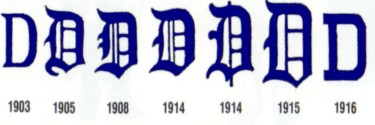
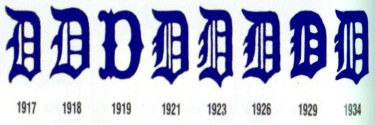
The Evolution of the famous Old English D. |

Logo 1940-1959 |
Logo 1960-1993 |
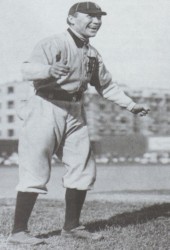
Hughie Jennings MGR 1907-1920 |
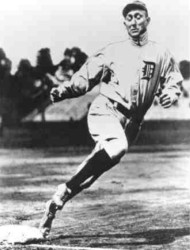
Ty Cobb 1905-1926 12 Batting Titles in 13 Years |
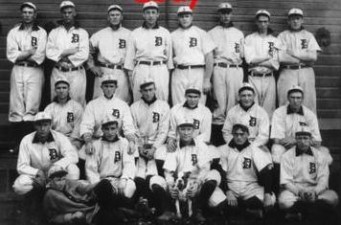
1907, 1908, & 1909 AL Champions Detroit Tigers |
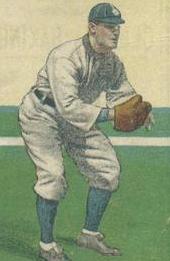
Sam Crawford 1903-1917 |
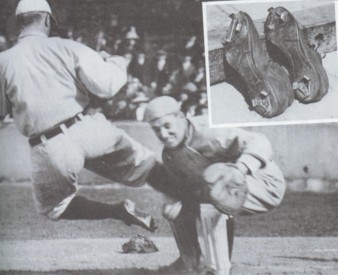
"The Georgia Peach" Ty Cobb making one of his infamous sharpened spike slides. |
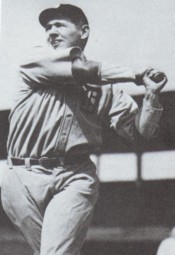
Harry Heilmann 1914-1929 |
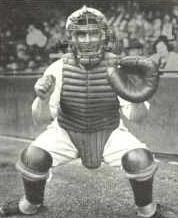
Mickey Cocherane 1934-1937 1934 AL MVP |
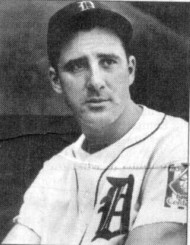
Hank Greenberg 1930, 1933-41, 1945-46 1935 & 1940 AL MVP |
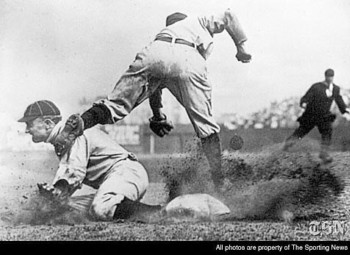
Tyrus Raymond Cobb 1905-1926 .367 Career Average, 4,191 Career Hits, 2,345 Career Runs, 892 Career SB |
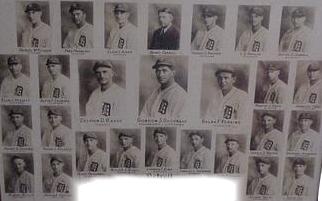
1935 World Champions Detroit Tigers |
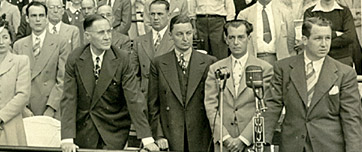
Detroit's Brain trust Frank Navin and Walter Briggs |
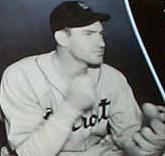
Schoolboy Rowe 1933-1942 |
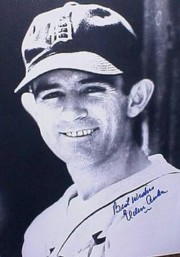
Elden Aucker 1933-1938 |
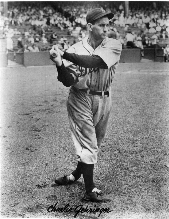
Charlie Gehringer 1924-1942 1937 AL MVP |
Dizzy Trout 1939-1952 |
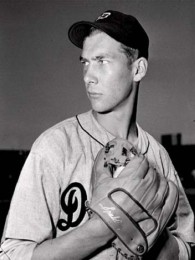
Hal Newhouser 1939-1953 1944 & 1945 AL MVP |
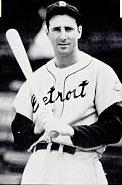
Hank Greenberg 1930, 1933-41, 1945-46 War Hero Returns for Pennant Drive in 45' |
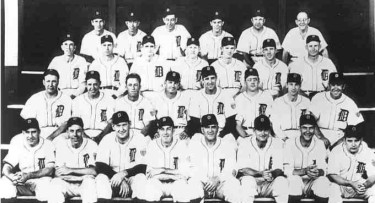
1945 World Champions Detroit Tigers |
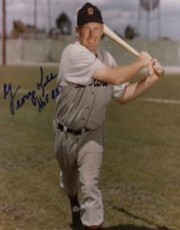
George Kell 1946-1952 |
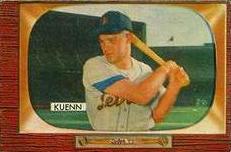
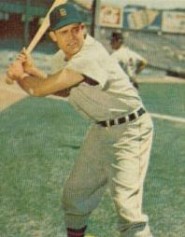
Ray Boone 1953-1958 |
Harvey Kuenn 1952-1959 |
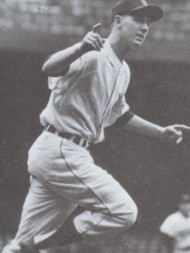
Al Kaline 1953-1974 1955 Youngest to win Batting Crown |
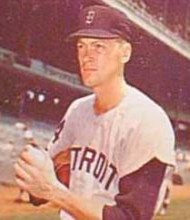
Jim Bunning 1955-1963 |
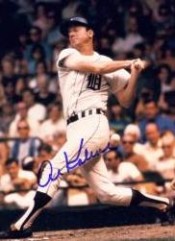
Al Kaline 1953-1974 |
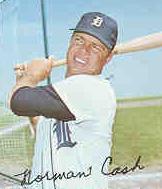
Norm Cash 1960-1974 |
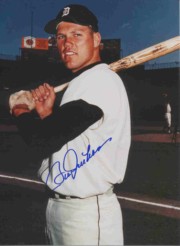
Bill Freehan 1961-1976 |
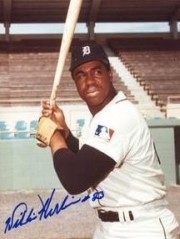
Willie Horton 1963-1977 |
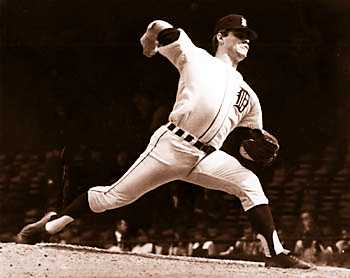
Denny McLain 1963-1970 1968: 31 Wins 1968 & 1969 Cy Young 1968 MVP |
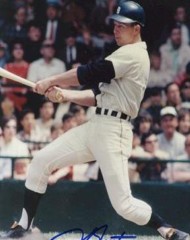
Jim Northrup 1964-1974 |
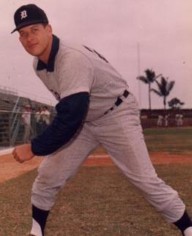
Mickey Lolich 1963-1975 1968:World Series MVP |
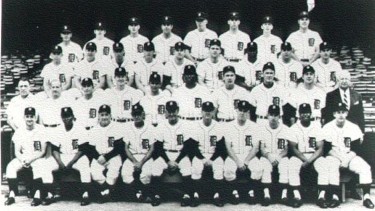
1968 World Champions Detroit Tigers |
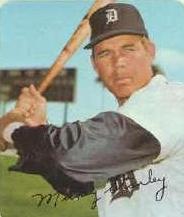
Mickey Stanley 1964-1978 |
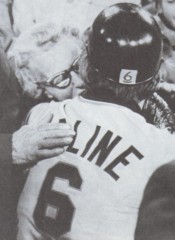
Al Kaline 1953-1974 1974: 3,000th Hit |
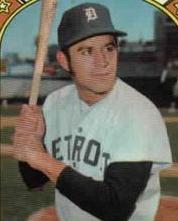
Aurelio Rodriguez 1971-1979 |
Ron LeFlore 1974-1979 |
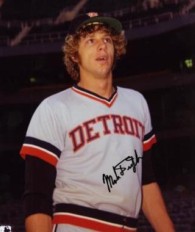
"The Bird" Mark Fidrych 1976-1980 1976 Rookie of the Year |
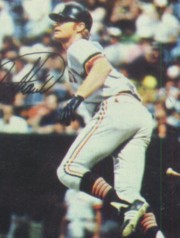
Rusty Staub 1976-1979 |
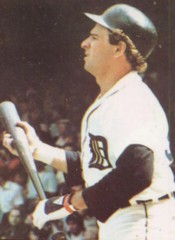
Steve Kemp 1977-1981 |
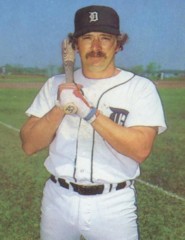
John Wockenfuss 1974-1983 |
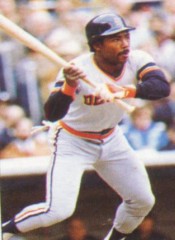
Chet Lemon 1982-1990 |
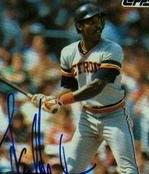
Larry Herndon 1982-1988 |
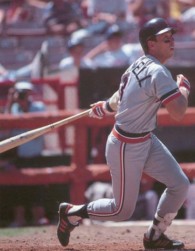
Alan Trammell 1977-1996 1984 World Series MVP |
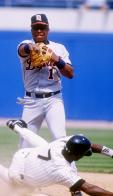
Lou Whitaker 1977-1995 |
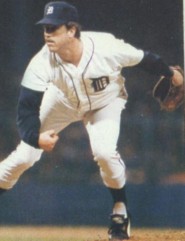
Milt Wilcox 1977-1985 |
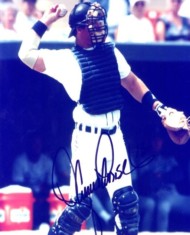
Lance Parrish 1977-1986 |
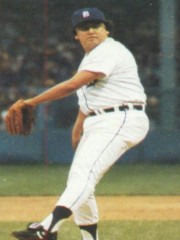
Aurelio Lopez 1979-1985 |
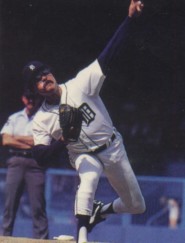
Willie Hernandez 1984-1989 1984 Cy Young & MVP |
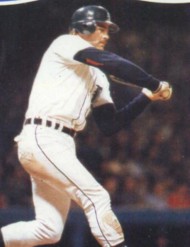
Kirk Gibson 1979-1987, 1993-1996 1984 ALCS MVP |
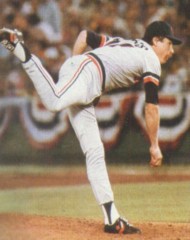
Jack Morris 1977-1990 |
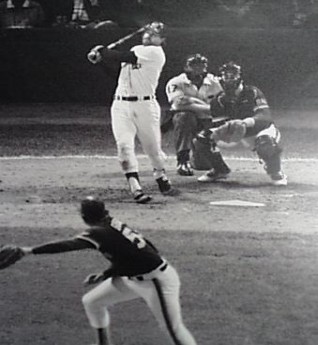
Kirk Gibson 1984 World Series Championship Clinching Homer |
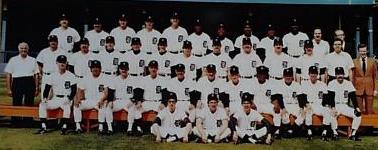
1984 World Champions Detroit Tigers |
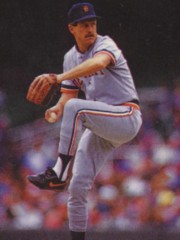
Dan Petry 1979-1987, 1990-1991 |
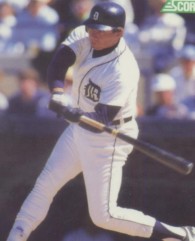
Darrell Evans 1984-1988 |
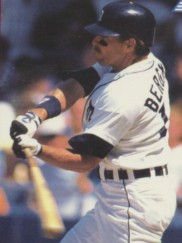
Dave Bergman 1984-1992 |
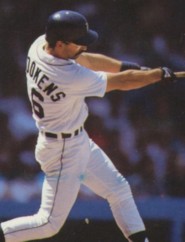
Tom Brookens 1979-1988 |
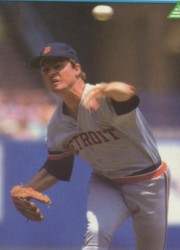
Frank Tanana 1985-1992 |
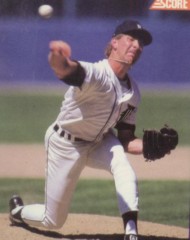
Mike Henneman 1987-1995 |
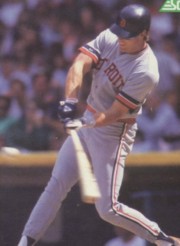
Pat Sheridan 1986-1989 |
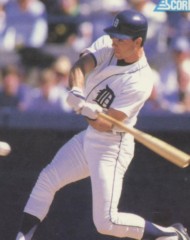
Matt Nokes 1986-1990 |
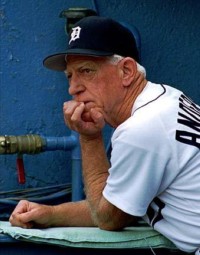
Sparky Anderson MGR 1979-1995 |
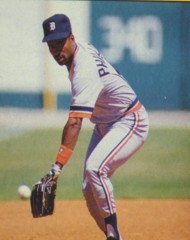
Tony Phillips 1990-1994 |
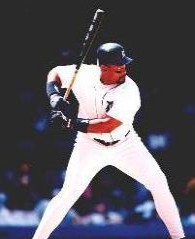
Cecil Fielder 1990-1996 |
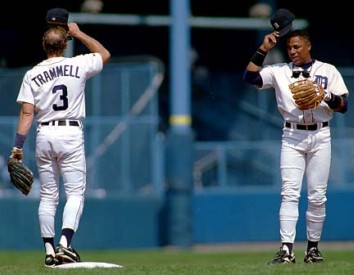
Alan Trammell and Lou Whitaker 1977-1995 1,918 Games Together |
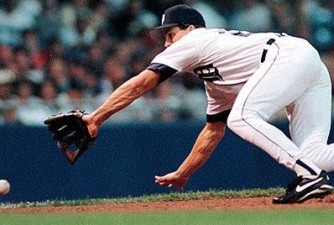
Travis Fryman 1990-1997 |
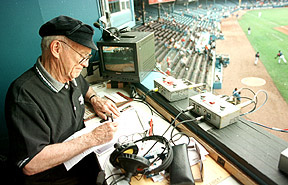
Voice of the Tigers Ernie Harwell 1960-1991, 1994-Present |
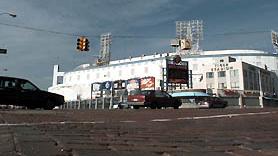
The Famous Corner of Michigan and Trumbull |
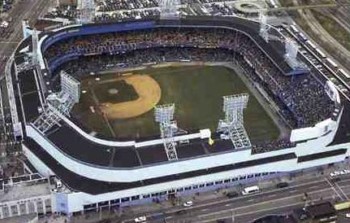
Tiger Stadium 1912-1999 |
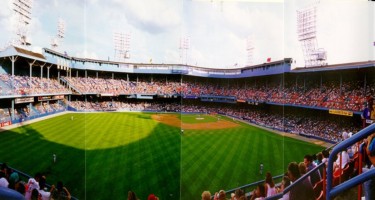
A Panormaic View of Tiger Stadium |
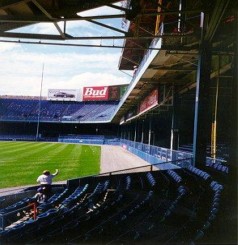
The Famous Tiger Stadium Overhang in RF |
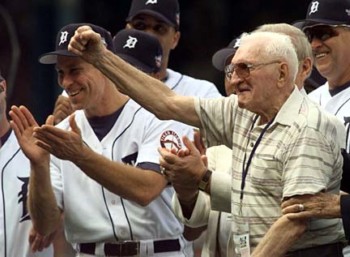
Tiger Greats say Goodbye to the old Ballpark on September 27, 1999 |
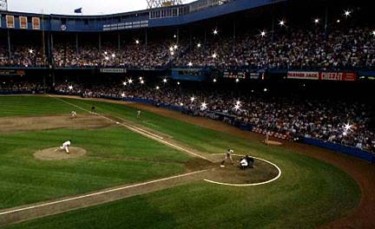
Todd Jones delivers the final pitch at Tiger Stadium on September 27, 1999 |
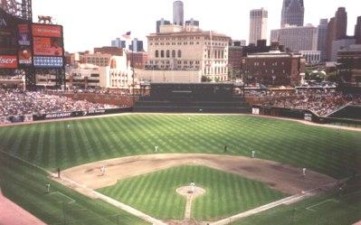
Comerica Park 2000-Present |
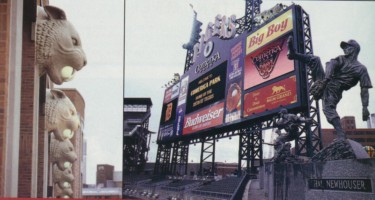
Statues of great players and Tigers on the facing, and on the scoreboard give Comerica
Park a unique look. |
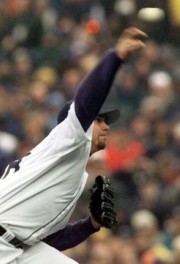
Brian Moehler 1996-Present Delivering the 1st Pitch at Comerica Park |
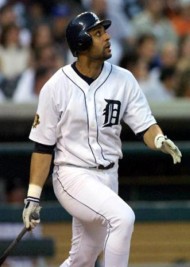
Tony Clark 1995-Present |
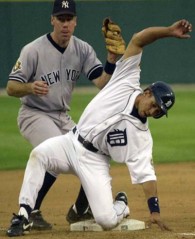
Damion Easley 1996-Present |
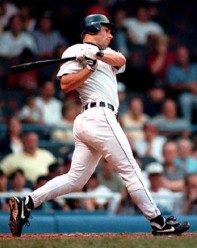
Bobby Higginson 1995-Present |
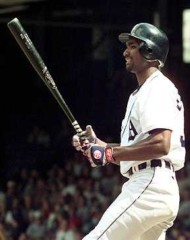
Juan Encarnacion 1997-Present |
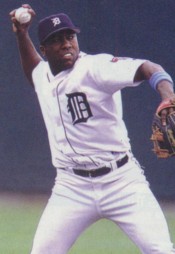
Deivi Cruz 1997-Present |
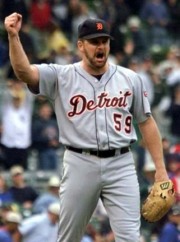
Todd Jones 1997-Present |
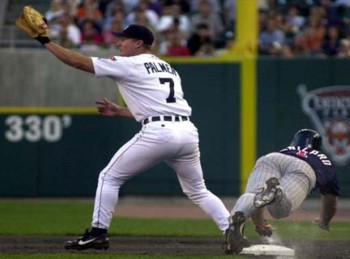
Dean Palmer 1999-Present |
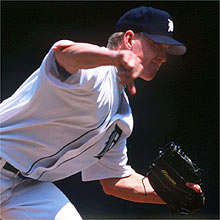
Jeff Weaver 1999-Present |
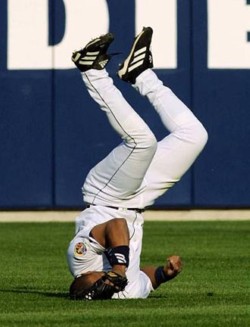
Roger Cede�o 2001-Present |