�MMII Tank Productions in association with Chris Creamer Properties Inc. Stats researched
by Frank Fleming, all information, statistics, logos, and team names are property of Major League Baseball. This site is not affiliated with the Cleveland Indians or the American League, Major League Baseball. This site is maintained for research purposes only. All logos used on this page were from Chris Creamer's Sports Logos Page. Page created on June 14, 2001. Last updated on April 2, 2002 at 4:25 pm ET. |
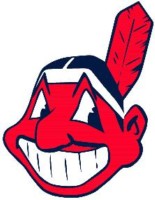
Logo 1979-Present |
101st Season First Game Played: April, 1901 |
Played As: Cleveland Blues 1901 Cleveland Bronchos 1902-1904 Cleveland Naps 1905-1914 Cleveland Indians 1915-Present Manager: Charlie Manuel 2000-Present Stadium: Jacobs Field 1994-Present Address: 2401 Ontario Street Cleveland, OH 44115 Phone: (216) 420-4200 Web: http://www.indians.mlb.com Nickname: The Cleveland Naps were named after their most prominent player, Nap Lajoie. He was sold to Philadelphia. The fans voted to rename club the Indians, after Cleveland's popular 19th century player, Louis Sockalexis, a Penobscot Indian, and the first Native American to play Major League baseball. Logo: Chief Wahoo is the name of the logos it is a red faced Indian with a large nose and eyes wide open. Above his eyes are raised eyebrows, and navy blue hair with a white had band holding a single red feather. The Indian is featuring a wide smile. Team Colors: Navy, Red, and White Managerial History: Jimmy McAleer 1901 Bill Armour 1902-1904 Nap Lajoie 1905-1909 Deacon McGuire 1909-1911 George Stovall 1911 Harry Davis 1912 Joe Birmingham 1912-1915 Lee Fohl 1915-1919 Tris Speaker 1919-1926 Jack McCallister 1927 Roger Peckinpaugh 1928-1933 Walter Johnson 1933-1935 Steve O'Neill 1935-1937 Ossie Vitt 1938-1940 Roger Peckinpaugh 1941 Lou Bodreau 1942-1950 Al Lopez 1951-1956 Major Farrell 1957 Bobby Bragan 1958 Joe Gordon 1958-1960 Jo-Jo White 1960 Jimmy Dykes 1960-1961 Mel Harder 1961 Mel McGaha 1962 Birdie Tebbets 1963-1966 George Strickland 1966 Joe Adcock 1967 Alvin Dark 1968-1971 John Lipon 1971 Ken Aspromonte 1972-1974 Frank Robinson 1975-1977 Jeff Torborg 1977-1979 Dave Garcia 1979-1982 Mike Ferraro 1983 Pat Corrales 1983-1987 Doc Edwards 1989-1989 John Hart 1989 John McNamara 1990-1991 Mike Hargrove 1991-1999 Charlie Manuel 2000-Present Stadium History: League Park 1901-1909 League Park II* 1910-1946 Cleveland Municipal Stadium 1932-1993 Jacobs Field 1994-Present *-Called Dunn Field 1921-1928 All Star Games Hosted: (5) 1935, 1954, 1963, 1981, 1997 World Champions: (2) 1920, 1948 World Series: (5) 1920, 1948, 1954, 1995, 1997 Division Champions: (6) 1995, 1996, 1997, 1998, 1999, 2001 Wild Card: None Retired Numbers: (7) 3 Earl Averill OF 1929-1939 5 Lou Boudreau SS 1938-1950 14 Larry Doby OF 1947-1955, 1958 18 Mel Harder RHP 1928-1947 19 Bob Feller RHP 1936-1941, 1945-1956 21 Bob Lemon RHP 1946-1958 42 Jackie Robinson (Retired by MLB) Hall of Famers: (25) Earl Averill OF 1929-1939 Lou Boudreau SS 1938-1950 Steve Carlton LHP 1987 Stan Coveleski RHP 1916-1924 Larry Doby OF 1947-1955, 1958 Bob Feller RHP 1936-1941, 1945-1956 Elmer Flick OF 1903-1910 Adie Joss RHP 1902-1910 Ralph Kiner OF 1955 Nap Lajoie 2B 1903-1914 Bob Lemon RHP 1946-1958 Al Lopez MGR 1951-1956 Hal Newhouser LHP 1954-1955 Phil Niekro RHP 1986-1987 Satchel Paige RHP 1948-1949 Gaylord Perry RHP 1972-1975 Sam Rice OF 1934 Frank Robinson DH 1974-1976 Joe Sewell SS 1920-1932, 1939 Tris Speaker OF 1916-1926 Bill Veck Owner 1947-1949 Hoyt Wilhelm RHP 1957-1958 Early Wynn RHP 1949-1957, 1963 Bill Veck Owner 1947-1949 Cy Young RHP 1909-1911 All Star Game MVP: (1) 1997 Sandy Alomar Jr. C Manager of the Year: None Rookie of the Year: (4) 1955 Herb Score LHP 1971 Chris Chambliss 1B 1980 Joe Charboneau OF 1990 Sandy Alomar Jr. C Fireman Award: (1) 1995 Jose Mesa RHP Hank Aaron Award: (1) 1999 Many Ramirez OF Cy Young: (1) 1972 Gaylord Perry RHP MVP: (3) 1926 George Burns 1B 1948 Lou Bodreau SS 1953 Al Rosen 3B ALCS MVP: (2) 1995 Orel Hershiser RHP 1997 Marquis Grissom OF World Series MVP: None Cycle Hitters: (6) 9/24/1903 Bill Bradley 8/17/1933 Earl Averill 7/12/1938 Odell Hale 6/4/1952 Larry Doby 7/2/1970 Tony Horton 4/22/1978 Andre Thornton No Hitters: (13) 9/18/1908 Dusty Rhoades 10/2/1908 Addie Joss (Perfect Game) 4/20/1910 Addie Joss 9/10/1919 Roy Caldwell 4/29/1931 Wes Ferrell 4/16/1940 Bob Feller* 4/30/1946 Bob Feller 7/10/1947 Don Black 6/30/1948 Bob Lemon 7/1/1951 Bob Feller 6/10/1966 Sonny Siebert 7/19/1974 Dick Bosman 5/30/1977 Dennis Eckersley 5/15/1981 Len Barker (Perfect Game) *-Opening Day Best Season: 1954 (111-43) Worst Season: 1991 (57-105) Historical Moments: 1889-1899: Professional baseball in Cleveland pre-dates the founding of the American League. Cleveland had teams in the National Association, early National League, and American Association before the Cleveland Spiders joined the NL in 1889. The Spiders struggled at the start but became a true contender in the NL when they signed Cy Young out of the minors. Young would go on to become the winningest pitcher in baseball history. Despite Cy Young the Indians never manage to win the Pennant and after the 1898 season their owner Frank Robinson buys the Cardinals and ships all the stars, including Cy Young, with him to St. Louis. The remaining Spiders team is so bad no one shows up to watch them play and the team is forced to play every game on the road fro a few months. The Spiders finish with an embarrassing 20-134 record, which still remains the worst in baseball history. After the season the Spiders are one of 4 teams the NL disbands leaving Cleveland without a Big League Ballclub. 1901: During the winter of 1900 Ban Johnson, president of the Western Baseball League, decided the country was large enough for two major leagues. Johnson decided to make his league a major league, changing the name from the Western League to the American League. Feeling strongly that a team in Cleveland would help boost the league's reputation as a major league, he moved the Grand Rapids franchise to the shores of Lake Erie. However, their first season would not be a success as the Blues finished in 7th Place with a 55-82 record. 1902: Now using the name Bronchos, Cleveland's AL team experiences its first winning season with a 69-67 record good enough for 5th Place. 1905: The team undergoes another name change this time becoming the Naps, in honor of their best player Napoleon Lajoie, who was called Nap for short. The Naps would not find much success finishing in 5th Place with a 76-78 record. 1906: The Naps get their first taste of pennant fever finishing 5 games back in 3rd Place in a 3-team race with a solid 89-64 record. 1908: The Naps, who posted a record of 90-64, lose what was the closest pennant race in baseball history, being defeated by the Detroit Tigers by only a half a game for the American League pennant. The Naps had played one more game then the Tigers, who failed to make up a rained out game, and it was a loss. Following that season, a new rule was instituted requiring teams to make up any rained out games that might affect the pennant race. The highlight of the failed charge for the pennant comes on October 2nd when Addie Joss tosses a Perfect Game, while throwing just 74 pitches. 1910: Cleveland Spiders great Cy Young who returned to Cleveland in 1909 to pitch for the Naps wins his 500th Career game cementing his record for career wins, which he would end up at 511. However, the Naps would not fare as well finishing in 5th Place with a 71-81 record. However, the story of the season was the strangest race for the batting crown in Baseball history. The race saw Cleveland's hero Nap Lajoie battle Ty Cobb until the final day of the season. What added spice to the race was that the Chalmers Automobile Co. had pledged to give one of its cars to the winner. In early October, thinking he had the car already won, Cobb skipped the Tigers final two contests to protect his average, claiming an eye ailment. However, driving away his new Chalmers would not be as simple as Cobb expected. On October 9th the Naps played a double header in St. Louis against the Browns. Jack O'Connor Manager of the Browns had his infielder play back and told his pitchers to give Lajoie hittable pitches so he could beat Ty Cobb who was universally hated through out the AL. In the 2 games Lajoie gets 8 hits in 9 ABS the only blemish is when he reaches base on an error. When the official averages were announced, The Sporting News cleared the controversy by naming Cobb the winner with a .3850687 average to Lajoie's .3840947. In a great public relations move, Chalmers made both Cobb and Lajoie fans happy by awarding each player a car. 1911: Tragedy strikes the Naps when Addie Joss contracts tubercular meningitis and passes away prior to the start of the season. In a forerunner of today's All-Star Game, stars gathered at League Park for an exhibition against the Naps to benefit the Joss' family on July 24th. The All-Stars cruise to a 5-3 victory, but the goal of the event is accomplished, as $12,932 is raised for the Joss family. The Naps would go on to have a solid season finishing in 3rd place with a respectable 80-73 record. 1914: On September 27th Nap Lajoie becomes the first player to reach the exclusive 3,000 hit mark in a Cleveland uniform. However, it would be Lajoie's last season with Naps, after the team finishes in last place with a 51-102 record, and decides to rebuild with youth. 1915: With the departure of Nap Lajoie, the team needed a new name, so it decided to revive a name the old 1890's NL team had once use, Indians in honor of Louis Sockalexis, a Penobscot Indian, who played for the team in 1897. In their first season known as the Indians the club finishes in 7th Place with a 59-97 record. 1918: The Indians drive of the pennant is short-circuited by a reduced schedule, as the team finishes in 2nd Place with a solid 73-54 record. However, at 2 and half game out the Indians were left to ponder if they could have caught the Champion Boston Red Sox under a full schedule. 1919: The Indians fight their way into the pennant race again, but fall just short with a solid 84-55 record. 1920: The Indians experienced possibly the worst tragedy in baseball history on August 16th. In the 5th inning of the game against the New York Yankees, pitcher Carl Mays hit Indians shortstop Ray Chapman in the head with a pitch. Chapman got up, walked to first, and then collapsed. He was taken to the hospital but never regained consciousness and died the next day. This is the only time in Major League Baseball that a player has died from an incident on the playing field. To replace Chapman the Indians called up Joe Sewell from their New Orleans farm club. Sewell who said he played that season with Chapman's spirit would go to have a Hall of Fame career. The rest of the Indians must have played with Chapman's spirit too, as the Indians beat out the Chicago White Sox, and Yankees to capture their first ever AL Pennant with a 98-56 record. 1920: That year the World Series was a best 5 out of 9 affair and the Indians faced the Brooklyn Dodgers. The Tribe won the first games of the series 3-1 as pitcher Stan Coveleski threw a 5-hitter. However, Brooklyn would bounce back by winning the next 2. The series went back to Cleveland with the Indians trailing 2 games to 1, as Coveleski had Brooklyn's number again as he won Game 4 to tie the series up, setting up a crucial Game 5 that was a memorable contest. Elmer Smith hit the 1st World Series grand slam, and Jim Bagby hit the 1st homer by a pitcher in the World Series. However, Bill Wambsganass outdid those performances by making the only unassisted triple play in World Series history. With 2 runners on, "Wamby" caught a line drive, stepped on 2nd base for the 2nd out, and then tagged the runner from 1st base to end the inning. Cleveland went on to win the game 8-1., and would go on to win Games 6 and 7 with Shutouts to win their first ever World Championship. 1921: The Indians follow up their Championship, by challenging for the AL Pennant again. However, they would fall 4 and half games short of a return trip to the Fall Classic with a 94-60 record. 1925: On May 17th Indians player-manager Tris Speaker collects his 3000th career hit at League Park. Speaker would end his career with 3,516 hits, and would be part of the second group selected for the Hall of Fame in 1937. However, the season was not as successful for the Tribe as the team finished in 6th Place with a 70-84 record. 1926: The Indians would battle the New York Yankees down to the wire, for the AL Pennant before finishing 3 games back with a solid 88-66 record. 1928: The Indians struggle all year and narrowly avoid finishing in last place with a disappointing 62-92 record. 1929: The Indians rebound nicely, and finish with a solid 81-71 record, but finish in a distant 3rd Place. 1932: The 1st game at the new Cleveland Municipal Stadium was one of Cleveland's great sporting events with a reported total attendance of 80,184. Initially, Municipal Stadium split time with League Park as home to the Indians, but it took over full time duties in the 1947 season. It would remain the home of the Tribe until 1993. However in its final years bad Indian teams, and small crowds would earn the park the nickname of the "Mistake by the Lake." However, a good Indian team took the field in the stadiums first year, finishing with a solid 87-65 record, while finishing 4th in a competitive AL. 1933: The Indians unveil a new logo created by a local newspaper columnist. The logo is named Chief Wahoo, although the Chief has changed his appearance since, but it is still the name of the smiling Indian on the Tribe's hats and logo. The Tribe would go on to finish in 4th place with a disappointing 75-76 record in their first year with Chief Wahoo at their side. 1936: Bob Feller makes his Major League debut as the Indians finish in 5th Place with an 80-74 record. 1938: The Indians put together a solid but unrewarding 86-66 season finishing in 3rd place, but a distant 20 games back of the New York Yankees. 1940: Bob Feller who was all ready established as one of the era's most dominate pitchers kicks off the season in style by no hitting the White Sox in Chicago on Opening Day. It is the first and still remains the only No Hitter tossed on Opening Day. The Indians woudl battle teh Detroit Tigers all season for teh pennant but would fall 1 game short with an 89-65 record. 1942: With many key players departing for service in World War II, including Bob Feller the Indians struggle and finish in 4th Place with a disappointing 75-79 record. 1945: With the war wrapping up Bob Feller returns, but the Indians can only muster a 5th Place 73-72 record. 1947: In July, only a few months after Jackie Robinson broke the color barrier, and became the first black player in the Majors in 60 years, Larry Doby becomes the first black player to play in the American League. Doby who had previously made a name for himself with the legendary Newark Eagles of the Negro Leagues would go on to have a Hall of Fame Career with the Indians. In Doby's first season the Tribe would finish in 4th Place with an 80-74 record. 1948: The Indians battle the Boston Red Sox all season for the AL Pennant and at the end of the 154 game season found themselves in a flat-footed tie at 96 wins and 58 losses. To decide the Pennant a one-game playoff was played at Boston's Fenway Park. The game ended up being no contest as Indians rookie knuckleballer Gene Bearden handcuffs the Sox all day while Lou Boudreau ended hopes of an all Beantown World Series with 2 Home Runs. 1948: In the World Series, the Indians found themselves staying in Boston as they faced the Braves. After the losing Game 1, Bob Lemon shutdown the Braves 4-1 in Game 2 to send the series to Cleveland knotted at a game apiece. The Indians would take the next 2 for a 3-1 series lead as AL Playoff hero Gene Bearden hurl a shut out in Game 3, and Game 4 on Larry Doby's HR. However, the Braves would hammer Bob Feller to take Game 5. Heading back to Boston Game 6 rested in the capable hands of Bob Lemon who combined with relief efforts from Bearden to gave the Indians a 4-3 win, and landed the Tribe their 2nd World Championship. 1949: The Indians follow up their World Championship by finishing in 3rd Place with a solid but unrewarding 89-65 record. 1950: The Indians finish 4th in a 4-team race with a impressive 92-62 record, while finishing a tantalizing 6 games out of first. 1953: For the 4th year in a row the Indians eclipse the 90 win mark with one of baseball best pitching staffs, but can't catch the New York Yankees for the AL Pennant. 1954: The Indians pitching staff puts together one of the strongest performances in baseball history as they win a, then AL, record 111 games to snap the New York Yankees streak of 5 straight pennants. Early Wynn, and Bob Lemon each win an AL high 23 games while Mike Garcia wins the ERA crown at 2.64, and leads an entire 5 rotation whose highest ERA belongs to Art Houtterman at 3.35. In the World Series the heavily favored Indians face the New York Giants. The Series would turn in the First Game when Vic Wertz hit a 440 Ft fly ball towards the deepest part of the Polo Grounds. Willie Mays would run down the ball in perhaps the most famous catch in baseball history, as the game remained tied into extra innings. In the 10th the same fates that cursed the Indians on Wertz 440 bomb smiled on the Giants as Pinch Hitter Dusty Rhodes won the game on a line drive HR to the shortest part of the ballpark. The Tribe would not recover from their stunning Game 1 defeat and would go on to be swept, forever diminishing their great regular season. 1955: Rookie Pitcher Herb Score bursts upon the American League scene, leading the league in strikeouts with 245, establishing a rookie record that would stand nearly 30 years, While winning the Rookie of the Year award. However, the Tribe found themselves 2nd Place again, with a 93-61 record. 1956: Herb Score was even better in his second season Winning 20 games. However, the fates would not be kind as late in the season, as Gil McDougal of the New York Yankees lined a pitch that hit Score right in the eye. Score would never be the same and over the remaining 5 years of his career would not manage to even win 20 games total. The Tribe would go on to finish the season in 2nd again with an 88-66 record. 1957: With the Score feeling the effects of the injury, and their great pitching staff showing its age, the Indians see their 10-year run of winning seasons come to an end with a 6th Place 76-77 record. 1959: Highlighted by a 4 Home Run game in Baltimore on June 10th, Indians OF Rocky Colavito Wins the AL Home Run crown with 42 HR. However, in a tight race for the AL Pennant the Indians come up short again losing out to the Chicago White Sox, despite a solid record of 89-65. 1960: Just prior to the start of the regular season Indians GM Frank Lane shocks baseball and Tribe fans by dealing away defending HR champion Rocky Colavito for Batting Champion Harvey Kuenn. Colavito would go on to have a few more stellar seasons with Tigers while Kuenn would spend just one season in Cleveland before witnessing his career fade quickly. The controversial trade would mark the beginning of the worst period in Cleveland Indians history, as the Indians finished in 4th Place with a 76-78 record. The Indians would not contend for the next 35 years, and the trade would eventually be known as" the Curse of Rocky Colavito." 1963: Early Wynn who the Indians dealt after the 1957 season returns to pick up his 300th and final victory on July 13th. The win, would come on Wynn's 9th attempt at the Hall of Fame milestone. The Tribe would not be as successful finishing in 6th Place with a 79-83 record. 1965: The Indians post their first winning season since the Rocky Colavito trade, finishing in 5th Place with an 87-75 record. 1968: The Indians coming off 2 mediocre seasons, post a solid 86-75 record, but finish in a distant 3rd Place. 1969: The Indians don't take to Divisional Play well, losing 99 games while finishing in Last Place, with a worst record the League's 2 expansion teams. 1971: The Indians fall from grace continues as they lose 102 games while finishing in last place for the 2nd time in 3 years. 1974: Desperate to draw fans to watch the struggling Indians, promoters decide to have a Nickel Beer Night. During the promotion beer would be offered for a nickel apiece. This would lead to one of the largest crowds at Municipal Stadium in years, and would be the recipe for disaster the fans ended up getting drunk on the cheep beer, and began to riot. This would lead to the Indians forfeiting the game against the Texas Rangers as players had to be rushed off the field to escape the flying beer bottles. The whole fiasco would end up in the cancellation of all future such cheap beer promotions throughout baseball. 1975: April 8th marks a great stride for not only the Cleveland Indians, and baseball, but for all of America as well when Frank Robinson becomes the first black manager in Major League history. At the same time Robinson continues his Hall of Fame playing career, and he enters the ranks in grand style, hitting a homer in his 1st at bat. However, the joy we be short lived, as the Indians suffer another losing season at 79-80. 1976: In Frank Robinson' s 2nd season as Manager the Indians post their first winning season in 7 seasons with an 81-78 record good enough for 4th Place. 1977: In the middle of a 71-90 season Frank Robinson' historic reign as Manager comes to an end as he is fired, and replaced by Jeff Torborg. 1981: In Perhaps the brightest moment in the dark days of the Indians Len Barker pitches a Perfect Game in front of a small but ruckus crowd in a light drizzle on May 15th against the Toronto Blue Jays at Municipal Stadium. However, in a strike interrupted split season the Indians fail to be a factor for the Divisional Race finishing below .500 in both halves. 1985: The Indians losing ways continue as the Tribe loses 102 games on the way to finishing in the cellar of the AL East, nearly 40 games behind the first place Toronto Blue Jays. 1986: Led by young players like RBI Champion Joe Carter, and Corey Snyder the Indians give fans reason to hope. The Indians were in 1st Place as late as May; the latest they achieved the top spot in 25 years. However, the Tribe would eventually fade finishing in 5th place with 84 wins, 11 games out of the top spot. However, there was finally reason for hope that the Tribe were about to turn things around. 1987: After the Indians encouraging season there was no reason for fans no to be optimistic about the Tribe's future. Sports Illustrated even went as far to put Joe Carter, and Corey Snyder on the cover of their baseball preview issue. Saying there would be "An Indian Uprising" as the magazine would pick the Indians to reach the World Series. This would end up being one of the most historic examples of the SI Jinx. Not only do the Indians fail to contend, but they also lose 101 games and finish in the AL East cellar. 1989: Indians fans finally get to see their team victorious again. However, it is not on the field. Instead it is n the Big Screen. In the movie "Major League" a band of rag tag Cleveland Indians put together an amazing run and defeat the New York Yankees in a one game playoff for the Division Title. The producers selected the Indians because over the past 30 years no team has been consistently worse. It also serves as a painful reminder that a whole generation of Indian fans has grown up without ever seeing the Indians play an important game for the pennant, as the team suffers another poor 73-89 season. 1991: The Indians finally hit rock bottom with a franchise worst 105-loss season. However, despite the struggles the seed were being planted for better days in the future as Mike Hargrove took over as Manager, and young players like Kenny Lofton, Jim Thome, Albert Belle, and Carlos Baergra started to become regular parts of the Tribe's lineup. 1993: Prior to the final season in Municipal Stadium, Tragedy strikes the Cleveland Indians again. After a spring game on March 23rd Steve Olin the Indians up and coming closer, Tim Crews a middle, and Bob Ojeda a Left Handed Starting pitcher both of whom were recently acquired from the Los Angeles Dodgers went out on an early evening fishing trip. The speedboat they were driving in crashed into a low-lying pier. Olin was killed instantly, and Crews died during surgery a few hours later. Ojeda the lone survivor also suffered serious head injuries, but would recover fully and would even comeback to pitch for the Indians in July. The tragic accident over shadowed a promising season where the Indians young talent began to show signs the Indians were about to rise again before finishing in 6th Place with a 76-86 record. 1994: A new era of Cleveland Indians baseball begins on April 4th when the brand new Stadium Jacobs Field opens up in a revitalized part of downtown. The Indians playing before a sell out crowd of 41,459 fans win the game against the Seattle Mariners in 11 innings 4-3. The move not only revitalizes downtown Cleveland, but the long-suffering Indians as well. The Indians find themselves right in the thick of a race for the top spot in the newly formed AL Central from the start. However, the season would end abruptly on August 12th because of a player's strike with the Indians just 1 game out of first with a 66-47 record, and in Wild Card position. 1995: After a strike stopped their first run at a title, the Indians went out and put an emphatic end to 40 years of frustration. The strike which end the previous season limited the season to 144 games, that was not enough to stop the Indians from reaching the century mark in wins, as the team finishes in 1st with an impressive 100-44 record. The Indians are so dominant that they finish 30 games better then the rest of their division the largest margin in baseball history. Albert Belle who hits 50 HR and 50 Doubles and Eddie Murray's 3000th Career hit also highlight the season. 1995: In the Indians 1st Playoff series in 41 years the Tribe find themselves matched up against the Boston Red Sox in the first ever ALDS. The Indians get things kicked started in grand fashion as Tony Pe�a delivers a Game Winning HR to win Game 1 in 13 innings the Tribe would go on to sweep the deflated Sox. Next up for the Indians was the Seattle Mariners, who after 3 games of the ALCS held a 2-1 series lead. However the Tribe would not be denied as they won the next 2 games at Jacobs to head back to Seattle leading 3 games to 2. In Game 6 they faced an opposing challenge as Randy Johnson who dominated them in Game 3 tries to even the series and force a Game 7. The game would turn suddenly when Kenny Lofton scores from 2nd on a passed ball and Randy Johnson gives up a Homer to the batter during the PB, Carlos Baerga this would earn the Tribe their first trip to the World Series in 41 years. 1995: The Indians World Series opponents would be the Atlanta Braves, who were looking to end years of postseason frustration themselves. The Braves stellar pitching would handcuff the Tribe in the first 2 games as they jumped out to a 2-0 series lead. The Indians would win Game 3 in Cleveland thanks to timely hitting from Jim Thome, and Eddie Murray. However after being handcuffed again in Game 4 the Indians were backed against the wall down 3 games to 1, and would be facing Greg Maddux who shut down them in Game 1. This time the Indians would gain a measure of revenge and would beat the dominant Cy Young winner to send the series back to Atlanta. In Game 6 pitching was again the story as Indians Orel Hershiser matched the Braves Tom Glavine zero for zero. However, Orel was removed for a pinch hitter, and reliever Jim Poole was victimized by a solo homer from David Justice, and the Indians great season would come to a bitter end 1-0. 1996: The Indians would follow up their first AL Pennant by winning 99 games and cruising to their 2nd consecutive Central Division Title. However, in the Division Series the Indians would get caught napping, and would lose to the Wild Card Baltimore Orioles 3 games to1. 1997: The Indians would struggle most of the season and would wind up with an average record of 86-75. However it was good enough to win a weak Central Division for the 3rd consecutive year. In the Division series the Tribe faced their historic archrival New York Yankees, who were expected to sweep the Indians. However the Indians managed to steal Game 2 in Yankee Stadium and sent the series to Jacobs Field knotted at a game apiece. After the Indians lost Game 3 they found themselves down 3-2 in the 8th Inning of Game 4. However, Sandy Alomar Jr. would then revive the Tribe by Homering off Mariano Rivera to tie the game. The Indians would go on to win the Game in the bottom of the 9th, and the deceive 5th game behind the dominant pitching of Jaret Wright to advances to the ALCS. In the ALCS the Indians faced the same Baltimore Orioles who stymied them in the year before in the ALDS. After being dominated in Game 1 the Tribe were in danger of falling behind 0-2, trailing in the 9th inning of Game 2. However Marquis Grissom gave the Indians a stunning victory by homering of the Orioles hard throwing closer Armando Benitez. The Indians would go on to win the series by winning 2 extra inning marathons in Games 3 and 6. In the Game 6 victory that won the series 4-2 the Tribe won on Tony Fernadez's 12th Inning Line Drive Homer to break a scoreless tie. The Indians who had struggled for 40 years were on their way to their 2nd World Series in 3 years. 1997: In the World Series the Indians would face the NL Wild Card Florida Marlins who were only in their 5th year of existence. The Series went back and forth with Marlins going back to Florida leading 3 games to 2. The Indians would then force a 7th and deciding game thanks to the dominating shutout pitching of Chad Ogea. In Game 7 the Indians took a quick 2-0 lead and Jaret Wright kept the Marlins off the board for 6 innings. After a Bobby Bonillia HR shaved the game 2-1 the Indians went to the 9th leading 2-1. However it was not meant to be as the Marlins would scrap to tie the game and send the game into extra innings. The Indians would wind up heartbroken again in the 11th when ALCS hero Tony Fernandez booted ball and helped the Marlins win their first ever World Championship. 1998: The Indians continue their Central Division dominance by cruising to their 4th straight division title with an 89-73 record. In the Division Series the Indians defeat the Boston Red Sox in 4 games to advance to the ALCS against the New York Yankees. That year the Yankees dominated the entire AL and broke the Indians 1954 AL record for wins in a season with 114. The Indians would steal Game 2 at Yankee Stadium in extra Innings to send the series to Cleveland knotted at a game apiece. In Game 3 the Indians hammered Yankees pitcher Andy Pettite, and looked primed for the upset. However, once again it was not meant to be as Orlando Hernandez, and David Wells dominated the Tribe to send the series back to New York with Yanks leading 3-2 in the series. The Yankees would go on to close out the Indians in 6 games. However, Indians fans could pride themselves with the knowledge that the 2 games the Indians won against the Yanks would be the only 2 the Yankees would lose that entire postseason. 1999: The Indians win the AL Central again and appear to be heading for a rematch for the New York Yankees in the ALCS after taking the first 2 games of the ALDS against the Boston Red Sox. However, the Tribe's pitching would fall apart and the Indians would lose the final 3 games. The Indians would go on to fire Manager Mike Hargrove who was triggered as the scapegoat for the Indians postseason collapse. 2000: The Indians get off to a slow start and fall out of 1st Place early in the season. Despite a strong finish the early struggles prove too much to overcome and the Indians 5-year reign as Division Champs come to an end despite a solid 90-72 record. Despite failing to make the playoffs the Indians Infield defense continues to sparkle as 2B Roberto Alomar, SS Oscar Vizquel, and 3B Travis Fryman each win Gold Gloves, and set an AL records for fewest errors, and best fielding percentage. 2001: Despite losing Manny Ramirez to free agency the Indians, reclaim the top spot in the AL Central with a 91-71 record, as Manny's replacement Juan Gonzalez drives in 140 RBI. During the season the Indians would see an end to their incredible run of 455 sellouts at Jacobs Field, which began in 1995. It was quite an amazing turn around when you consider that at one time the Indians would play in front of 50,000 empty seats at the cavernous Municipal Stadium. In the ALDS the Indians would face the Seattle Mariners who tied a Major League Record with 116 wins during the regular season. However, through out the season the Tribe proved to be a pesky challenger for the Mariners, including comeback from a 14-2 deficit during a Nationally Televised Sunday Night Game on August 5th. In the ALDS the Indians would prove pesky again splitting the first games in Seattle. The Indians would then push the M's to the brink with a 17-2 rout in Game 3. However, the Mariners would bounce back to take the next 2 games to advance to the ALCS. The off-season would be even worse for the Tribe, as the team decides to cut payroll by not exercising an option on Gonzalez's contract, and trading Roberto Alomar to the New York Mets. Odds and Ends: Team Mascot: Slider On The Air: Televison: WUAB (Channel 43), Fox Sports Net Ohio Radio: WTAM 1100-AM Brodcasters: Jack Corrigan, Mike Hegan, Rick Manning, and John Sanders-TV Mike Heagen, Tom Hamilton, and Matt Underwood-Radio Ford C. Frick Recipients*: (1) Jimmy Dudley 1948-1967 *-Award grants entrance in the broadcasters wing of the Hall of Fame Spring Training History: Cleveland, OH 1901 New Orleans, LA 1902-1903 San Antonio, TX 1904 Atlanta, GA 1905-1906 Macon, GA 1907-1908 Mobile, AL 1909 Alexandria, LA 1910-1911 New Orleans, LA 1912 Pensacola, FL 1913 Athens, GA 1914 San Antonio, TX 1915 New Orleans, LA 1916-1920 Dallas, TX 1921-1922 Lakeland, FL 1923-1927 New Orleans, LA 1928-1939 Fort Myers, FL 1940-1941 Clearwater, FL 1942 Lafayette, IN 1943-1945 Clearwater, FL 1946 Tucson, AZ 1947-1992 Winter Haven, FL 1993-Present On The Farm: AAA: Buffalo Bisons AA: Akron Aeros A: Kinston Indians A: Columbus Red Stixx A: Mahoning Valley Scrappers Rookie: Burlington Indians |