
|
|
|
|
|
|
|
|
|
|
|
|
|
|
|
|
|
|
|
|
|
|
|
|
|
|
|
|
|
|
|
|
|
|
||||||||||||||||||||||||||||||||
|
|
|||||||||||||||||||||||||||||||
| YOGYAKARTA | ||||||||||||||||||||||||||||||||
| Yogyakarta, or simply Yogya, is also the name of the capital of the Special Region of Yogyakarta, sometimes dubbed the "Cradle of Javanese Culture" because of its exceptionally rich cultural heritage. Usually called Yogya, Yogyakarta (pop. 650,000) is Java?s cultural capital and the country?s center for higher education: The population swells by a few hundred thousand during the school year. It is also the country?s second major center for foreign tourism after Bali, and a major site for Indonesian tourists as well. To top everything off, it?s also the cheapest city in Indonesia. It can be reached by air, train, bus (the adequate Bima Express runs daily from Jakarta and is very cheap) or car from Jakarta and Denpasar. Yogya, however, is a center of traditional culture in a process of transition. The golden era of the sultanate is long gone, and a new era has broken. On the face of it, Yogya may still appear old and traditional. | ||||||||||||||||||||||||||||||||
| Yogyakarta is also called the "City of Struggle", because of its role as the Republic?s war capital during the second half of the 1940s. It is also known as the City of Bicycles because of the many bikes that fill its roads, although these popular vehicles are slowly making way for noise motor-bicycles and cars. | ||||||||||||||||||||||||||||||||
| Yogya is famous for its becaks: three-wheeled bicycle cabs, which are an inexpensive, quiet and cool way to get around town. Negotiate a daylong fee to have a becak driver take you around and wait while you shop and explore. | ||||||||||||||||||||||||||||||||
| Although many aspects of culture are still treasured and the classical arts live on, Yogya has become a genuinely Indonesia city ? perhaps one of the most Indonesian in his country, since so many young people from all over the archipelago are gathered here to study or work. Their presence unavoidably brings about a meeting, and eventually a blending, of ethnic values and elements from all the regions of Indonesia. | ||||||||||||||||||||||||||||||||
| Yogyakarta is also called the "City of Struggle", because of its role as the Republic?s war capital during the second half of the 1940s. It is also known as the City of Bicycles because of the many bikes that fill its roads, although these popular vehicles are slowly making way for noise motor-bicycles and cars. | ||||||||||||||||||||||||||||||||
| One particularly popular nickname is City of Students, which is an apt appellation because Yogya is one of Indonesia?s foremost centers of education and learning and has a great number of students from all over the country among its population. According to official statistic, about 20 percent of the city?s inhabitants, or about 600.000 people, are students, Gadjah Mada University is Indonesia?s oldest state-owned universities, and also one of its most prestigious. | ||||||||||||||||||||||||||||||||
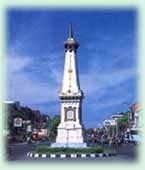
| The are around Malioboro, the main thoroughfare which stretches for several kilometers from close in front of the kraton in the south to the Tugu monument in the north, constitutes the city?s center. Along this stretch are two major landmarks ? the old Governor?s Palace and the Beringharjo central market, located near the southern end of the thoroughfare. In addition, there are a couple of moviehouses, a church and a number of offices, mostly government. | ||||||||||||||||||||||||||||||||
| Malioboro comes to life in the late afternoon or early evening, when the air gets cooler. Then, crowds begin milling about around shops filled with every imaginable kind of merchandise. Shops and sidewalks overflow with cheap trinkets and ready-to-wear clothing, with traditional Javanese costumes especially in demand. There are batik cloths, leather puppets, sandals, striped coarse lurik textiles, and what not. | ||||||||||||||||||||||||||||||||
| After the shops close, unique modest eateries open along the sidewalk in front of the Beringharjo market. There are no chairs, only mats, on which customers sit cross-legged as they savor their food, oblivious of the passers-by. | ||||||||||||||||||||||||||||||||
| The are around Malioboro, the main thoroughfare which stretches for several kilometers from close in front of the kraton in the south to the Tugu monument in the north, constitutes the city?s center. Along this stretch are two major landmarks ? the old Governor?s Palace and the Beringharjo central market, located near the southern end of the thoroughfare. In addition, there are a couple of moviehouses, a church and a number of offices, mostly government. | ||||||||||||||||||||||||||||||||
| Malioboro comes to life in the late afternoon or early evening, when the air gets cooler. Then, crowds begin milling about around shops filled with every imaginable kind of merchandise. Shops and sidewalks overflow with cheap trinkets and ready-to-wear clothing, with traditional Javanese costumes especially in demand. There are batik cloths, leather puppets, sandals, striped coarse lurik textiles, and what not. | ||||||||||||||||||||||||||||||||
| After the shops close, unique modest eateries open along the sidewalk in front of the Beringharjo market. There are no chairs, only mats, on which customers sit cross-legged as they savor their food, oblivious of the passers-by. | ||||||||||||||||||||||||||||||||
| Indonesia?s top school, Gajah Mada University, occupies a campus to the north of the old city, in the neighborhood called Bulak Sumur. Just across the street from the university?s monumental conference center, you?ll find the local government-run arts center, the Taman Budaya (also called Purna Budaya), which offers wonderful dance and music performances and exhibitions of contemporary art. The center is off the beaten tourist path and offers a taste of authentic Indonesia. Nearby is a late-night restaurant and snack food district, up the street from the Galleria Mall. | ||||||||||||||||||||||||||||||||
| The Sultan?s palace (kraton) is a must-see, although you have to pay an official guide a small fee and suffer a sometimes annoying tour. There is a fine crafts shop inside the kraton walls where Yogya aristocrats and Dutch colonial officials once shopped. Guides will often try to take you to other batik shops in the area, since they receive commission if you buy?if you?re interested in batiks, you?re better off roaming on your own in the nearby Taman Sari district, home to most of Yogya?s batik painters. In the same area is the bird market. Jalan Malioboro is the main shopping area and has lots of street vendors selling all kinds of crafts and souvenirs. The Malioboro Mall has a nice and inexpensive Indonesian food court and a bookstore that sells the Jakarta Post and a good range of English-language books (and guidebooks) on Indonesia. | ||||||||||||||||||||||||||||||||
| Yogya is also a wonderful place if you?re interested in puppetry. Wayang kulit (literally, "leather shadow") puppets are flat, carved out of buffalo hide and painted with gold and colored paints. A single, highly skilled puppeteer (dalang) controls the puppets behind a screen, creating voices for each, as musicians provide the mood music. Lamps hung behind the dalang casts shadows of the puppets on the screen. (Indonesians like both to sit and watch the shadows in front of the screen and stand in back, watching the dalang perform his magic.) The stories are derived from the Javanese versions of the Hindu epics Ramayana and Mahabharata, but the dalang inserts contemporary commentary, often of a political or sexual nature. | ||||||||||||||||||||||||||||||||
| Wayang golek is another form of puppet theater, which uses three-dimensional wooden puppets. Plays typically go on for several hours, but it?s common for people to walk in and out and stay for only portions. Don?t feel shy about leaving if you?ve had enough. Performances can be found at the Taman Budaya, the Arts University outside town, and sometimes at hotels and tourist sites, or on special occasions, at the kraton. | ||||||||||||||||||||||||||||||||
| Yogya stays up late, and once it?s dark, shopping districts turn on their neon lights and food vendors roll out mats on the sidewalk for a Yogya tradition called lesehan, late-night meals. Avoid the overpriced lesehan on Jalan Malioboro: Venture into the neighborhoods for better and cheaper food?but be selective in your ordering, sticking to dishes that are stir-fried or grilled on the spot. | ||||||||||||||||||||||||||||||||
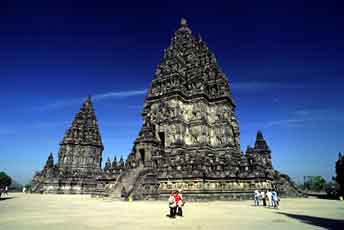
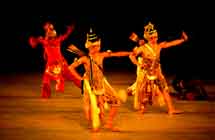
| You should set aside an entire day for a trip to Borobudor, an elaborate 1,000-year-old Buddhist temple that is one of the historical art treasures of the world. It?s about 10 mi/16 km east of Yogyakarta. On the way, you can make quick stops at the nearby Mendut (actually considered part of Borobudor) and Candi Pawon. Take along a guidebook for background information, and get there early to avoid the heat and the crowds. The temple, created in the shape of a mandala, contains elaborate carvings that portray Javanese court life of the time. The famous lower level, or "foot" of the temple, reportedly contains erotic carvings that show Tantric influence and was intentionally buried by the Indonesian government. Once a year, during the summer, on the Buddhist new year of Wasiak, the small Indonesian Buddhist population descends on Borobudor in a huge colorful procession. Also, if you?re visiting Yogya between May and October, stop by the Prambanan Temple to see the Ramayana Ballet during nights of the full moon. This is an amazing spectacle, with more than 100 dancers and musicians: Performances run for four consecutive nights each month. 270 mi/435 km east of Jakarta on the island of Java. The Yogya Art Gallery sells batik, statues wayang puppets and paintings by modern Indonesian artists, including some by Affandi, the internationally acclaimed Indonesian master of expressionism. | ||||||||||||||||||||||||||||||||
| Copyright © 2001 by Yogyakarta Gallery. | ||||||||||||||||||||||||||||||||
| BACK TO HOME | ||||||||||||||||||||||||||||||||