 |
|
|
|
|
|
|
|
|
|
|
|
|
|
|
|
|
|
|
|
|
|
|
|
|
|
|
|
|
 |
|
|
|
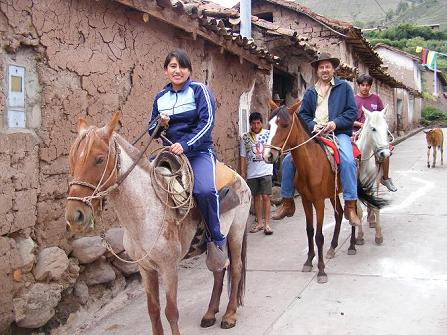
Three of us took a horseback ride up the valley ride one day. Glenny is the only one with a saddle and bridle, Brian and I just have blankets cinched around the horse's belly and ropes tied in a pattern to make the bridle. The little colt behind us belonged to the white mare that Brian is riding. It followed us all the way, as did a little white and black dog that was friends with Glenny's horse. They played together any time we rested. |
|
|
|
|
|
 |
|
|
|
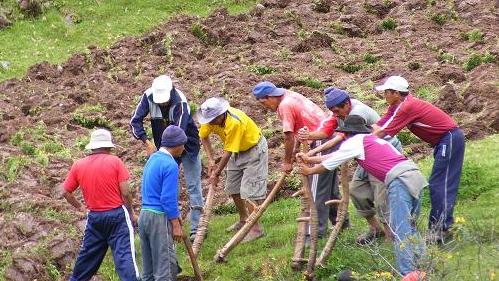
On the way we passed some men opening up a fallow field. Because of the terrain they can't use tractors, and some places are too steep for horeses. Places like these they use the chachitaq'lla, a digging tool that dates back to over a thousand years before Columbus arrived. We stopped and drank a glass of chicha (homemade corn beer) with them for a few minutes. |
|
|
|
 |
|
|
|
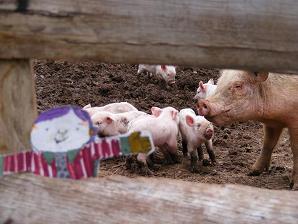
One place we stopped there was a sow with some piglets only a couple of days old. Stanley wanted to play with them, but the mother would probably have eaten him. Mother pigs are mean. |
|
|
|
|
|
 |
|
|
|
|
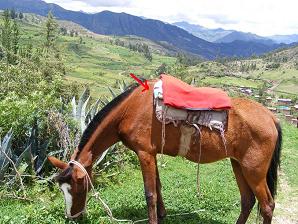
This is the stallion that Stanley and I rode on. The village of Limacpata, where the piglets were, is below. |
|
|
|
|
|
|
 |
|
|
|
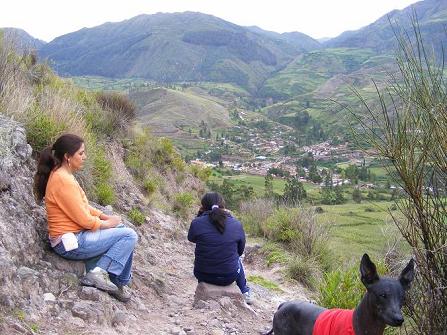
We went for a walk up a mountain named Ascan, just south of town. Chochito was happy to guide us. Glenny and Marleny stopped to look at pretty rocks while Chochito and I climbed up to within probably 300 feet from the top. We saw an eagle flying around the peak of the mountain. The altitude was barely under 11,000 feet where this picture was taken. |
|
|
|
|
|
 |
|
|
|
|
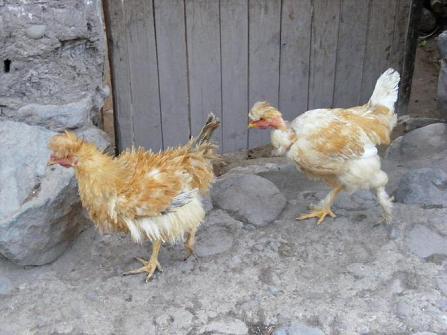
Although you might think these chickens are sick, but actually they're very, very old breeds called Chacharas and Caracuncas. They were already being bred in Peru when the Spanish arrived. |
|
|
|
|
|
Next Page => |
|
|
|
|