| The Sacred and the Profane Summary |
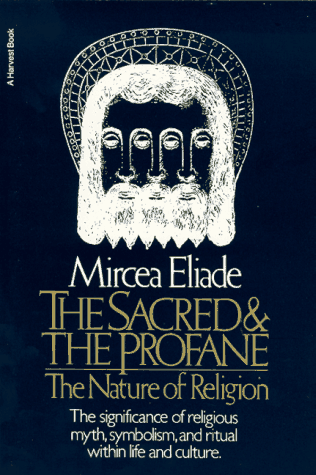
| 9/8: In The Sacred and the Profane, Mircea Eliade explains the Sacred, a referral to sacred dieties, places (axis mundi), or things. He also explains the idea of a hierophany, which is the relationship between humanity and the Sacred, and the explanation of humans as homo religiosus, or people who are accepting of the hierophany. The numinous experience or theophany ties into the hierophany of homo religiosus, as it explains the overwhelming experience (mysterium tremendum et fascinans) which furthers the relationship between homo religiosus and the Sacred. The axis mundi, the central space dedicated to the Sacred such as temples and churches, enables humans to physically relate to the Sacred by combining the tangible aspects related to the space and the objects within the space to the intangible virtues of the Sacred. Eliade also explores cosmogonic and cosmologic aspects of the Sacred and homo religiosus, namely through rituals and myths. Rituals that continually remind human beings of their creation and their place in the universe and myths that continually imitate divine models help human beings to further relate to the Sacred and provides the basis for several religions. |
 |
| All religions have common points where their morals and ethics intersect, even while their theology may contradict. The famous saying of "do unto others as you would have them do unto you," proves this. Whether it is the Hillel, Hadith or Bible, or even an ancient Yoruba saying, all religions have similar teachings in their main source of inspiration. All of these religions bind humans in a twofold way, both horizontally and vertically. It binds ourselves horizontally by forming a common bond between all humans, while bonding vertically by creating a relationship with a sense of some type of "sense of the sacred." From this point religion transforms as an extensio of one's culture; reflecting either a pantheistic view, to a dualist view, to even deism. |