Women
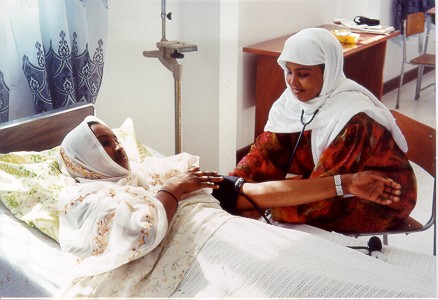
Somali women are responsible for the health and nutrition of their families but a woman�s health is of low priority in the family. Psychological and physical health is often deprived when a woman arrives in the United States due to the lack of education, poverty, and violence in Somali. In some ways, healthcare is the same in the United States as it is in Somalia. Both of the countries have hospitals and doctors but the customs in each country are distinctive of each other. There are two major factors that set healthcare apart from Somali and the United States. The first difference is the cultural traditions and beliefs Somalis are accustomed to in their country. American medicine is foreign to them regarding medical and legal issues of informed consent. In Somali, consent is not needed to perform any type of healing so this concept is new to Somalis who are experiencing Western medicine for the first time. Another difference is the issue of circumcision.. Both males and females are circumcised before age five. Circumcision is viewed as a rite of passage and an essential part of marriage. This raises new challenges for American doctors who are unfamiliar with this custom.
A mother who is expecting a child gives birth in her home with a midwife. After the baby is born, the mother and baby stay at home for 40 days and family friends and relatives help care for them during this time. Diapering is not common in Somalia. A mother will hold a basin in her lap, and during different times in the day, the child will be held over the basin in a sitting position. At night, a piece of plastic is put between the mattress and bedding and is cleaned daily. Because United States customs are quite different, Somali women often have to become accustomed to western maternal health.
Primary Care
In Somalia, traditional medicine is practiced by �traditional doctors�. Usually older men of the community learn skills from older family members. In Somalia, the major illnesses are malnutrition, including iron deficiency anemia, Vitamin A deficiency, and scurvy. The following infectious diseases are common: diarrheal disease, measles, malaria, and acute respiratory illness. Recent emigrants from Somalia to may have these conditions. It is reported that 47 percent of the recently arriving Somali population are affected by one or more kinds of intestinal parasites. The HIV infection rate in 1997 was 0.25 percent, which is below that of other African nations. The doctors in Somali are trained in treating hepatitis, measles, mumps, chicken pox, hunchback, facial droop, and broken bones. Remedies include fire-burning, herbal remedies, casting and praying. Traditional doctors also help cure illnesses through spirits in Somalia. Curing the disease includes a combination of reading from the Koran, eating special foods, and burning incense. Somalis relate nurses, doctors, and hospitals with very serious illnesses. Because they are accustomed to receiving medication when they go to a hospital in United States, they expect to get medication every time they visit a doctor. Often times, Somalis will get very upset when they are sent home with instructions on how to get better rather than a prescription.
Primary care needs for Somalis in United States is hard to measure due to the lack of data. Most Somalis are grouped in health databases as �others�, therefore, this group is represented inaccurately. It is clear that minorities do experience problems when trying to access healthcare and should hold true for the Somali population as well. Cultural issues and language barriers definitely present a challenge for the Somali population living in United States.
Somali culture and language does not acknowledge �mental health� as a problem. This presents as an unique situation due to the extremely traumatic experiences the Somali community encounters in their homeland. Often times, Somali refugees have experienced or witnessed physical assault, rape, torture, or the death of a loved one. The loss of a home, belongings, identity, contact with family members, and time spent in a refugee camp are other sources of substantial stress. These losses coupled with the stress of moving to a foreign land can often be the cause of mental health issues. The Columbus Health Department reported that Posttraumatic Stress Syndrome is a large problem in the Somali community among youth and adults. Counseling and therapy are stigmatized in Somali culture, so individuals often do not get the help needed to overcome their mental health issues. |