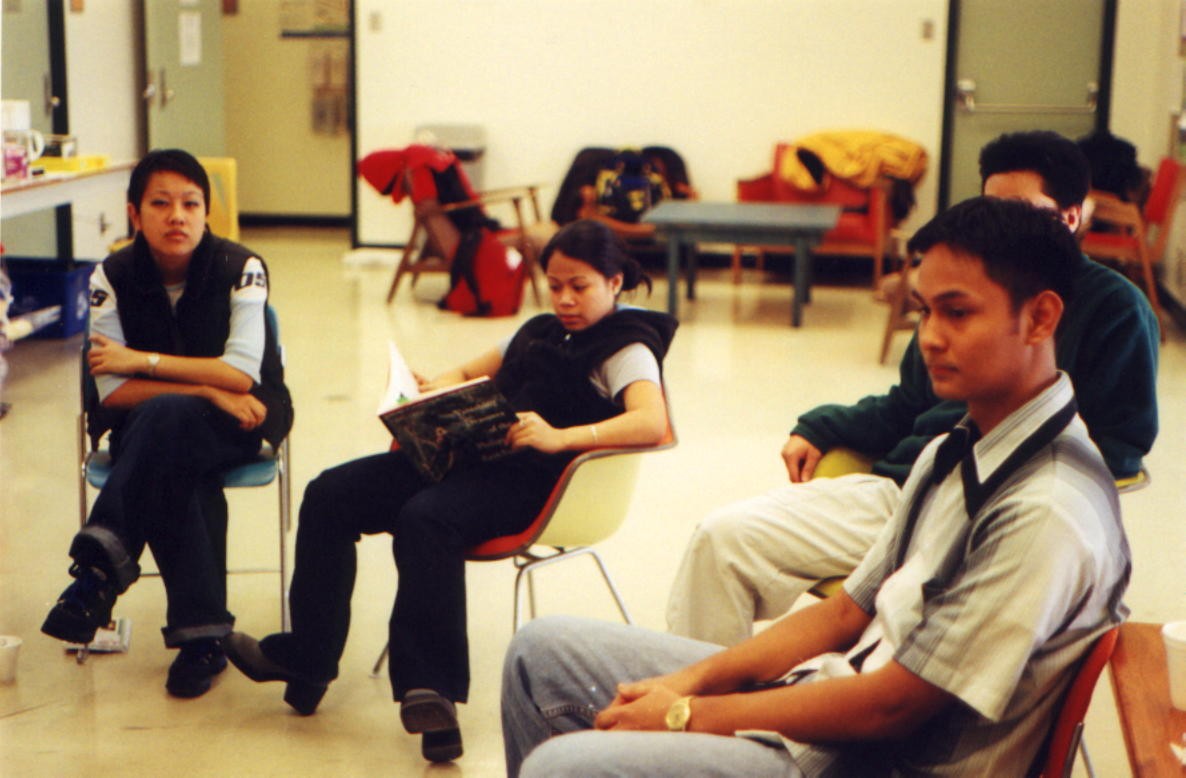
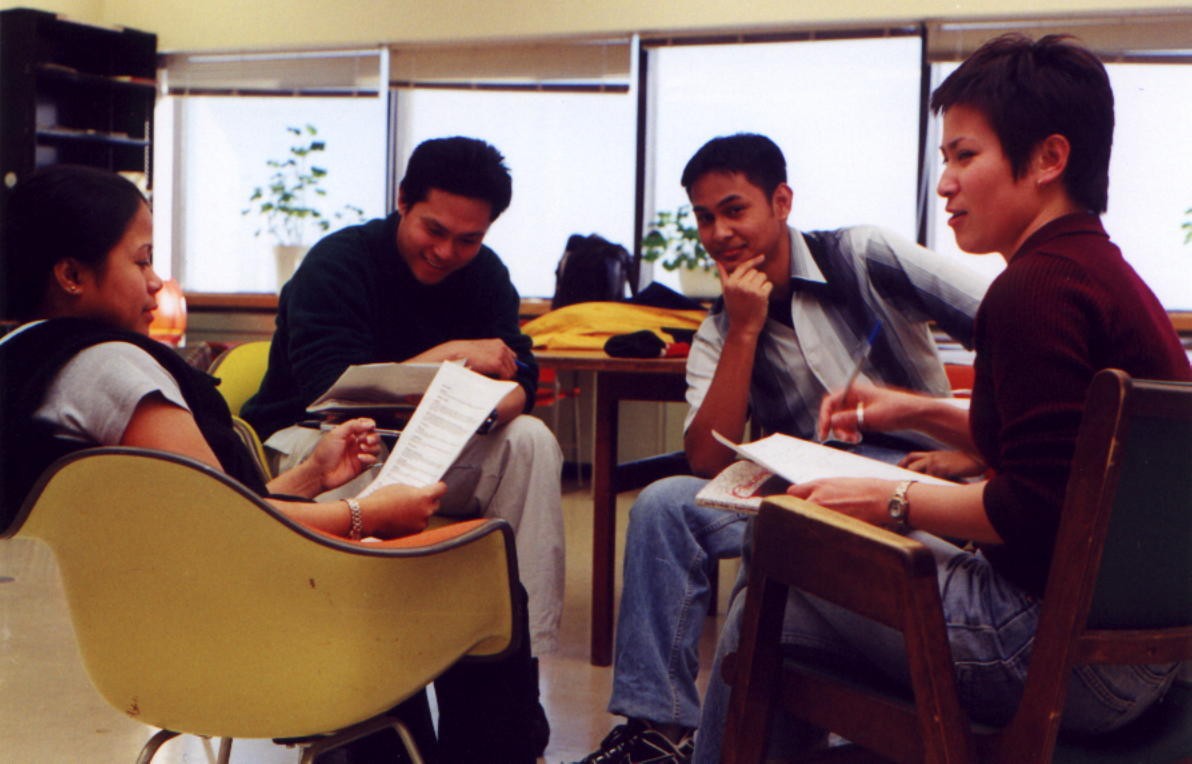
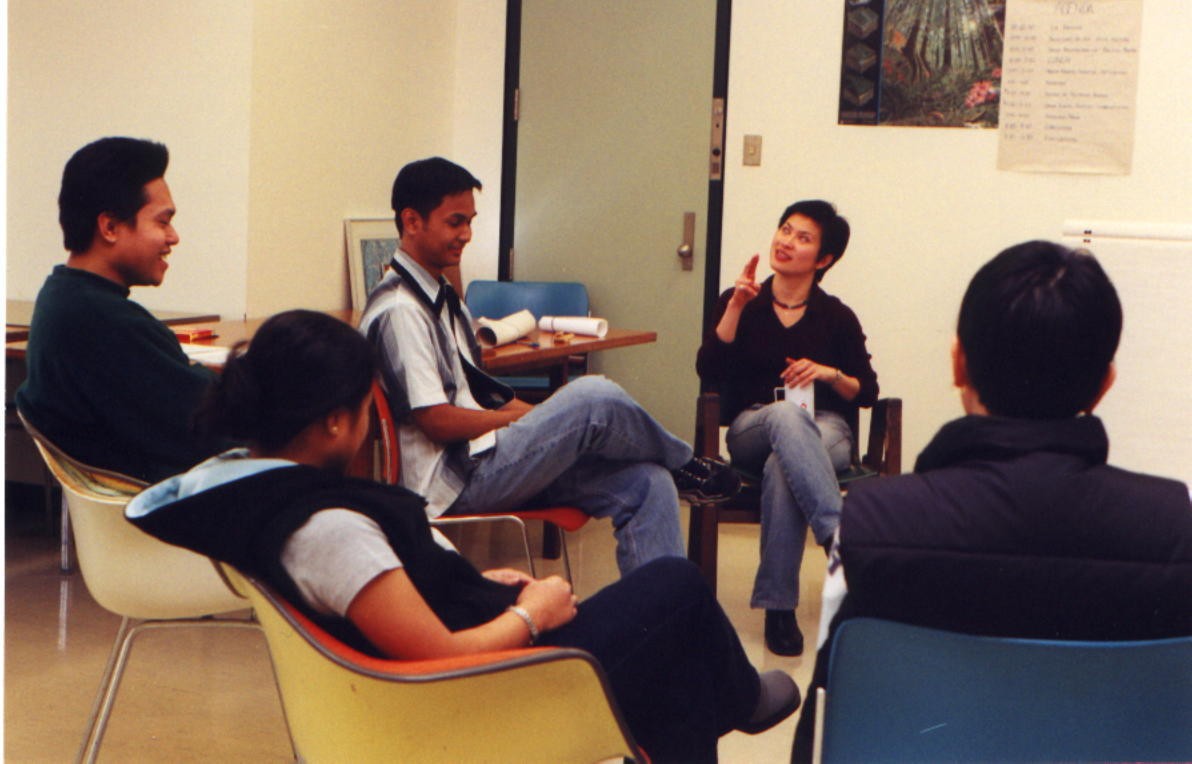
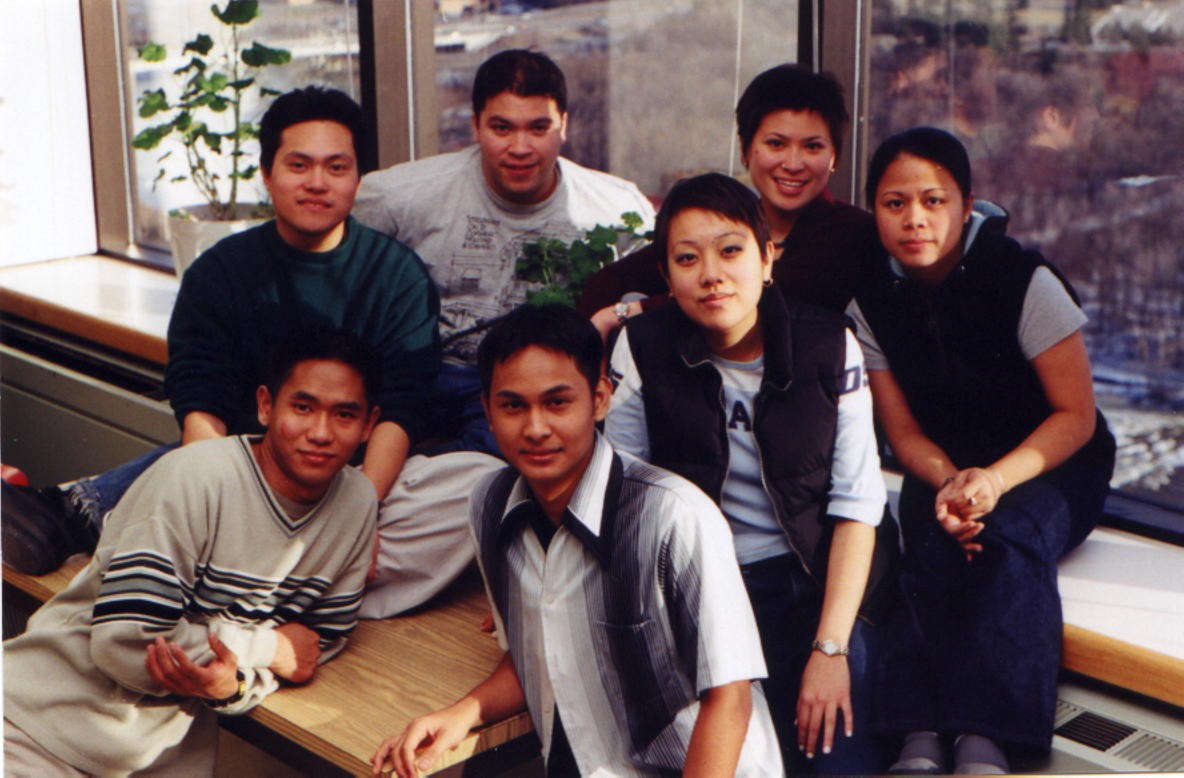
The following is the transcript of CUFSA's first (January '99) leadership training/group bonding workshop along with some references. Hopefully, it will be useful to you out there especially to those who are planning to start a Filipino youth/students group or who have already started but not quite sure where to begin.
Peace and Solidarity,
Avegaile Mendiola
"Never doubt that a small group of committed people
can change the world; indeed, it is the only thing
that ever has."
- Margaret Mead
"We women of colour must not behave
like
modern Medusas
- throats cut,
reduced to mere hissing."
-Gloria Anzaldua
CUFSA LEADERSHIP TRAINING #1
OBJECTIVES:
To strengthen our group by getting to know each other better, by learning about our strengths
and weaknesses as individuals and as a group, and by sharing our experiences.
To explore our collective identity as Filipino youths by introducing some concepts that are relevant to our collective reality.
To have fun together
ACTIVITY # 1 (Ice Breaker)
What: Prior to the day participants are asked to bring an object that represents them ie. their personality/values/beliefs/ideals/interests etc... They are also asked to bring something Filipino eg. objects, literature, food, music, art work, photos etc...
Purpose: To stimulate reflection of participants' identity. To get to know everyone in the group. To practice listening skills.
Pocedure: Everyone divided into pairs. Each pair share the objects they brought. Everyone reconvenes to the bigger group. Each person talks about their partner and the objects they brought. Time: 30 mins.
ACTIVITY # 2 (Consciousness-Raising) Reflection on our social identities
What: Word association and drawing exercise
Purpose: To explore our identity. To identify who we are (and who we are not) as a Filipino(a) and as Filipinos in relation to those who wield power in Canadian society. To illustrate our commonalities.
Procedure: Word association - paricipants brainstorm on words/concepts that come to mind when they hear the word 1) Filipinos and 2) the Philippines.
Power flower - paricipants draw a flower with 24 petals, 12 on the inside and 12 on the outside . The core is filled with dominant social identities ie. sex, race, family, language, religion, education, ethnic group, sexual orientation, social class, age group, abilities/disabilities, relationship to the natural world, geographic region (origin), geographic region (current). Paricipants locate themselves on the inner petals and the whole group on the outer petals.
Time: 60 mins.
ACTIVITY # 3 (Group Building Exercise)
What: Decision-making
Purpose: To give participants practice in decision-making and reaching consensus in a group situation.
To introduce and stimulate discussion of existing problems in the Philippines.
To recognise the interrelatedness of issues.
Guidelines: consensus does not mean unanimous agreement rather, agreement through compromise (see attached sheet which will be distributed to the group)
Equipment: one copy of the problems for each participant
Directions: Give participants copy of problem sheet and ask them to rank in order of relevance the first 15 issues and eliminate the 15 that are less relevant. Each issue will have the ff. implications: social, environmental, political, economic, cultural. After each participant has done his/her own ranking, divide into groups of 4-5 and ask to compare their ranking and then reach to a group consensus. Then reconvene to the bigger group and discuss the results and the decision-making process.
How did you come up with your ranking?
Who did most of the talking in the small group? In the big group?
Who initiated the discussion?
Did the members of the group assume different roles,e.g. recorder, listener, leader, modifier?
Time: 60 mins ( 5 min/participant, 15-20 min/small group, 20 min/big group,
10min/intro & conclusion)
PROBLEM SHEET:
The situation: One dark stormy night...etc...etc... (you can elaborate the story)
you become the first youth president of the Philippines and must deal with the problems.
What: Paired Interview
Purpose: To get to know each other.
To identify resources available within the group
To give each person an opportunity to make a presentation in front of the group
Materials: Interview sheet handouts
(facilitators need to come up with at least 5 value-laden questions)
Pencils
Procedure:
the group brainstorms a list of things they would like to know about each other.
Post the questions for everyone=s reference.
Each person pairs up with someone they know least. Using the questions and the interview sheet as a guide, the two partners interview each other. Each record info on the other on the sheet (10 mins).
Participants introduce their partners to the group
ACTIVITY # 5 (Energizer)
What: Let's laugh together - everyone lies down on someone's belly, a person makes a laughing
sound either ha ha, ho ho, he he, hi hi...etc then another person repeats the sound and makes a new sound.
Time: 5 mins.
ACTIVITY #6 (Intro to Philippine History)
What: Game and discssion. Each team brainstorm on their knowledge of events, people, activities during specific periods in Philippine history.
Purpose:
To introduce the concept of popular education.
To give an overview of Philippine history. (Facilitator: Joe Calugay)
To encourage creativity.
Time: 1 hr.
ACTIVITY # 7 (Energizer)
What: Trust Exercise.
Everyone stands in a circle. One person stands in the middle with arms crossed in front of the chest. Those in the circle, one at a time push the person in the middle. But before they do so they must say a Tagalog word. The person who catches the one in the middle must say a word in Tagalog as well.
This is a good exercise for the non-Tagalog speakers. Also, great for waking up and learning to trust each other!
Time: 5 mins.
What: Participants are asked to communicate something eg. issue, idea, concept etc...
through drawing/skit/interpretive dance/mime/song/poem etc... They can do this alone, in pairs or triads.
Purpose: To explore non-verbal communication.
To encourage creative and constructive expresssion.
Time: 50 mins.
ACTIVITY # 9 (Conclusion)
What: participants will be given an object that will encourage them to express something positive to at least one person in the group.
Closing go around
EVALUATION (exercise)
What: evaluation of each activity including the intro and the conclusion, the structure and content of the whole day, the organization of the day, timing, location etc...
Purpose: to encourage critical thinking, constructive criticism and creativity.
DINNER + unstructured group building
suggestion: make food together, go out etc...
REFERENCES:
BASICS & TOOLS: A COLLECTION OF POPULAR EDUCATION RESOURCES AND ACTIVITIES CUSO (1988: CUSO, Ottawa)
EDUCATING FOR A CHANGE.R. Arnold et. al. (1991: Between The Lines & Doris Marshall Institute,Toronto)
THE ENCYCLOPEDIA OF ICEBREAKERS. S Forbes-Greene (1983: Between The Lines, Toronto)
SEEING OURSELVES: EXPLORING RACE, ETHNICITY AND CULTURE. Carl E. James (1989: Sheridan College, Oakville)