
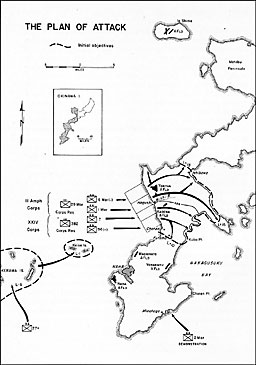
A successful America battle plan for the pacific included the ability to devise a successful strategy recognizing the most favorable offensive tactics that could be supported by continuous backup personnel and equipment. The situation in the pacific represented a fluid operation with the necessity for adjustments and creative thinking to achieve objectives.
The Allied invasion of Japan required a launching area within flight range and the Ryukyu islands, especially Okinawa, fulfilling that requirement. Okinawa was considered a part of the Japanese home islands and with the Allied taking, the Japanese suffered a severe psychological blow. This operation to secure Okinawa for allied forces was a huge endevour with numerous logistical problems.
Admiral Chester Nimitz encouraged the campaign to target Okinawa as the location best suited for the future invasion of Japan. It was essential that Nimitz and his fellow leaders formulate plans that entailed air support, naval support, and of course, the element of surprise was imperative. This campaign known as Operation Iceberg included the targets of Luzon, Iwo Jima, and Okinawa, and was the culmination of lessons learned by the American forces in their previous engagements against Japanese pacific outposts. It was evident that the campaign to take Okinawa would tax American and Allied resources to the limit, and was a campaign of cooperative military branches never yet scene in the Pacific War.
The Last Battle, p. 30
The Last Battle, p. 18