
Courtesy of the 6th Marine Division [2]
![[2]](http://www.sixthmarinedivision.com/images/MapOki_lg.jpg)
Courtesy of the U.S. Army [1]
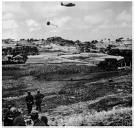
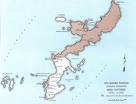
The Battle of Okinawa was fought on the Japanese island of Okinawa, lasting from late March to June of 1945. It was the bloodiest of all the fights in the Pacific War, with the Japanese losing approximately 70,000 combatants and 100,000 civilians (more than Guadalcanal and Iwo Jima combined). The battle was referred to as the "Typhoon of Steel" because of the massive amounts of artillery used by the aggressive U.S. forces.
The Japanese used a defense strategy that differed from previous battles. They chose not to defend the beaches at Okinawa in order to avoid casualties from the overwhelming firepower of the U.S. forces. In the opening days of the battle, the Japanese organized hundreds of kamikaze aircrafts to debilitate the American Fleet, a tactic that led to the most U.S. Naval casualties during the war. The Japanese ship, Yamato, was sent to Okinawa to help defend, but was given very poor aerial support, a tactic that the U.S. forces took full advantage of. The Yamato was intercepted by Allied forces on her way to Okinawa, and sank on April 7, 1945.
The land campaign was headed by Lt. Gen. Simon Bolivar Buckner, Jr., and his Tenth Army. They found themselves against the Imperial 32nd Army, an Army that had strengthened itself through the three years of fighting the U.S.