|
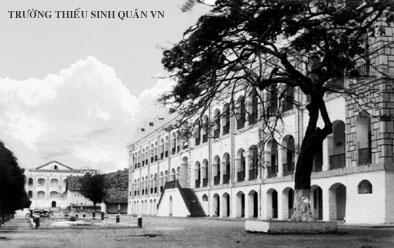
Trường
Thiếu-sinh-quân Việt-Nam. |
|
Trường
Thiếu-sinh-quân Việt-Nam. |
VIETNAM VETERANS
FOR ACADEMIC REFORM
The student
auxiliary at the University of Kansas
Goldberg
confesses to CBS bias - but leaves out Vietnam
Part 10 of a 10 part
series , "Vietnam and the Media" - by Leonard Magruder,
President -
Vietnam Veterans for Academic Reform
Subject: From a new
history by a Vietnam vet and historian.
A Vietnam veteran
who has just finished a new history on the Vietnam War has just given me
permission to quote from his chapter on the media, but wishes however, to remain
anonymous.
I can think of no better way to end this series, "Vietnam and the
Media" than to look at the conclusions of someone who was there, and is an
accomplished historian.
"
Conclusions: There were some worthy, honest, and intelligent reporters in
Vietnam and Southeast Asia, Dickey Chapelle, Robert Shaplen, Liz Trotta, Peter
Braestrup, Hugh Mulligan, Keyes Beech, Neil Davis, Denis Warner, were among
those who objectively, and without resort to sensationalism, conveyed elements
of truth, parts of the puzzle, to the American public. Their efforts
notwithstanding, the fog of nonsense spewed out by others obscured and
effectively censored honest, logical, Comprehensive reporting, denying the
American public information needed to develop accurately informed opinions.
News media malfeasance was complemented by brilliant manipulative Hanoi
propaganda, and a corresponding U.S. government inability or unwillingness to
make a case for its own efforts. The American public could not hope to
understand what was taking place, and does not today.
No one,
least of all South Vietnamese, American or other allied forces, was oblivious of
or happy with the endemic corruption and incompetence, yet, because of
flawed and narrowly focused "reporting" the story of South Vietnam's
progress and improvement remains untold. American reporters never wrote or
televised stories about CDR, Phan Quang Dan, Gen. Ngo Quang Truong, Gen. Nguyen
Khoa Nam, the 81st Biet Kich, the Hau Nghia RF, Col. Mach Van Truong ,
Gen. Le Minh Dao, Tran Ngoc Chau, Col. Ha Mai Viet, writer Nguyen Manh
Con, or RVN Marine Sergeant Van Luom, who stood alone on the Dong Ha Bridge and
knocked out the lead tank in an NVA armor column with a shoulder-fired antitank
missile, an act, in the words of an American witness, of inspiring
"defiance and bravery."
Knowing
little of this, the American public was understandably disenchanted. The
news media seldom, if ever, accompanied American or Australian troops on MEDCAPS
or DENTCAPs (Dental Civic Action Projects extremely welcome to rural people with
painful tooth conditions. )
In the first six
months of l969 more than 200,000 villagers received medical care and 15,000
received dental care from the U.S. 3rd Marine Division alone.
Instead the American public was subjected to repeated coverage of the My Lai
atrocity, which, like the photo of Gen. Loan, was considered symbolic and
representative of the entire war.
Wolfgang
Leonhard, a Soviet communist agent before defecting to the West, was
tasked with analyzing western news media stories. He and his
colleagues were puzzled over superficial news coverage predominating in the
newspapers they read. "Generally, we could only shake our heads over them,
and often we were exceedingly disappointed. There was usually not even
mention of the really significant events that were causing endless
discussions amongst ourselves and on which we were passionately eager to read a
serious Western commentary. "They don't seem to know what is going on
" was the main theme of our conversations when we talked to each other on
the subject."
One of the
more tragic ironies of Vietnam and the news media failure is that there were
many fascinating and positive stories to be told. The American people
would have appreciated seeing hour-long specials on, for example, U.S. Marine
Corps CAP units, a squad of 14 Marines living in one hamlet for their entire
tour, working with and defending "their " hamlet alongside local PF.
USMC CAPs had a higher voluntary extension rate than among their line
unit counterparts. Why? It would have made for a good story.
It would have been equally enlightening to see programs showing U.S. troops
helping an orphanage, or volunteering to teach English. The American public
deserved to know about a VNAF Skyraider pilot who had been shot down five times,
and continued flying, despite his several fused vertebrae. They deserved
to know that American forces could take on the NVA, in their own backyard, and
prevail. Something might have been learned from Americans who volunteered for
three, four, five, six, or even seven tours as advisors, choosing to serve in
Vietnam again and again, not as blood thirsty and uncaring killers, but as
very normal, decent human beings who could eloquently and convincingly
explain their motivations, which was ultimately to see Vietnamese people have
a life of peace and decent government.
Geopolitics and
the Cold War, all relatively abstract concepts, were not a primary concern,
taking a back seat to basic human concerns for that which is fair.
Americans would have benefited by hearing of Captain
Nguyen Quy An, Lt.Vu Tung and Warrant Officer Nguyen Quang Hien of the famed 219
Kingbees. Were it not for the action of these men, John Litter, Bob
Stratliff and Wiley L. Craney, by their own testimony, would have been killed or
captured after their helicopter had been shot down in Laos. They
were rescued by Captain An and his crew while under fire and surrounded by NVA.
Captain An would later lose both his hands by keeping control of a burning
helicopter, saving the lives of others on board who would have died had the
flame-engulfed chopper fallen from the sky.
Americans were mesmerized by the NVA 25-day hold on Hue
City in l968, and presumably would be similarly impressed by the 92nd Ranger
Battalion 400-day stand at the remote base of Tong Le Chan. Completely cut
off, re-supplied only by air, the 92nd held, with ambulatory wounded refusing
evacuation. Had a NVA unit held out for over 400 days, surrounded and cut
off, it would have made headline news. The 92nd Rangers did it and nothing
was said, Had a handful of VC high school boys held off an allied
attack it would also would have made headlines. A
handful of high school boys did resist VC/NVA forces at the "Truong Thieu
Sinh Quan", a junior high school military academy for sons of RVNAF (South
Vietnamese) military in service & fatalities. They resisted to
the end in l975, with twelve and thirteen year old boys sending younger kids
home, staying in their barricaded school and fighting on. Many of them
were killed and when the Communists came in they fought them. The
Communists could not get into that academy. NVA forces eventually
surrounded the school, threatened to level it with rockets, kill everyone
inside, and negotiated a surrender. This last stand would presumably have
had all the drama and "human interest" for a "big story" and
had VC adolescents been involved opposing RVNAF, the story would undoubtedly have
been trumpeted to the American public. To this day next to nothing has
been said or printed, and the cadets at Truong Thieu Sinh Quan are not even a
footnote to history.
Coverage
of these stories could have gone on and should have gone side-by-side with
negative reporting on corruption, civilian casualties, drug use, and other
presumed universal evils of American involvement in Southeast Asia. It is
neither suggested nor desired that blemishes or morally repugnant aspects be
ignored or covered up. It is asserted, however, that it would have been
far more honest to have contrasted examples of deplorable behavior with other
aspects, not in the least rare, of which many Vietnam veterans are familiar with
and participated in. Fairness and objectivity also demand that equal
coverage be applied to the VC/NVA shortcomings and ruthless excesses
shown in proportion to their existence and occurrence. Had all this been
done the American public would have been able to understand something, and
certainly much more than the psuedo-understanding derived from the "shoot-em-up-
bang-bang" reporting they were continually exposed to. For any
number of reasons, "positive" news did little for a reporter's career
or ego, a career based on finding or inventing "stories"
accentuating the negative while heightening public discontent.
Ignorance
of military and Southeast Asia matters, of communist revolutionary warfare,
fueled by potential for lucrative career advancement, unwilling or unable to
report on South Vietnamese or Laotian troops except in cases of failure,
apparently enthused by the visual impact of war and the destruction it causes,
sometimes disdainful of South Vietnamese if not American troops while ignoring
Australian, Korean, Thai, and New Zealand forces, the news media proved
incapable of depicting Vietnam, and Hanoi's War, in its entirety. The
American public saw the same "bang- bang" every year, and were misled
into assuming nothing had changed, nothing was accomplished. Allied
temporary defeats were portrayed as permanent setbacks, while victories and
accomplishments went unreported, or were, with smug theatrics, cast aside as
government propaganda.
News media
misrepresentation not only misled and uninformed the American public, but also
prohibited its ability to think and make logical inferences on its own.
In the final analysis, Vietnam, Southeast Asia, Hanoi's
war, and American involvement could not be, and cannot be, understood, in
good part because of media failings, moral, intellectual, and otherwise.
Without recognizing this, and knowing that what was reported was not the
all-comprehensive truth of the matter, the subject itself cannot be understood.
Overall, and efforts of responsible reporters notwithstanding, the nature and
extent of news media failure in Vietnam exceeds that of allied military forces
who were attempting to and succeeding, despite documented lies and bumbling, to
stop Hanoi's War. Many people died and millions more have
greatly suffered simply because the whole story was never told. And
because what was portrayed in media reporting was demonstrably not, to use the
famous Cronkite phrase, "the way it is."
This
bitter judgement is itself based on beliefs articulated by Robert Elegant,
himself a journalist :
"Illusionary events reported by the press as well as real events within the
press corps were more decisive that the clash of arms or the contention of
ideologies. For the first time in modern history, the outcome of a war was
determined not on the battlefield but on the printed page, and above all, on the
television screen. " Looking back coolly, I believe it can be said
that South Vietnam and American forces actually won the limited military
struggle. They virtually crushed the Viet Cong in the South, the
"native" guerillas who were directed, reinforced, and equipped from
Hanoi, and thereafter they threw back the invasion by regular North Vietnamese
divisions. Nonetheless, the war was finally lost to the invaders after the U.S.
disengagement because the political pressures built up by the media had made it
quite impossible for Washington to maintain even the minimal material and moral
support that would have enabled the Saigon regime to continue effective
resistance".
(Editor's note:
Elegant, a highly acclaimed British reporter on Vietnam, later added these
terrible words : "never
before Vietnam had the collective policy of the media sought by graphic and
unremitting distortion, the victory of the enemies of the correspondents own
side.")
Could this
possibly be the truth about the performance of the U.S. media in Vietnam? In
ending this series, from my extended observation and study of the media while on
the home front during the war, this is certainly the way it looked to me. And
many others. Said Senator Margaret Chase Smith, "The press has become more
sympathetic to the enemy than to our own national interest."(Congressional
Record, June 16, l971)
Email Leonard
Magruder at [email protected]