The purest idolatry of all?
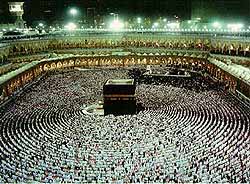
“Ye shall make
you no idols nor graven image, neither rear you up a standing image, neither
shall ye set up any image of stone in your land, to bow down unto it:
for I am the LORD your God.” (Lev.26.1)
Islam is famed as a strictly iconoclastic
faith, in which idols or associations of created beings or objects with the ever
Blessed Creator are shunned with righteous hatred. In many ways, Islam may be
seen as a Divine judgement on apostate
icon-worshipping Christians, who having slipped back into their pagan ways had
provoked God to anger. No better example of this may be found than in fall of
Yet ironically, for all their stringent
rejection of the human and animal form Muslims are themselves given over to an
ancient form of pagan worship.
It is one they most horribly and improperly
attribute to Abraham, namely the worship of the Ka'bah
five times a day. Islam is at essence submission to the black rock, in devoted
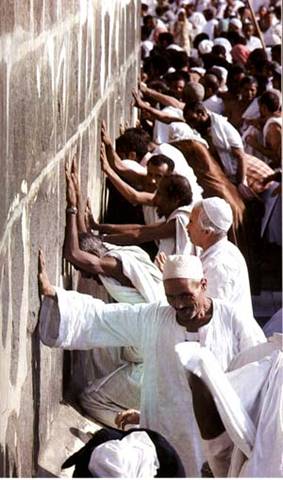
prayer and ritual, and ultimately the once a lifetime duty of circling the rock
in pilgrimage, often still resulting in the deeply pagan practice of kissing
the old idol.
Abraham turned his back on idols as he left
“Saying to a
stock, Thou art my father; and to a stone, Thou hast brought me
forth,” (Jer. 2.27)
The Ka'bah at
Woe unto him that saith to the wood, Awake; to the dumb stone, Arise, it
shall teach! Behold, it is laid over with gold and silver, and there
is no breath at all in the midst of it. (Hab 2:19)
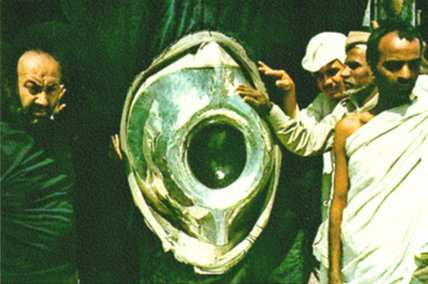
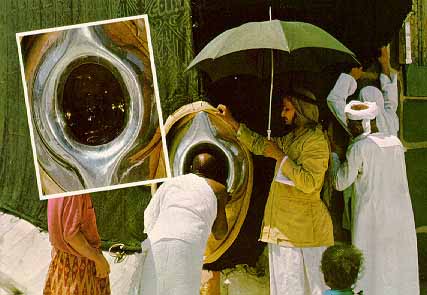
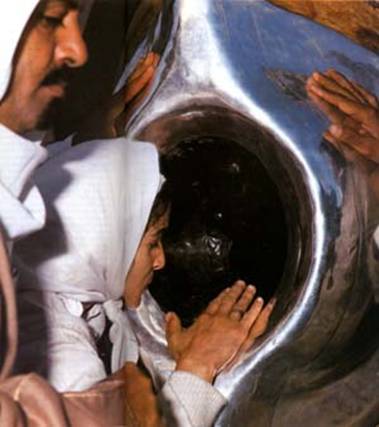
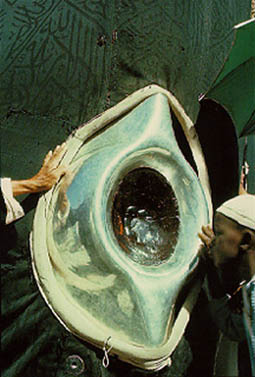
Similarly, deities of other cultures are well known to
have been associated with stones include Aphrodite at Paphos,
Cybele at Pessinus and
later
To which Scripture also bears oblique reference,
“And when the townclerk had
appeased the people, he said, Ye men of Ephesus, what man is there that knoweth not how that the city of the Ephesians is a
worshipper of the great goddess Diana, and of the image which fell down
from Jupiter?” (Acts 19.35)
According to Bukhari,
even loyal ‘Umar blushed at the eagerness of
his prophet to engage in pagan worship.
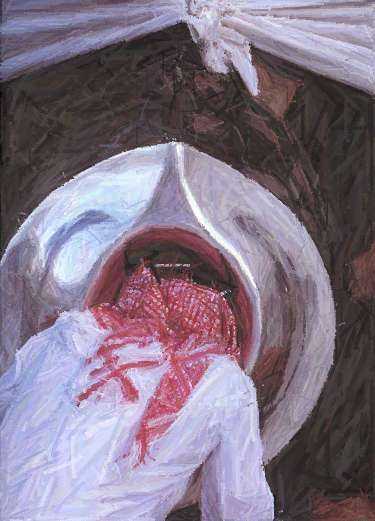
Narrated
'Abis bin Rabia:
'Umar came near the Black Stone and kissed it and said
"No doubt, I know that you are a stone and can neither benefit anyone nor
harm anyone. Had I not seen Allah's Apostle kissing you I would not have kissed
you."(Vol 2, Bk 26, No. 667)
This
is a serious breach of God’s second commandment.
Little children, keep yourselves from idols! Amen (1 Jn.5.24)