
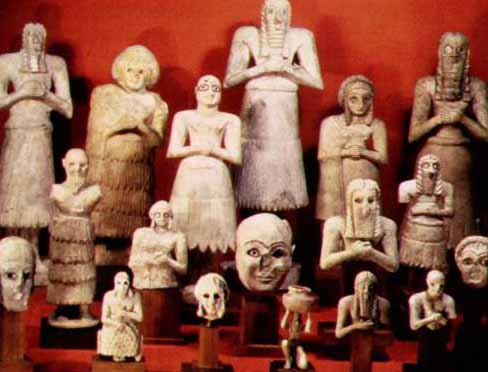
Summerians had statues that they made to put it around the temples for the religious purposes. The of the statues were cylindrically shapes and had large eyes; They look more like a cone and a cylinder. The large eyes are symbolical meaning "the windows to the soul." The statues were abstract because they didn't look like a human form and they were highly stylized. The Summerians made their cylindrically shapes statues to clasp their hands so it appeared that they were praying to their God. This was the way the Summerians carved their statues to put around their temples. Summerian arts were more abstract when it comes to make human form; they used precious metals and inlays for crafts and domestic objects.
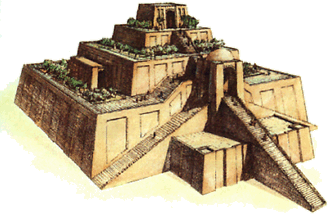
Ziggurat was made of sun dried mud bricks because this was the only available resource in Mesopotamia other than stones and woods. Ziggurat was built just like the pyramids of the Egyptians, the only thing that is different was Ziggurat had three steep steps that led to the gateway of the temple. It is highly decorated with carved reliefs and colorful mosaics to declare the power and wealth of the ruler. The priest that lived in the temple were the powerful leaders that governed the whole city-state of Summerians. Also, this was where they stored the well-kept written scripts of the law.
This was the spiritual center of the Summerians City that "they served as a symbolic connection between heaven and earth where Gods and humans could meet."
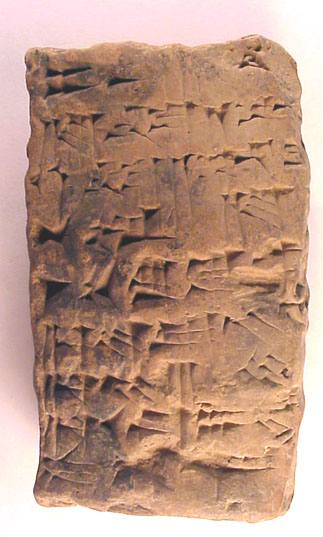
When Summerians established their locations in Mesopotamia's lower region in 3500 BC they had brought cuneiform writing (composed of wedge-shape characters of the alphabet) to the people to use it as a communication tools, basically, the Summerians had taught the people to write and read. Also Summerians brought "law, religion, practices of government and science." Before Summerians came to the Fertile crescent, people believed in many Gods (polytheistic). Summerians believed that their God brought them in Mesopotamia to have an abundant life.