Ropes and Webbing
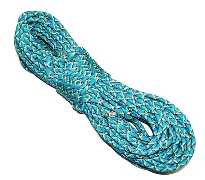
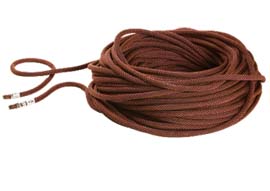
The rope is the most visable sign of safety in climbing. They come in all sizes, lengths, colors, and with specilties in each of them.
Rope are measured in meters for length (3 meters equals about 1 foot), and in millameters for thickness. A good size rope to have for your first is a 60m/10.5mm.
A rope that you get at the hardware store is very different than ropes you'll climb on.
The first mountaineers in the 1800's used natural fiber ropes. But these ropes had no give and might break if a person were to take a hard lead fall. But during World War II, Du Pont began manufactoring Nylon ropes, and so climbers slowly began to trust their ropes more and more. This allowe them to push the limits of their climbing ability. But early Nylon ropes stretched too much, and would often increase 40% in length if a hard fall occured.
Today this has become the standard and you should not even consider a climbing rope that is not like this. A nice perk to your rope is a water resistant coating. Suited for the Pacific-Northwest, these types of rope are good in almost any situation. They absorb much less water than other ropes and are prefered my many alpine climbers.