Bargaining
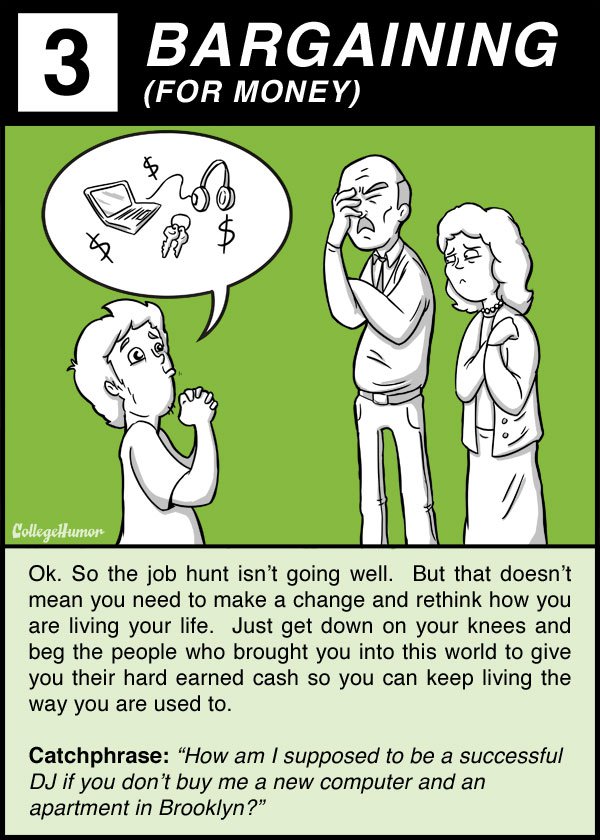
The third stage involves the hope that the individual can avoid a cause of grief. Usually, the negotiation for an extended life is made in exchange for a reformed lifestyle. People facing less serious trauma can bargain or seek compromise. For instance: "I'd give anything to have him back." Or: "If only he'd come back to life, I'd promise to be a better person!"
Examples of the Bargaining Stage
Children grieving in divorce
- In this stage, children feel as if they have some say in the situation if they bring a bargain to the table. This helps them keep focused on the positive that the situation might change, and less focused on the negative, the sadness they'll experience after the divorce. Example: "If I do all of my chores or maybe if I do everything I'm supposed to, then she won't leave.""
Grieving a lost serious relationship
- The partner left behind may plead with a departing partner that the stimulus that provoked the breakup shall not be repeated. Example: "I can change. Please give me a chance." Alternatively, he/she may attempt to renegotiate the terms of the relationship.
Grieving in substance abuse
- This is the stage that drug and alcohol abusers go through when they are trying to convince themselves or someone else that they are going to stop abusing in order to get something out of it or get themselves out of trouble (or to justify continuing their use of drugs and/or alcohol). Example: "God, I promise I'll never use again if you just get me out of trouble." "...If you let me stay here, I will never do drugs/alcohol again."
The 5 stages of grief and loss are:
- Denial and isolation;
- Anger;
- Bargaining;
- Depression;
- Acceptance.