 Sacred Celebrations
Sacred Celebrations
|
|
|
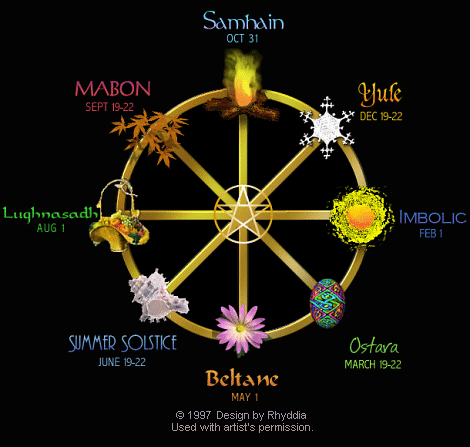
Winter Solstice: December 21,22
Winter Solstice is also known as Yule, and is the shortest day and longest night of the year.
The precise date will change year to year. The darkest time between
Samhain and Yule draws to an end as the Goddess, Mother Earth, gives
birth to the Sun again. It is a sabbat for fond memories, reflection on the
interconnectedness of all and glory of knowing the Sun has been rebirthed
and his rays of warmth will soon start to spill upon us. Yule is also known
as Midwinter and Fionn's Day (Christmas is the christianization of Yule).
Yule colors are red, green and white. Symbols are the Evergreen, wreath,
Yule Log, holly and spinning wheels.
Imbolc(EM-bowl'k): February 1
Imbolc is the Sabbat that celebrates and honors the Goddess as the
bride-to-be of the returning Sun God. The soon arrival of the plant life
whispering beneath the soil, the full warmth of the Sun God being birthed
from the Imbolc Virgin Goddesses womb, the promise of fertility that is
celebrated on Beltaine, are all honored on this sacred day. Witches typically
charge and annoint seeds that are harbored by their hearths until Ostara,
the day in which they are planted. Imbolc is also known as Oimelc, Brid's
Day and Bride's Day. Imbolc colors are white, pale yellow and silver.
Symbols are candles, grain, burrowing animals, ewes and marigolds.
Spring Equinox: March 21,22
Spring Equinox is also known as Ostara, the Sabbat of Balance. The days and nights are of equal length
but the Sun God is gaining more power over the darkness of Winter. Ostara
is also celebrated as the time of courtship of the God and Goddess in
preparation for their consumation on Beltaine. Witches typically plant the
seeds that were annointed on Imbolc on this Spring Equinox. Ostara is also
known as Eostre, Easter, or Lady Day. Ostara colors are anything soft and muted
such as pastels. Symbols are the egg, equilateral cross and the butterfly.
Beltane: May 1
As Samhain was the beginning of the cycle of Winter, Beltane marks the
second major cycle of the year: Summer. This May Sabbat is a celebration
of new life in all it's forms. This is the day God and Goddess are united in
sacred marriage, their relationship consumated. This melding of God and
Goddess symbolically fertilizes the animals and crops for the rest of the
year. Witches celebrate the great fruitfulness of the earth and the
exuberance of spring this night with a playful sense of carefree abandon.
This is the traditional day of pagan handfastings. A vow made between two
witnessed and blessed by the God and Goddess that commonly lasts for a
year and a day (which then can be continued for life). Jumping over
broomsticks and dancing around the maypole typically entwining the red
and white ribbons (symbols of the God and Goddess) are both symbols of
fertility. Beltane is also known as May Day, Bealtaine, Rudemas, Giamonios and Bhealltainn.
Beltane colors are red and white (symbolizing the God and Goddess).
Symbols are the May Pole, baskets, flowers and the butterchurn.
Summer Solstice: June 21,22(the first Crysta Starr's Birthday!)
Midsummer is the time when Father Sun reaches the highest power, Mother
Earth is green and holds the promise of a bountiful harvest. While steamy
Midsummer marks the beginning of the Sun's dying strength the season
itself is very lush, erotic and sexy. The Sun, flowers and Earth are in full
bloom. Hot Midsummer creates a fiery, mature, breathless passion.
Midsummer is also known as Litha, Feill-Sheathain, and Gathering Day.
Midsummer color is green. Symbols are Fire, sun dials, feathers, and
swords/blades.
Lughnasadh (Loo-NAHS-ah): August 1
Lughnasadh is a grain harvest festival. This is the first harvest on the Wheel of the Year. The Goddess is honored as the
Mother who has given birth to bounty and abundance and the God as
Father of Prosperity. The splendor of the bountiful cornucopia of wheat, fruits and vegatables is also reflected upon as it pertains to our lives. Lughnasadh is also known as Lammas, Elembiuos and August Eve. Lughnasadh colors are gray, green, yellow and gold. Symbols are threshing tools, breads, cornucopias and all
grains.
Autumn Equinox: September 21,22
Autumn Equinox is known as Mabon, and is the second harvest festival on the Wheel of the Year. This Sabbat particularly celebrates the harvests of the vine, wine and apples as symbols of life renewed. Partaking of the fruits of this season as well as leaving apples upon burial cairns and graves as a token of honor are all common neopagan and Old Celt practices. There is a thankfulness for this abundance as well as a wish of the living to be be in touch with the dead which comes up in Samhain. Mabon is also known as Feast of Avalon and Wine Harvest. Mabon colors are russet, maroon, orange and all the colors of autumn. Symbols are the apple, wine, vine, gourd, cornucopia, burial
cairns and garland.