
At Sea World, San Diego, California is a whale by the name of Corky or as many know her as "shamu".
As with the nurmerous wild-caught orcas, Corky has lived through a terrible loss only a mother can experience. She
has lived a long and stressfull life in captivity; here is her story.
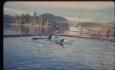 Six killer whales were taken on the night of December 11, 1969. The pod or family unit of whales entered
Pender Harbor, Vancouver to escape a coming storm.By entering this protected harbor, the orcas unknowingly
put themselves in danger. Soon the whales were spotted and nearby fishermen quickly jumped into their boats
and surounded the whales with nets. The animals must have been very frightened and confused. The fishermen
were well aware that the whales meant money and that aquaria around the world were willing to pay top-dollar
for a "killer whale". During the night of her capture, the nets became clogged with dogfish, a small type of
coastal shark. The whales' captors fought to keep the nets afloat. Corky and her mom were both captured, but
mom escaped and soon little Corky was trapped. Six of the little orcas were bought and shipped out.
Six killer whales were taken on the night of December 11, 1969. The pod or family unit of whales entered
Pender Harbor, Vancouver to escape a coming storm.By entering this protected harbor, the orcas unknowingly
put themselves in danger. Soon the whales were spotted and nearby fishermen quickly jumped into their boats
and surounded the whales with nets. The animals must have been very frightened and confused. The fishermen
were well aware that the whales meant money and that aquaria around the world were willing to pay top-dollar
for a "killer whale". During the night of her capture, the nets became clogged with dogfish, a small type of
coastal shark. The whales' captors fought to keep the nets afloat. Corky and her mom were both captured, but
mom escaped and soon little Corky was trapped. Six of the little orcas were bought and shipped out.
 Corky's first home was at Marineland of The Pacific were she and three other whales were put on display. Two
of the companions in this tank were her pod mates and they died two years afte capture. Now the little female
and Orky, a young male, were all alone. All was forever changed to the two whales, their 3D ocean paradise was
now a circular enclosure with nothing. During her stay at Marineland, Corky became sexually mature and mated
with Orky. Then on February 28, 1977 the first captive-born orca was thrust into the world. Orky helped the tiny
baby to the surface, but it soon became apparent that something was wrong. The calf didn't nurse. The staff
force-feed the infant, but he lost weight and died of pneumonia after just 16 days.
Corky's first home was at Marineland of The Pacific were she and three other whales were put on display. Two
of the companions in this tank were her pod mates and they died two years afte capture. Now the little female
and Orky, a young male, were all alone. All was forever changed to the two whales, their 3D ocean paradise was
now a circular enclosure with nothing. During her stay at Marineland, Corky became sexually mature and mated
with Orky. Then on February 28, 1977 the first captive-born orca was thrust into the world. Orky helped the tiny
baby to the surface, but it soon became apparent that something was wrong. The calf didn't nurse. The staff
force-feed the infant, but he lost weight and died of pneumonia after just 16 days.
On October 31, 1978 Corky became pregnant again. She gave birth to a female, but the calf didn't nurse and soon
died of pneumonia and bacteria infection from the formula after 11 days. In April 1980 a stillborn, premature calf
was delivered. Corky's longest surviving calf was born on june 18, 1982, it was a female. After 46 days both
parents drowned the baby. Frusterated, the marineland staff "taught" the unsuccessful mother how to properly
nurse her babies. She did well during the training, but not when it came to her own young. Poor Corky had two
more unsuccessful pregancies. July 22, 1985, she gave birt6h to another female calf who survived for a month. This
calf too failed to nurse. Her last pregancy ended on July 27, 1986 when staff found an aborted fetus on the tank
bottom. Corky had experienced SEVEN lost births. She stopped ovulating (producing eggs made to make a new baby)
at the age of 21. The reason for the calfs' deaths comes from the design of the tank. Orcas can only nurse while
swimming in a straight line. Corky's tank was circular.
 In December, 1986, Sea World purchased Marineland and the surrounding land. The two orcas wer moved to Sea World.
After the move to Sea World and during the summer of 1988 Orky began to lose weight and died. A year later on
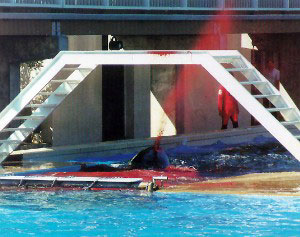
August 21 Corky and Kandu V were performing a 4 pm show when Kandu suddenly charged Corky at full speed and hit
the older whale with a powerful blow. The trainers attempted to continue the show, but soon Kandu V began to
spout blood and the water turned red in front of thousands of spectators. 45 minutes later Kandu died from a
ruptured artery. Orcas in the wild never display that type or any type of aggression toward one another.
In December, 1986, Sea World purchased Marineland and the surrounding land. The two orcas wer moved to Sea World.
After the move to Sea World and during the summer of 1988 Orky began to lose weight and died. A year later on
August 21 Corky and Kandu V were performing a 4 pm show when Kandu suddenly charged Corky at full speed and hit
the older whale with a powerful blow. The trainers attempted to continue the show, but soon Kandu V began to
spout blood and the water turned red in front of thousands of spectators. 45 minutes later Kandu died from a
ruptured artery. Orcas in the wild never display that type or any type of aggression toward one another.
In 1933, ABC Television played a recording of Corky's family to the captives at Sea World. When the sounds where
played all movement stopped and Corky trembled and shuddered violently. She remembered those voices, but Sea World
staff didn't want to think she might miss her wild family.
Corky is now 35 years old and her health has fluctuated over the years. She no longer produces eggs and can never
have children, her teeth are worn, and she is nearly blind in one eye. She mostly passes her time by circling her
small tank. Of the six orcas kidnapped in 1969 only Corky survives. She has survived longer in captivity than any
other orca. It is now time to give Corky back. Her family is waiting for her. Corky's chances of surviving in the
wild is very high.
Please help Corky. SeaWorld has used and abused this graceful animal long enough and it is time that she lives like
an orca is meant to live. To get involved write to the head of Budweiser Beer and tell him to free Corky.
August Busch III
CEO, Anheuser Busch
1 Busch Plaza
St Louis, MO 63118
Phone: (314) 577-2000
Or you can call Sea World and tell them you want to see Corky go home.
1-800-23-SHAMU
BUDS OUT TILL CORKY'S OUT!