 |
| 100 Great(est) Films Of the Past 100 Years |
| OK, so maybe you weren't such a big fan of my top 100 albums of the rock era. Admittedly, that list was much tougher to come up with than this one. When you're going through music, there are, what, 15,000 albums released every year, most of whichnever get heard? A calendar year can't handle more than 150 to 200 new released, half of which are at least advertised and broken down for the public through video, DVDs, cable, and network showings. For this reason, it's a lot easier to evaluate and shoot down movies. I think this collection would be a lot harder to disagree with than the music list, although I'll probably get some guff anyway. So, in descending order... |
 |
 |
 |
 |
 |
 |
 |
 |
 |
 |
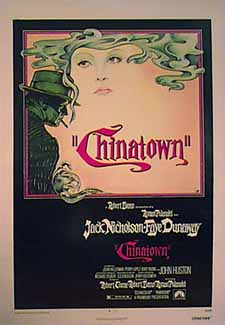
| 10. Chinatown (1974) |
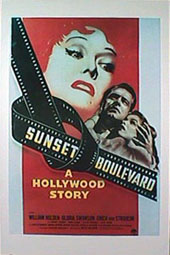
| 9. Sunset Boulevard (1950) |
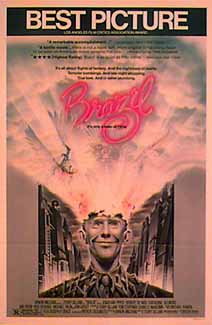
| 8. Brazil (1985) |
| 7. Playtime (1967) |
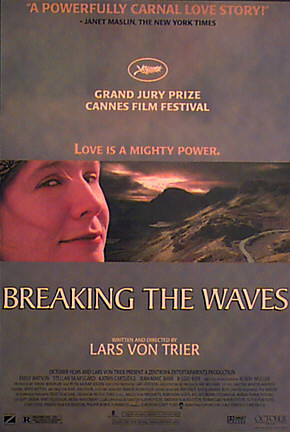
| 6. Breaking The Waves (1996) |
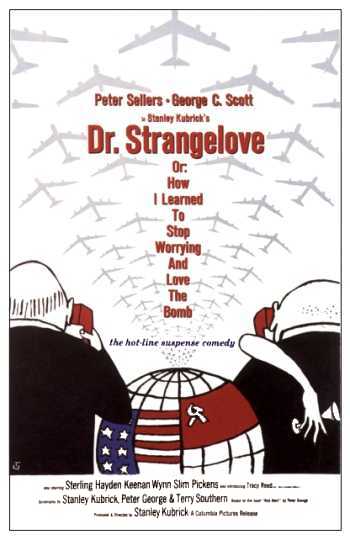
| 5. Dr. Strangelove... (1964) |
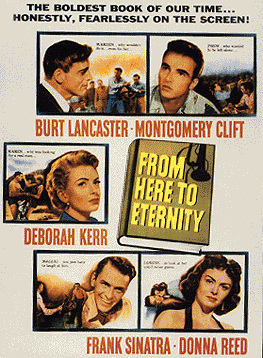
| 4. From Here To Eternity (1953) |
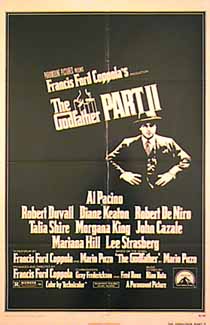
| 3. The Godfather, Part II (1974) |
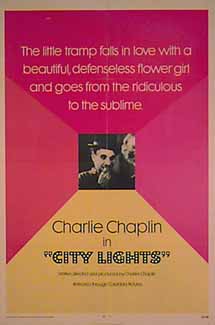
| 2. City Lights (1931) |
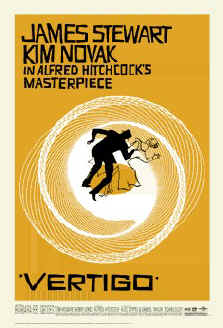
| 1. Vertigo (1958) |
| Deservedly recognized for being one of the greatest scripts ever (I once heard a comment that it's the only screenplay on which you could have a whole 10-week course), and really entertaining for such a labyrinthine plot. Has anyone (beside Robert Towne) ever fully marked out the twists and turns of the mystery? No matter. It's a wild story - I mean, subverting the DWP is like playing God, maybe even more so that creating a planet. Nicholson is, as more often than not, excellent; Faye Dunaway is the perfect knowing femme fatale. Let's not forget the star that should have had third billing - Jake's bandage. It truly paved the way for other inanimate objects in cinema, such as Wilson from Cast Away and Marky Mark's cock in Boogie Nights. Also one of the best collections of one-liners in movie history. |
| To live and die in L.A....I can't decide whether this is a satire or a farce. Either way, its hyperromantic vision of Hollywood as the be-all, end-all, self-fulfilling prophecy of success and dreams is like candy for the mind. One never really understands why Joe doesn't skip town, why he sticks with Norma and her dead pet monkey and keeps chugging along. The Business may be the respectable Left Coast version of the Mafia...and after all, you never go against the family, especially when your butler is Erich von Stroheim. End up face-down at the bottom of a pool and you've died a death nobler than any samurai could hope for. Quite possibly home to the greatest closing line in history (it's OK - Billy Wilder has the top two), as well as one of the best lines ever, as Norma drifts towards the soft-focus lens of her starry-eyed wishes. |
| Coked-out fantasy/melodrama about all the intricacies of a bureacracy - pressing the flesh, the ridiculous amount of paperwork, the soul-suckin' jerks waiting to stab you when you turn your back - mixed in with balls-to-the-wall hallucinations and enough family tension to crack a redwood in half. One of the most visually stunning films of any decade - does Terry Gilliam ever NOT do cool things with the screen? - and a moral to all the young go-getters, masquerading as the collegiate hipsters and post-grad cornershop philosophers who make up the majority of the fanbase of this work, that is summed up a line repeated throughout the film - "We're all in this together." As Bob Dylan once sang, he who gets hurt will be he who has stalled. |
| I've only seen it once - about five years ago in a pretentious film class - but it has left such an impression on me. I never got Charlie Chaplin until I saw this film, and very soon after (like 10 minutes after the class had ended) I was back in my dorm espousing the scenes to my unattentive flatmates. When I walked into class that day, I was unintelligent and thick-headed when it came to film. When I walked out, I wasn't much better, but I knew I'd just seen something absolutely remarkable. It all adds up through some disturbingly original equation - about seven lines of dialogue, a single scene that seemed to last for an hour, and acting so strong it didn't need dialogue to confer upon the audience its frenzied take on technology and the urban world. Tati is already a god in my mind. |
| In terms of viewership, the exact opposite of Playtime. I've seen this one, what, twelve or fifteen times now, and it gets more heartwrenching, more sick, more twisted, more lovely, more problematic, more religious, more powerful, more amazing every time. Emily Watson deserved all the statues in the world, though that still wouldn't have been enough. Some critics argue that the only roles for women are hookers and saints. Watson plays both as Bess, but as far from Julia Roberts' hackneyed 1991 take as you can get. By turn, Bess is innocent, conniving, self-loathing and holier-than-holy, demented but the sanest one in a village of fanatics...and the ending. My God. The ending. Seeing Jan stare up into the heavens, so many emotions come to a swell that it's impossible to stay still or keep quiet for hours after the screen goes black. |
| The funniest movie EVER. Period. There is no questioning, no denying, no supposing with other titles, even with the entire silent film era at one's disposal. Peter Sellers turns in the performance that made me sit through a black-and-white movie for the first time, when I was twelve. Even then, when I didn't get all the sexual entendre or the black humor, I knew these things to be true - Mandrake's British twittiness, even as he's flopping around the carnage of his base, is too good to resist; President Merkin is the epitome of nerds in control; and Strangelove - how can you not love the accent? When I finally understood all of the film, George C. Scott went from funny to hysterical; the phone conversation with Dmitri, the film sequence most-oft quoted between friends and I. "I'm glad you're fine, and I'm fine. Yes, I agree, it's great to be fine, ha ha, ha ha...Listen Dmitri, the reason I'm calling is...". |
| The definition of scope. A seemingly insurmountable topic - America on the verge of war - gets studied as microcosm. Forget that all the principals are involved in the armed forces somehow. Burt, Monty, Frank, Donna, Deborah, Ernest... these aren't actors playing parts. These are real people that sense something unnameable in their midst. I connected to this movie right away, and not for any patriotic reasons or because I was a huge fan of any of the actors. It's just that when a picture is painted so completely, with all of the facets illuminated with such a deft touch and a solid story to boot, you can't help but stand back and say "Wow". |
| The first film starts off with the line "I believe in America.", but it isn't until this movie that the country gets its due. The major story here - a family under duress - is augmented by the backstory of how that family came to be. Even at the end, packing a punch twice as great as the first film's baptism scene, America's still on the burner. It's a success story for the ages, meaning it's preparing us (and Michael) for the Big Letdown in Part III. Read into that however you may...but realize that through the film, the new young Don has seen his familia enter and exit the greatest period of their existence. Michael knows their riches and dreams-made-true are futile aspirations and will soon crumble. When all that's left of the trinity of immutables in defining self-worth in this country - money, blood, and respect - is dependence on family, and is literally and figuratively blown away on a Lake Tahoe roawboat , you get a chill. This is the America you've known all your life. Fredo's dead, baby. |
| Charlie Chaplin, ove the course of his life, was not a happy man, so it's kind of interesting that his character of the Little Tramp is, decades after its first presentation, the archetype of humor and joy for the filmic set. In this film, he retains that position as our Number One foil, the Little Guy we're all rooting for, but ultimately, when we look back, he meets an inevitable intersection of haunting gravity. Between the playboy so bored with life, the boxer so enamored with pugilism, and a lowly flower girl, the Kid performs to such a level where it would hurt to stop laughing, and for a short while, we're all in this together with him. Just as quickly, the movie hall turns quiet as the most eloquent and moving ending in all of film is played out. The laughs are so good, it's okay to cry. |
| Film is a hunter's craft, the capture and re-release of living things. More importantly, it is a voyeur's trade - the congregation of a mass of bodies in the dark, peering in on the private lives of men and women who never acknowlegde our presence. At the crossing of these lines of thought lies this film. It's a love story that grows sour, a mystery which boasts an end more shocking that we'd like to believe, and a protracted chase sequence for truth and beauty. The word "obsession" is bandied about in discussion, but it's more penetrating, more ugly. It's a full-on consumption, for so many reasons - Kim Novak's beauty, Barbra Bel Geddes' frustrations, the views of San Francisco - but first and foremost, because Jimmy Stewart sheds his image of the upstanding morally inpregnable hero. As Scotty, he's ugly, distracted, frail, misguided, and possessive - and he's staring right back at us. No one who is seen by this movie is ever the same. |