 |
|
|
|
|
|
|
|
|
|
|
Texas Hero: William G. Cooke |
|
|
 |
|
 |
|
|
 |
|
|
|
|
|
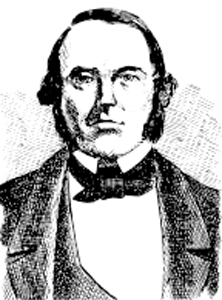
��������������� Although not as well remembered as men like Sam Houston, Steve Austin, Jim Bowie, Buck Travis or Davie Crockett, William G. Cooke was one of the true heroes of Texas history and one of the all time great Americans of the frontier set. He was among the first to serve Texas in uniform and also among the last when the Republic of Texas was formally annexed by the United States of America. He was born William Gordon Cooke on March 26, 1808 in Fredericksburg, Virginia to Adam Cooke and Martha Riddell Cooke. His family operated a drug store and his youth was spent in training for the family business. Keeping his interest in medicine, he moved to New Orleans, Louisiana where the Texas bug bit him hard. In 1835 the people of Texas had erupted in open revolt against the Mexican government of the military dictator Antonio Lopez de Santa Anna who had abolished the 1824 Constitution and garrisoned Texas with an army of convicted criminals. The provisional government of Texas sent out calls for volunteers to help them and one of the first to form was the New Orleans Grays. |
|
|
|
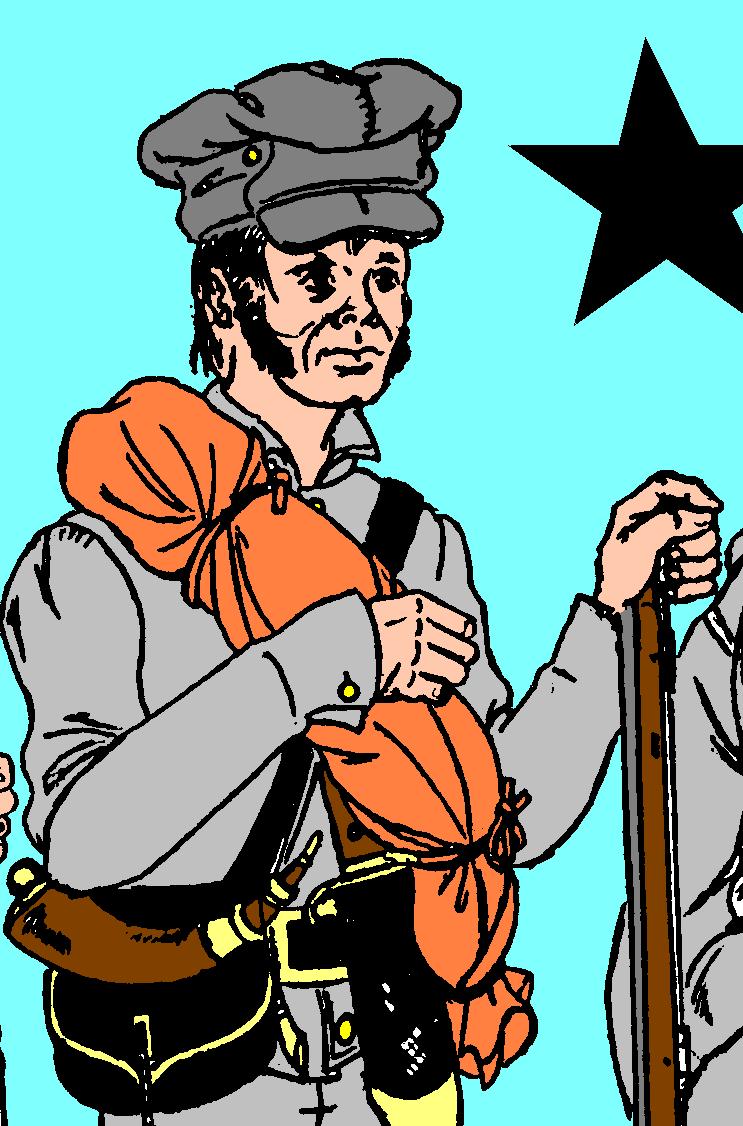
��������������� A very wild, tenacious and smart looking outfit, the New Orleans Grays organized into two companies with local volunteers as well as men from as far away as Canada and Germany and all points in between. Inspired by the plight of the Texas people and the call to glory and adventure, William G. Cooke signed up with the second company and donned the gray uniform on October 25, 1835. By land and by sea the Grays set out for Texas and at Quintana Cooke was elected first lieutenant of his company on October 26. When his company arrived at San Antonio and joined forces with the Texas army there, besieging the Mexican garrison under General Martin Perfecto de Cos (the brother in law of General Santa Anna) Cooke was elected captain of his own company. When the rough and ready Texan Colonel Ben Milam determined to storm the city, Cooke helped organize volunteers for the assault. Milam fell to a Mexican sniper in the initial assault with command passing to Grays Major Morris and Colonel Frank Johnson. Captain Cooke and his men played a key role, capturing the house of the local priest on the main plaza and when the Mexican garrison surrendered it was Captain Cooke who received the capitulation flag and sent it to Colonel Johnson. This, the siege and battle of Bexar as it was called, was the largest battle of the War for Texan Independence and the only one in which both companies of New Orleans Grays participated in full strength and Captain William Cooke played a pivotal role. |
|
|
��������������� After San Antonio was taken and the surrendered Mexican army was released to return home only on the promise that they would not take part in any aggression against Texas again many of the Texas volunteers continued to clamor for action and desired to take the battle to the enemy. An expedition was planned by Colonel Frank Johnson to march south and attack the Mexican city of Matamoros. The majority of the New Orleans Grays, always an adventurous lot, went too and Major Robert Morris was one of the top commanders of the group which first set out for Goliad. Captain Cooke, now of the renamed San Antonio Grays, was there as well and heard the stirring speech of General Sam Houston who urged the volunteers not to attack Matamoros. The Mexicans were far from beaten he told them and the best thing to do was to consolidate and await the counteroffensive that was surely on the way. Cooke was one of those moved by Houston and he abandoned the Matamoros enterprise and signed on with the Texas army. Little did he know this decision surely saved his life. |
|
|
��������������� At Refugio Captain Cooke met up with the Georgia Battalion and his new commander Colonel James W. Fannin Jr. who commanded all Texan forces in the area. Colonel Fannin ordered Cooke to march to the relief of his fellow Grays officer Major Morris at the old Irish colony of San Patricio where the Matamoros expedition was already in trouble, having run headlong into the advancing Mexican army of General Jose Urrea. Cooke was subsequently ordered back to Goliad as the forces marching on Matamoros were destroyed one at a time. Eventually, Colonel Fannin and his entire command would surrender and be massacred on orders from Santa Anna, but Captain Cooke was spared this fate when he was sent to the temporary seat of the Texas republican government at Washington on the Brazos with two Mexican prisoners of war to report to General Houston. |
|
|
��������������� William G. Cooke must have made an impression on the commanding general of the Texas republican army as he was promoted to major and given a position on his staff as assistant inspector general. His first task was to help in the organization of the practically non-existent army at Gonzales. This job done, he accompanied Houston on the famous runaway scrape as the Texans stayed one step ahead of Santa Anna following the heroic fall of the Alamo and the infamous massacre at Goliad. Finally, on April 21, 1836, at San Jacinto, General Houston turned on an unsuspecting Santa Anna and launched a surprise attack. The Mexican army was overrun and defeated in a matter of minutes, Texas independence was secured and General Santa Anna was taken prisoner. Major Cooke was the officer in charge of Mexican prisoners of war when this occurred and he had a hard job in keeping the rest of his justifiably angry comrades from lynching the Mexican dictator. |
|
|
��������������� During this historic battle, General Houston was badly wounded and had to go to New Orleans for medical treatment and Major Cooke went along with him. He came back, however, to take a government post as a clerk on the War Department. When Sam Houston was elected President of the Republic of Texas he gave Cooke a job as stock commissioner, in which position he served until 1839. In the meantime though, he had other duties entrusted to him which reflected how well respected he was as a hero of the Texas War for Independence. In November of 1836 President Houston made him temporary Secretary of War and the following year Inspector General. Following this assignment, Cooke retired from public service because of poor health and went into private business in Houston, opening two drugstores. However, he was recalled to public service again in the summer of 1837 when he signed promissory notes on behalf of President Houston who had an injured arm, a position Cooke held until 1839. |
|
|
��������������� The previous year Cooke had reenlisted in the Texas army, was made quarter master general of the Texas republican army and in the spring of 1840 the new President of Texas, Mirabeau Buonaparte Lamar, made him a commissioner for the Republic of Texas to the Comanche Indians. During his service in this area Cooke participated in what became known as the Council House Fight in San Antonio. This battle erupted over hostages taken by the Indians, including a young girl who had been gruesomely tortured and an attempted ambush at a diplomatic conference on March 19, 1840. Later that year Cooke was made commanding colonel of the elite First Texas Infantry Regiment. In this post Colonel Cooke and his men founded the Military Road from the Little to the RedRivers and improving internal travel and communication in Texas fighting off Indian attacks and struggling against harsh conditions with meager supplies the entire time. He explored and mapped large sections of north central Texas, established the Texas army bases of Ft Johnson and Ft Preston on the Red River and Cedar Springs Post on the Trinity River; the first of what would eventually become the modern metropolis of Dallas. |
|
|
��������������� When Colonel Cooke returned from this eventful expedition he was celebrated in the Texas Senate with a grand ball and was even nominated for vice president of the Republic; which the military rather than political Colonel Cooke declined. He did, however, accept the post of senior commissioner for the administration of President Lamar on the famous but doomed Texan expedition to Santa Fe, New Mexico. President Lamar, unlike President Houston, did not favor annexation to the United States but rather dreamed of an independent Texan Empire that would stretch to the Pacific Ocean (in fact the Texas legislature passed resolutions claiming the Californias). The area of modern New Mexico east of the Rio Grande was already nominally part of the Republic of Texas but in actuality most of the region was not really fully controlled by any government, Mexican or Texan. The Santa Fe Expedition was to establish a Texan presence in the far west of her frontier and Colonel Cooke helped to organize it and was to be the chief civil authority of the region once Texan rule was established. However, as Texans remember, the group was betrayed on September 17, 1841 and Cooke and his comrades were captured by the Mexican army and hauled to Santiago Prison in Mexico City in horrible conditions. International pressure finally forced Mexico to release the prisoners on the promise that they would not fight against Mexico again. |
|
|
��������������� As soon as he returned to Texas, Cooke disregarded this pledge; perhaps remembering how the Mexican army of General Cos had done the same during the War for Independence. A Mexican army under the French General Adrian Woll had invaded south Texas and Cooke rushed to join the Texan forces assembling under the veteran General Edward Burleson. He was wounded charging Mexican cannon with Captain John C. Hays at the battle of Arroyo Hondo on September 22, 1842 but survived to be appointed quartermaster general of the Texas Army by President Houston the following year. At this post he helped organize supplies for the expedition of Colonel Jacob Snively which ran afoul of the United States as well as the punitive expedition of General Alexander Somervell which Cooke actually joined. He left with the command on February 1, 1843 and so was spared the fate of those who went on to what is known as the Mier Expedition and the infamous Black Bean Incident but that is not to say his aggressiveness toward Mexico had cooled. |
|
|
��������������� When civil war broke out on the Mexican coast the newly proclaimed Republic of the Yucatan enlisted the help of the Texas Navy under the famous fighting sailor Commodore Edwin W. Moore. Cooke went to New Orleans and switched services to join the Texas Navy where he saw plenty of action on the high seas. The Mexican navy was small but they had experienced British officers commanding their ships and had innovations like steam power and iron armor. However, Commodore Moore and the Texas Navy still triumphed over them with Cooke fighting aboard the sloop-of-war Austin, flagship of the Texas Navy. Later, Cooke joined the crew of the Independencia and sailed with her on two voyages to raid Mexican shipping and in the hope of taking Mexican prisoners who could be exchanged for Texans still suffering in Mexican captivity. The first voyage brought a victory in the capture of a Mexican ship but the second brought only the unhappy news that President Houston, who wanted to scrap the Texas Navy, had declared them pirates! They returned to Galveston on July 14, 1843 and were exonerated of the charge despite the efforts of the President. |
|
|
��������������� William Cooke received another assignment from another of his comrades in the War for Independence, General Sidney Sherman, who appointed him adjutant general of the Texas militia. The following year Cooke was elected by the people of BexarCounty to represent then in the Texas House of Representatives in the Ninth Congress where he also served as chairman of the Committee on Military Affairs. He spoke in defense of his old commander in the navy, Commodore Moore, during his legal persecution by President Houston. In the end Moore was exonerated and the Texas Congress passed a bill commending him which Houston, in a rather childish display of sour grapes, vetoed (the Congress eventually was able to override his veto and extend official praise anyway). The stature Cooke gained in government earned him a place in the succeeding administration of President Anson Jones, the last President of the Republic of Texas. Cooke served as Secretary of War and Marine, replacing Morgan C. Hamilton. It was a job Cooke was uniquely qualified for, having served from the ranks on up to commander in the Texas Army as well as seeing action in the Texas Navy. |
|
|
��������������� Cooke also found time for romance in his private life. On August 16, 1844 he married Angela Maria de Jesus Blasa Navarro and the couple later had a son. Angela was the daughter of a very prominent Tejano family and proof that his adamant opposition to Mexico was purely political and never racial. When it became clear that the Republic of Texas was to be annexed by the United States, Cooke had to disband the Texas army and begin preparations for sustaining the army of occupation soon to arrive in Texas under General Zachary Taylor. The votes were cast and Texas became a member of the United States with William G. Cook, possibly the last man to wear Republic of Texas Army uniform, was present with the other members of the administration of President Anson Jones at the formal handover ceremony wherein the Lone Star flag of Texas was symbolically replaced with the Stars and Stripes. Cooke decided to run for Congress as a new representative from Texas but he was barely defeated by Timothy Pillsbury. On April 26, 1846, Cooke was made first adjutant general of the state of Texas by Governor James P. Henderson; an office he held until his death on December 24, 1847 from tuberculosis. |
|
|
|
��������������� William Gordon Cooke, though not among the most famously popular, is one of the giants of Texas history and was a man who dedicated his entire life to the service of the LoneStarState. He served in uniform longer than almost anyone, from his first days as a volunteer in the New Orleans Grays during the War for Independence, throughout the battles to maintain that independence from the Somervell expedition to the Santa Fe expedition and even service in the Texas Navy across the Gulf of Mexico. He had been a general, a government official, a soldier, a marine, and a prisoner of war. Although not remembered in the same category as the martyrs for liberty like Travis, Bowie and Crockett or the winner of independence Sam Houston or the Father of Texas Stephen Austin, William G. Cooke has a reputation second to none when it comes to courage, determination and a lifelong devotion to serving the people and Republic of Texas. |
|