 |
|
|
|
|
|
|
|
|
|
|
|
|
|
|
|
|
|
|
The Sun King of France |
|
|
A Catholic Perspective |
|
|
 |
|
|
 |
|
|
|
|
|
|
|
|
|
|
|
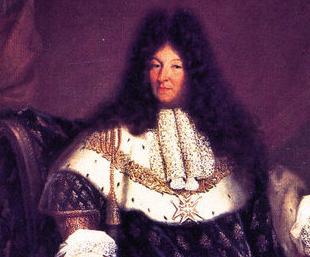
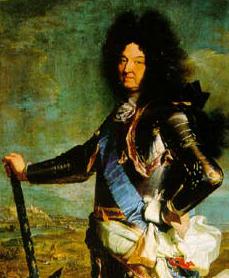
Probably one of the most dominant monarchs in the history of the world at least as far as popular images of monarchism goes is certainly King Louis XIV of France. Known as the Sun King, Louis the Great or simply the Grand Monarch his image is the first to come to mind when one thinks of royal power and opulence. All of these hundreds of years after his long and eventful reign he is still remembered as the epitome of royal absolutism as well as royal extravagance. Yet, his reign is also remembered with at least a touch of pride by many patriotic French as a time when France was the dominant world power, the most glamorous, artistic and scientifically advanced nation in Europe. The reign of Louis XIV marks, perhaps, the zenith of the ancien regime as it is most often remembered. Whether one hold a positive or a negative opinion of Louis XIV, he is impossible to ignore. As a monarch, he was a colossus. Most events in western Europe during his lifetime revolved around his actions and decisions. As a man, he is harder to judge. |
|
|
How is it though, that Catholics remember the monarch known as the Sun King? That is a somewhat more complicated question. In a way, Louis XIV and his reign personified Catholic France, and the Church itself to an extent. That is, sinful but driven, a flawed man but one who reigned in radiant style. Louis XIV is justly criticized by Catholics, and was by the Church in his own time, for his centralization of power, his debauchery and his effort to subordinate the Church in France to his own royal will. Yet, it must be remembered, Louis XIV also fought the Protestants with considerable zeal and supported Catholicism in Great Britain; both of which conveniently served his political ambitions as well. He is a hard man to admire but also a hard man to resist applauding for the hypnotic grandeur of his reign. At the end of the day he was also always a staunchly Catholic monarch, if not ever a devout one. He could never abide Protestantism and close as he might come he could never bring himself to totally break with Rome and be a French Henry VIII. |
|
|
Louis was born on September 5, 1638 to King Louis XIII and his queen Anne of Austria. Legend has it that he addressed himself as Louis XIV even as a little boy to his father who was on his deathbed. Whether true or not, it illustrates the arrogance that would come to be so associated with Louis XIV, though even for a man who liked to model himself as the sun god Apollo he could also be very polite and charming. He was only four years old when his father died and he became King of France and Navarre on May 14, 1643 and this, combined with his longevity for his time and place would earn him a place in the record books as the longest reigning monarch in European history at 72 years. Early on, as per the wishes of his father, he was acted for by a regency council directed by his mother Anne of Austria but it was Jules Cardinal Mazarin who was the real power in the country. |
|
|
Before Cardinal Mazarin came to prominence it was his former boss, the famous Cardinal Richelieu, who was the power behind the throne. Cardinal Mazarin was more quiet and subtle while Cardinal Richelieu had been very much large and in charge but both had similar policies. The most significant in terms of the wider Catholic Christendom was their opposition to the Hapsburgs of the Holy Roman Empire and their desire to promote France and French interests at any cost. In the days of Cardinal Richelieu this meant entering the 30 Years War on the side of the Protestants by way of supporting the King of Sweden. It was terrible for the Catholic Holy Roman Empire but it was good for France as following the devastation of Hapsburg central Europe the French emerged as the dominant power on the continent. Mazarin expanded France and clashed with the Pope but gave only empty promises to the French Protestants to placate them and was a zealous enemy of the Jansenist heresy. In many ways Louis XIV would follow this same basic platform of conquest for the glory of France, making himself an enemy of the Pope but also fighting Protestantism. There was even a connection in the realm of foreign policy as it was Hortense Mancini, the niece of Cardinal Mazarin, who was a mistress to King Charles II of England and a relative of Mary of Modena; Queen consort to King James II. |
|
|
The young monarch got his chance when Cardinal Mazarin died in 1661 and Louis XIV announced that from then on he would be his own chief minister and rule the country directly himself. At or near the top of his order of business was the centralization of power in France. True enough, he could look back at the long history of civil wars in France fought by powerful, feuding nobles as justification for this and which were not a distant memory. However, the Catholic observer would look for some other way to ensure peace in the realm in preference to the method of Louis XIV which was to consolidate all power in the country into his hands alone. This building of the absolute monarchy in France, underway at least since the administration of Cardinal Richelieu and a weak monarch, was now coming to fruition under Louis XIV; a very powerful and assertive monarch. |
|
|
For Louis XIV to rule France personally required a huge government bureaucracy and this he created. The number of civil servants in France rose from 600 to an astounding 10,000 as the Grand Monarch brought every aspect of French government under his control. When Louis claimed that he was the state he was being fairly accurate. His magnificent palace at Versailles also played a part in this enterprise. Begun early on but only completed and lived in during the height and end of his reign it served several purposes. One was that Louis loved the country and hated being in the city or even in doors longer than was necessary. Additionally, the grandeur and opulence of Versailles helped awe visitors and was a display of his magnificence and power as the Sun King (even the rooms and his routine were laid out in imitation of the rising and setting of the sun) and finally it gave him a place to gather all of his nobles together where they could live in splendor as guests of the king, away from their estates, where he could dominate and keep a close eye on them. |
|
|
Versailles was built around a hunting lodge of Louis XIII and included such luxuries as 1000 orange trees, copper gilded chimneys, a large collection of exotic animals from Africa and Asia, 2,400 fountains and two million pots for flowers to allow for constant changes in the garden setting of the palace. Musicians were employed constantly as Louis never liked to be without music playing in the background. Representations of the sun could be found throughout the palace and there was an endless succession of parties and entertainments with the finest food and the finest wine constantly flowing. Strict rules of etiquette and ceremony pervaded life at Versailles and, in recognition of the dichotomy of Louis XIV, there were lavish rooms for his mistresses as well as numerous clerics on hand to preach and advise in spiritual matters. Colbert, the finance minister, kept the French economy afloat with all of this extravagant spending through precise record keeping, the weeding out of corrupt and dishonest officials and tax collectors and other means to keep Louis in money. It worked for the time being but with the tax burden falling squarely on the poor while the elites paid almost nothing meant that there would be big problems in the future. |
|
|
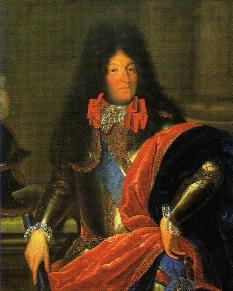
Louis also set his sights on expansion and military glory early on and to this end he dramatically increased the size of the French army. Before long, he had a very capable and professional military of 400,000 men. His first concern was the continuing war with Spain which he was fighting, in a way reminiscent of Richelieu and the Swedes, with the Puritanical dictator of England Oliver Cromwell. The result was a resounding French victory in 1659 over King Philip IV and the resulting Treaty of Pyrenees secured for France the long disputed territories between the two countries. The personal reign of Louis XIV, it seemed, was off to a good start. Yet, it was to the east that his true ambitions lay. Louis XIV wanted to extend the French frontier to the Rhine River and toward this end, in 1667, he launched the War of Revolution against King Charles II of Spain (his brother in law following his marriage to Marie Therese of Austria) in order to conquer the Spanish Netherlands or what is now Belgium. |
|
|
 |
|
|
Eventually an alliance was formed against Louis which included Spain, England, Holland and Sweden. This is important to remember when Louis XIV is criticized for never gaining much with his military policies or at least eventually losing what he did gain, but it should be kept in mind that it invariably took coalitions of most of the major powers in Europe to stop the advance of the French army under his command. For many years his primary enemy was the fledgling Dutch republic which stood in the way of his drive to the Rhine. The foreign policy of Louis XIV was dominated for some time by a delicate dance between France, Holland and England. The Dutch worked with the English Protestants against the French while the French worked with the English Catholics to oppose the Dutch. In any event, the War of Revolution lasted until 1678 when the Peace of Nijmegen was signed but by 1689 Louis was back at war again against the Germans as he sought to extend and stabilize the French frontier. |
|
|
In his international agenda Louis XIV was a plain and simple nationalist in that he favored anything which would advance France and would make whatever sort of agreements were necessary to serve French interests. On moral and religious issues, however, he was somewhat more contradictory. His private life was scandalous, though the worst was usually kept away from the public. He had a succession of mistresses and aside from these women, who he generally treated well, he was known to go to bed with whatever woman was available and caught his eye when the mood hit him. His court chaplain, Bishop Jacques Bossuet, one of the most gifted and eloquent preachers in Christian history, was constantly reprimanding Louis to get his private life in order. |
|
|
Some mistresses tried to influence him for the better too such as Madame de Maintenon while another, Madame de Montespan, took up sorcery to try to hold his favor. At times Louis and his mistress of the day would go to confession, take communion and resolve to live as friends but it never seemed to last very long. It is noteworthy that Bossuet, best known for his Biblical defense of absolute monarchy, was never in favor of arbitrary monarchy and despite the exalted position of his master was not afraid to reprimand the royal sinner. As regards his religious policies as the Most Christian King of France, Louis XIV was an avowed enemy of Protestantism and his dragoons caused plenty of misery for the Calvinists in France. He viewed them not only as heretics but based on the recent histories of Britain and Germany also as the spreaders of political discord and rebellion. It must have only reinforced this opinion that some of his most intractable enemies were the Protestant Dutch republicans who embodied everything that the absolutist Catholic King of France despised. |
|
|
In 1685 Louis XIV revoked the Edict of Nantes which had granted religious tolerance to the Protestants of France. He may have thought to win some favor with the Pope through this measure, though as usual it coincided with his political interests to remove a rebellious faction and seize the considerable wealth of the Protestant elites, but the Pope, Innocent XI, opposed the revocation, stating that Christ would not have done such a thing and that sinners must walk into the temple; they cannot be dragged. After this act all Protestants were forced to convert to Catholicism or leave France, which is what most of them did. However, this action by Louis XIV did not really make France much more Catholic. Many who did not go into exile simply abandoned Calvinism for agnosticism and simply became religious skeptics who had no real religion at all and the seeds they planted were to bear terrible fruit for France and the rest of Europe in the era that followed. |
|
|
In the Church itself Louis zealously fought Jansenism, which is to his credit, but he also supported the Gallican cause, as it was known, which was an effort to make the Church in France answerable to the King rather than the Pope. For years the Pope and King Louis were practically enemies. Innocent XI refused to appoint bishops to vacant dioceses which the King wanted appointed and would advance those favored by the Hapsburg Holy Roman Emperor rather than King Louis. Infuriated, Louis finally seized the Papal city of Avignon and had the papal nuncio imprisoned, however, as bad as things got, at the end of the day, Louis XIV was a Catholic monarch and could not bring himself to take France into schism. In later years Pope Innocent XI was beatified and would have been canonized were it not for the strident opposition of the French and still to this day the late pontiff remains Blessed Innocent XI rather than saint. |
|
|
|
Aside from the wars, Louis XIV kept himself busy in many other ways on the world stage. He supported, for example, French exploration in North America led by such men as Champlain and La Salle. The territory of New France, modern day Quebec, was settled, the mouth of the Mississippi was reached and the Louisiana territory was claimed for France and named after King Louis XIV and Queen Anne. During his life the reign of the Sun King eventually came to shine from Canada to the coast of Texas. Along with these expeditions also went heroic Jesuit priests who established missions and converted Indians such as St Isaac Jogues and St John de Brebeuf. Some were martyred but more was won than was lost and the practical knowledge gained was also considerable such as by the expedition of Father Marquette and Louis Joliet who explored the mighty Mississippi as far as Arkansas. By the end of his life Louis XIV had made France the dominant power in North America. |
|
|
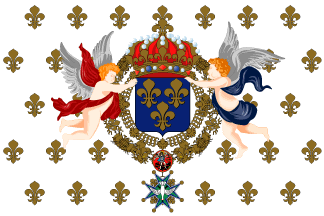
In France itself the Catholic Church was going strong despite the troubles at the top. St Vincent de Paul did immensely good work in his help for the poor at a time when it was sorely needed and what is more than what he was able to accomplish himself was his gift of being able to persuade the wealthy to willingly give charity and do more than he ever could on his own. He helped orphans, prisoners, the sick and downtrodden and was able to recruit enough female supporters to found the Daughters of Charity to compliment his own order of priests known as the Congregation of the Mission. At roughly the same time St Margaret Mary Alacoque received her vision of the Sacred Heart of Jesus and her charge to spread this devotion throughout France and the world from the King to the poorest peasant. As instructed she even went to Louis XIV to ask him to emblazon the Sacred Heart on the arms of France, which the worldly monarch refused to do. Catholics can point to this rejection of the love of Christ as a spiritual mistake which perhaps made God less inclined to protect France later in her hour of need. |
|
|
 |
|
|
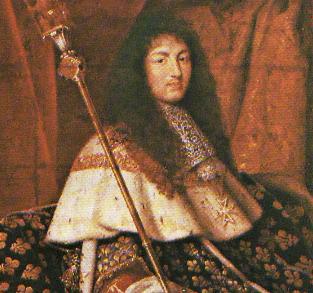
In political affairs Louis was very pragmatic and though he favored certain causes above others was always first and foremost concerned with what was in his own interests and thus the interests of France. This meant that he supported the Muslim Turks against his age old enemy the Holy Roman Empire but also that he supported the English Catholics and the Stuart monarchy in the British Isles. King Charles I had married his aunt, Henrietta Maria, and he took care of her following the English Civil War and throughout the Puritan Interregnum. He also supported King Charles II in his struggles with the Protestant elites who dominated Parliament. Louis XIV gave Charles II money and promised military support should the power of the monarchy be threatened again in return for Charles promising to become Catholic when the time was right. When Parliament tried to rob James, Duke of York, of his succession rights because he converted to Catholicism King Charles II was able to dissolve Parliament and rule on his own for the end of his reign thanks to the support of Louis XIV. On his deathbed he became Catholic as well. |
|
|
When King James II came to the thrones of England, Scotland and Ireland he was a natural ally of Louis XIV. His marriage to Mary of Modena had been arranged by King Louis, his mother was French and they shared a common religion and an interest in the defense of monarchy. The primary antagonist of Louis XIV in his eastward offensive was William III, Prince of Orange, leader of the Dutch republic and the brother in law of King James II. When James and Mary produced a Catholic heir to the throne the Protestant elites in Parliament conspired to overthrow James II by supporting a Dutch invasion of their own country by William of Orange. The last thing Louis XIV wanted was for the Dutch to control the British Isles and he warned James II that his daughter and son in law were plotting against him. Unfortunately, James could not believe that his own daughter and her husband were about to invade England and attack him. By the time the facts became clear and he took action it was too late and the so called Glorious Revolution of 1688 drove James II from the throne and replaced him with William III and Mary II. |
|
|
King Louis XIV gave James sanctuary in France and he lived there the rest of his life, never managing to retake his throne. Also known as the War of the Grand Alliance, the Nine Years War or the War of English Succession, the French and the Irish Jacobites were opposed by the Holy Roman Empire, the Dutch republic, England, Spain, Savoy and Sweden. The long standing enmity between Louis and the Austrians has always been a painful memory for Catholics even though it was something very often encouraged by the Papacy when the Empire became worryingly powerful. Louis XIV had no qualms about being friendly with the Muslim Turks who were menacing Austria and he consistently refused to participate in any crusade against them even when Pope Innocent XI offered him Constantinople as a potential prize if he did so. The Jacobites may have lost in Ireland but on the continent Louis did rather well though he gave considerable concessions to make peace. It was hoped this generosity would aid in better relations with Spain. |
|
|
The War of the Spanish Succession was to be the last significant European clash of arms during the reign of Louis XIV. The question at issue was whether the childless King Carlos II would be succeeded by a French or an Austrian royal and Louis XIV naturally favored the extension of French power and the defeat of his longtime Austrian rivals. The Spanish, for their part, were mostly interested in maintaining the Spanish Empire and not seeing it divided between the Bourbons and Hapsburgs. Most Protestant powers sided with Austria, not wishing to see Louis become ever more influential. The Spanish offered the throne to the Duke of Anjou on the condition that he maintained the whole of the empire and should he refuse it would go to the Duke of Berry, if he refused then the Austrian Archduke Charles and finally if all refused it would then pass to the House of Savoy. Louis XIV was finally prevailed upon to accept the Spanish terms as no matter what he agreed with Spain, any Bourbon being placed on the Spanish throne was likely to spark a war against him. The agreements were all signed and when Carlos II died the throne passed to the Duke of Anjou as King Felipe V. |
|
|
The rest of Europe agreed but certain actions of Louis sparked trouble, though in each case no one (certainly no Catholic) could call them unreasonable. Upon the death of the exiled King James II of Britain and Ireland Louis supported his son, Charles Francis Stuart, as the rightful monarch rather than the Dutch Protestant King William III in London. Further, to ensure a peaceful acceptance of the new succession he garrisoned the Spanish Netherlands (modern Belgium) with French troops, which of course infuriated the Dutch republic. The British, Dutch and Germans formed yet another Grand Alliance to fight Louis XIV who secured his own allies in Spain, Portugal, Savoy and Bavaria. |
|
|
France had enjoyed a high military reputation during most of the era of King Louis XIV (a significant reason for the Spanish favoring a French monarch) but the war quickly pushed French finances to the breaking point and the command structure was grossly inefficient. Additionally, the enemies of France enjoyed the talents of two of the greatest generals of the age; the British Duke of Marlborough and the Austrian Archduke Eugene of Savoy. Bavaria was soon defeated and Portugal and Savoy jumped ship and switched to what seemed to be the winning side. The war went steadily worse and worse for France to the point that King Louis was willing to make almost any sacrifice for peace. However, the Allies proved to be totally unreasonable and made demands that no one would have accepted and so the war continued. By 1712 the Allies were probably wishing they had accepted the generous terms Louis had offered when they had the chance for in that year the skilled leadership of the Duke of Villars brought a new wave of French victories and the tide of the war seemed to be turning back in the favor of the Sun King. |
|
|
The situation was further complicated by the Austrian Emperor Leopold I who was succeeded by Emperor Joseph I. The Allies, particularly the British, came to the belated realization that if they were successful Emperor Joseph would come into possession of a vast realm the likes of which had not been seen since the reign of Emperor Charles V. With visions of the Spanish Armada dancing in their heads the British started to question whether they really wanted to beat the French after all. Thus, Britain and France came to terms and after a few more battles the Austrians decided to call it quits as well. France had to make some concessions but on the whole came out much better off than most would have thought. Even with all the major powers of Western Europe allied against her she had held her own. The peace with Austria was signed in 1714 and King Louis XIV died only a year later on September 1, 1715 just before his 77th birthday. To the very last his word commanded war or peace for half the world. |
|
|
 |
|
|
Looking back on the reign of the Sun King we can see a man full of dichotomies. He was complex and shallow at the same time. Although he probably never declared that he was the state, he was certainly an imperious man. However, Versailles was never so open to the public as when he was alive. Almost nothing was often limits and those who did wander into a restricted area were told quietly by some servant so as to avoid embarrassment. He held huge numbers of audiences and would make time for almost anyone. Despite his fondness for the finer things he was also a very hard working monarch who put in extremely long hours attending to his government. |
|
|
For Catholics he remains a rather mixed bag. He shrugged off a great deal of Christian morality and there was an outbreak of high society murders by poison and even Satanism during his reign which it would be easy to lump together with his own immorality. However, he always remained somewhat attached to the Church and could never bring himself to break from his Catholicism. In his foreign policy he allowed personal ambition and nationalism to trump his faith but, although this meant siding against his fellow Catholics in Austria in also meant supporting the faith in England and Ireland wherein Louis XIV used devotion to the Catholic Church as a means of displaying commitment to France. It should also be remembered that his revocation of the Edict of Nantes, though criticized by modern standards of freedom of religion and condemned by the Pope was almost universally praised and advocated by the Catholic hierarchy in France at the time. It is also true that while it was his France that saw the first enlightenment trend toward cynical unbelief it was also his France that represented the height of Catholic civilization in science, literature and the arts after the Renaissance. There were many dark spots he brought to the lilies of France, but it cannot be denied that his reign brought a glory to Catholic France, to the old Bourbon kingdom, that it has never seen since. Once again, it can be said that he was a hard man to like but a hard man not to admire as well. |
|