

Some might think it would be hard to find a monarch who was not an enthusiastic monarchist after the horrors of the French Revolution and the Napoleonic Wars. However, they were not always so dedicated to monarchy on principle as one might think. Probably the most monarchist monarch of them all was Emperor Francis I of Austria who was one of the founders, though not the driving force, behind the very monarchist Holy Alliance that was to be a sort of monarchist coalition to stamp out revolution wherever it appeared. However, the Czar of Russia seemed to be trying to have his politics both ways and there were plenty of others who seemed willing to try to come to an agreement with their enemies. The Holy Alliance was stopped, for example, by the British mostly, from coming to the rescue of the Spanish Empire in America when the Latin American colonies began to revolt. It was a crucial mistake, for the cause of monarchy at least, for the failure to take immediate action meant that the Americas were to become almost a "republics only" zone. The United States was opposed of course, but she was not strong enough to enforce the "Monroe Doctrine" and had a European coalition intervened then it might have died an early death.
In the era after the Napoleonic period one royal who was certainly a monarchist monarch in his own attitudes was King Charles X of France, however, enough political instability and divisions remained in his country as a result of the Revolution that he was not able to do a great deal to promote monarchy as he was ultimately unable to hold on to his own throne. Very oddly enough, one monarch who displayed a favoritism for monarchy in his foreign policy was Emperor Louis Napoleon III who had started out as a liberal revolutionary himself and who first came to power as the President of the Republic. However, he was helped out in monarchist eyes by having an extremely monarchist wife in Empress Eugenie who was Spanish and had a very zealous devotion to religion and royalism. Certainly not all of Louis' policies were good for monarchy in Europe but he did do some important things all monarchists should be able to applaud no matter what the reasons or how he might have botched them later on. He did provide French troops to protect the Pope and his temporal rule of Rome against the red-shirt republican revolutionaries of Garibaldi and it was French troops under his orders who defeated the republicans in Mexico and restored the monarchy in that long-suffering country in the person of Emperor Maximilian. In his colonial expansion into Southeast Asia he also did not remove the defeated native monarchs from their thrones even though in some cases there was considerable revolutionary opposition that might have served his interests to do so. Had things gone differently he also had plans to expand monarchial rule into South America, possibly Ecuador and wanted to create a "Kingdom of the Andes".
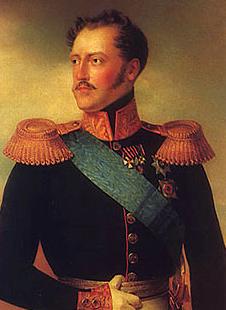
However, in the Victorian era there was probably no more monarchist a monarch than the man known today as the "Iron Czar" Nicholas I of Russia. Nicholas I did not grow up thinking he would become Emperor of All the Russias and had the crown thrust upon him, nonetheless, he was one of the greatest enemies of anti-monarchy movements in modern European history. He firmly and dicisively suppressed revolution in his own country, did his best to ensure that republicanism could never gain a foothold and he carried out a very monarchist foreign policy. Nicholas I was an enemy of republicans no matter which monarchy they happened to be in. When Poland threw off their Russian Crown he sent his troops in and restored his place as King of Poland. He urged his brother monarch the King of Prussia not to give in to the constitutionalists who wanted to weaken the monarchy with a liberal government. Most importantly, when Hungarian revolutionaries rose up against the Emperor of Austria Nicholas I sent his Russian troops in and largely saved the day for the Austrians, putting down the rebellion with ruthless energy. Because of all of this he became known as the "Gendarme of Europe".
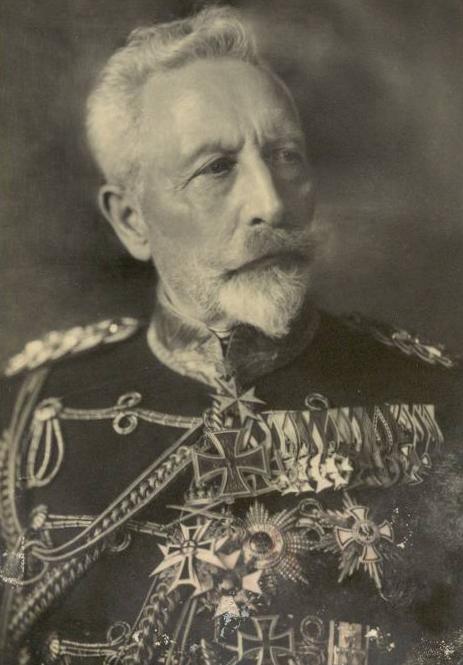
In the 20th Century the title of most monarchist monarch would probably fall on the German Kaiser Wilhelm II. Like everyone named here he is considered a controversial figure but, love him, hate him or mock him, he was every inch a monarchist. This comes across in his own style, many of his words and letters, particularly his letters to his cousin Czar Nicholas II in which he spoke of the need for the monarchs of Europe, particularly the emperors of Germany, Austria and Russia; standing together in opposition to the spread of republicanism. His government could be criticized most for their return of the Bolshevik revolutionary Vladimir Lenin to Russia to make trouble. However, I don't think anyone fully grasped how bad things were in Russia and it seems this was purely done as a military tactic to undermine the Russian war effort. I cannot believe that the Kaiser or the Germans in general could have foreseen the terrible fate that befell the Russian monarchy because of their actions. More important though, in terms of this discussion, is German policy as a whole during World War I and the clear favor shown to the spread of monarchy. Before their defeat the Germans had taken steps to set up a Kingdom of Finland, Kingdom of Lithuania, United Baltic Duchy (consisting of Estonia and Latvia), Kingdom of Poland and a monarchy in the Ukraine. The German legation in China also supplied money and weapons to the Qing loyalist Zhang Xun who restored the last Manchu Emperor for a short time in 1917. There is no doubt that had the Kaiser been triumphant the world would have been a much more monarchist place than it turned out to be.
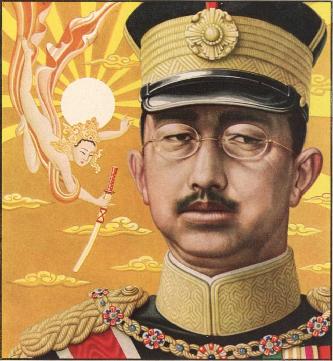
Lastly and probably most controversially we move from World War I to World War II and the Japanese Emperor Hirohito. How big a part Emperor Hirohito played in Japanese government during the war is still a matter of very heated debate and, as stated, motives and the actions of troops and so on is not what I am talking about here. The fact remains that, during the reign of Emperor Hirohito, there was a clear Japanese policy of favoring monarchy over republican governments wherever possible. The Japanese restored the last Emperor of China to the throne of his ancestral homeland in Manchuria, sponsored a monarchy in Inner Mongolia under Prince Teh, restored to (at least nominal) independence the native monarchs of Laos, Cambodia and Vietnam, allied with the Kingdom of Thailand and several native monarchs in Malaysia and in the areas under their control stressed the importance of monarchy and the principle of loyalty to the native king or emperor as a vital part of national revival. This is not meant as an attempt to justify all of the actions of Japan or the Japanese military but only to point out that had Japan won Asia would be much more solidly monarchist than it turned out to be. In fact, Japan did not even have to win for this scenario to have happened, the Allies could have simply left the native monarchs on their thrones and supported them as they did in Japan. Some might bring up the actions of the Kingdom of Italy in the era of World War II, but I do not. This is not because of any reluctance to deal with the issue of fascism or how genuine the monarchies in Ethiopia, Albania, Croatia and so on might have been compared to those in Asia but rather for the simple reason that these cases do not fit in with what I am talking about as none of these were a case of restoring or establishing a monarchy in what had been republican territory as all of the areas mentioned, whether Ethiopia, Albania or Yugoslavia, already had monarchs of their own and so do not fit in with the premise of this discussion.
I am sadly forced to admit that this would be a controversial issue even among monarchists. However, I put it forward only to try in spark some interest in the cause of pan-monarchism. I would like to see the monarchies of the world display the same pride and zeal as republicans in defending and promoting their form of government at home and abroad. The history of republics spreading republicanism around the world, despite all of their glowing speeches, do not have a great history of success. Monarchists should exploit that weakness and present their own alternative. For every president preaching the spread of republicanism around the world I would like to see leaders of monarchist governments balancing their bombast with calls for the spread of monarchy, the defense of those that survive and basically doing more to "sell" the idea of monarchy around the world as a better form of government and a better record of success than republicanism has ever enjoyed.