 |
|
|
|
|
|
|
|
|
|
|
|
|
|
|
|
|
|
|
|
|
|
|
|
|
|
|
|
|
|
|
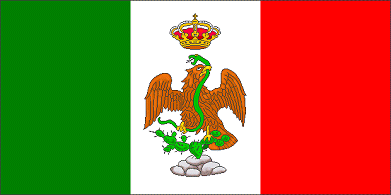
The Rise and Fall of the Second Mexican Empire |
|
|
 |
|
|
|
 |
|
|
|
When Mexico first became independent of Spain in 1821, it was as an empire rather than a republic. However, the short-lived monarchy of Emperor Agustin de Iturbide lasted only a few months before he was forced to abdicate and was eventually shot. A disgruntled former subordinate, Antonio Lopez de Santa Anna had led the opposition against him, but it was Guadalupe Victoria who became the first President of the Republic of Mexico. However, Mexican politics rapidly degenerated into open warfare between competing factions as one self-interested president after another seized power. The second Mexican President, Vicente Guerrero, seized power in a coup with the help of Santa Anna in 1829 to stop the conservatives from taking office. He was, in turn, removed by another coup and was later killed by the conservative General Anastasio Bustamante when he tried to take power by force once again. His successor was president for less than a week and the fourth man to hold that office lasted only a day or two more before the former monarchist Bustamante became president, bringing a short period of conservative rule to Mexico and surrounding himself by such traditionalist leaders as Lucas Alaman. |
|
|
|
Ultimately, the long time schemer Santa Anna seized power, and typical for a man who had once supported the Emperor, then led his overthrow, Santa Anna first posed as a federalist, or states' rights advocate, only to reveal himself as a centralist once in power. He declared that Mexico was not ready for democracy and abolished the Constitution of 1824 which had been modeled on that of the United States. This quickly led to the War for Texas Independence in which Santa Anna was humiliatingly defeated and taken prisoner by Texas General Sam Houston. Almost a decade later, Santa Anna again seized power when the annexation of the Republic of Texas by the United States led to another war with Mexico and another defeat after which Santa Anna was deposed again and a great deal of territory was sold to the American government. |
|
|
|
The presidency went back and forth through the hands of a few men as each faction in Mexico blamed the others for their defeats and became increasingly radical. Ironically, it was a Mexican of French heritage named Ignacio Comonfort that was the first to take the most radical step of disestablishing the Roman Catholic Church as the official religion of Mexico. This sparked a fierce period of more internal conflict which ultimately came to be led on the liberal side by the Indian Benito Juarez, who had been Vice President under Comonfort. Both factions claimed power and as the liberals became more radical in attacking the Church, the conservatives in turn became more convinced that an outside force would be needed to firmly restore order to Mexico and that a change in the form of government rather than simply the men in government was necessary. |
|
|
|
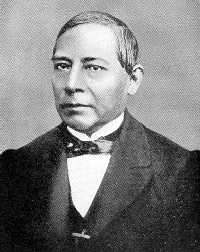
The conservatives were mostly united by Miguel Miramon, who became the youngest Mexican president at age 25. Opposing him was the liberal forces of Benito Juarez. As usual, foremost among the liberal projects of Juarez was land redistribution and bringing the Church under government control. At one point Juarez even attempted to set up his own Mexican pope to take the place of the Holy Father in Rome. Juarez ultimately managed to defeat the conservatives and send Miramon into exile in Europe, but he had driven Mexico into bankruptcy doing it. This would not have attracted too much concern were it not for the fact that on July 17, 1861 Juarez announced that he had no intention of honoring his debts and Mexico's foreign creditors would simply have to take a loss. |
|
|
 |
|
|
President Benito Juarez |
|
|
The French Emperor, Louis Napoleon III, organized an international expedition consisting of French, British and Spanish forces to force Mexico to pay her debts. This resulted in the Treaty of London which was signed on October 31, 1861. The forces of Spain arrived in December from Cuba and occupied the port city of Veracruz. British and French troops arrived in January of 1862 and Britain and Spain were soon placated with promises from Juarez to pay up, but Napoleon III had other motives and kept his troops in Mexico. Hoping always to emulate his famous uncle, Napoleon III saw here a chance to further establish French prestige and glory as well as investing in a future friendly Mexican government. Mexican conservatives, exiled in Europe, had been putting their case before anyone who would listen and were anxious for any help that would mean the end of the liberal monopoly on power. There was also the bold and pious Spanish wife of Napoleon III, the Empress Eugenie who championed the cause of the beleaguered Catholic Church in Mexico and was adamant that Louis do something to set things right again. |
|
|
Emperor Napoleon III was not entirely a moral crusader though and he also had dreams of emulating the military success and empire-building of his uncle and thought that military victories around the world would shore up his own power base. There were also considerable mineral riches in Mexico which could be exploited and since the United States, which had warned all European nations against interfering in the Americas with the Monroe Doctrine, was currently engaged in a civil war there was no immediate danger of being challenged by the US. He also knew that his position could be defended more easily if an independent monarchy was established by a non-French figure who favored his interests. Mexico would not become an outright French colony, but surely the new government would be favorably inclined toward France if his troops and credit helped establish it. The choice for a candidate to the throne of Mexico eventually fell on the Archduke Maximilian of Austria who was popular, a progressive thinker and somewhat dissatisfied by his lack of an appreciable role in Austrian affairs by his conservative brother Emperor Francis Joseph. He was also a descendant of Emperor Charles V and the Spanish Hapsburgs who had claimed Mexico centuries ago. Napoleon III may also have wished to thwart the ambitions of his half-brother, the Duc d'Morny, who had been strongly pushing intervention in Mexico. Events were soon set in motion for the French occupation of Mexico and the restoration of the Mexican Empire. |
|
|
In January of 1862 the French and British expeditionary forces arrived in Mexico. Their intention at the outset was to simply establish a presence in the area, demonstrate their military superiority and force President Benito Juarez to pay the money he owed them. This was not an uncommon event around the world and would be repeated later on by other nations, however, Napoleon III had more far reaching goals in mind. The British and Spanish, however, did not share these goals. Eager to distance themselves from an enterprise they had no part in, when Benito Juarez renewed his promises to pay up over time in installments all British and Spanish forces evacuated in April. It then became a pitched battle between the French and Benito Juarez, it is important to remember, not the French and the Mexicans. Benito Juarez, it must be remembered, had never been democratically elected by a majority of Mexicans, nor does the evidence show that the populace was largely loyal to him. For France to conducted extended military operations from across the Atlantic in Mexico, the Mexicans could have had the French vastly outnumbered at every encounter. Yet, it seems that only a fraction of the Mexican public was devoted enough to Juarez to bestir themselves to come to his defense. |
|
|
 |
|
|
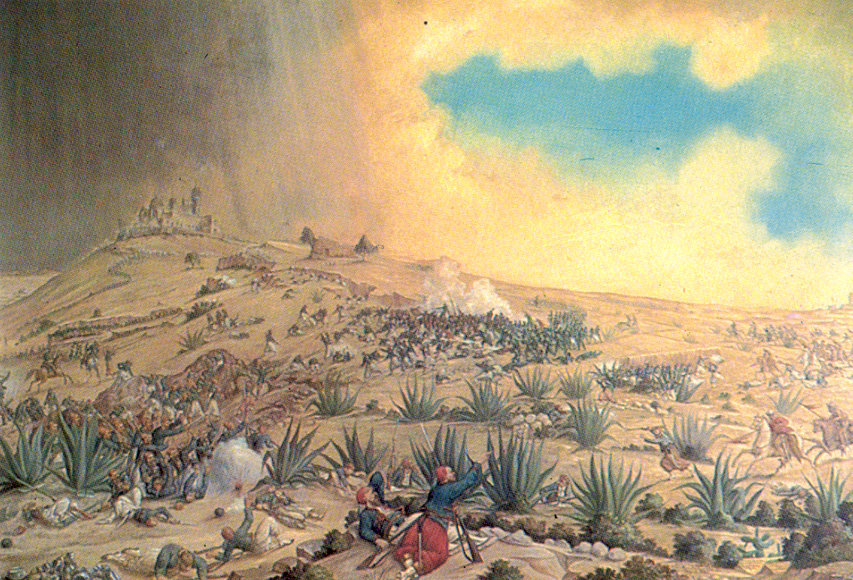
The Battle of Puebla, Cinco de Mayo, 1862 |
|
|
|
The French expedition was commanded by General Frederic Forey, who was actually opposed to the entire operation but was swayed by the promise of the rank of Marshal of France if he captured Mexico City. The initial contingent, however, was commanded by the Comte d'Lorencz who met Mexican troops in what is probably the most famous engagement of the war at the Battle of Puebla on May 5, 1862. Lorencz had around 6,000 French troops and was opposed by only roughly 3,000 hastily assembled Mexicans under the Texas-born General Ignacio Zaragoza. A combination of bad weather, French arrogance and Mexican determination won a shocking victory for General Zaragoza and by the order of President Juarez the Fifth of May, Cinco de Mayo, has been a Mexican national holiday ever since. |
|
|
However, this was only a setback for the French and not a decisive defeat by any means, despite the extent to which it has been played up since the war. The Mexican army was defeated the following month at Orizaba and more French reinforcements arrived in the fall, along with General Achille Bazaine. By the end of the year the French army, now 28,000 strong, had captured Tampico and Xalapa. The offensive was renewed at the start of 1863 and soon the French under General Forey were back at Puebla once again. It was during this campaign that the French Foreign Legion first earned its legendary reputation when 65 legionaries fought off 2,000 Mexican troops on April 30, 1863 until only three legionaries were left standing. Fought at the Hacienda Camaron, ever since April 30, or Camaron Day, has been the holiday of the French Foreign Legion, a time to remember their courage in the face of impossible odds. |
|
|
|
The campaign was ultimately a French victory and honor was restored after the defeat on the Fifth of May. General Ignacio Comonfort had been dispatched to relieve the siege of Puebla but he was defeated by Bazaine at San Lorenzo and on May 17 the city of Puebla surrendered to the French Imperial forces. Juarez had gambled almost everything at Puebla, and along with the town the French captured 26 liberal generals and 16,500 soldiers. The way to Mexico City was open to Forey and Benito Juarez knew this. The Congress, dominated by liberals supportive of Juarez since all conservative leader had been driven into hiding or exiled, quickly voted Juarez dictatorial powers after which Juarez and his cabinet packed up their documents and the national treasury and abandoned Mexico City on May 31, heading into the deserts of northern Mexico. Not only was he opposed by the French, but also by leading conservative Mexicans fighting with them including the widely respected Tomas Mejia and the widely feared Leonardo Marquez, known as "the Tiger of Tacubaya". General Bazaine and his vanguard entered the capitol on June 7, 1863 followed by General Forey with the main body of the army three days later. Forey was duly made a Marshal of France as Napoleon III had promised, after which he immediately resigned and returned to France to denounce the Mexican campaign. |
|
|
Now, efforts could be made to rebuild the government, especially since Juarez had abandoned his seat of power and was now on the run, seldom remaining long in one place. Before leaving the country General Forey had formed the Superior Junta consisting of 35 prominent Mexican conservatives. On June 16, they appointed General Juan Almonte, a distinguished Mexican widely known for his foresight and dedicated service during the war in Texas as the Provisional President. The following month the new government proclaimed the birth of a Catholic empire on July 10, 1863 and with the help of Napoleon III, and also his wife Empress Eugenie, offered the throne of Montezuma to Archduke Maximilian of Austria. A delegation was sent to Miramar headed by Jose Maria Gutierrez de Estrada for this purpose and on October 3 the Archduke accepted and was hailed as Maximilian I, by the Grace of God and the Will of the People, Emperor of Mexico. |
|
|
|
 |
|
|
|
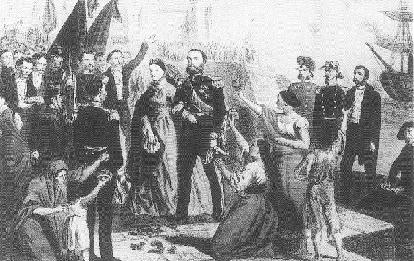
Maximilian and Carlota arrive in Veracruz |
|
|
|
|
|
While these political moves went forward the campaign against the republicans went on. In September General Tomas Mejia had taken San Luis Potosi from General Miguel Negrete and in the opening months of 1864 French forces under Bazaine and General Felix Douay captured Guadalajara and Zacatecas. That summer Acapulco and Durango fell to the French and by the fall French and Mexican Imperial troops had defeated Juarez to take control of Sinaloa, Jalisco and the Rio Grande border city of Matamoros. Maximilian and Carlota landed at Veracruz in May and were later crowned in grand style in the national cathedral of Our Lady of Guadalupe. During the regency the conservatives had free reign to rule as they liked and to undo all of the liberal and anti-Church measures of Benito Juarez. Laws were passed that mandated everything from the restoration of land rights to kneeling in the streets when the Holy Eucharist was carried in procession. |
|
|
Emperor Maximilian, however, was fairly liberal by contemporary standards. His vision was of a strong constitutional monarchy that guaranteed equal rights, protected the poor and had a democratically elected Congress to represent the people. Staunch conservatives like Miguel Miramon and Leonardo Marquez were honored but then sent overseas and many laws passed by the regency were repealed by the new emperor who innocently wanted his regime to represent both liberals and conservatives, something neither side in Mexico was willing to accept. Maximilian had learned Spanish and Mexican history, he dressed like a Mexican and observed the holiday of the Mexican Declaration of Independence, even shouting the traditional Grito de Dolores from a balcony. He tried to root out corruption, revised the legal code and refused to allow the French to lease silver mines in Sonora. He even tried to abolish one of the most traditional institutions in Mexico, that of debt peonage and to end forced labor. Carlota raised money for poverty relief and the preservation of Mexican culture. Yet, he was often at odds with the French while his liberal policies made him distrusted by conservatives and was at the same time hated by the liberals simply for being a royal and a foreigner. |
|
|
Benito Juarez seemed to be all but done for and many Mexican officials deserted him. The powerful state governors were a particular worry, especially on the border where government authority always had a hard time reaching. Tamaulipas was contested by a number of men but effectively ruled by the bandit chief Juan Cortina who mostly saw his interests as coinciding with Juarez who would allow him a free hand. The Governor of Coahuila and Nuevo Leon, however, was another story. That man was Santiago Vidaurri, known as "The Lion of the North". He was powerful, crafty and thanks to running a lucrative trade with the Confederate States of America to circumvent the US Navy blockade, also increasingly rich. When Juarez came to Monterrey, Vidaurri declared against him, but Juarez had enough troops at his disposal to depose Vidaurri who escaped to Laredo, Texas and the protection of his Confederate friends. He later returned as the Minister of Finance for Emperor Maximilian. |
|
|
|
At the end of 1864 things looked very bad for Juarez. His government was on the run, his main armies were smashed and the French held control over one seventh of the territory of Mexico and about three million people with a force of 38,000 French and 1,800 Mexican troops on hand. However, as was fairly common, the Mexican populace remained largely apathetic or hostile. It is estimated that only one in twenty supported the monarchy whole heartedly while many supported Juarez and a great many more supported whoever seemed to be winning at the moment. When French and Mexican Imperial troops occupied a city, the people cheered for the Emperor, and when they withdrew and the Juaristas returned, the same people emerged to cheer Juarez and the republic. With two few troops to garrison the areas they controlled, this was not a game that the French could hope to win. |
|
|
 |
|
|
|
Imperial troops on the march |
|
|
|
The following year, 1865, was to prove crucial for the life or death of the new Mexican Empire. At the outset, things continued to go well. On February 9, 1865 now Marshal of France Achille de Bazaine defeated Juarista General Porfirio Diaz and captured Oaxaca and the following month French army and naval forces captured Guaymas. However, there were also a growing number of setbacks. Emperor Maximilian lost the support or at least the total trust of many conservatives when he refused to favor their interests alone, even going so far as to allow liberals into his government. Rather than appreciate his tolerance, these men naturally acted as agents from the inside for Benito Juarez. When he also declined to restore the favored status of the Catholic Church in Mexico but insisted on religious freedom, the Pope recalled his nuncio Cardinal Pedro Francisco Meglia. April and May also saw republican victories at Tacambaro in Michoacan and an increasing Juarista presence in Sonaloa and Chihuahua. However, perhaps an even more critical event in the long term also came in these months far away on the other side of the Rio Grande, particularly on April 9, 1865 when Confederate General Robert E. Lee surrendered to US General Ulysses Grant, the beginning of the end of the Confederate States of America. |
|
|
Money was also a major problem. Maximilian had never been a very thrifty man and the French demand that Mexico pay its debt as well as increasing them by supporting the occupation made it harder for their effort to succeed since Mexico would be beholden to French creditors far into the foreseeable future. In 1865 the wine bill alone for the Imperial residence at Chapultapec came to 100,000 pesos. Military help did come from other countries to bolster the Imperial Mexican Army. The largest was the 6,000 man Austrian Volunteer Corps followed by the 1,200 man Belgian Foreign Legion sent by King Leopold I to protect the Empress. However, after the recent wars between France and Austria, these two nations did not get along well and the Austrians resented the commanding role of the French. The fact that the foreign units were organized under a separate establishment reduced the cohesion of the imperial forces and the French never organized an intelligence network that could counter the many spies and propagandists working for Benito Juarez. |
|
|
With the collapse of the Confederacy came the return of US forces to the border who were eager to aid Juarez as much as possible. Soon, Matamoros and the rest of the northern frontier fell into the hands of republicans of one variety or another. One bright spot did come thanks to the Belgian volunteers when they defeated a Juarista force on July 11 at Tacambaro, reclaiming their honor after an earlier defeat there soon after their arrival. The string of republican victories and the mounting pressure by the United States though provoked what was probably the most infamous policy of the Mexican Empire. Time and again Maximilian had extended his hand in friendship and cooperation only to have it spit on and since organized resistance had largely been defeated and replaced by guerilla action the Mexican Emperor was finally persuaded into taking repressive measures and on October 3, 1865 signed the so-called "Black Decree" which threatened any citizen taken with arms with swift execution. The justification for this was that since the Juaristas were no longer fighting by conventional means, but hiding among the populace acting as bandits and guerillas that the normal rules of warfare no longer applied and such people could be treated as traitors rather than enemy combatants. |
|
|
|
This enabled Maximilian to eliminate a number of his most dangerous enemies, but it was also a propaganda coup for the Juaristas who were quick to paint the Emperor as a murderous tyrant, ignoring of course the many overtures of peace and friendship he had made earlier even at the expense of alienating his own power base. It also played into the hands of the United States which had long portrayed the Austrian prince as a foreign conqueror and despot whose victory might bring about a monarchist revival in the Americas and thus end US hegemony in the New World. There had long been republican clubs formed in the US to oppose Maximilian, but now with the Confederacy crushed under foot, official action could finally be taken. |
|
|
|
A year before, while the war against the Confederates was still raging, both houses of the US Congress unanimously passed a condemnation of the Mexican monarchy and starting in 1866 political pressure was applied to France and Austria to withdraw their forces from Mexico or face the wrath of the Great Republic. An army of 50,000 troops was sent to the border under General Philip Sheridan and US weapons and supplies began to be shipped south to Juarez. US officers even granted their troops leaves of absence to fight against Maximilian. Measures were taken to keep this unofficial, such as when General Sheridan declared 40,000 rifles unfit for service and left them in the desert and arranging for Juaristas to "find" the discarded weapons. An envoy was accredited to Benito Juarez and US protests stopped 4,000 Austrian reinforcements from being sent to Mexico to aid Maximilian. |
|
|
|
 |
|
|
These measures, combined with new threats in Europe and a restless public finally had the effect that Juarez and the US wanted. By the middle of 1866 Emperor Napoleon III decided to give up on the Mexican adventure and began evacuating all French forces starting at the end of May. He also advised Maximilian to take the opportunity to leave with them under the protection of the French flag. However, the Mexican Imperial couple had been at odds with the French for some time, and contrary to the image painted of Maximilian as a French puppet, their relations were often far from cordial and ultimately he decided against leaving with the French troops but continued to claim independent sovereignty. He felt he had a duty to Mexico that he had to uphold no matter what the circumstances. To be sure, the situation seemed to be declining rapidly. Through the summer of 1866 the Juaristas had retaken Chihuahua, Guadalajara, Matamoros, Tampico, Acapulco, Monterrey and Saltillo.
Smelling death in the air many of the Mexican Imperial troops deserted and the same townspeople who had cheered the Emperor when he appeared to be winning now shouted "Long live the Republic" when Juarez seemed again on the ascendant. The battle of Santa Gertrudis, fought on June 14, 1866, and which directly led to the fall of Matamoros, was sometimes called the Waterloo of the Mexican Empire. When surprised by the Juaristas the equivalent of two battalions of Mexican Imperial troops deserted to the republican side, leaving a handful of their comrades and a few hundred Austrians to be butchered. Millions of dollars worth of supplies were captured in this battle, but more importantly it showed that even the relatively small number of Mexicans in the service of Maximilian could not be counted on as absolutely reliable. |
|
|
|
By the end of the year the last French officials had left Mexico City and Empress Carlota had gone to Europe in a vain attempt to rally support there. Oaxaca was taken by the republicans as well as large parts of Zacatecas, San Luis Potosi and Guanajuato. By the start of the following year all of these states would be entirely in republican hands. When their governments decided to wash their hands of the campaign the Austrian and Belgian troops were supposed to transfer to the Imperial Mexican Army, but the majority of them saw the hand writing on the wall and left the country with only 1,148 staying behind. The last French troops still in Mexico City withdrew in February of 1867. Maximilian, along with his small corps of foreign volunteers, now had only his Mexican loyalists to rely on and even the core of his support in Mexico was no longer reliable. Miramon and Marquez returned from Europe to fight with him, but many Mexican conservatives felt they could not trust their Emperor entirely due to his efforts at reconciliation with the liberals. He was urged to make a stand outside of Mexico City and was not allowed to take his European troops with him. The Emperor set out for the city of Queretaro on February 13, 1867 where he would make his stand. He was joined there by his top Mexican generals and though drastically outnumbered (the odds were around 8,000 against 30,000) the plan was to use the fortified city as a base from which to strike out and destroy the converging republican armies one by one. It sounded grand enough, but this was a hopeless battle and most everyone knew it. |
|
|
 |
|
|
|
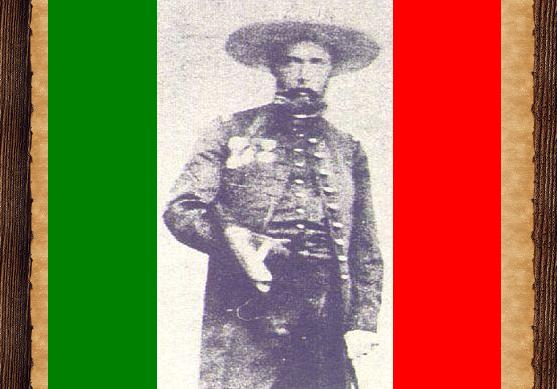
Last known photo of Emperor Maximilian |
|
|
|
The siege of Queretaro began on March 9 and was to last two months despite the ridiculous odds. The Juaristas cut the supply of water to the city, but the Imperial units fought heroically, with only the truly committed still in the ranks for the most part. The end came on May 15, 1867 when Colonel Miguel Lopez, now remembered as the Traitor of Queretaro, let republican troops infiltrate the imperial lines. Emperor Maximilian was taken prisoner and after a show trial before a military court was sentenced to death by Benito Juarez. Hardly anyone in the civilized world expected the sentence to be carried out though. Even the United States, which had always opposed Maximilian, could see that he himself had never been the real enemy of the Mexican republic. He had not orchestrated the French invasion, nor had he participated in the overthrow of Juarez. He had come to Mexico only after being invited and assured that he had been democratically chosen and had made every effort as Emperor to be fair, impartial and to find a peaceful solution. In fact, aside from the royals of Europe, the US and leading liberals like Victor Hugo and the Italian nationalist Giuseppe Garibaldi wrote to Juarez entreating him to spare Maximilian. |
|
|
|
However, Juarez would not be swayed in his determination to kill the fallen Emperor. He had found, among the captured imperial documents, his own death warrant as a traitor and renegade. He wanted a gesture that would strike fear into the hearts of any who opposed him and he did not want traditionally minded Mexicans to dream of the day when their Emperor would return or for Maximilian to give inspiration to exiled conservatives in the years to come. He already had enough competitors for power among his own camp. Therefore, on June 19, 1864 Emperor Maximilian, along with longtime conservative leader Miguel Miramon and the loyal General Tomas Mejia, were executed by firing squad on the Hill of Bells outside of town. The following day Mexico City surrendered and republican rule was formally restored to Mexico with the Constitution of 1857 that Juarez had established. The great estates were again abolished, the Church suppressed and conservatism ceased to play any role in the political life of Mexico. |
|
|
|
Once Maximilian was dead, indeed almost immediately following the defeat of imperial troops, things went back to their chaotic state in the Mexican republic. The state of Tamaulipas alone was contested by no less than three claimants in additional to General Escobedo whom Juarez had sent to restore his rule in the area. Juarez was also challenged by another former supporter who claimed the presidency. In 1871, in direct violation of the very constitution he had enacted, Juarez ran for President again and was easily reelected which prompted a rebellion by one of his former generals, Porfirio Diaz. Juarez died not long after this victory and although defeated in his early attempts, Diaz eventually seized power and became dictator until being forced into exile by the Mexican Revolution in 1911. It was quite a sight coming from the same men who had fought Maximilian in the name of democracy and good government. Nonetheless, the winners wrote the history books and Benito Juarez has been almost deified in Mexico and is still touted as their greatest president ever. |
|
|
As for Napoleon III, his Waterloo, so to speak, came in 1870 after being maneuvered into a war with Prussia. His wars across Europe cost him the friendship of the Russians, Italians and Austrians and he was defeated. The French Second Empire collapsed and Napoleon III and his family went into exile in Great Britain. Empress Carlota went mad with grief after going to Europe and spent the rest of her life in seclusion, plagued by insanity until her death in 1927. Their adopted son, Prince Imperial Agustin, renounced his titles and joined the Mexican Army but was imprisoned and later exiled for his opposition to the Diaz regime. He received a pension from the Emperor of Austria and ended his days as a professor in the United States, dying there in 1925. General Leonardo Marquez escaped from Mexico with about a million dollars and lived in exile in Cuba until finally being allowed to return home in his final years. Santiago Vidaurri, formerly the "Lion of the North" was not so fortunate. He was found in Mexico City and was severely beaten before being executed on a dung heap. |
|
|
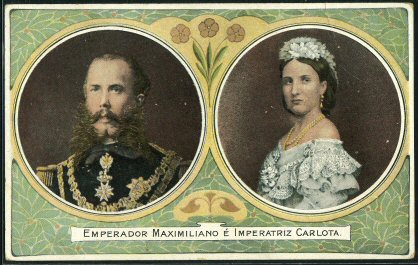
All in all, the French lost 7,000 men in the Mexican Adventure, though 5,000 of those losses were the result of disease rather than the Juaristas. The most bloodied unit was the famous Foreign Legion which contributed 1,918 to that total. Losses for the Mexican Imperial Army numbered about 5,600. However, these losses were surpassed by the forces of Benito Juarez who lost almost 32,000 men driving out Maximilian and restoring his rule. Looking back, we can see that Napoleon III did himself no favors by increasing the debts of Mexico which only worked against the monarchy. Emperor Maximilian, for his part, was too good for his own good. He incurred the wrath of his core supporters through his liberal policies and found out that he could make all the correct and proper moves and still lose the game. He was a reasonable man surrounded by unreasonable people. Some things, like the dependability of the populace and the outcome of the war north of the border were simply beyond his control. The victory of the United States over the Confederacy by itself almost ensured the victory of Juarez over Maximilian. The story of the Mexican Empire, looking back, is very much that of the gallant Austrian Archduke and his tragic Belgian wife. Never before or since had the Mexicans had leaders so genuinely devoted to their welfare and never before or since was there a Mexican government with more promise. Yet, they were met by enemies who would have hated them no matter what they did, allies which proved unreliable and a populace, extending from the lowest to the highest levels, that cared more for personal interest than any real loyalties. Some things may have been done differently, but it is also possible that the problems in Mexico were so great that no one could have saved the situation. There is also a very strong case to be made for the claim that the fate of the Mexican Empire was not decided in Mexico at all, but rather at Appomattox Court House where General Robert E. Lee surrendered to Union forces. The legacy of the second Mexican Empire therefore remains one of the romantic lost cause and of unrealized potential. |
|