 |
|
|
|
|
|
|
|
|
|
|
|
|
|
|
|
|
|
In Mournful Memory
M.I.M.
R.I.P. |
|
 |
|
|
|
|
 |
|
|
 |
|
|
|
|
|
|
|
 |
|
|
|
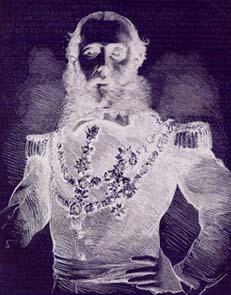
Emperor Maximilian was almost certainly the best ruler Mexico has ever had and they shot him for it. How can such a crime ever be atoned for? He came to serve, protect, liberate and uplift and was met with hostility, bigotry, deceit and murderous wrath. How can that be forgotten? The truth is, it has not, and Mexico can never forget, but the guilty souls who put Maximilian in his grave have tried to put the best face on their wickedness and "call evil good and good evil". They have tried to justify the unjustifiable by portraying Emperor Maximilian as a cruel and heartless autocrat; an uncaring elitist who oppressed the people and supposedly persecuted the "noble" President Benito Juarez. The truth is entirely the opposite! Never has anyone been so unjustly remembered as the name of Emperador Maximiliano is in Mexico today. If the truth were told and the masses took off their xenophobic blinders they would mourn the execution of such a noble and upright man and try to make right that most dastardly and suicidal act in Mexican history.
The truth is that Emperor Maximilian came to serve and not to oppress. He came to uplift and not to tyrannize. His grand vision was a prosperous and powerful Catholic Latin empire in Mexico and possibly even stretching on into Central America where the first Imperio de Mexico briefly held sway. He saw his duty as putting an end to the chaos and corruption that had gripped Mexico since her birth, uplifting the poor peons and giving everyone an education, dignity and self worth as well as pride in their country that was genuine and based on genuine accomplishments. He saw his duty as being to unite all sections of society, the criollos, mestizos, indios and Europeans. His government and army were filled with leaders from all of these groups. He came to Mexico with the best of intentions and trusted that any doubters would be won over when they saw how genuinely he was devoted to their welfare and determined to become a true and total Mexican rather than simply an Austrian on the Mexican throne. On his way to Mexico he was not studying tax estimates on what he could take or military reports on who he could fight and what would have to be conquered. Rather, he learned Spanish, Mexican history and customs and wrote a book on court etiquette so that the world would know the era of coups and warlords was gone and proper, genteel, civilized behavior was to be the new norm. |
|
 |
|
|
|
|
|
Emperor Maximilian has often been accused of being a French puppet, nothing more than a pliant stooge for Emperor Louis Napoleon in Paris, but, again, that is the total opposite of the truth. Maximilian and the top French commander in Mexico, Marshal Bazaine, were bitter enemies and when France requested to lease the silver mines in Sonora Maximilian refused -knowing that this wealth would be sorely needed by his own people. He dressed in Mexican clothes and even shouted the traditional "Grito de Dolores" on Mexican Independence Day in honor of Father Hidalgo as was the custom for Mexican presidents to do. He reformed the law codes to ensure that they were fair for everyone and removed corrupt judges whenever he found them and tried to finally rid Mexico of the system of debt peonage forever. In spite of the wishes of the conservative party who were his chief supporters he refused to revoke the land reforms previously carried out by the liberals which distributed Church property among the poor. This angered the conservatives and the Church (which eventually recalled their nuncio) but these lands represented about half the productive lands of the entire country and Maximilian could not see himself taking all that away from all the small farmers now working them to survive. When has Mexico ever had a ruler who risked offending his primary base of power because of something he sincerely felt was in the best interests of the Mexican people as a whole? If even one can be named I would be greatly surprised. |
|
|
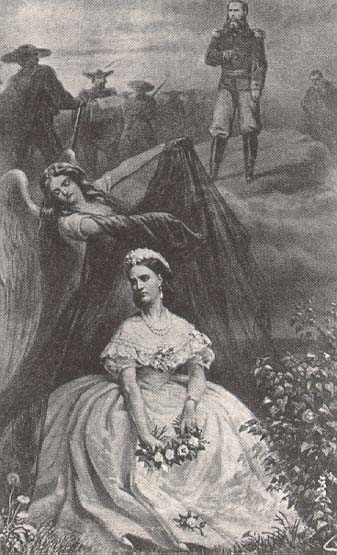
In any way one chooses to measure Emperor Maximilian to the very, very long list of Mexican rulers he surpasses them in character, courage and sincere devotion to his people. He was not a native, born Mexican true enough; but what does that matter if he was the only one to have ever truly cared for them? He even adopted the grandson of Emperor Agustin de Iturbide so that when he died the throne would pass to a native born Mexican with no foreign connections at all. In short, he did everything he could to even assuage the unreasonable fears and bias of his people who he had devoted his life to by an oath before Almighty God. His wife, the lovely Empress Carlota, was constantly raising funds for the benefit of the poor, working to improve education, build poor houses, hospitals and the two of them (an Austrian and a Belgian by birth) did more to preserve the ancient history of Mexico through patronage of museums and preservation efforts than any ruling couple in Mexican history.
Most significantly though, in my mind at least, was the heroism of the defeat and death of Emperor Maximilian and that alone should give him recognition as the most sincere and devoted ruler Mexican has ever been fortunate enough to have. Just think about it for a moment. Maximilian knew there was little hope when the French pulled out their troops and the US began flooding support to Juarez. He was urged to abdicate and leave the country then, and he could have; he could have gone back to his palace in Italy and lived the good life with his beautiful wife for the rest of his days as the brother of the Emperor of Austria but he refused. He would not abandon his people nor his duty and his obligations to them and forget his oath to God which he took when he was crowned Emperor of Mexico in the Basilica of Our Lady of Guadalupe. |
|
|
|
 |
|
|
|
|
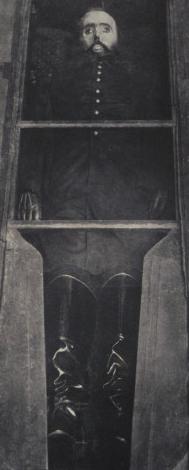
Maximilian rallied his loyal forces and for God and Mexico determined to make his last stand on the field of honor. By the misguided efforts of a traitor he was defeated and left to the mercy of the republicans. Even then he had the chance to escape, but his honor and his integrity would not permit him. More than any other ruler in Mexican history he was a man of principle. He would not run away to save his own life when his faithful generals were going to be killed simply for being loyal to him; Maximiliano, their Emperor. He tried to save all of their lives but it was to no avail and he went to his death alongside his brave generals Miramon and Mejia. Even then, he showed his quality, surrendering the place of honor to General Miramon who he said was more worthy of it than him. His last words were, "long live Mexico!" while the last words of his generals, touched in their hearts by the quality of their brave monarch, were, "Long live the Emperor!!!" Think of the republican general in that war, Porfirio Diaz, who later became dictator of Mexico. When it was clear that he would be defeated he took every bit of public funds he could get his hands on and left the country to live out the rest of his life in the lap of luxury in Europe. Santa Anna, long before, sold out his country and went into exile in a grand hacienda in Cuba, others were never given a choice in the matter but took power by force and lost it by force. Yet, it was Maximilian, a man of principle, who had every opportunity to save his own life, who willingly chose to die alongside his loyal generals because he felt it was the only honorable thing to do. I ask again; how many other rulers of Mexico have been so upright? |
|
 |
It is because of all of this that the black day of June 19, 1867, the day that Emperor Maximilian and his loyal generals Miramon and Mejia were executed on the Cerro de las Campanas, the Hill of Bells, should be a day of mourning for all Mexicans and all those who have a care for the country and nation of Mexico. Never since have they been graced by so honest and upright, so sincere and principled a national leader as that betrayed and forsaken archduke from Austria. Had his beloved wife Carlota had any choice she likely would have rather died with him, but it was her fate to live on without him, with her grief causing her to slip ever more into depression and insanity for the loss of her love and the loss of the great promise and potential future of the Empire of Mexico. Without him, the country fell back into its old habits and has remained there ever since, forgetting or even reviling the name of the man who could have saved them from it all. |
|
|
|