
|
|
|
|
|
|
|
|
|
|
|
|
|
|||||||
| Leonardo Marquez | |||||||||
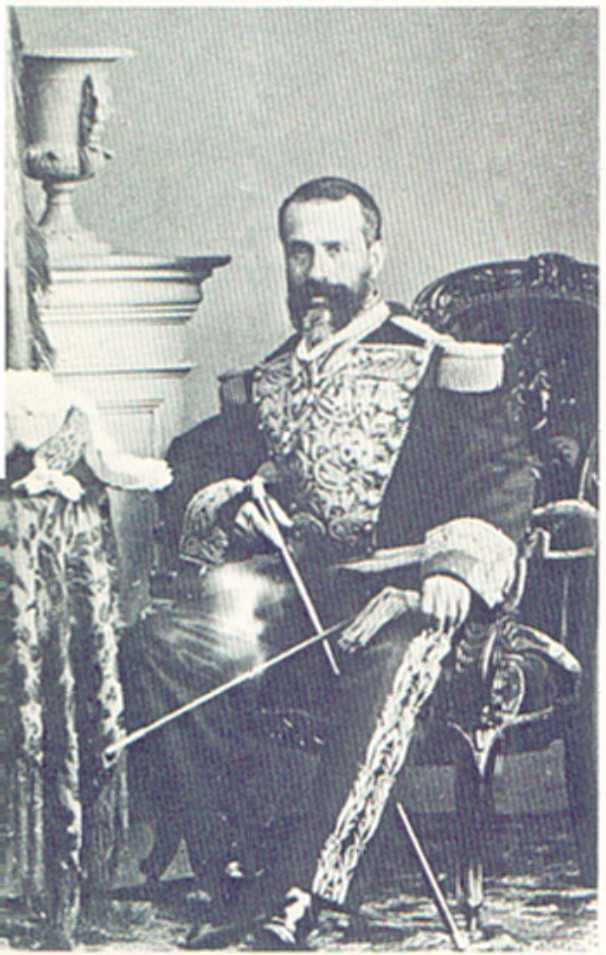
| Leonardo Marquez was born in Mexico, sometime in 1820 and entered the military early In life. As a young field officer he fought against the revolution of General Paredes and captured the guerilla chief Jarauta near Guanajuato in July, 1848. Like many in the army, he became disgusted with the liberal government and on February, 10 1849, declared against President Herrera and in favor Antonio Lopez de Santa Anna. He intended to march on Queretaro, but he had misjudged the attitude of his soldiers and his army deserted him. Marquez fled, was arrested, escaped and arrested again before being released as part of a general amnesty. He supported the conservative General Zuloaga and took Zacatecas from the liberals on his behalf in 1858, though it was soon lost again. Marquez then joined with the conservative forces under General Miguel Miramon who was leading the resistance against the liberal Benito Juarez. | |||||||||
| Marquez proved instrumental in this campaign, doomed though it was. When liberal troops under Santos Degollado marched against Mexico City, Marquez intercepted and totally defeated them at Tacubaya on April 11, 1859. However, the public was shocked when following the victory General Marquez executed the majority of his prisoners as well as six medical students who had come to treat the enemy wounded. Marquez claimed to have been ordered to do this by General Miramon, but throughout his career Marquez never showed any hesitation about dealing brutally with his enemies. In spite of this blot, General Marquez was celebrated when he and his men returned to Mexico City the next day. A group of leading ladies gave him a silk sash which read, "To virtue and valor, a token of the gratitude of the daughters of Mexico." | |||||||||
| General Miramon, ever zealous in his duties, set about organizing three brigades for combat against the liberals. He commanded one of them, marching on the state of Michoacan, occupying Morelia and afterwards taking Guadalajara. He then launched a raid on Tepic, executing a number of prominent liberals and carrying back 20 loads of bar-silver. On his way back, General Marquez moved against Guanajuato but was attacked by the forces of General Jose Maria Arteaga. Nonetheless, Marquez got round Artega, surprised his rear guard and routed the enemy army. Still, Marquez was not always popular. He had fallen out of favor with General Miramon and in November of 1859 Miramon ordered his arrest for taking $600,000 in silver in Guadalajara. However, circumstances saved Marquez as the conservative defeat at Silao on August 10, 1860 forced Miramon, who needed every experienced commander he had, to release Marquez. | |||||||||
| The following September, General Marquez was given command of one of the three divisions that were formed in Mexico, and ordered to keep an eye on the liberal forces in Guanajuato. However, when the bulk of the liberal army marched on Guadalajara, Marquez was forced to fall back with his much weaker force and occupy Queretaro in October. He tried to build up his army to sufficient strength for an attack to relieve the conservatives under siege at Guadalajara, but when he made the attempt he was defeated near Guanajuato by General Huerta on October 8 and following the surrender of Guadalajara the main liberal army under Gonzalez Ortega turned its full strength against him and crushed Marquez at Tololotlan. Marquez was forced to flee to Mexico City, which itself was soon besieged by the forces of Benito Juarez. With no money, and desperate for resources to mount a defense, Marquez controversially raided the British legation of $620,000 on November 17, 1860. | |||||||||
| When General Miramon was able again to move against the liberals, Marquez joined him and commanded a division at the final defeat for the conservatives at Calpulalpam on December 22, after which Miramon and many others fled to Europe. Marquez, however, refused to admit defeat and took to the mountains of Michoacan where he raided and harassed surrounding liberal forces, sometimes in conjunction with fellow conservative general Tomas Mejia. When the pair defeated and captured the liberal General Escobedo in Rio Verde, Marquez did his best to have him executed, but Mejia refused to allow it. Ultimately, Escobedo would greatly trouble their cause again and this may have fuelled a desire in Marquez to show no mercy to his enemies. In March of 1861, Marquez publicly decreed that anyone who served the government of Benito Juarez was a traitor to Mexico and if taken by his forces would be summarily put to death. | |||||||||
| After a failed attack on Queretaro, General Marquez joined former President Zuloaga for joint efforts in Villa del Carbon. When Melchor Ocampo, a leading liberal, was captured Marquez had him shot and hung up in a tree which caused a public outcry and prompted the liberal Congress to put a $10,000 bounty on his head. In subsequent raids Marquez also captured, shot and hung General Leandro Valles. When the French became involved in Mexico, he cooperated with their operations and lead the vanguard of General Louis Forey's army in 1863. He supported the enthronement of Emperor Maximilian and was rewarded with the position of commander on the Pacific coast. In 1865 he fought with the French General Douay and was wounded in the eye after which Maximilian dispatched him as envoy to the Ottoman Empire. | |||||||||
| As French support began to fade, Maximilian recalled Marquez and he returned to Mexico in November of 1866. He was given command of the troops in Mexico City but when General Miramon was defeated at San Jacinto on February 1, 1867 Marquez took his 4,000 men and joined Emperor Maximilian at Queretaro. Marquez was later dispatched with orders to organize a relief effort against the forces of General Escobedo that were besieging Queretaro. Instead, Marquez tried to relieve Puebla, which was besieged by General Porfirio Diaz. He failed to prevent the fall of Puebla and was himself defeated by Diaz at San Lorenzo on April 10. Marquez retreated to Mexico where he was besieged by General Diaz. Marquez tried to suppress news of the defeat of the Emperor at Queretaro, but ultimately Mexico City fell to the forces of Benito Juarez. General Marquez went into exile in Cuba where he spent the rest of his life. | |||||||||