 |
|
|
|
|
|
|
|
|
|
|
|
|
|
|
|
|
|
|
|
|
|
|
|
 |
|
|
|
Iconography of the Mexican Empire |
|
|
|
 |
|
|
|
 |
|
|
|
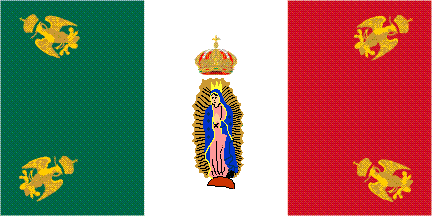
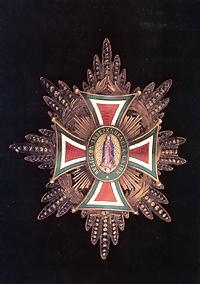
As long as modern Mexico has existed the single most significant national icon has been Our Lady of Guadalupe, the vision of the Blessed Virgin Mary as seen by St Juan Diego which led to the conversion of the native Mexican people to Catholicism. The name of the Virgin of Guadalupe was on the lips of the Padre Hidalgo in the first revolution against Spain and when Emperor Agustin de Iturbide won the independence of the Mexican Empire he created the Order of Our Lady of Guadalupe (above) as the highest order of chivalry in Mexico. Although in fell into disuse with the advent of the republic, the importance and devotion to the Virgin of Guadalupe never went away and when Emperor Maximilian ascended the Mexican throne he was quick to recognize the importance of the icon. The Imperial Order of Our Lady of Guadalupe was restored and banners bearing the image of Our Lady of Guadalupe were hung in the palaces and seen all over Mexico once again. Long before the Church officially made it so Our Lady of Guadalupe has long been the first Queen of Mexico. |
|
|
|
 |
|
|
|
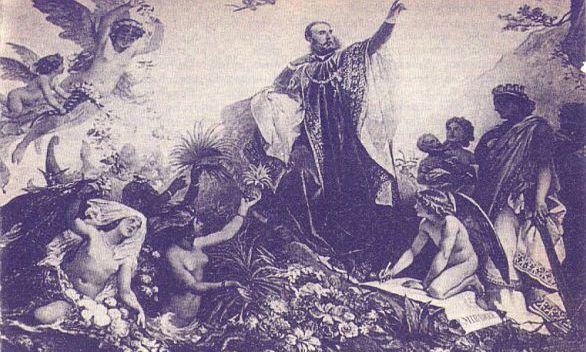
In this illustration Emperor Maximilian is portrayed as the savior of Mexico, sent by the grace of God with angels heralding his arrival in the background. The romanticized natives at his feet represent the Mexicans and are shown welcoming him and offering him gifts in appreciation for his coming to their aid. Another angel is recording his words. |
|
|
|
 |
|
|
|
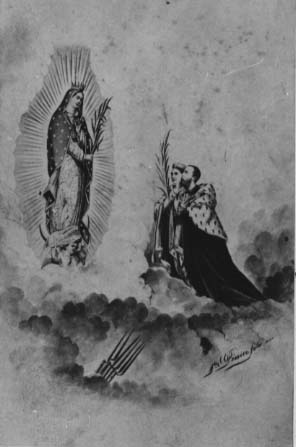
This image demonstrates the effort to win the support of the common people of Mexico. In fact, Emperor Maximilian was the first leader in Mexico to encourage patriotic support through the distribution of pictures of the Emperor and Empress. Here we see Maximilian and Carlota kneeling in adoration of the Virgin of Guadalupe, a clear illustration of their piety and desire to be accepted as Mexicans by their people. |
|
|
|
 |
|
|
|
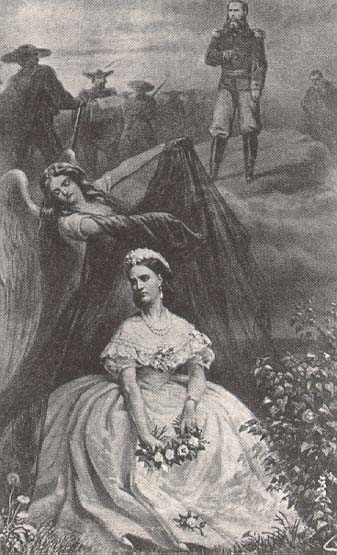
Here we see the tragic end of the Mexican Empire represented. In the background the noble Emperor Maximilian bravely stands before his executioners. The place of honor though goes to the sad-eyed Empress Carlota who looks downcast while a mourning angel hovers over her with a black veil representative of the grief-induced madness that was about to overtake her upon word of her beloved husband's death. |
|