 |
|
|
|
|
|
|
|
|
|
|
|
|
|
|
|
|
|
|
|
|
|
|
|
|
|
|
|
|
The Good, The Bad and the Ugly |
|
|
|
Battle for the Mexican Border |
|
|
|
 |
|
|
|
 |
|
 |
|
|
 |
|
|
|
|
|
|
|
|
|
 |
|
|
|
|
|
|
|
|
|
|
|
|
|
|
|
|
|
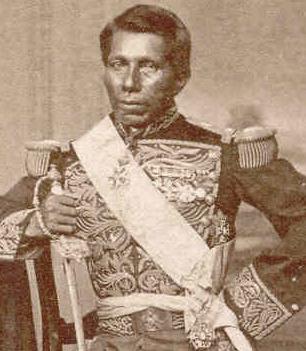
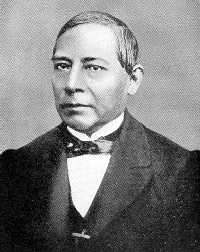
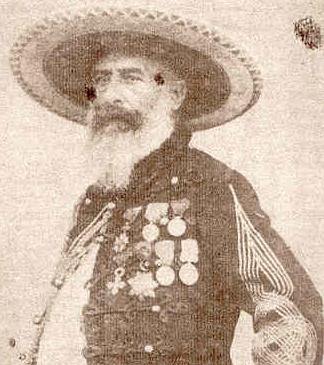
General Tomas Mejia, President Benito Juarez and Colonel Charles Dupin |
|
|
|
The northern Mexico, south Texas border has always been a wild place. Conflict has always been close at hand and the period of the French invasion of Mexico was no different. No area in the southwest was at hotly contested as the Lower Rio Grande. There were Unionists and Confederates battling on one side of the river, the French and Mexican imperialists fighting Juarez and Mexican republicans on the other with Indians and bandits in between. For the Rio Grande Valley, the roots of war go back to 1859 and the local bandit chief and border caudillo Juan Cortina. He had attacked Brownsville, Texas with his personal army and clashed off and on for about a year with militiamen, Texas Rangers and the U.S. Army while being more or less ignored by the Mexican authorities. When Texas voted to secede from the Union, Cortina's men attempted to lead an uprising in Zapata County against the Confederacy, but Cortina had no real political loyalties on either side of the river and changed allegiances as it suited him. |
|
|
|
In 1861, the key city of Matamoros was held by the conservative General Guadalupe Garcia who had repulsed an attack by red liberal and Governor of Tamaulipas Jesus de la Serna. Confederate Colonel John S. Ford allowed Serna to recover in Texas and joined by General Jose Maria Jesus Carbajal, one of the men of the liberal President Benito Juarez, attacked Matamoros again, causing great damage but failing to take the town. The situation was secured somewhat by the help of the conservative Governor Santiago Vidaurri of Nuevo Leon. Later, however, when Vidaurri began talking about leading several northern Mexican states into the Confederacy, President Juarez sent 6,000 men to remove him from office. |
|
|
When United States forces occupied Brownsville on November 6, 1863 Matamoros was quickly taken by General Jose Maria Cobos with the support of Juan Cortina who had always hated the Confederates across the river. Yet, this was a partnership that would not last. Cobos was a Spaniard by birth and a conservative who called Benito Juarez a, "tyrannical demagogue". Only a day later Cortina had Cobos executed and was once again in control of the border. Governor Manuel Ruiz of Tamaulipas was prepared to fight him for power though, and after a brief standoff the two agreed that Ruiz would be governor and Cortina would be deputy commander of their combined forces led by General Jose Macedonio Capistran and the partners would move to oppose the French army at Tampico. By this time, the French had already invaded Mexico and plans were well underway to restore the Mexican monarchy in the person of the Hapsburg Archduke Maximilian of Austria. |
|
|
However, Cortina was reluctant to leave his territory and bloodshed soon broke out between the two factions anyway. Cortina seized control of Matamoros after bitter fighting and named himself Governor of Tamaulipas. Secure for the time being, events elsewhere would soon bring new combatants to la frontera. President Benito Juarez had fled Mexico City and on May 16, 1863 following a two month siege the town of Puebla was taken by the French forces of General Elie Frederic Forey. In June, the French and Mexican imperialists had taken the capitol city and Mexican imperialist General Tomas Mejia sent Juarez and his army reeling from San Luis Potosi in December. Cortina pledged his loyalty to Juarez, but the Indian president was forced to flee from Monterrey when the "Lion of the North" Santiago Vidaurri declared against him. Juarez called in his troops and with the republican army approaching, Vidaurri attempted to flee north but was overtaken by 1,600 Juaristas. Vidaurri and a small group escaped to Laredo and the protection of Confederate Colonel Santos Benavidez while the rest of his men switched to the republican side. |
|
|
|
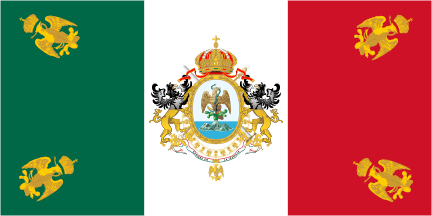
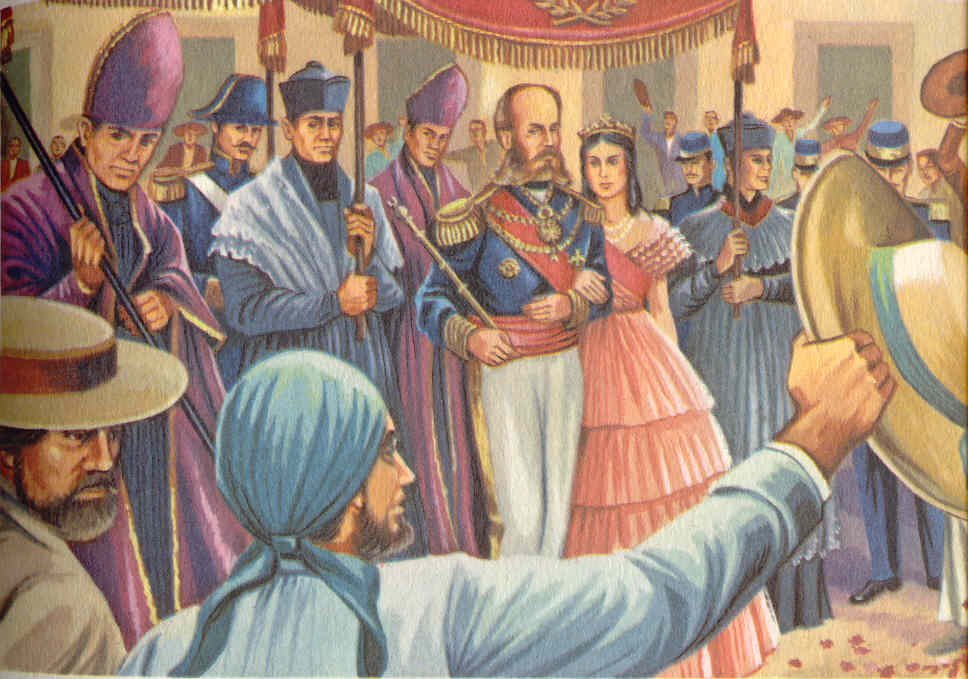
From April to August of 1864 Juarez established himself at Monterrey before the French and forces of the Imperial Mexican Army forced him to disband and go into hiding in the deserts of northern Mexico. The conservative cause seemed certain of victory with Juarez missing and on the run and the Archduke Maximilian of Austria and his wife Princess Charlotte of Belgium enthroned as Emperor and Empress of Mexico. Officially, the Rio Grande border was now part of the restored Empire of Mexico. On August 22, 400 French marines occupied Bagdad at the mouth of the Rio Grande and established good relations with the Confederates across the river. Cortina, however, was still the wild card. Cortina had been making aggressive moves against the Confederates in Texas. However, his position was greatly endangered when General Mejia and his imperialistas captured Burrita on September 2 and there were more closing in from San Fernando and Monterrey. |
|
|
|
 |
|
|
|
Cortina soon began making plans to escape across the Rio Grande and join with Union forces to clear the Confederate presence from the region. When the Cortinistas and a Union cavalry detachment clashed with Confederates near Palmito Ranch the French troops at Bagdad reacted angrily and joined with the Confederates in pledging to treat Cortina and his men as renegades rather than soldiers. Cortina, however, quickly changed his coat again and when General Mejia arrived on September 26, 1864 Cortina declared himself the loyal servant of Emperor Maximilian. Nonetheless, no one in the monarchist camp trusted Cortina and Mejia was given command of the region with the bandit chieftain soon on the run in the ranks of the Juaristas once again. |
|
|
The Empire was now in control of the key border city of Matamoros and the Confederates in Brownsville were pleased with the change in flags, but the Unionists were becoming quite alarmed that their man in Mexico, Benito Juarez, had been reduced to the role of an influential fugitive and that the republican cause in Mexico seemed on the verge of extinction. In a bizarre turn of events, Union General Lew Wallace proposed a mad scheme to convince Texas Confederates to surrender and join in going to the aid of Benito Juarez and assuring the defeat of Emperor Maximilian. On March 11, 1865 Wallace, future author of "Ben Hur" met with General James Slaughter and Colonel John S. Ford to discuss ending hostilities. The talks went better than one might have expected but Major General John G. Walker, Confederate commander of Texas at the time, halted all negotiations as soon as he learned of them and declared that he would never surrender Texas to the Union. |
|
|
|
When news of the fall of the rest of the Confederacy reached south Texas, General Slaughter sold his artillery and military stores to the imperialistas and almost to a man those Confederates who escaped to Mexico allied with Emperor Maximilian. Some, like General Sterling Price founded a colony of southerners in Mexico on land granted by Maximilian which they named Carlota in honor of the lovely Belgian Empress. The United States also began moving more troops to south Texas to support Juarez (unofficially of course) and to pressure the French and Maximilian. Their primary enemy now became Imperial Mexican General Tomas Mejia in Matamoros. |
|
|
This was to be expected as General Mejia had been openly supportive of the Confederates. He had offered the southern troops safe haven in Mexico and had offered General Slaughter Imperial lancers to help hold Brownsville. He had also oversaw the purchase of the Confederate artillery for the monarchist cause. General Mejia was of old Indian stock, extremely loyal and known as an honest and upright man at a time when the Mexican army had precious few. Now, he was worried about another U.S. invasion with so many troops arriving on the border. He pointed out to the American authorities that U.S. troops, most of whom were black soldiers sympathetic to Juarez, had been firing on his forces across the river and some even came south to join the Juaristas with the blessing of their officers. In spite of official U.S. neutrality, Union occupied Brownsville had become the headquarters for opposition to Emperor Maximilian on the Rio Grande border. U.S. troops were also intent on trying to stop the flow of the 8-10,000 Confederates who had gone to Mexico to escape Union rule, most of whom sided with Maximilian. |
|
|
|
As always, the conflict on the border had a style all its own. On one side was the noble General Mejia with 3,000 troops, including about 300 French and Austrian soldiers. Their army was harassed constantly by the regular and bandit forces of Benito Juarez as well as the bandits of the border chieftain Juan Cortina. In the summer of 1865 Mejia embarked on an offensive toward Camargo that cleared out the bandits and Juaristas. Consolidation was able to take place and the city of Matamoros was cleaned up and work even got under way by a Belgian company to build an opera house in anticipation of a visit by the Imperial couple. |
|
|
The bandit king Cortina continued to be very problematic though. On May 1, 1865 he joined with Juarista General Miguel Negrete for a three day attack on Matamoros. The Imperial Army defeated them and sent the Juaristas packing, but Cortina stayed behind. U.S. forces even allowed the Cortinistas to recruit new men In Brownsville and to use U.S. army camps, and buy federal weapons. The French naturally protested, but the U.S. all but ignored them. Cortina was even employed in trying to track down the Confederates entering Mexico but with little effectiveness. |
|
|
|
Eventually, Cortina drove the Imperialistas out of Camargo, but he was in turn dealt severe defeats in an attempted raid on an imperial supply train and an attack on his own encampment. The situation soon degenerated Into a no-holds-barred guerilla war. The French and Mexican Imperialists decided to fight fire with fire and turned to the flamboyant and vicious Colonel Charles Dupin who struck the liberal forces with such ferocity and cruelty that he was nicknamed the "hyena of Tamaulipas". However, both sides were equally brutal. Dupin was an imposing figure in his braided, medal strewn jacket, Mexican sombrero and a cigar clenched in his teeth. The grizzled Frenchman declared that the good had nothing to fear from him and his contra-guerillas, but that toward those who opposed him he vowed no mercy. |
|
|
|
The primary goal of the republican forces on the border was to drive the Imperialistas out of Matamoros. Toward this goal, U.S. General Lew Wallace and Mexican rebel Jose Maria Jesus Carbajal collected men, money and weapons for an "Army of the North" to attack the city. The effort began in October of 1865 with an attack by Juarista General Mariano Escobedo. General Mejia met the challenge bravely, at one point personally leading a charge with 500 cavalry to drive out Juaristas who had broken through his defenses. Supporting fire came from the Paisano which shelled the Juaristas from the river. Another French gunboat, the Antonia, was fired upon by U.S. troops on the Texas side of the river, and in fact Escopedo's army included many U.S. soldiers on "leaves of absence" to participate in the battle and help ensure a Juarista victory. Cortina's men were also involved and harassed the French marines from the safety of U.S. soil. Of course, General Mejia and the French naval commander in the Gulf protested such blatant violations of American neutrality, and of course it did them no good whatsoever. |
|
|
The attack on Matamoros went on for 16 days until an imperial cavalry patrol discovered that the Juaristas had abandoned their lines and retreated on November 9. Total losses for the Juaristas amounted to 500 dead or wounded and 58 taken prisoner while Mejia had lost fewer than 12. Yet, as long as the liberals remained in the area the fight went on with Juarista raiders attacking French and Imperialista detachments. In December, General Escobedo even managed to take Monterrey, though It was quickly taken back by only 700 Imperial cavalry. The town of Bagdad also came under attack, first by American land pirates and again in January, 1866 by forces allied with the scheming U.S. General Lew Wallace. Lt. Colonel J. D. Davis commanding the 118th Colored Troops at Clarksville, Texas also allowed the invaders to pass and many of his troops joined the expedition. The raiders overcame the guards at Bagdad on January 5, surprised and captured the guard commander and murdered the imperialist mayor. The town was seized and then plundered by the American forces. |
|
|
|
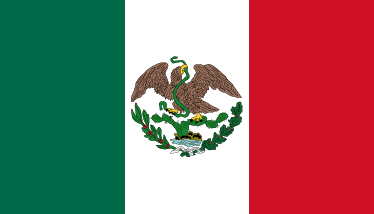
With all sides taken by surprise, soldiers of the 2nd U.S. Colored Troops entered Mexico and took possession of Bagdad. Pressure from local merchants and leading citizens of the area forced a U.S. investigation but naturally no American officers were punished. The Americans, of course, allowed the liberals to take over but these forces evacuated on the 24th and monarchist rule was restored though it took threats of a French blockade of Brazos de Santiago to see even a fraction of what was looted returned to Mexico. On January 25, 1866 a mixed army of contra-guerillas, French marines, 100 rural militia, 120 Austrians and 300 Mexican lancers marched in to occupy Bagdad which they found in ruins, stripped clean and all but deserted by her former citizenry. Nonetheless, it was a time of celebration for the monarchist cause and the following week a representative of Emperor Maximilian awarded General Mejia the Grand Cross of the Order of the Mexican Eagle for his successful defense of Matamoros in full view of his troops and a crowd of patriotic citizens. |
|
|
|
The situation on the border looked good for Emperor Maximilian. Juarez had thrown his best at Matamoros and had been defeated. Further, the republicans were occupying as much time fighting each other as they were the Imperialistas. Cortina had attacked Servando Canales who tried to make his brother, Tristan Canales, Governor of Tamaulipas and the United States was beginning to draw back their support of Cortina. On April 30, 1866 General Rafael Olvera, with a troop of Imperial cavalry, defeated Juan Cortina at Palo Blanco, seized his camp and very nearly captured the bandit chieftain himself. When General Olvera returned to Matamoros the city turned out for the triumph with church bells ringing in celebration as the 118 Cortinista prisoners were paraded through the streets by the victorious imperial troops. |
|
|
|
Such glory for the Emperor's cause, however, would prove fleeting. On June 7, 1866 a massive column of 2,000 mules pulling wagons loaded with $3,000,000 worth of supplies departed the city bound for Monterrey. They were escorted by eight canon, a rural militia company, zapadores or combat engineers, cavalry, a company of Colonel Dupin's contra-guerillas, altogether about 1,110 Mexican imperial troops plus 290 Austrians all under the command of General Olvera. In spite of all they were carrying, adequate provision for water had not been made and from the first day men began to die from sunstroke in the searing heat and dust of northern Mexico. Many other men became violently ill after eating pear apples (fruit of the prickly pear cactus) as a source of moisture. |
|
|
|
Soon, the imperial troops also came under constant attack on both flanks by Juaristas commanded by General Jeronimo Trevino. The artillery was able to send them quickly running for cover, but they slowed the column which was also forced to stop at every arroyo or ditch while the zapadores filled them in to allow the troops and wagons to cross. When word of this expedition reached General Escobedo, commanding the Juarista northern army, he pulled his scattered units together for a massive attack. He sent his troops to block alternate routes while General Trevino continued his harassing actions as well as setting up obstructions in the roads and poisoning the water wells. Similar action was taken in the south when Escobedo learned that a second column of French and Mexican imperial troops was marching from Monterrey to join Olvera. |
|
|
The Juaristas managed to delay the troops from Monterrey and when Escobedo learned that they had stropped at Cerralvo, he moved in for a formal battle against Olvera, interposing his army between Olvera and the nearest water. The battle began on June 16 near the Mesa de la Santa Gertrudis, southeast of Camargo. General Olvera battled ahead with the two Austrian companies in the lead and making full use of his artillery. They pushed the Juaristas back and after over an hour and a half took the heights of Mesa Santa Gertrudis. However, many more Juaristas were hidden around them and as the imperial troops continued onward the Juaristas came charging out of the brush into them. As they were heavily engaged General Trevino, with his cavalry, burst out from their cover, smashed the imperial cavalry and turned Olvera's flank. The Austrians fixed bayonets and charged into the mass of their enemies, deciding to go out in a blaze of glory. The Imperial forces were overwhelmed and cut to pieces with only a few of the cavalry officers managing to escape. Hundreds were captured, 165 were wounded and 396 were killed by the victorious Juaristas. Many of those who were captured immediately turned their coats and joined the republican army since things seemed to be going in their favor. |
|
|
|
General Escobedo had suffered only 155 men killed in the bloody battle of Santa Gertrudis. The carnage did not end with the battle either. Many of the imperial officers were executed. The feared contra-guerillas were singled out for particular cruelty and were shot after being taken prisoner. Many of the wounded died later at Camargo due to sub-standard medical treatment. For the forces of Emperor Maximilian, the battle was a disaster and both sides could see that such a loss meant the end of imperial rule on the Rio Grande frontier. Two days later, on June 18, General Mejia evacuated Bagdad and with only 600 men left in Matamoros the city could not hope to be held. To make things worse, with many of the men seeing the Juaristas as the soon-to-be victors, many of the Mexican imperial troops simply deserted. |
|
|
|
Six days after the battle of Santa Gertrudis General Mejia and his remaining troops withdrew from Matamoros by land and by steamers on the river. They were only a remnant, but they were proud and left with Imperial style with rifles held high, flags proudly waving and drums beating as they went. In typical fashion, the same townspeople who had cheered their arrival and celebrated their victories now emerged to cheer their defeat and celebrate their evacuation. As the last soldier left Matamoros It was the end of the reign of Emperor Maximilian along the border and it would never be restored. |
|
|
|
Epilogue |
|
|
No sooner had General Mejia and his men left Matamoros the chaos of republican rule on la frontera returned. It was the Juarista Governor of Tamaulipas, Jose Maria Jesus Carbajal, who had agreed to let Mejia evacuate peacefully. Benito Juarez was infuriated by this, denounced Carbajal and ordered he and his deputy Juan Jose de la Garza to be court-martialed. At the same time, the bandit-king Juan Cortina had once again named himself governor. Juarez sent General Escobedo to occupy the city, but before he arrived another Juarista, Colonel Servando Canales, beat him to it and proclaimed himself governor after deposing Carbajal who fled to Brownsville, Texas. Juarez declared the actions of Canales null and summoned him to Chihuahua and in the meantime, yet another Juarista general, Santiago Tapia, also declared himself governor. The border fell into bloodshed again as one republican warlord battled another for control. |
|
|
|
On the imperial side, things were much less complicated, but no less tragic. In the Spring of 1867 Emperor Napoleon III, under pressure from the United States, broke his word to Maximilian and withdrew all French troops from Mexico. Furious at such a betrayal, the fiery Belgian Empress Carlota left for Europe to denounce Napoleon and try to rally what help she could for her besieged husband. Emperor Maximilian would never see his wife again. Unwilling to abandon his adopted country and his loyal subjects, what few there were, the noble Austrian decided to stay and fight on until victory or death. He gathered his remaining forces, a relative handful of loyal Mexicans and die-hard Austrians and Belgians at Queretaro where he was quickly besieged by the republican armies. General Tomas Mejia was there, as were Generals Leonardo Marquez and Miguel Miramon just back from Europe. After a gallant defense against hopeless odds the city fell thanks to the duplicity of Colonel Miguel Lopez, known forever after as the Traitor of Queretaro. On hand to witness the downfall of Maximilian were border figures such as General Escobedo and Juan Cortina. |
|
|
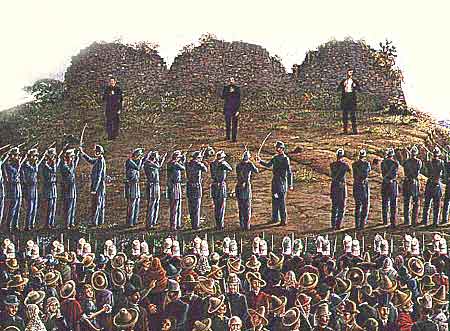
Following the fall of Queretaro, Emperor Maximilian, General Miramon and General Mejia were executed by order of Benito Juarez on the Hill of Bells outside of town on June 19, 1867. General Marquez had been sent to Mexico City during the siege and was able to escape to Cuba. Another figure from the border region was not so lucky. Maximilian's finance minister, who had once been known as the "Lion of the North", Santiago Vidaurri, was found In Mexico City on July 8. He was beaten and executed on a dung heap. The Mexican Empire though, was long dead by that time; it had died along with Maximilian there on the Hill of Bells. Before he was shot, Maximilian prayed that his blood would be the last to be shed in Mexico, but his prayer went unanswered. Canales, Cortina and Escobedo continued to battle for control of the border and Benito Juarez was soon opposed by Jesus Gonzalez Ortega who claimed the presidency. Eventually, when Juarez broke the rules of his own constitution to run for president again he was opposed by his own former general Porfirio Diaz, who eventually became dictator of Mexico himself for many years. In short, after the reign of Emperor Maximilian from 1864 to 1867, things on the border and across the nation as a whole went right back to their normal republican routine in Mexico. |
|
|
 |
|
|
|
The execution of General Mejia, General Miramon and Emperor Maximilian |
|