 |
|
|
|
|
|
|
|
|
|
|
|
|
|
|
|
|
|
|
|
|
|
|
|
|
|
|
 |
|
 |
|
|
|
|
|
|
 |
|
|
|
|
|
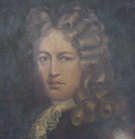
General Patrick Sarsfield |
|
|
|
��������� General Patrick Sarsfield was the greatest Irish hero in the war against William of Orange. He was, in every way, an admirable figure being a brilliant soldier, a loyal son of Ireland and his rightful King and a devout Catholic. Protestants may celebrate the battle of the Boyne, but Patrick Sarsfield was the real, authentic hero of that war. He did not betray his family; he was loyal to his rightful king, his people, his country and his religion. He did not support centralizing power in the hands of a ruling elite while he lived a pampered life like William of Orange but he fought for the independence of Ireland and indeed the freedom of all the nations of the British Isles; he fought for the idea of all people governing themselves. He did not come to enforce religious oppression on people, persecuting those who believed differently than he did. He fought religious bigotry in support of King James II who was overthrown for the very reason that he wanted to end Protestant absolutism and allow freedom of religion in Britain and Ireland. General Sarsfield should not be simply a Jacobite hero or an Irish hero but a hero for all people be they in Ireland, Scotland or England. |
|
|
����������� Patrick Sarsfield was born at Lucan in County Dublin probably around 1650, the second son of Patrick Sarsfield and Anne O'Moore. Patrick came from Anglo-Norman stock but his mother was a daughter of Rory O'Moore who had organized the Rebellion of 1641 so he had solid roots of devotion to Irish freedom. As he grew older he went to school at a French Military College where he had little patience for studying organization, logistics and the like but excelled at battle exercises, always being quick to volunteer for the most dangerous challenges. Unlike many, he was fortunate enough to be born into a wealthy family and when he succeeded his older brother William as owner of the family estates in 1675 they were producing an income of 2000 pounds a year, which was quite an amount for that time. Sarsfield, for the moment, continued to focus on his military career and in 1678 went to England to take up his appointment as a captain in the infantry regiment under Colonel Dungan. |
|
|
����������� His star was on the rise and in 1685 he transferred to Hamilton's Dragoons and the following year was promoted to lieutenant colonel of Dover's Horse regiment. He served in France with the regiments King Charles II sent to assist Louis XIV. This was a controversial issue in rabidly Protestant England that there should be any cordiality with Louis XIV, the most powerful Catholic monarch in the world. In 1686 Sarsfield was promoted to full colonel, a position he held when things began to go awry for King James II. Before coming to the throne, James II had converted to Catholicism which made him very unpopular with the Protestant elites who dominated England and the Scottish lowlands. They tried to have him barred from the succession but his brother, Charles II, would have none of it and James succeeded to the throne. The Protestants might have grumbled through the reign of their Catholic king, but James II rocked the boat by proposing that the laws which favored the Church of England and barred all others from government service were unfair; not only to Catholics such as himself but to Protestant dissenters as well. His efforts to enact religious toleration met with great opposition in Parliament but it was his family life that sealed his political fate. James II had earlier married the beautiful and devout Italian Mary of Modena who gave him a son and heir in 1688. The Protestants of England were not about to allow the possibility of another Catholic monarch and called on the Dutch Prince of Orange, who was the son-in-law of James II and a Protestant, to invade England, depose James and become their own puppet monarch. |
|
|
|
����������� William and his Dutch army landed on November 5 and King James II went to meet him. However, he was immediately surrounded by betrayal on all sides. Anti-Catholic riots broke out in London and even his supposedly loyal English generals, most crucially Churchill, turned against him in favor of the Dutch invader. Ireland, however, was a different story. Irish Catholics had seen their first glimpse of religious freedom after what seemed an eternity of Protestant oppression and they remained loyal to the King. None were more committed that Patrick Sarsfield who was in Ireland at the time. He raised a cavalry regiment of which he was made colonel and was quickly promoted to brigadier general. He assisted the Catholic Lord Lieutenant of Ireland, the Earl of Tyrconnel, who King James had made commander in chief, in reorganizing and training the Irish army. Sarsfield soon came to England with a body of Irish troops requested by King James to try to save the situation, but with the English army turning against him in favor of William, there was little that could be done. After seeing first to the safety of his family he was forced to go into exile in France, accompanied by his loyal Irish Catholic general Pat Sarsfield. |
|
|
����������� King James II, however, had not given up on his people and his country and the people of Ireland stood out especially as those who had most stood with him when so many in Britain turned against him, and with good reason. The Irish people knew that with a Protestant usurper on the throne acting as a figurehead for Parliament which was dominated by Protestant bigots, they could expect an end to the freedom they had enjoyed under James II and a return to the persecution and oppression they had known in the years past. Of course, James II was as imperfect as all men are bound to be and he made mistakes, one of which was not making better use of General Sarsfield. Nonetheless, he knew that Ireland was his safest stronghold and the following year he returned to the Emerald Isle, declared independence and launched his bid to drive out the invader and restore the Stuart reign. |
|
|
����������� Despite being underutilized, Sarsfield was busy in 1689, on and off the battlefield. He found the time to marry Honora De Burgo, daughter of the Earl of Clainricarde, at Portumna Castle in Galway and was elected MP for Dublin in May. However, it was the war that was to dominate his mind in these years and it was certainly to be that once William of Orange landed in Ireland with his army of British and Dutch soldiers as well as foreign mercenaries. He secured Connaught for the Jacobites (those being the people loyal to James II) and guarded against a possible British attack. He was known during his military career as a strict disciplinarian but a commander who was much loved by the soldiers who fought under him. His devotion to Ireland was second to none and over his life he fought a number of duels over the honor of Ireland, and was once badly wounded, for Sarsfield would not suffer his homeland to be insulted. Unfortunately, it took him some time to be used to his full potential as the King and some of those around him believed that, while he was certainly brave and loyal, that he lacked the overall head for a top command because he was always so willing to jump right into the thick of the fight. Time would prove how incorrect that opinion was. |
|
|
����������� However, that was certainly not to say that the abilities of Sarsfield went unappreciated by the King himself. In fact, in 1690 King James II created him Baron Roseberry, Viscount of Tully and Earl of Lucan as well as being appointed Colonel of the Lifeguards. On two occasions in 1691 he was to serve as Commander-in-Chief of the loyal forces in Ireland. Nonetheless, it was his misfortune to be uninvolved in the most decisive actions of the conflict while the King himself was still in Ireland. It was also the misfortune of the King himself who could certainly have used the talents of Sarsfield. This was certainly true at the battle of the Boyne, which is now viewed as the decisive battle of the entire war, though it need not have been as the Jacobite defeat was not as total or as disastrous as it is often made to seem. It did, however, break the will of King James II (whose father had been beheaded by traitors lest we forget) and afterwards he returned to exile in France. However, the war for freedom and legitimate government went on in Ireland in his name for some time after, thanks largely to the leadership of Sarsfield. |
|
|
|
����������� At the battle of Aughrim, Sarsfield was again underutilized but nonetheless earned great admiration for the way his well ordered cavalry kept a defeat from turning into a total disaster and saving the lives of a great many Irish soldiers. This was one occasion of many when the discipline he instilled in his troops paid off handsomely. It was a seemingly hopeless fight the Irish faced. They were poorly equipped, poorly supplied, poorly armed and faced by a much more numerous army of well stocked professional soldiers. Nonetheless, Sarsfield faced this challenge with his usual zeal and proved his full worth at the epic siege of Limerick. Besieged by a vastly superior enemy the city of Limerick refused to open its gates to the pretended King William III and refused to surrender. In a bold and brilliant move, General Sarsfield slipped out of the city with a few of his cavalry, rode all through the night and captured the enemy supply train, blowing up a huge quantity of English ammunition and gunpowder. |
|
|
����������� Soon thereafter, 10,000 Dutch and English soldiers launched an assault on the city of Limerick. William brought up huge siege guns to blast a breach in the city walls and sent his men charging in. For three desperate hours the Irish infantry fought them off before being pushed back. As the Orange forces clawed their way into the city the Irish troops fought them in hand to hand combat. Orange losses were heavy but they pushed through the streets where they were met by a hostile population. As the soldiers fought on Irish civilians, men and women alike, hurled rocks and bottles down at the attackers. With casualties mounting ever higher in this slow, painful advance, the Irish cavalry then rode around and attacked the Orange forces from the rear. This proved to be the last straw and William of Orange ordered a retreat. The city of Limerick was saved and they had inflicted 3,000 casualties on their enemies while sustaining less than 500 of their own. It was a great victory for the Irish Catholics and a demoralizing blow for William of Orange who then decided that he had had enough of Ireland and went home, leaving the treasonous English General John Churchill in command to subdue the island. |
|
|
 |
|
|
����������� Unfortunately, there were other victories for the Orange forces and soon the war settled down to a stalemate typical of Irish history. The British were too powerful to defeat entirely, but the Irish resistance was so effective that they could never be decisively defeated either. Churchill, however, had the advantage of more men, more supplies, more weapons, more money and virtually everything else (except perhaps courage and honor). It became clear to General Sarsfield that while he could continue the war he also could not win it with his exhausted army and to try to do so would only be to waste the lives of his beloved soldiers. In October of 1691 he agreed to discuss terms of peace with William of Orange. To his surprise the British offered a generous peace. Irish Catholics would be free to practice their religion, have the full rights of all other citizens and were guaranteed protection from all persecution and harassment. It was more than many Irish leaders had dreamed possible and Sarsfield willingly signed it on the Treaty Stone at Limerick. |
|
|
����������� This might have been the start of a new and better relationship between Protestant Britain and Catholic Ireland, but it was not. The Treaty Stone still sits in the town square of Limerick but as a reminder of Protestant British deceit rather than goodwill. Hardly had the ink on the treaty dried when the English Parliament passed the Penal Laws which were aimed at nothing less than the total obliteration of Catholic Ireland. Irish Catholics were forbidden to practice their religion, not allowed to be educated, not allowed to hold office, not allowed to conduct business or commerce of any kind, they were not allowed to purchase land, not allowed to rent land worth more than 30 shillings a year nor were they allowed to profit from any land already held. In short, conditions in Ireland became worse than ever under the reign of William of Orange, the man still considered by many in Britain today to be the father of free, liberal, British society. |
|
|
|
����������� As for Patrick Sarsfield, he left Ireland in December, to follow his true king back into exile once again with 12 ships and about 2,600 others escaping the tyranny that had descended on their country. Once back in France King James II made him captain of the second troop of Irish Life Guards in 1692. This was the start of the second flight of the Wild Geese as thousands of young Irishmen were forced to go into exile, many joining Irish units in the militaries of foreign nations. Patrick Sarsfield continued his loyal service until he was mortally wounded leading French troops against his old enemies at the battle of Landen in Flanders in 1693. He died of his wounds three days later in Huy, Belgium with his last words being, as his life slipped away, "If this was only for Ireland". He died after fighting in a lost cause, though his was not the first Jacobite uprising nor would it be the last. Yet, Ireland was not liberated, the Stuarts were not restored to the throne but to the Irish Catholics that did not matter so much where Patrick Sarsfield was concerned. His life was an example of the very best of the Irish Catholic spirit, an illustration of the spirit that existed in those times and an inspiration for future generations. He fought for freedom against tyranny, he fought for legitimate government against a usurper. He fought for Ireland and for the freedom of the Catholic Church but in fighting for King James II he was also fighting for justice in all of the British Isles, for the true king of Ireland, Scotland and England as well. His life was an example and one that anyone today would benefit from remembering and seeking to emulate. |
|
|
|
 |
|
|
|
Oh Patrick Sarsfield, Irelands Wonder, |
|
|
|
Who fought in the fields like any thunder, |
|
|
|
One of King James' chief commanders, |
|
|
|
Now lies the food of crows in Flanders. |
|
|
|
Och hone, Och hone. |
|