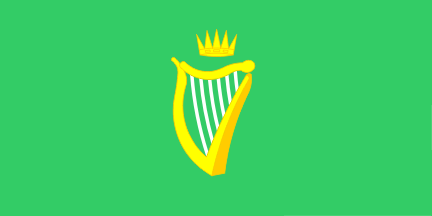


However, being a patriotic Irish Catholic, even one who could never stomach saying a good word about any British royal, does not mean it is impossible to be a monarchist. Ireland, after all, was a collection of monarchies before the English invasion and at times even a united "empire" of sorts (High King Brian Boru was sometimes called the "Emperor of the Irish" for ruling over a number of kingdoms). For someone who adores all things Irish and detests all things British, keep in mind that Britain does not have a monopoly on monarchism and Ireland was once crawling with kings and princes. There had never been an Irish republic before the invasion of England and, in effect, one could say that by simply being a republic Ireland is giving in to the idea that so many centuries of British rule managed to change them into something they never were and that foreign rule effectively brought in a form of rule after independence that was totally foreign to Irish culture. I cannot help but imagine that it would have been rather glorious for Ireland, at the time of independence, to have crowned a High King of Ireland and restore all the chief families and go on as though the occupation had never happened. It would have been close to if not impossible I know, but it seems to me very "Irish" to have done something like that as a way of saying no enemy, no occupation, no matter how long will change who we are and how we do things.
There are a few Irish people who would like to see the old kingdoms restored but this would be quite a job and leads back to one of the reasons why the British monarchy remains rather unpopular. The English government did quite a good job of buying out, forcing out or simply killing off the native Irish royal and noble families. Some were simply added to the English peerage (a tactic that worked well across the British Isles) while those who cooperated with England sometimes became reviled by their own people (a common fate for native monarchs in a colonial system) and the brave few who tried to fight for their people were all ultimately defeated and killed or forced into exile where they eventually blended in with the native people there. Effectively, the Irish had few to no traditional leaders to turn to and the English and later British ensured that they were the only game in town so to speak. That is one of the problems faced by the handful of Irish monarchs who favor a return to high kingship; who would be High King?
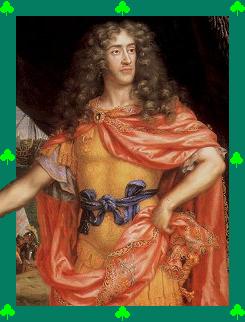
Yet, even with the British and Commonwealth monarchy, feelings in Ireland were never quite so uniform as they are now, especially among the core, Irish Catholic population. Despite the injustices and cruelties under monarchs like Elizabeth I, the Irish Confederates did ally with King Charles I and the Irish people did support the restoration of King James II and there were Irishmen who fought in the Jacobite wars in Britain. Even as the British monarch was the embodiment of the British Empire many Irish, though resenting British rule, did take a measure of pride in their own part in building the largest empire in history. The Irish sailed with the Royal Navy, fought in the British army and settled in British colonies around the world. Given the many centuries of injustice and persecution it is amazing how many Irish people remained supportive of the monarchy. Dan O'Connell, sometimes known as the uncrowned King of Ireland, was a monarchist who looked at republican France with horror. Even Sinn Fein was originally formed with some monarchist leanings. Since the reign of at least King George III one would be hard pressed to find any British monarch who actively persecuted the Irish. King George III himself was rather unpopular in Ireland because of the bloody reprisals following the 1798 Uprising and his refusal to grant Catholic Emancipation. However, George III was not answerable for the conduct of the troops and he had no blind prejudice against Catholics, but considered that to emancipate them would be to violate his coronation oath to the Church of England.
Queen Victoria was originally quite popular in Ireland and had a great love for the island. She was greeted with much fanfare when she visited Ireland and even clubs of Irish nationalists would often end their meetings by singing "God Save the Queen". She supported Maynooth College, visited the seminary and backed the grant of over 30,000 pounds by the Peel government to the college. During the Potato Famine the Queen donated 5,000 pounds for the relief of the Irish. However, the monarchy suffered in popularity because of the famine, at least somewhat, again simply because it was the institution which most symbolized Britain. However, it was the Queen's rigid attitude regarding proper behavior which ultimately became her greatest mistake in dealing with Ireland. When the Dublin Corporation refused to congratulate the Prince of Wales (future King Edward VII) on the occasion of his marriage the Queen took it very personally and refused to visit Ireland after that. The Queen herself was not too fond of her indulgent and debauched son, but she believed in keeping up appearances. Unfortunately for the Queen her action was exactly the wrong thing to do. It is doubtful that any of the radicals missed her and her absence made the loyal Irish feel neglected and enthusiasm toward the monarchy dropped. Her own care for Ireland was genuine though and perhaps may have helped spread the rumor that she was natural daughter of an Irish father.
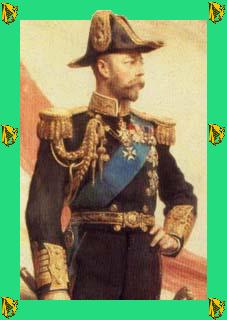
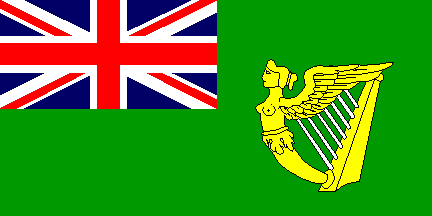
Concerning World War I, it is interesting to note that even during the Easter Rising of 1916 many Irish people opposed the fight and had very much rallied around the monarchy in the time of war and did not take kindly to the rebels friendly words toward the Germans. On the opposite side there was also some rumors at the time and since that the Irish nationalists, or at least a faction among them (some were socialists) favored inviting the Kaiser's son, Prince Joachim, to become King of Ireland. Of course, it did not happen and the Easter Uprising was bloodily suppressed. In fact, British harshness may have given the nationalists their greatest victory. Even the many who had opposed the uprising were shocked and horrified by the brutality of British forces and the swift execution of those involved. In fact, though little known at the time, it was King George V who urged his government to show mercy for the very reason that harshness would only cause more Irishmen and women to view the British as their enemies. As we know, the King's advice was not taken and support for republicanism grew. It was in the aftermath of this situation, for instance, that Sinn Fein dropped her monarchist position and became openly republican. We all know the sad conflict and civil war that engulfed Ireland afterwards, with Ulster being torn away and the Irish Free State coming into being in 1922 with George V as King in Ireland from 1922 to 1927 and following that as King of Ireland. There was even some planning done to have George V crowned in an official ceremony in Dublin but nothing came of it.
However, surprised as some might be today, Ireland still had a reasonable monarchist presence at the time. A vital event in the changing of this attitude was to come with the rise of Eamon De Valera. Having been born in the United States and an early member of the Irish Republican Brotherhood, De Valera had little use for monarchy nor of Arthur Griffith's Anglo-Irish "dual monarchy" idea which was a throw back to the Grattan Parliament. Oddly enough, both of these men were Protestants while De Valera was a devout Catholic which, perhaps, illustrates the difficulty caused by the monarchy being tied in with the Protestant Church of England and all the sad, subsequent history. It became easy to see why Protestantism became associated with monarchism and Catholicism with republicanism in Ireland; certainly one of the few countries in the world in which that was true. Nonetheless, when De Valera gained power there was enough of a monarchist presence among the Irish people for him to promise to put the issue to a vote once Ireland became fully independent. At that time, Ireland could vote to become a republic or to choose a monarch provided the prince in question was not a member of the British Royal Family -monarchy or not De Valera wanted complete and final seperation from the British Empire. That promise too, failed to materialize. The vote was never held and Ireland became a republic save for the northern counties which Britain still clings to even today.
Because of this, over time, monarchism was forgotten in Ireland and even grew to be more and more hated as a result of the violence and discrimination in Northern Ireland and the association of monarchy with the British government and her policies. This is understandable given that, technically, it is "Her Majesty's government" but in reality everyone knows that the Queen does not actually govern and the actions of the sitting government in London no more absolutely represent her own views than do "her" governments in Canada, Australia or New Zealand. So, is there no hope for an Irish Catholic monarchist? Common sense says there is little, but still perhaps more than one might think. Archbishop John Healy of Tuam, who said, "The character of Kings is sacred" was obviously a monarchist, Abbot Columba Marmion said he was not in favor of a republic. As mentioned even Sinn Fein founder Arthur Griffith, though not a monarchist at heart, favored a "dual monarchy" for a free Ireland to share with Great Britain (and later this was, in a way, to happen throughout the Commonwealth). Dan O'Connell was a monarchist, sickened by the violent republicanism in France; as was Henry Grattan who was a Protestant but then so were Emmet and Tone and so many other republicans. At the end of the day, the basic facts are these: the crimes of the British should not prejudice Irish Catholics against monarchy in general and should certainly not make them forget the glory days of the Irish monarchy in Celtic Ireland of old. It should also be remembered that the British royals themselves have done good things for Ireland even though it might not have been known at the time. Hopefully, when the situation in the north is resolved and Ireland and Great Britain can truly be friendly and equal neighbors and all the ugliness of the past put behind us a more reasonable and realistic view of Irish Catholics by the British and the British monarchy by Irish Catholics can be possible.