 |
|
|
|
|
|
|
|
|
|
|
|
|
|
|
|
|
|
|
 |
|
Bernadette Devlin: Civil Rights Activist to Socialist Agitator |
|
 |
|
|
|
|
 |
|
|
|
 |
|
|
|
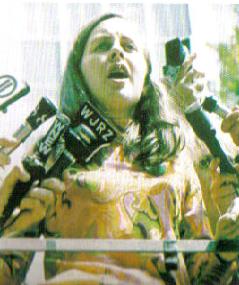
Bernadette Devlin was born on April 23, 1947 in Cookstown, County Tyrone, Ireland and would become known around the world for her political activism, especially her time as the youngest member of Parliament in the history of the Westminster system. Over the years her politics became more and more extreme though she has moderated at least somewhat in recent years. She started out as a psychology student at Queen's University in Belfast in 1968 when she cut her political teeth in the student organized Catholic civil rights party People's Democracy. She was known early on for her strident opinions, short skirts and combativeness. Her activism eventually reached a sufficiently controversial pitch for her to be kicked out of school. So, what was a radical Irish girl to do after being thrown out of college; run for political office of course! In the 1969 election she decided to run against James Chichester-Clark in her native Northern Ireland. |
|
|
This gained Devil even more notoriety but it was nothing compared to the attention she received after the death of Mid Ulster MP George Forrest when she announced she would compete for his seat in the Westminster Parliament. Devlin ran on the "Unity" ticket and was opposed by Anna Forrest, the Unionist widow of the late incumbent MP. Her campaign was groundbreaking in many ways. For one, she vowed that she would take her seat if elected which is something most Irish Catholics or republicans had refused to do (on religious and political grounds). She was also only 21-years-old making her the youngest woman to ever run for a seat in Parliament. This caused a media sensation and to the surprise of many she won the election. She was radical to the core which impressed the liberals but she also had enough combativeness on basic civil rights issues and a girl-next-door appearance to win the support of more moderate and conservative Catholics. |
|
|
That same year Devlin wrote a book which gained her further notoriety called The Price of My Soul which was, for many, their first real look at the severe discrimination Irish Catholics were forced to endure in Ulster at the hands of the Protestant authorities. The crusade for Catholic civil rights was to be her first real major political goal and she pursued it with considerable zeal and a youthful patience that would not tolerate the standard way of doing things. All of this made her quite popular with some but extremely unpopular among the British, Protestant, Unionist crowd. As she had vowed she took her seat in Westminster after being elected and gave her maiden speech on her 22nd birthday. She remains the youngest member of Parliament in the history of the Westminster system. However, controversy was never far away for her and her career was only just beginning. |
|
|
When the infamous Troubles of Northern Ireland were just getting started Devlin was in on the ground floor agitating for Catholic civil rights at the famous battle of the Bogside in Derry when protests broke out that August over the parade of the Protestant Apprentice Boys celebrating the shutting of the city gates against the Catholic King James II in 1689. Riots and clashes with the RUC ensued and in December of that year Devlin was arrested on charges of inciting a riot and sentenced to six months in jail at Armagh of which she served four months. She had long lobbied for one vote for one person, repeal of the special powers, fair electoral boundaries and freedom of speech, assembly and equal rights in housing and employment, however, her politics became more and more radical as time went on. After being reelected in the 1970 general election she announced that she would be taking her seat as an independent socialist and would, from then on, becoming an increasingly vocal proponent of socialism. |
|
|
In 1971 she traveled around the United States to speak out about the conditions in Northern Ireland and to raise support from the Irish-American community. Some received her well but others were put off by her comments about political events in the United States. That same year she gave birth to her daughter Roisin which, being single and unmarried, cost her more support from the Irish Catholic community which had already begun to distance themselves from her, the conservatives at least, for her increasingly socialistic politics. Devlin was asked to speak at an anti-internment march in Derry on January 30, 1972 which, after the march was re-routed, resulted in 13 Irish civilians being killed by soldiers of a British paratroop regiment and became known as Bloody Sunday. The following week, back in the House of Commons, Devlin called the English Home Secretary, Reginald Maudling, a lying hypocrite when he insisted that the British troops had fired in self defense. Then, to the shock of everyone, Devlin cross the floor and punched the home secretary which resulted in her temporary suspension. |
|
|
In February of 1974 she contested her seat as an independent socialist but lost the election and then co-founded the Irish Republican Socialist Party but resigned from it the following year. These events coincided with a group splitting away from the Official Irish Republican Army to form the even more radical Irish National Liberation Army. It soon became clear that the IRSP was willing to make their politics take a back seat to the clandestine activities of the INLA and Devlin parted company with them as she did with various other socialist political factions in the following years. Throughout this time she also became increasingly vocal in her opposition to the old guard, so to speak, of Sinn Fein and the IRA. She kept to a strictly political role herself but never seemed to give serious consideration to those working for peace, at least in that stage of her career. She continued to be an advocate for socialism and occasionally stood for election such as during her activism in support of Irish insurgents being held in British prisons. She supported the strikers during the 1981 Hunger Strike but also did not hesitate to voice her opposition to Gerry Adams and Sinn Fein. |
|
|
By this time Bernadette Devlin would hardly have been taken for someone who had started her career campaigning for Catholic civil rights. Indeed, she was an admitted atheist and openly spoke contemptuously of the Catholic Church and organized religion in general. She had become, essentially, the standard left-wing, radical socialist revolutionary who seemed able to find fault in anyone and anything. She had, however, embraced at least one traditional institution as on the day she turned 26, April 23, 1973, she married Michael McAliskey. In time she seemed to recede into the background somewhat, being out of power, but still known for her fiery oratory and still able to win many enemies. On January 16, 1981 she and her husband were wounded when gunmen of the Ulster Freedom Fighters (a Protestant paramilitary group) stormed into their house and shot them both. The incident was highly suspicious as the home was said to be under surveillance by the British army and it was British troops who first came to their aid. One went to a neighboring home to borrow a car and drive the couple to the hospital but many have wondered why these troops could have missed the attack if they were so close or why they had no field radio or transportation of their own. |
|
|
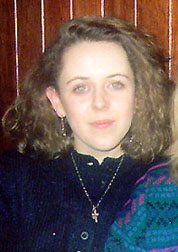
In any event, Bernadette McAliskey (as she is now known) and her husband recovered and the three gunmen were eventually captured and sent to prison. Although she has not held a political position for some time she has been censored in both Britain and Ireland for her many inciting remarks, often aimed at both governments. In 1996 her pregnant daughter Roisin was arrested on charges of murder. She was accused of being implicated in a mortar attack on a British army barracks by members of the Provisional IRA and was horrendously mistreated by the authorities. There was no real, hard evidence against her and yet she was held in terrible conditions, ultimately being sent to an all-male prison where she was repeated strip-searched and humiliated by male guards before finally being sent to a psychiatric hospital to have her baby, a girl. It was not until 1998 that she was released with the only reason given being ill health. Like many such instances the entire affair stunk to high heaven and many assume, with some justification, that it was no more than an act of police retaliation against a woman from a very unpopular family with the British authorities. |
|
|
|
 |
|
|
|
|
In 2003 Bernadette Devlin McAliskey made headlines again when she was refused permission to land in the United States and was barred from the country under new legislation passed by President George W. Bush in the wake of the 9-11 terrorist attacks. Her name appeared on a list of those with terrorist ties which McAliskey vehemently denied to have any connection to terrorism and indeed had never been in any legal trouble other than her brief stay in jail for incitement to riot in Derry. In recent years she has voiced her opposition to the Good Friday Agreement and condemned Sinn Fein for going along with the power-sharing government. At the time she stated that such a compromise was not what so many IRA soldiers had died for. However, in 2007 she hinted at some lingering political aspirations of her own when she commented in any interview that she would be better qualified to bring peace to Northern Ireland than the current leadership. In any event she remains a committed radical, a zealous socialist and has spent much of her time recently advocating for better treatment for migrant workers in Northern Ireland. In 2008 it was announced that a motion picture on her life was in the works to be titled The Roaring Girl; quite an appropriate title. |
|
|
Bernadette Devlin is an example, admittedly on the extreme end, of how radical liberalism has grown to dominate much of the republican movement in occupied Ireland. Her early campaigning for Catholic civil rights was good and admirable in every way, however, her radicalism and rebelliousness seemed to get the better of her until she came to oppose almost everything and everyone around her. She campaigned for Catholic civil rights and yet came to attack the Catholic Church which has for so long been the strongest pillar of Irish culture. She campaigned for unity, independence and the withdrawal of the British yet her recent liberal attitudes welcome any number of other foreigners to the point that the Irish may someday be in danger of becoming a minority in their own country which was never a danger even among the darkest days of British rule. This also runs rather contrary to her stated belief that Ireland belongs to the Irish and her socialism would agree with that only until Irish themselves are forced to give what is rightfully their own to someone less fortunate or some immigrant who had not earned it. Devlin has at least been honest enough to admit that socialism is a foreign concept to Ireland which is more than most other such revolutionaries. All in all, Devlin became one of those who is a revolutionary simply for the sake of the revolution. She accomplished some good things, but in her increasing radicalism broadcast the seeds of the destruction of what she once claimed to be for. However, it can also not be denied that her and her family have been subject to gross injustices and discrimination which must be kept in mind when considering her attitudes as well as those of the Irish Catholic community as a whole in the long years of strife between Catholic and Protestant, republican and unionist. |
|
|
|
|
|
|
|
 |
|