 |
|
|
|
|
|
|
|
|
|
|
|
|
|
|
|
|
|
|
|
|
|
|
|
|
|
 |
|
Embattled Derry |
|
 |
|
|
|
|
|
 |
|
|
| Today most people know the city of Derry as the site of numerous clashes between Protestant and Catholics in the tumultuous history of Northern Ireland. Located near the sea at the mouth of the Foyle River, just across from the border with the Republic of Ireland, the city was previously known as Londonderry because it was there that the London companies first established themselves during the dark days of the Ulster Plantation. It was not until 1978 that the city council achieved a nationalist majority and was able to drop the hated name of London from the city authority at least and revert back to the old name of Derry. As the second city of Northern Ireland it has been a flashpoint of conflict between Catholics and Protestants, Unionists and republicans, but the origin of this tense situation goes all the way back to 1689 and the siege of Derry fought by the forces of the Protestant Dutch William of Orange and the deposed Catholic King James II. |
|
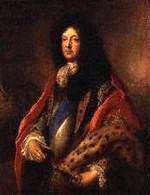
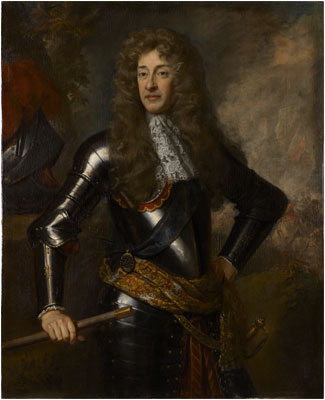
| It was King James II who first gave permission in 1613 for the fortification of Derry which made it a formidable walled city. When the legitimate monarch of England, Scotland and Ireland, the Catholic James II, was overthrown by his Protestant Dutch son-in-law William of Orange and his daughter Mary it was Lord Richard Talbot, First Earl of Tyrconnel who was the Viceroy for King James II in Ireland. He was of the Old English class in Ireland that had effectively become Irish. He was a Roman Catholic and had fought in the Confederate Wars for Catholic Ireland. He was loyal to James II and did his best to see to it that the Protestants were disarmed and all of the fortified cities in Ireland were garrisoned by Catholic troops loyal to the legitimate King. Derry was one of two cities (the other being Enniskillen) in Ulster where this was not completely accomplished. With the advent of the so-called Glorious Revolution (which was anything but) Ireland, like all other areas united under the Stuart crown, was thrown into confusion. |
 |
|
|
The Earl of Tyrconnel |
|
 |
|
|
|
Alexander MacDonnell, Third Earl of Antrim, was ordered to garrison Derry with reliable Jacobite (loyal to King James) soldiers but was so particular in choosing his men that it was several weeks before he and his 1,200 men were on the march toward the city. Meanwhile, the Protestants in Derry were in an uproar when a letter was produced with promised that the Catholics would massacre all Protestants in the city. Later it would be learned that this letter was a complete fabrication, but the paranoid anti-Catholic Protestants were eager to believe it. On December 7, 1688 the soon to be famous 13 Protestant apprentice boys took the keys to the city and shut the gates; locking out Antrim and his troops just as they were about to enter the city. On December 10, 1688 King James II was forced to leave London and by the middle of the month was in exile in France. There he received support from his powerful Catholic cousin, King Louis XIV of France (an old enemy of William of Orange) who gave support to King James II to retake his throne. His first step was to land in Ireland and declared independence from there. |
|
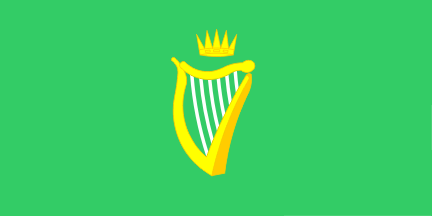
| Since the Confederate Wars in Ireland and the English Civil Wars Ireland had been seen as a Roman Catholic royalist stronghold. British Protestants feared it for the same reason it gave James II and his Jacobites hope; that it would be the ideal stepping stone as a base for the invasion of Britain and the restoration of the Stuarts. On March 12, 1689 King James II landed at Kinsale, Ireland with 6,000 troops given to him by King Louis and called on all loyal Irishmen to rally to his cause. Obviously, it was the Irish Catholics who responded most enthusiastically. At first it seemed a glorious campaign of marching. The Jacobites took Dublin and continued northward but the farther north they went the stronger were the Protestants who backed the Dutch invader William of Orange. The conflict is sometimes called the War of the English Succession because the government had declared the usurpers joint sovereigns as King William III and Queen Mary II of England, Scotland and Ireland though the Archbishops of Canterbury and York continued to recognize James II as the lawful monarch. |
|
|
|
|
 |
|
|
|
|
| On April 18, 1689 King James II himself and his army of French troops, English Jacobites and Irish Catholics arrived at Derry the city refused to open the gates for him and refused his call to surrender. They even opened fire on their lawful monarch and so the Jacobite army settled down for a siege. There was really no other option as the city was very strongly defended. Before their arrival some 30,000 Ulster Presbyterians had fled to Derry and the protection of its walls when they heard that King James and Catholic Ireland were on the march. It would be a long and grueling fight as both sides realized that Derry was vital to the outcome of the war. The Jacobites encircled the city and brought forward their cannon and mortars to lob shells into the city. A constant rain of death fell on the Protestants though the Jacobite forces had no way of knowing what effect their fire was having. King James returned to Dublin and summoned a Parliament where he proceeded to restore freedom of religion, restored the lands confiscated by the Protestants to their rightful owners and confiscated all the property of those supporting the Prince of Orange. |
|
| The siege at Derry continued with the Jacobites under the command of lieutenant general Richard Hamilton. Inside Derry, the City Governor, Lieutenant Colonel Robert Lundy, did not want to fight and advocated surrender. When word of his views leaked out he was beset by hostile Protestants until he was forced to disguise himself as an ordinary soldier and leave the city secretly and flee to Scotland. The defense of Derry was taken up by Major Henry Baker, Colonel Adam Murray and Major Reverend George Walker who vowed never to surrender. That sounded well enough but the situation in Derry was becoming more and more desperate. Weeks turned into months as the population became more and more starved, reduced to eating dogs, cats, rodents and even glue in some cases. However, neither side was willing to give up in the fight for the strategic city. The Jacobites did not have the strength to storm the place but the Protestants could not break out on their own. |
|
| Finally, on June 11, 1689 British warships of the Prince of Orange arrived just off the coast. However, King James II (an old navy man himself) had very cleverly ordered the construction of a giant boom across the river Foyle at Fort Culmore so that it would be blocked to any naval relief force. It was not until forty seven days later that a major effort was made to relieve Derry. Major General Percy Kirke ordered three ships; the Mountjoy, Phoenix and Jerusalem to sail upriver under the guns of Captain John Leake on the frigate HMS Dartmouth. The Mountjoy rammed the boom blocking the river but it was not broken until sailors disembarked and dismantled it. Then, the fleet was able to sail upriver and relieve Derry on July 28, 1689 after 105 days of siege. It was a significant loss in what was to be a lost war for King James II and a free Catholic Ireland. |
|
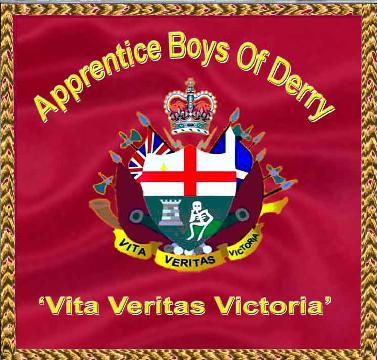
| In the history that has passed since, because of the events of 1689, the city of Derry has achieved the status of a sort of loyalist version of Leningrad. A Unionist group formed taking the name of the Apprentice Boys of Derry in recognition of the Protestant toughs who closed the gates on King James II and they have commemorated the event every year to the disgust of the predominately Catholic population. When the boundary was set between Ulster and the Republic of Ireland many expected Derry to be returned to the Irish, but this was not done. Furthermore, Derry became one of the worst examples of Protestant, Unionist gerrymandering in all of Northern Ireland. Although Catholics have long been in the majority they were denied equal opportunity in employment and housing and denied their full voice in government matters. As such, Derry became a focal point for the movement for Catholic civil rights in Northern Ireland. |
 |
|
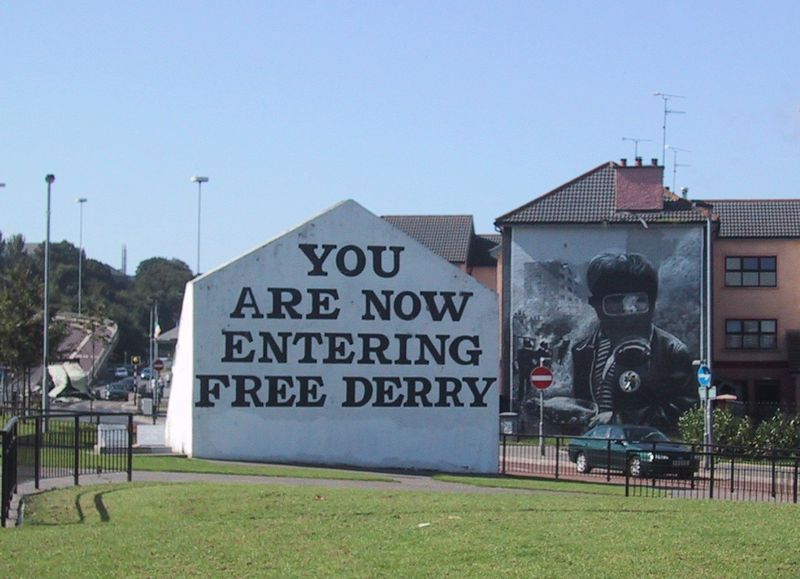
| Irish Catholics suffered severe political and economic discrimination because of the gerrymandering that gave the Protestants control of the city council. In 1968 a march was held protesting the poor conditions Irish Catholics were held in and many of the marchers were assaulted and severely beaten by members of the RUC. The Apprentice Boys also continued to hold their annual march along the walls during the Maiden City Festival week which was often accompanied by clashes between Catholics and Protestants. After a march in January of 1969 the RUC broke into the homes of several Catholic families and assaulted the residents which even the British government eventually admitted were completely wrong and cruel. The result was the establishment of Catholic self defense units which were formed to patrol the area of Bogside and to keep the RUC out. Barricades were set up and the Derry activist John Casey painted his famous mural at the edge of town proclaiming that one was entering Free Derry. |
|
|
 |
|
|
 |
|
It was also in 1969 that the Battle of Bogside erupted during a march by the Apprentice Boys when fighting broke out between the Protestant marchers and the Catholic residents. The situation became so severe that the Prime Minister of Northern Ireland requested British troops to intervene in the clashes between the Catholics and the RUC. Troops of the Prince of Wales Own regiment were duly dispatched with orders to separate the forces involved but not to enter the Bogside community. Most Catholics welcomed them as benevolent neutrals who would defend them against the RUC and though about 1,000 people were wounded there were no deaths as the British troops restored order to the area. This marked the first time that British troops had intervened in Ireland since the partition of the country. Nonetheless, the events in Derry in 1969 are often regarded as the start of the Troubles in Northern Ireland between the Unionists and republicans. |
|
|
|
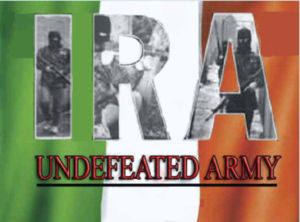
| In 1972 Derry was the scene of the tragic events known as Bloody Sunday when protestors marching for Catholic civil rights were attacked by troops of a British airborne regiment which resulted in numerous deaths. The British claimed that an IRA sniper had been working in the area but none of the evidence supported this. The British embassy in Dublin was burned and the Irish Foreign Minister actually requested UN intervention to stop the violence in Northern Ireland. The IRA was able to use the bloodbath at Derry as a recruiting tool to enlist a new crop of soldiers for their guerilla war against the Unionists. Open season was declared by the IRA on all members of the RUC and the headquarters of the British regiment involved was bombed in February of 1972. The attacks quickly got out of hand until Catholic republicans began calling for an end to it all and on May 29 the IRA announced a cease fire though other groups did not respect it. In 1972 a massive operation by the British army in Northern Ireland, with losses, opened up the last areas of the Bogside that had been off-limits to all Protestant forces. There were lingering tensions and other problems afterwards but in years since most marches have been peaceful. Nonetheless, from the years of James II until now, Derry will always have a certain symbolic significance for Catholics and Protestants in Ireland. |
|
|
|
|
|