
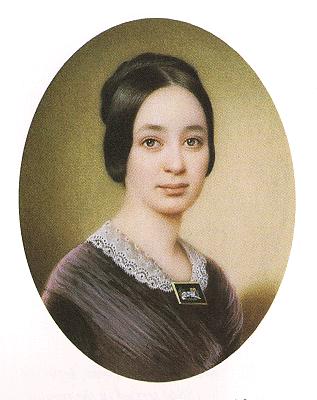

First Lady of the Confederacy

Nevertheless, Jefferson managed to "rob the cradle" and the couple were married on February 26, 1845. The following year, Jefferson Davis resigned from politics upon the outbreak of the Mexican-American War, forming and leading the Mississippi Rifles to considerable glory. When Davis returned to politics after the war, Varina was less than thrilled saying that such an occupation was the natural enemy of a happy family life. Yet, few people would have guessed as much since Varina was known all around Washington as an excellent and popular hostess at the city's many social gatherings. She also proved to be invaluable in helping her husband write speeches and correspondence. Jefferson was the Secretary of War in the Buchanan administration and a U.S. Senator before giving up his seat and going back to Mississippi following the election of Lincoln and the start of the secession of the southern states.
Varina Davis was working outside with her husband when word came that he had been elected President of the Confederate States of America. Because of the expression on his face as he read the news, Varina first thought someone in the family had died. As much as the President, Varina's role as First Lady of the Confederacy proved beyond doubt what a strong and resourceful woman she was. She knew her husband was a very sensitive man, and tried to protect and defend him from his political enemies as best she could. And, if the war was not tragic enough, the Davis family had to deal with the death of one of their children in an accidental fall from the balcony of the Executive Mansion.
Varina Davis was such an important part of her husband's presidency that many called her the "power behind the throne" and cabinet members and every manner of politician did their best to win her favor if they wanted the support of the President. She dealt with official business and also acted as nurse many times to her often ailing husband, who she was completely devoted to. In 1865, when the Confederates were forced to abandon Richmond, Varina remained at her husband's side and was with him when he was finally captured in Georgia. While in prison, Jefferson Davis had no greater champion than his wife Varina. After sending their children with her mother to Canada, Varina began a tireless campaign of harassment appealing for the release of her husband. When she refused to relent she was for a time allowed to join him in prison, which she did, so strong was her love and loyalty.
In May of 1867 Jefferson Davis was finally released and he and Varina moved back to Mississippi after touring Canada and Europe. A friend left them an estate (as their own had been taken and destroyed by Union forces) where Varina helped her husband write his memoirs before writing her own after his death in 1889. Varina Davis set up their estate as a home for Confederate veterans, widows and a monument to her beloved husband Jefferson Davis after which she moved to New York. She died there on October 16, 1905.