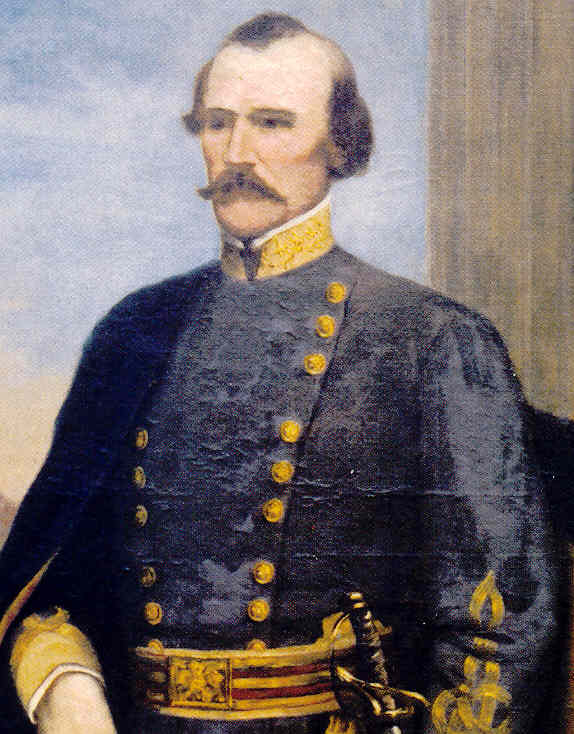
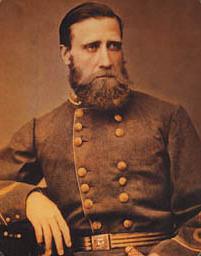
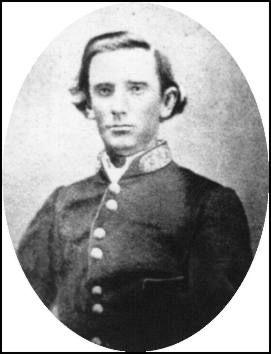
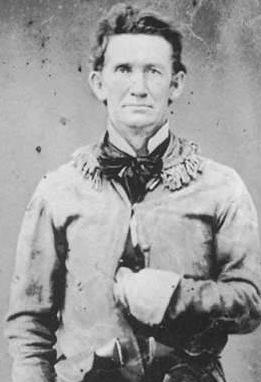
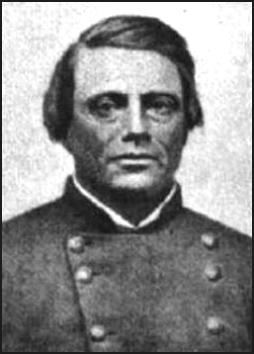
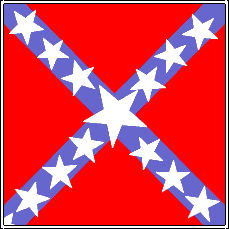
It was former Republic of Texas general, Albert Sidney Johnston, who was the ranking Confederate field commander and the man expected by all to be the most brilliant general on either side. In the Army of Northern Virginia it was "Hood's Texas Brigade" which gained the reputation of being the "shock troops" of General Lee's army. When a British observer noticed the ragged appearance of Hood's men, General Lee proudly pointed out, "Never mind the torn trousers, the enemy never sees the backs of my Texans". It is not unfair to say that, especially during the Seven Days battle and the battle of Anteitam Hood's hard fighting Texans saved Lee's army from disaster and defeat.
The situation in the western theatre was much the same. Confederate Texans gained a glorious reputation, especially the 8th Texas Cavalry, better known as Terry's Texas Rangers, which, under commanders such as future Major General John A. Wharton, was hailed as the very best cavalry unit of the entire war, north or south. Farther west, in Texas herself there were many heroic and colorful episodes. When Confederate Texans under General Henry Hopkins Sibley invaded New Mexico they managed to advance farther west than any Confederate units. During the battle of Val Verde Texans made the only documented lancer charge of the war and also became the only Confederates to fight side by side with the Yankees when both were attacked by Apache Indians.
Texas proved to be the most formidable state in the entire Confederacy. On January 1, 1863 Confederate Texans under General John Magruder inflicted what has been called the most humiliating defeat of the United States Navy before Pearl Harbor. In September of 1863 at Sabine Pass the 1st Texas Heavy Artillery and Jeff Davis Guards (altogether no more than 46 men & 6 guns) faced a massive invasion force of four warships and seven transports loaded with 5,000 men who intended to invade Texas, cut off the line of supply from Mexico to the rest of the Confederacy. In an astounding act of courage and heroism the handful of Texans under Lieutenant Dick Dowling at Sabine Pass turned back this entire invasion force, inflicting some 230 losses on the Union flotilla, including the sinking of two of their gunboats without so much as a single Texan killed. Needless to say this fight went down in history as the most one-sided victory of the War Between the States.
Texas Confederates on the border had a wild time, fighting Indians, Yankees and Mexican bandits. A Tejano Confederate, Santos Benavides of Laredo, was the highest ranking Hispanic of the Civil War and successfully kept Union forces from closing the border at his hometown. By the end of the war an uneasy truce had developed, but that ended with a Union attack near Brownsville. The Yankee commander expected to make a name for himself by winning the last battle of the war, but he didn't count on meeting a certain Texas Ranger named John "RIP" Ford. Colonel Ford and his men defeated the Yankees at Palmito Ranch and that snotty Yankee major who wanted to win the war's last battle instead lost the last battle of the war to Colonel Ford's Texans.
Throughout the Civil War the Texans earned a matchless reputation from Gettysburg, Pennsylvania to Glorietta Pass, New Mexico. On their own soil the Texans had an unbroken record of victory after victory. As someone once said at the outbreak of the war, the other southern states had to earn their reputations in battle, but the Texans had to uphold the reputation they had already earned on battlefields from the Alamo to San Jacinto. God bless Texas and the Southern Confederacy!