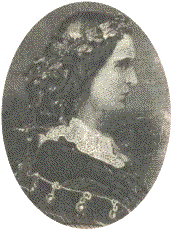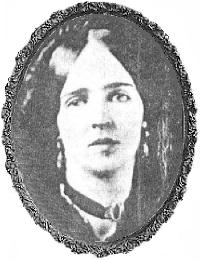


The Holcombes lived at Capitol Hotel while their plantation, Wyalucing, was being built and became leading members of the local community and Texas society. It did not take long for Lucy, who was beautiful, brilliant and very captivating to attract her own Texan and the two were soon engaged to be married. Lucy was overjoyed, but disaster struck hard for the 19-year-old girl when her beloved fiancee was killed during an attempted invasion of Cuba. After recovering from the loss, Lucy realized that life was short and that from now on she would settle for nothing but the best and live every day as though it were her last.
For a girl as lovely as Lucy, romance was never far away. While visiting the aristocratic retreat of the Virginia coast she happened to meet a 48-year-old widower, South Carolina planter and local politician named Francis W. Pickens. He was immediately smitten by the exuberant young girl and sent her many long love letters to Texas begging her to become his wife. Seeing a chance for a great step up, and being as fond of Francis as should probably could have been any other man beside her deceased first love, she decided to press her luck and promised that she would marry Pickens if he could land the post of ambassador in some lavish foreign land. Of course, Francis was willing to move Heaven and earth for Lucy and after pulling some political strings and President Buchanan appointed him U.S. Ambassador to Russia. Pickens was quick to hold Lucy to her promise and he went to Marshall, Texas to claim his bride where they were married on April 29, 1858.
After the ceremony the couple set sail for St Petersburg. The couple were well liked in Russia, especially the pretty and vivacious Texas lady whose charm, knowledge and pleasing personality made her an instant favorite of Czar Alexander II and Czarina Maria Alexandrovna. When the Pickens' daughter, Olga Neva Francesca Eugenia Dorothea Pickens was born in the Winter Palace the Czar and Czarina were her godparents. The Russian Imperial Couple lovingly called the little girl "Douschka", the Russian word for "darling".
In 1860 Francis and Lucy Pickens returned to South Carolina where Francis was persuaded to run for Governor. He won the election and Lucy became the first lady of the Palmetto State. The couple were both ardently pro-south and pro-secession and as happy as the rest of South Carolina when that state became the first to secede from the Union on December 24, 1860. Only four months later, after the formation of the Confederate States of America General Pierre G.T. Beauregard began the bombardment of Ft Sumter that signalled the official opening of hostilities in the War Between the States. Lucy watched the opening battle from a rooftop in town.
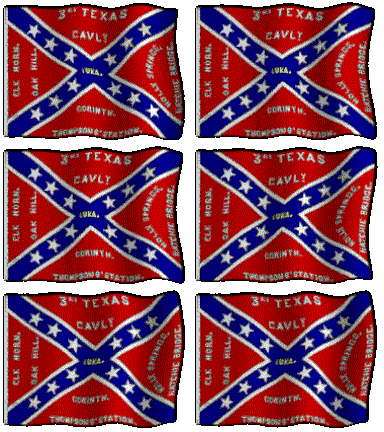
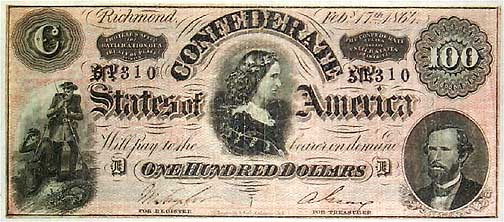
As Governor of the first state to secede, Francis Pickens became a celebrity across the south, but he was probably never so famous as his Texan bride. During the war Lucy was her husband's closest and most trusted advisor and a major force in politics, helping solve a great many problems. In the South the women were famous for being far more fiery in their patriotism than even the men, and Lucy was no exception, showing her devotion to the cause by donating her silver and jewelry to support the war effort, becoming known far and wide as "the Queen of the Confederacy". This money paid for the formation of a local military unit named in her honor, the Holcombe Legion, and when they went to war they marched under a flag Lucy designed for them, which proudly bore the Lone Star of Texas in honor of Lucy's home state. Lucy's image was seen all across Dixie, on southern war bonds and even appearing as the only woman ever featured on Confederate currency.
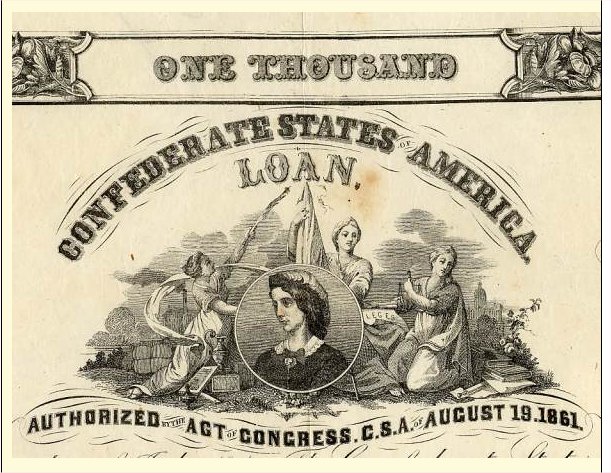
After the war Lucy continued to be involved in causes and organizations to honor the memory of the Confederate States. She died in 1899 of a cerebreal emobolism and was buried in South Carolina.