 |
|
|
|
|
|
|
|
|
|
|
|
|
|
|
|
|
|
|
|
|
|
|
|
|
|
|
|
|
|
|
|
 |
|
|
|
|
The Confederate Guerillas of the Trans-Mississippi Wild West |
|
|
|
|
|
|
 |
|
|
 |
|
|
|
|
 |
|
|
|
|
|
|
|
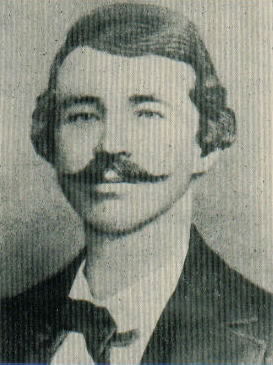
Captain William Clarke Quantrill |
|
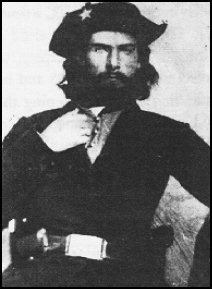
"Bloody Bill" Anderson |
|
|
|
 |
|
|
|
The primary focus for the War Between the States will doubtlessly always be on the east with the large formal battles in Northern Virginia between General Robert E. Lee and all of his lesser Union counterparts. However, the fact is that the war started and ended in the west from "Bloody Kansas" to Palmito Ranch, Texas. The fighting in the west was the most "colorful" such as with the lancer charge and exploding mules of the Confederate invasion of New Mexico. It was also the most brutal thanks to the "jayhawkers" and "bushwhakers" of the Kansas-Missouri area. Union oppression in the area gave rise to numerous Confederate guerilla units, but none were so notorious, feared or successful as the partisan rangers under Captain William Clark Quantrill.
Captain Quantrill could justly be called the father of the "Wild West Outlaw" as it was as part of his unit that such future bandits and Jim and Cole Younger and Frank and Jesse James all learned their trade. However, while many remember their killings and plunder, particularly the sacking of Lawrence, Kansas or the actions of Quantrill's infamous lieutenant "Bloody Bill" Anderson, many people fail to remember the acts of Union cruelty which prompted these actions, and those after the war, such as the "Camp Jackson Massacre", General Ewing's Order No. 11 or any of the barbaric acts carried out on members of the gang's family. The winners do write the history books and so northern commanders of extreme brutality such as Benjamin Butler, William T. Sherman, Philip Sheridan and others are hailed as heroes while the Confederate partisans are dismissed as villanous bandits. |
|
|
|
 |
|
|
|
 |
|
|
|
|
|
|
|
|
|
|
|
|
William C. Quantrill |
|
|
|
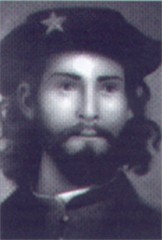
A hero to some and a heartless villain to others, William Clarke Quantrill was born in Ohio the same state that produced Union generals such as William T. Sherman and U. S. Grant. He moved out west as far as Utah at one point occupying himself as a teacher, gambler and was run out of Lawrence, Kansas on accusations of murder and horse theft. He then moved to Missouri and despite his Unionist background embraced the Confederate cause at the outbreak of the War Between the States. In many ways he was a rebel without a cause, eager to oppose the powers-that-be no matter who they were. He recruited his own band of partisan rangers of whom the most famous were the Younger brothers, Bill Anderson, Frank and Jesse James. Their primary enemies were the equally irregular Union forces of Kansas and Missouri known as "Jayhawkers". Quantrill's men robbed, sacked and killed anyone in the area of Unionist sympathies operating mostly behind enemy lines in quick, violent raids. The U.S. declared him and his men outlaws and even many southern commanders, a very gallant and chivalrous lot, viewed his forces with considerable distaste. However, his successful operations, particularly the capture of Independence, Missouri earned him the rank of captain with his own independent command. Undoubtedly his most infamous act was the raid on his former home of Lawrence, Kansas. This was done in retaliation to the brutality of Union General Thomas Ewing Jr who had ordered the arrest of the families of Quantrill's men. A number of women and children were captured and later were killed when the jail mysteriously collapsed. Judging it a deliberate massacre, Quantrill and some of his men, including "Bloody Bill" Anderson and Frank James rode into Lawrence and sacked the town, looting it and killing more than 150 men and boys (women were strictly hands-off) and finally burned most of the town to the ground. Quantrill continued his raids, sometimes in conjunction with operations by regular Confederate forces, and even planned to disguise his men as Union troops and ride to Washington to assassinate President Lincoln. He finally met his end in Kentucky on May 10, 1865 when he was paralyzed in a shootout with Union troops and died on June 6, 1865. |
|
|
 |
|
|
|
"Bloody Bill" Anderson |
|
|
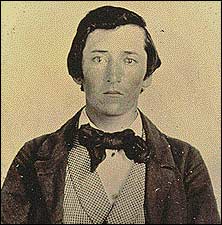
Quantrill's band as a whole was as fearsome as they come, but during the war none were so notorious as his right hand-man William T. Anderson, better known as "Bloody Bill". Born sometime in 1839 he was raised in Missouri with 2 brothers and 3 sisters. His father was a hat maker and a member of the "Independent Order of Odd Fellows" but in 1850 the lure of California gold caused him to abandon his family leaving 11-year-old William as the sole provider for his brothers and sisters. His father returned several years later empty-handed and moved the family to Kansas. A longtime Confederate sympathizer, in 1862, during the war, he and his brother Jim killed the man who had shot their father. The following year they became "bushwhakers" and finally joined up with the partisons of William Clarke Quantrill. Later in 1863 Union forces arrested two of Bill's sisters, Mary and Josephine, and held in Kansas City, Missouri. When the jail collapsed Josephine was killed and Mary left crippled for the rest of her life. Anderson set out to take revenge for this atrocity and soon earned his nickname "Bloody Bill". In retaliation for the death of so many of their women in Kansas City Quantrill raided Lawrence, Kansas and Bloody Bill was a zealous participant. By 1864 disputes with Quantrill led Anderson to break off with his own gang, including the James boys. It is not known how many Union troops and sympathizers Anderson and his men killed, but they were certainly good at what they did. Bloody Bill even wrote letters to the newspapers warning that any pro-Union forces he came across would be targets. Union troops sent to capture the notorious raider would be found scalped, their throats cut and sometimes with mocking messages from Anderson pinned to their clothes. He is said to have decorated the bridle of his horse with the scalps of Union men he had killed. His greatest moment of glory was the battle of Centralia in which, after raiding the town and a passing train his troops ambushed and wiped out a larger force of Union cavalry sent to capture them. Of the 150 federal troops, 116 were found "shot through the head, then scalped, bayonets thrust through them, ears and noses cut off". However, Bloody Bill's rampage was not to last much longer. Only a month after the Centralia fight he and his men were pinned down by Union troops in Missouri. Sacrificing himself so that his men could escape, Anderson charged the Union lines with both pistols blazing. He was killed by two shots to the back of the head. After his death the Union forces sat him in a chair, took his picture and then cut his head off and stuck it on a telegraph pole for all southerners to see. |
|