


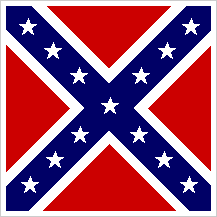


The bulk of the Catholic population of the United States was certainly in the north, particularly the big cities which attracted the majority of immigrants from Ireland, Germany, Italy and other Catholic countries. However, the oldest Catholic strongholds were all in the south in states like Texas, Louisiana and Maryland. President Jefferson Davis had been given a Catholic education as a young man and the principle for which the south was fighting, local autonomy against centralized federal power, was very much a Catholic one. As with all relationships between the Confederacy and other countries slavery was a very difficult issue. The Church had long opposed slavery but accepted it as a matter of fact. In places like South Carolina the Church was even somewhat defensive of the institution as these coastal areas where home to many French refugees from the slave revolt in Haiti where slaves had gone on a rampage killing huge numbers of white men and children and raping hundreds of white women in the process. Needless to say, the vision these people had of liberated slaves was very different than that of the upright but distant abolitionists in New England. Emancipation was an ideal the Church supported, but military force and violent revolution was not a jutified way of bringing it about.
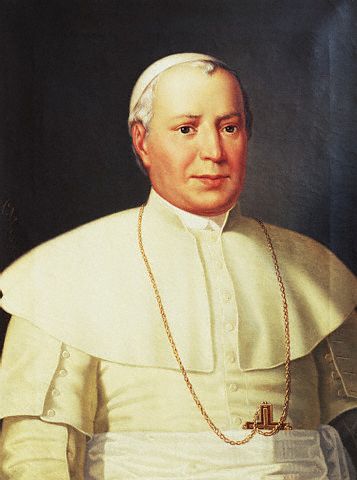
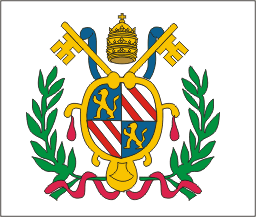
The reigning Sovereign Pontiff of the day, Blessed Pius IX, also looked at the war in America in the context of what was going on at the same time all across Europe. Militant nationalism had been sweeping Europe including the Italian states with the Kingdom of Savoy and the radical republicans slowly conquering all of the Italian Peninsula, including the Papal States. It was easy for the Pope to see the American Civil War as another manifestation of the spirit that was behind the movements to unify Germany and Italy under strong central governments. Of course, the Church was officially neutral, but the Vatican newspaper 'lOsservatore Romano had several write-ups about the conflict that were very sympathetic to the Confederacy. It was also easy to see that the success of the Confederates would ensure the success of the attempt to restore Catholic monarchy to Mexico.
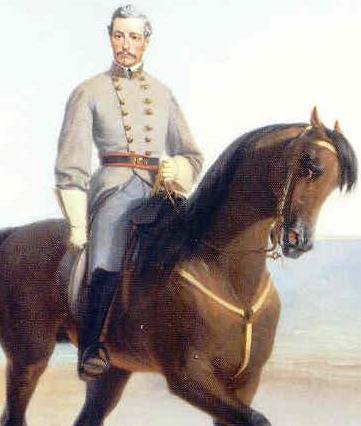
After the end of the war, when President Davis was confined in a military prison some Catholic ladies of Savannah sent him a rosary and a special package came from Pope Pius IX which included an autographed portrait and a crown of thorns he weaved himself. After his release Davis first took refuge in the Catholic city of Montreal, Canada before travelling across Europe and finally returning home. The Sisters of Charity in Savannah also extended a helping hand to Varina Davis and her children during her husband's confinement. In fact, during the war, Blessed Pius IX de facto recognized the Confederacy by dealing with Jefferson Davis as a legitimate president. In fact, the U.S. government was so infuriated by the dealings between the Vatican and the Confederacy that Bishop Lynch of Charleston, unofficial envoy to the Vatican, was for some time refused permission to return to his diocese. Few people also probably realize that "Dixie" the unofficial national anthem of the Confederacy, was written by a Catholic named Dan Emmet.
BLESS
THE
SOUTH
POPE PIUS IX
PRAY FOR US