 |
|
|
|
|
|
|
|
|
|
|
|
|
|
|
|
|
|
|
|
|
|
Religion: "My flesh is true food and My blood is true drink" |
|
|
 |
|
 |
|
|
|
My religion, as stated, is that of the Roman Catholic Church and I could not be anything else. I converted to the Church of Rome after a heartfelt search for authentic Christianity following a vow to God made in a desperate moment. I came from a family as far from Catholicism as any devout Protestant family can be (though I was never a member of the family church) and as I told the priest at the end of our very first meeting, I had to become Catholic or I would not be a Christian at all. Nothing else satisfies and nothing else can possibly be the true Church founded by Christ and His apostles. The Catholic Church has history on her side, and everything that goes with that. Throughout history it has been on the "right" side of every argument, dispute and struggle as far as I'm concerned and, perhaps, most importantly, it is the only denomination in which Christ is *truly* present; that is, through the Most Blessed Sacrament which is the greatest reason by itself to become Catholic. As I like to say to my fellow 'rebellious' types: the Catholic Church is where you find hard-core Christianity.
The Roman Catholic Church is the original Christian church and there is not alot of genuine dispute to that. Some may argue the point, but the fact is, even if one does not believe the Catholic records, there is no other church which can prove to be older than the Roman Catholics. No other institution in the world has had the longevity of the Catholic Church, which naturally brings to mind the promise of Christ to St Peter that "the gates of Hell" would not prevail against His Church. Every other government, empire, institution, nation, philosophy or method of organizing humanity has fallen since the time of the founding of the Church of Rome and yet the Church is the only thing still here, still operating in the world today. For a student of history that is something that simply cannot be ignored. Aside from being "the truth" there are alot of other things to recommend the Roman Catholic Church. One of which is that, it is Catholic, it is 'Universal'; there is something in it for everyone. In 2,000 years of history there is little chance that no matter what sort of person you are or what sort of style you have there has not been someone like that in the Catholic Church before. It is also the most deep, the most intricate and the most all-encompassing religion in the world. In my opinion that is because it is truly where God is and God is all-present, all-powerful and all-knowing. He is infinite. |
|
 |
The Catholic Church has such a wealth of details to offer that, for me, it was like finally getting the complete story of Christianity that I had never known; and one could probably study for decades and still not read everything or even a fraction of the knowledge that the Catholic Church has accumulated over the centuries. I love everything about it. I love the saints, the details about the angels, the demons, the facts about this world and the next as well as what was before there was anything. I love reading about the very long and fascinating history of the popes; and all that entails as it is sometimes a history of the good, the bad and the ugly. As the Church is thousands of years old there is virtually no subject, no matter how obscure that some Churchmen, saint or scholar has not studied in depth and written on. No matter what one is interested in, no matter what sort of personality or priorities one has I am confident they can find a home in the Catholic Church and its history and traditions. No matter if you like the mystical, the logical, the bright and beautiful or the odd and creepy you will find something to admire in the Church of Rome. When I was first being pulled in the direction of the Tiber I did my best to find some problem with it, something that didn't add up or make sense, but the more I dug the more it all seemed to make perfect sense to me and was, in fact, the only thing that did. I can now honestly say that the Catholic Church is the one thing I am 100% sure on even if there is absolutely nothing else in the world. |
|
|
|
|
I know there are things about the Catholic Church people have problems with, though it has been my experience (and that of many others) that these are usually misunderstandings rather than genuine problems. Probably the most common today is the Catholic teaching on sexuality and it is also one that I find extremely absurd since I can hardly think of another "faith tradition" that has been more pro-sex than the Catholic Church. Think about it for a moment; it is the Catholic Church which says that marriage is a sacrament and no marriage is final until the couple has sealed it with the sexual act. The Catholic Church alone encourages married couples to have pure, unfettered sex as much as possible to procreate. In my prayer book it is even listed as a sin for one spouse to deny sex to the other without a very good reason! At least one Catholic philosopher I know has pointed out how the most intimate organs of the female body are "veiled" very much unlike those of men. In the Bible we can see that the veil is a very sacred symbol, probably the most significant being the veil which covered the Holy of Holies in the Temple of Solomon. The Catholic Church not only encourages sex between married men and women but elevates it to the status of a holy act. There is also alot of misconceptions about Church teachings on sex. I think it was the ranking Archbishop in Austria who put these to rest when he said that as long as sex is between a married couple, without contraceptives, the Church does not care if you swing from the chandeliers -go nuts! That is because sex is the act of giving life and the Catholic Church is the most pro-life Christian group in the world. |
|
|
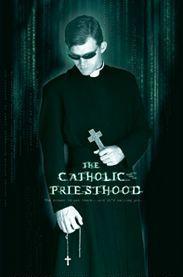
Another sticking point for many people is the priesthood and the hierarchy. This was certainly true in my family which put a great deal of emphasis on the Old Testament. However, even in the OT we see constant references to priests and High Priests and the fact that what the majority want is usually what is wrong rather than what is right. The Catholic Church basically looks at the long succession, throughout the Bible of priests and prophets working in the world, conveying the teachings of God and says, that never changed, it is still going on today with the priests, bishops and the pope around the world. One of the things that always had an impact on me was the Biblical descriptions in Revelations about Heaven. If you read it for yourself you will find that Heaven seems very "Catholic". There is talk about altars, incense, chanting and other things that most Protestants would find repulsive. It also talks about the saints conveying our prayers to God. St Paul, speaking of priests, also says that it is best for the servants of God to be celibate like himself. I would ask any Protestant who believes in married pastors if they think they know better than St Paul; the great "Apostle to the Gentiles"? I can find plenty to complain about in the current episcopal hierarchy (especially in the US which I know best) but one can always find things to complain about, and I have been told that one knows you are a genuine Catholic when you start complaining about your bishop......so go figure. |
 |
|
|
|
|
In any event, from a purely worldly perspective, history is where I find the greatest arguments for the Church of Rome. The fact that, through miraculous intervention, it became the official religion of the Roman Empire, the rulers of the known world at the time, is by itself extremely telling to me. Nothing can compare to the civilization of ancient Rome and from very early on Catholicism was *Roman* Catholicism and I do not think this was an accident. From attempts to keep the flame of Rome itself alive, to thwarting barbarian invasions (see Leo the Great and Attila) to the Investiture Dispute, the Protestant Revolt, the Crusades, the French Revolution and so on it seems to me that the Catholic Church has always been on the right side -even if not the popular side. Most of my favorite historical figures (certainly the Christian ones) have all been Catholics from Emperor Constantine the Great and his mother St Helena, Emperor Theodosius the Great, St Joan of Arc, Mathilda of Canossa, Charlemagne, Emperor Charles V, Catherine of Aragon, Bloody Mary, Mary of Guise, Mary Queen of Scots, King Philip II of Spain, Queen Isabella of Castile, the Jacobites, the Mexican Imperial Family, the Carlists, the Emperors of Austria and so on, they are all Catholics and usually staunch if not always devout ones at that. That is my own odd preference within the Church. I glory in the stories of the Catholic emperors, the loyalist rebels, bone chapels and 'la dia de los Muertos' of nearbye Mexico. It may not be the best recruiting sign, but I am among those who think that the assassination of Willem the Silent should be a feast day and that Tomas de Torquemada should be canonized (okay, I'm half joking - but just half). |
|
 |
|
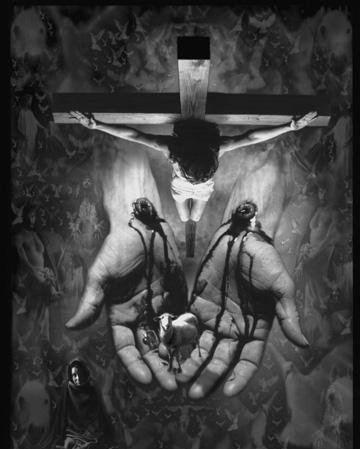
The most important thing about the Roman Catholic Church though, without question, is the Most Blessed Sacrament; the Holy Eucharist. Take it to the bank folks -this is it; the height of Christian worship and the heart and soul of Christianity itself. It is the fulfillment of the Judaic origins of the worship of the True God, the fulfillment of the words of Christ and His promises and the one thing Christ said was essential for anyone who wishes to have eternal life. That is, we must eat His flesh and drink His blood. That may sound macabre to some people, but to me that is only more evidence that the Roman Catholic Church is teaching the true, ancient faith handed down from a time when people were not quite so 'sensitive' as they are today. This is the heard-core Christian stuff right here. This is what was the most difficult to accept even in the time of Christ Himself when He made it clear in the 6th chapter of St John's Gospel. Jesus said that His flesh was true food and His blood was true drink and that if we wished to have eternal life we must eat His flesh and drink His blood. At that point many of His disciples left Him, it is even the point, we have heard, when Judas first turned against Him in his heart. Yet, Christ did not relent on this point. He said, "my flesh is true food and my blood is true drink. Whoever eats my flesh and drinks my blood will abide in me and I in him". This was totally in keeping with the sacrificial traditions of Judaism but took them to the next level; which is what Jesus and His ministry was all about. Judaism, like the other ancient religions, was a religion of blood sacrifice. Animals were sacrificed to atone for the sins of the people and those sacrificial lambs were always consumed as part of the Law of Moses. Yet, there were not enough. Jesus, the Son of God, was the only worthy sacrifice and His flesh and blood had to be consumed as well. |
|
|
|
|
It is hard to put into words the sheer power and mystical magnificence of spiritually and physically becoming one with God through consuming His actual flesh and blood. This is what is meant by "communion". We commune with God when we consume His body and blood in the Holy Eucharist. As the Holy Scriptures say, when we eat His flesh and drink His blood we live in Christ and He lives in us. This is the sacrifice of the Old Testament taken to the ultimate level. We offer up the death of Christ, God in the flesh, in payment for our sins and at the same time we become one with Him and He with us by consuming Him, body and blood, in the Most Blessed Sacrament. This is the height of Christian worship, of Christianity itself and brings to reality the truth of our religion more than any other in the world. We do not simply follow and obey the words of a wise teacher, but God became man for us, lived among us, died for us and in taking Holy Communion we become one with Him. We will never be closer to God, never be in more intimate contact with the Divine this side of Heaven than when we take Holy Communion, eat His flesh and drink His blood so that we may live within each other and live forever, triumphing as Christ did, over the grave. No other religion even offers the possibility of such intimate, physical contact with the Almighty than in every Catholic mass on earth. |
 |
|
|
|
|
I do not mean to go into a full lecture on apologetics here. For me such things as the veneration of saints and the use of statues and icons are so evident and secondary as to be worthy of little mention. However, I will say that in the veneration of the communion of saints the one that stands out as the greatest to Catholics and the greatest obstacle to Protestants in the Blessed Virgin Mary. For me, the importance of the Holy Mother is so evident as to be almost absurd to try to emphasize. Any Christian who claims to recognize the truth of Holy Writ can see it for themselves in black and white. Mary is the chosen vessel of God, full of grace, the most blessed of all women, the mother of our Lord, the one whose soul "magnifies" the Lord and who is, for all generations, the "most blessed" of all women. Surely such a saint could only lead us into a deeper understanding of Christ and never lead us away from Him. I could go on and on about the significance and beauty of our Holy Mother but I should not have to. She is the most blessed, the most sacred and the most perfect gift of humanity that God ever created as she was created to be the instrument by which the Word of God made flesh came into the world for the salvation of humanity. |
|
 |
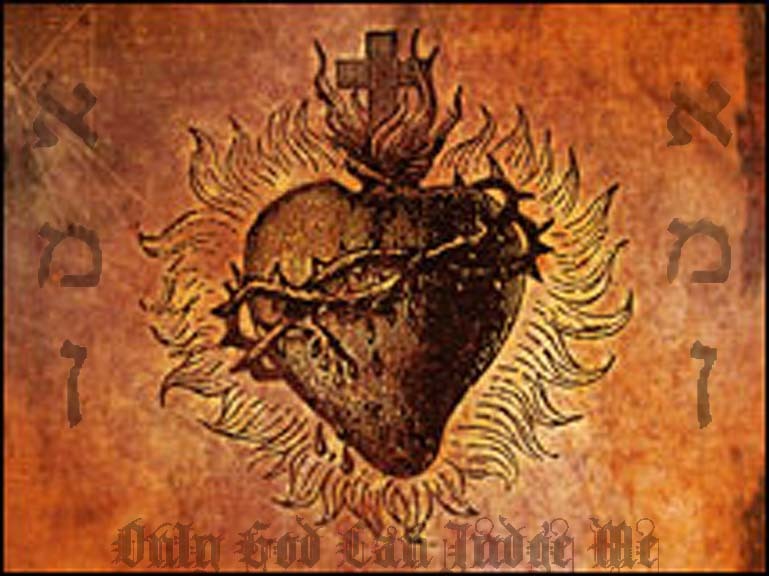
In the most ancient devotion to Christ which I most favor, and one which goes back to the Carthusians, is the Sacred Heart of Jesus. Part of this is spititual and part of my fascination with it is also worldly in that the Sacred Heart has always been the badge of the most Catholic, royalist and counterrevolutionary forces around the world from the Vendee in France to the Carlists of Spain and the Cristeros of Mexico. Aside from Christ the King, the Sacred Heart of Jesus is certainly my most favorite and is the patron saint of my home parish; Sacred Heart Church in Cotulla, Texas. The symbolism of the Sacred Heart shows us so much and so much of what I have already discussed -or tried to. In the iconography of the Sacred Heart we see the Crown of Thorns which painfully adorned the head of our Saviour, in mockery of his kingship but in tribute to his sacrificial suffering. We see the wound that came when the Roman Longinus stabbed him, reaching into His heart, from which grace poured as water and blood. We also see the Holy Cross, burning with the flames of the love of Christ for all of us which is why He gave His life for all of us. It is symbolic of that famous verse of St John's Gospel 3:16, "for God so loved the world that He gave His only begotten Son..." His heart burned with such intense love for all humanity that He suffered unspeakable torture, torment and death so that our sins might be forgiven. |
|
|
|
|
All of these things remain in the world today within the One, Holy, Catholic and Apostolic Church. One of the most clear differences between Catholicism and other 'varieties' of Christianity is also one of the most radical and dangerous (and I mean that) which is the way in which the Catholic Church embraces pain and suffering. The "health, wealth and prosperity" Protestants think that pain is a sign of faithlessness or divine disfavor. The Catholic Church, on the other hand, embraces pain and venerates suffering. Every Catholic has heard the admonishing to "offer it up"; that is to offer up our sufferings in expiation for our sins. Just as Christ willing suffered, shed his blood, endured pain and agony beyond description and finally died (think about that -God willing died) so that we might be brought closer to Him and be forgiven for our wickedness. As Christians are to be Christ-like the Church therefore teaches us to see the nobility in pain and gives meaning to our agony by joining it with the death of Christ. This is all very Biblical as it states several times that the good will suffer and that those who suffer unjustly are being truly Christian and will be rewarded in the next life in a greater amount than they were tormented in this one. The faith effectively promises us eternal justice, that wrongs will be put right, the wicked will be punished, the righteous rewarded and everyone who trusts and obey will see perfection and enjoy the beatific vision forever. The faith is ancient, eternal, unchanging and pays no mind to passing trends or polite standards. The faith is what it is and can be nothing else. As God said in describing Himself, "I AM". |
|
|
|
 |
|