 |
|
|
|
|
|
|
|
|
|
|
|
|
|
 |
|
|
Monarchy: Hail Caesar, Emperor of Rome, we who are about to die, salute you! |
|
|
|
 |
|
|
|
Monarchy seems to be on the decline lately, but that certainly makes it all the more likely something I would support. Monarchy is, politically, very unfashionable and there are few monarchies left in the world in which there is not at least some sort of organized movement calling for them to be overthrown and replaced by a republic. However, what is very telling, at least in my eyes, is that monarchy remains so socially fashionable. Movie stars, pop stars and other celebrities never seem to turn down an invitation to or a job at some luxurious royal bash. We see pop stars that espouse the most liberal politics possible still finding it oh so very chic my dear to hobnob with the Prince of Wales or some billionare heir to an oil throne (like Brunei). People worship the god of democracy and egalitarianism and yet any tabloid with royals on the front page is a sure best seller, gobbled up by people everywhere, even in the Great Republic of the United States. Part of that is because monarchies are, on an emotional and artistic level, just so much more stylish and romantic than democracies. How can anything any of the French republics ever done compare to Louis XIV reigning in splendor at Versailles? Look what happened when Britain dropped the monarchy; the result was a drab, repressed, puritanical nightmare.
For me, though, there is more to monarchy than that. Frankly there is probably more I dislike than like about the modern crop of royals, but I have an endless attachment to the ideal of monarchy. The secular-spiritual ties of the monarchies of old is something I admire though they have mostly been abolished or are ignored today. This was something common in virtually all the monarchies of the world in every culture. The Roman Caesars were also titled pontifex maximus (until Emperor Gratian surrendered the title to the Pope), the Emperor of China was the Tien Su or Son of Heaven, the Kings of Thailand were (and to some extent still are) regarded as divine incarnations, the Queen of the U.K. is still, technically, the Supreme Head of the Church of England; the Emperor of Japan still has a pseudo-priestly role in the Shinto religion, the Kings of Israel were considered anointed by God, the Catholic Church also granted religious titles to a number of monarchies such "Catholic" in Spain, "Most Christian" in France and "Apostolic" in Hungary. The Pope gave the King of England the title Fidei Defensor or Defender of the Faith and this is retained to this day even though the country is officially Protestant. This, of course, ties in to the previous point that monarchies are more colorful than plain democracies. Anyone who has seen archive footage or movie recreations of the old coronations of Europe or the enthronement of the Chinese emperor knows that this just cannot compare with a bunch of suits holding up their hand and taking an oath.
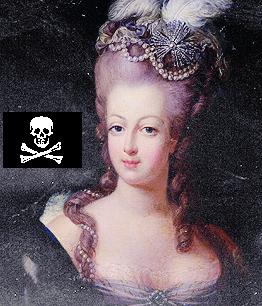
I should add, in all fairness, that some republics make a better effort than others. One of my favorite monarchies of all time, Rome, was legally a republic but a republic with an Emperor. If the USA ever tires of the hypocrisy, double-talk and buttering-up of the current regime and decides to go monarchial the Roman model is about the only thing I can imagine having a chance since both had firmly established republican institutions and both regarded the title of "king" as a four-letter word. I could also point out that all of the very greatest civilizations in human history have been monarchies whether we are considering the Egyptians, the Persians, the Romans (east or west), the Chinese, the Mongols, the Spanish or the British. Each one also had a very distinct religious-spiritual aspect to it. Speaking for myself, perhaps being influenced by being a Texan (Remember the Alamo!), a southerner and a Jacobite I also have a strong attachment to the "lost cause"; the hopeless fight and the diehard rebel that draws me to monarchy. Think that the revolutionaries were the rebels? You need to re-read your history. Those who truly fought against the longest odds were the Tories in North America, the Vendee Catholics in France, the White Russians and of course the Jacobites be they the Irish at the Boyne or the Highland Scots at Culloden. I have long had a special interest, perhaps for this reason, in the last monarchies of various countries and those royals who were put to death for the very same blood in their veins that once brought them favor such as Charles I in England, Louis and Marie Antoinette in France and the noble mystics of the Romanov family in Russia. |
|
 |
I also have some very controversial names among my list of favorite royal figures (some probably deserved but mostly not in my opinion) such as Queen Isabella the Catholic of Spain, Queen "Bloody Mary" of England, the Roman Emperor Tiberius, the "Iron Tsar" Nicholas I of Russia, the last Emperor of China Henry PuYi or the last papal monarch, Pope Pius IX, who once famously thundered, "I AM the tradition!" I have also taken a strong interest in some of the less known, more forgotten monarchies of the world for various personal reasons such as the short-lived Empire of Mexico, the late monarchies of Indo-china and the closely related monarchial-theocracies of Tibet and Mongolia.
Some would argue that the spiritual purist should oppose monarchism as being the height of vanity. I, naturally, would disagree and take the opposite view. Monarchism, as I see it, fosters the very opposite of vanity by instilling in everyone the fact that no matter what we do there will always be someone in a higher position than ourselves and nothing we can do can change that. I love the image, for example, of the most powerful politicians and generals in Thailand having to crawl on their hands and knees before their little, old monarch. Who could forget the dramatic enthronement scene in "The Last Emperor" in which a multitude of the most powerful soldiers, scholars and officials in China are all bowing down to a 3-year-old? I do not think monarchies celebrate vanity any more than any other government or society but at least they do, in their pure form, elevate the virtue of humility. Are not our own modern systems even more vain and arrogant? We have, with the current system of democracy, made the highest and most powerful office in the world the prize of a nation-wide popularity contest! We are proud of ourselves for not giving our elected leaders respect while at the same time giving them immense power! HUH?? |
|
|
|
|
Perhaps still more controversial (but I'm sure not surprising at this point) is my support for the colonial empires of old. This comes about not purely because of royalist romanticism but also the very practical ability to look at the world today and see that there is hardly a single case where a former imperial possession gained independence and was the better for it. This even carries over to republican countries. The Vietnamese monarchy, for example, was supported even by the French republic but when the colonial era ended things, frankly, went to Hell and ended up in a communist dictatorship. Are Angola or Mozambique any better off now than when they were ruled by the Republic of Portugal? Haiti was certainly better off when administered by the US Marine Corps than they have been since full independence was restored. Look at the divisions and nuclear stand-off on the Indian subcontinent; all of which would not have happened under the British Empire which, overall, did more good than harm. Certainly Tibet and Mongolia were better off as autonomous vassals of the Qing Emperor than as the slavish subjects of the communist dictators of Red China and the Soviet Union. What is happening in the Sudan today would never have been tolerated under the British, nor would the reign of terror of Robert Mugabe in Zimbabwe. Burma is another perfect example of things becoming far worse after independence than under colonialism. Even as harsh as the Japanese were at times it is a simple matter of fact that the most prosperous, industrialized nations in the Far East were all once part of the Empire of Japan prior to World War II. Say what you like about how harsh the Romanovs were, Russians were at least not being massacred by the tens of millions under them as they were under the Bolsheviks. |
|
|
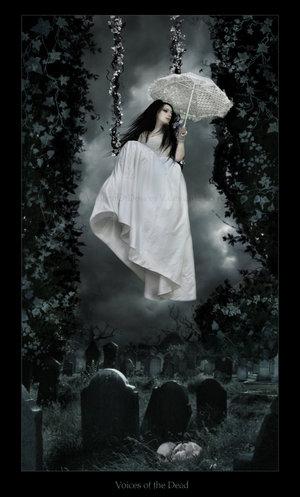
Traditions seemed to always be better preserved under the old, honest, colonialism than under the economic, neo-colonialism of today. I greatly agree with the words of the noted Catholic author G.K. Chesterton (an English convert to the Church) who spoke of tradition as the democracy of the dead; in that it provided a voice for those who have gone before us rather than limiting ourselves to the opinions of only those who happen to be alive at the moment. Getting back to the point of vanity, is it not the height of vanity and arrogance to suppose that we of today know better than everyone who has ever lived before us? I certainly think so and I will oppose anyone who would claim that all of our ancestors were idiots. In so many ways today things we think are new and cutting edge are simply examples of re-inventing the wheel.
A favorite example of mine is Red China. People ask how it is that the communists of China have not gone the way of the Soviets who died because of the stupidity of their own system? I say it is because the Chinese finally learned what the ancient Romans knew 2,000 years ago: panem et circenses, that is, bread and circuses. They have dropped true communism in all but name and discovered that if they allow enough economic opportunity for people to stay fed and entertained by owning a color TV they can rule them with an iron fist and no one will mind having no freedom of speech, religion, press, assembly and so on. This should not puzzle anyone because it was figured out by the Romans thousands of years ago. Likewise the corruption of modern welfare states was figured out by the democracies of ancient Greece thousands of years ago when they discovered that no system of democracy can long survive when the people can vote themselves more and more benefits while at the same time voting down any effort to pay for it. |
 |
|
|
|
|
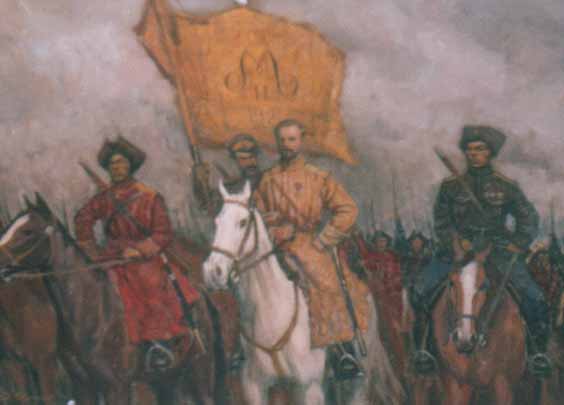
Hopefully all will see the truth in that. One area in which I am sure to find very little agreement is in my choice of monarchist mascot for these pages; namely the "Bloody Baron" himself, Roman von Ungern-Sternberg, commander of the Order of Military Buddhists, formerly the Asian Division of Cavalry, formerly the "Savage Division" of the Russian Imperial Army. Those who are aware of the Baron mostly know him for his atrocities as the short-lived defacto dictator of Mongolia (he restored the Bogd Khan as the actual sovereign of Outer Mongolia) but although much of the lurid tales told about him are true there were also good things about his rule. For instance, after 3 days of pillage he put a stop to his soldiers' rampage and instituted strict rules against looting and drunkeness. Anyone caught stealing from the local populace would be hanged and those found drunk were to be beaten with bamboo poles with soldiers receiving a greater number than civilians and higher ranks worse still. He instituted a modern sewage system in Urga and introduced public sanitation as well as the first modern conveniences the city ever had. He did not allow rape, though necrophilia was considered a second-best substitute (one can imagine the Baron would have been a big Rob Zombie fan) which I would consider at least somewhat of an improvement for the living. His anti-Semitism is also often made much of, but one must remember that this was an outgrowth of his opposition to communism and what the Bolsheviks had done to his beloved Mother Russia. Truth be told, many of the leading Marxists (like Marx himself) were Jews and this created a great deal of animosity against them among those opposed to communism. I am certainly no anti-Semite, I support the State of Israel and even like the most radically Orthodox Jews the best, but given what had just befallen Russia I can see how many White Russians would become anti-Semitic. But, what I like best about the Baron is his pan-monarchism and his audacity. With a few hundred men, probably never more than a thousand, he was prepared to ride into battle to restore the Mongol Khan, the Emperor of China and the Romanovs of Russia and kill any communists that got in his way. Ride on Baron! |
|
|
|
 |
|