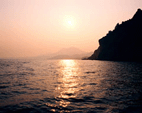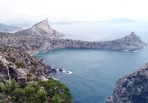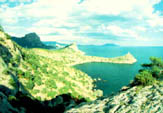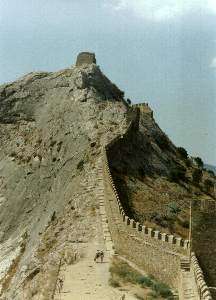
City on the shores of the Black Sea, 57 km from the Theodosia railway station. Population: 15,000.
Founded in the 3rd c. In early written sources it is referred to as the fortress of Sugdaea, a trading city on the Great Silk Road. The Venetian consulate was maintained here from 1287. At this time the Black Sea was called Sudak. The "Great Silk Road'' festival-market takes place here every summer.
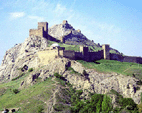
GENOESE FORTRESS, 14th-15th c.
Situated on a mountain 150 m high; its southern coastal side is a precipice. Occupies an area of 29.5 ha. The fortress was built in 1371-1469. Many structures have been repaired and restored.
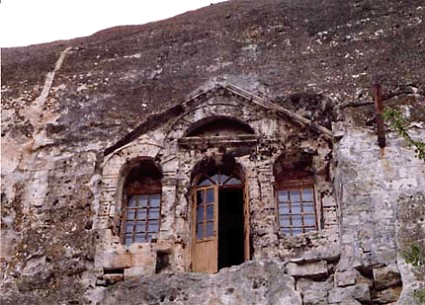
Inkerman - Cave Monastery
CAVE MONASTERY, 7th-9th c. The monastery complex included 8 land and crypt churches linked by passageways and stairs, among which is the church of St. Klyment (Clement).
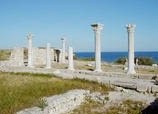
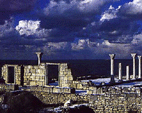
THE CITY OF CHERSON
Ruins, located in the western part of Sevastopol on the Heraclian Peninsula. An important political and cultural centre of the Black Sea region. Founded by Greeks in 422-421 B.C. From 5-1 B.C. was a city-state with democratic self-government. In 3-2 B.C. the first defence structures consisting of 24 towers, 10-15 m high, were built. More than 30 streets and a large number of gardens were laid in the city. The city centre contains an acropolis and an agora (place of public meetings), a theatre, and a temple. During the 1st-4th c. Chersonese became an aristocratic republic under the control of Rome. Later it fell under Byzantine rule and in the 4th c. converted to Christianity. In the 5th-6th c. a mighty defence system was constructed. In 988 prince Vladimir the Great captured Chersonese. In 1299 it was captured and destroyed by the Tatar-Mongols.
Koktebel
Novyi Svet