|
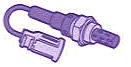
Oxygen Sensor/EGO
Sensor
Measures
the percentage of oxygen in the exhaust, and tells the computer whether the
fuel/air mixture is too lean or too rich.
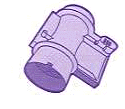
Mass Air Flow
Sensor/MAF Sensor
Measures the
amount of air drawn through the engine's air intake, so the computer can
compensate for altitude and temperature.

Detonation
Sensor/Knock Sensor
Listens for
engine "ping" so the ECM can retard the spark timing, and thereby
reduce emissionsand overheating, if the engine is knocking.

Fuel Pump
Feeds fuel
from the gas tand to the carburator or fuel injection system. Most
fuel-injected cars have electric fuel pumps.
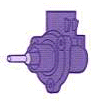
EGR Valve Position
Sensor
Detecrs the
opening of the EGR valve, so the ECM can make adjustments to
optimize
performance.
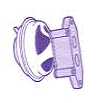
EGR Valve
Recirculates a
measured amount of exhaust gas into the engine's air intake, to lower
combustion temperatures and reduce emissions, especially NOx.
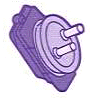
Air Cleaner
Temperature Sensor
Prevents cold
outside air from entering the air intake until the engine warms up. This
limits emisions and improves cold-engine performance.

Fuel Injector
Injects
fuel into the intake manifold. The ECM tells the injector exactly when to
inject, and how much to inject, to produce the needed amount of power.
|
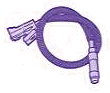
Crankshaft or
Camshaft Position Sensor/CPS
Monitors
the rotation of the engine and tells the computer exactly when to trigger the
fuel injectors or the ignition spark.

MAP Sensor/BAP Sensor
Reads changes
in barometric (air) pressure. The ECM uses this information to adjust timing
advance and air/fuel ratio.
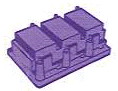
Ignition Coil
Convert's the
car battery's 12 bolts to the thousands of volts needed to fire the spark
plugs.

Mixture Control
Solenoid
Used on
computer-controlled carburators. Controls the blend of air and fuel to
produce the needed amount of power and minimize emissions.
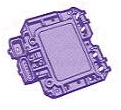
Control
Module/Ignitor
Regulates and
times the spark signal to the ignition coil, for correct ignition without
misfiring.
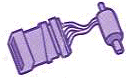
Throddle Position
Sensor/TPS
Monitors the
position of the accelerator pedal and the throddle linkage, so the ECM can
make accurate air/fuel mixture adjustments.

PCV Valve/Positive
Crankcase Ventilation Valve
Recirculates
partially-burned gases from the crankcase to the combustion chamber, to
improve economy and reduce emissions while preventing buildup of sludge and
corrosion.
|
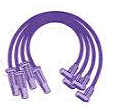
Ignition Wires
Carries the
spark voltage to the spark plugs. Faulty wires can drain off the voltage to
the spark plug and cause misfiring.
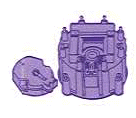
Distributor
Cap/Rotor
Routes the
ignition coil's output votage to the correct spark plug. A faulty cap or
rotor will cause the engine to misfire or refuse to start.

Air Pump Check Valve
One-way that
valve that prevents hot exhaust gases from recirculating back through
the air pump, protecting the air bypass system.
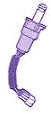
Idle Speed Control
Actuator
Adjusts idle
speed as dictated by the ECM, to prevent idle fluctuations and keep emissions
low.

Ported Vacuum Switch
Senses engine
temperature, and opens or closes vacuum lines to various emissions-related
components.
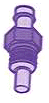
Coolant Temperature
Sensor/CTS
Measures the
temperature in the cooling system, so the ECM can make adjustments based on
the engine's operating temperature. Can also control the dashboard
warning light.

Votage Regulator
Controls
the voltage supplied to the car's electrical system, preventing overcharge,
undercharge and damage to electrical computers

Breather
Element
Filters out
contaminants from the crankcase gases that are being drawn into the intake
system throught the PCV Valve.
|