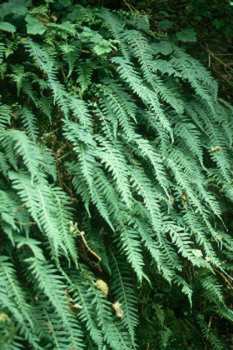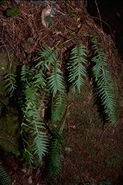
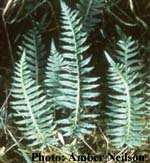
Licorice Fern is named after its licorice-flavored rhizomes. The name �Licorice fern� comes from the Greek words, Polypodi, meaning many-footed fern; glyc, meaning sweet; and rhiza, meaning root.
Habitat
Licorice fern most commonly grows on tree trunks and branches, often on the Bigleaf Maple, at low elevations. It can also grow on wet, mossy ground, and sometimes on rock slabs.
Uses
Licorice fern was used by the Native Americans as a food only when there was no better food to eat: it was considered a famine food. The Native Americans used the fern as a treatment for chest pains. The most common part of Licorice fern that was used was the rhizome. Many first peoples chewed them for their sweet taste. They either dried, steamed, scorched or just ate them raw. The Native Americans would roast the rhizomes, chew them, and swallow the juice to treat coughs. They would also use the sweet-flavored rhizomes for children who wouldn�t eat, and for shortage of breath. Colds and sore throats were treated by the rhizomes of Licorice fern as well. For bitter medicines, rhizome was added to help enhance the sweetness. Last of all, the rhizome was pounded and boiled with fir needles to treat measles.