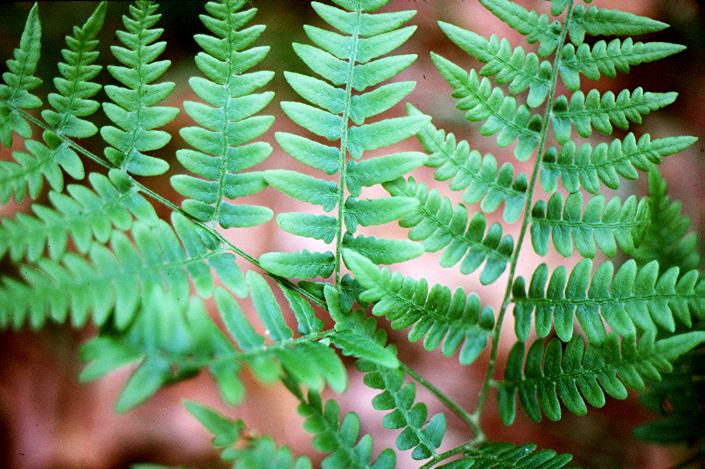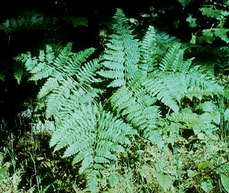
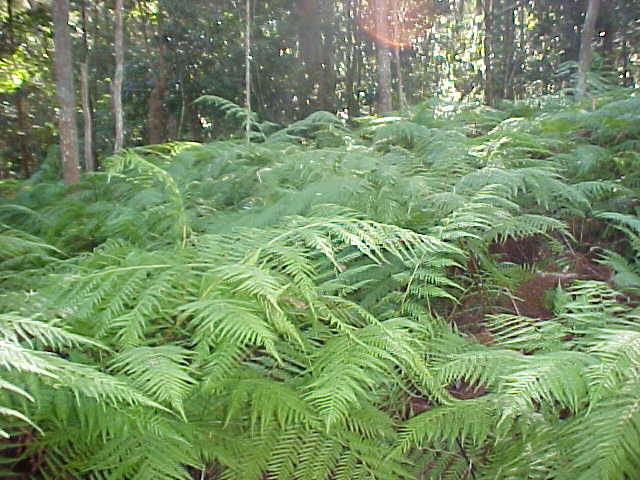
Pteridium is from the Greek word pteris, which means �fern�, and aquilinum is Latin, meaning, �eagle like�. Bracken is an old English word for all large ferns, but eventually applied to this species in particular.
TAXONOMY
Kingdom Plantae, the Plants
? *Division Polypodiophyta, the True Ferns
? Class Filicopsida
? Order Polypodiales
? Family Dennstaedtiaceae
? Genus Pteridium
DESCRIPTION
Bracken fern is a rhizomatous fern.
The fronds of Bracken Fern are killed when winter comes, and in spring, the fronds sprout up again. Dead fronds form a clump of highly flammable dead plant that insulates the below-soil rhizomes from frost when there is no snow cover. This dead plant also delays the rise in soil temperature and sprouting of frost-sensitive fronds in the spring. If there is no last year�s dead plant decaying on the ground, the fronds will start sprouting to early and will most likely get killed by spring frost.
DISTRIBUTION
Bracken fern grows throughout the globe, except in hot and cold deserts.
HABITAT
Fossil evidence suggests that bracken fern has been around for at least 55 million years to evolve and perfect antidisease and antiherbivore chemicals. Since Bracken fern has had so much time to evolve, it is very uncommon for it to catch severe diseases. But Despite production of bitter-tasting compounds, chemicals that interfere with insect growth, and toxic chemicals, a great number and variety of herbivorous insects like to munch on Bracken fern.
Bracken fern was used as a fuel when a quick hot fire was desired, as a roofing thatch, as a green mulch and compost, and for winter livestock beading in parts of Wales (since it is more absorbent, warmer, and easier to handle than straw). The ash of Bracken fern was also used as a source of potash in the soap and glass industry until 1860 and for making soap and bleach. Also, the rhizomes were used for tanning leathers and dying wool yellow. In the Middle Ages, Bracken fern was considered so valuable that it was used to pay rents. The American Indians would pound the starchy fiber of Bracken Fern rhizomes into flour and they would also cook, peel, and eat the rhizomes of Bracken Fern. American Indians also ate rhizomes raw as a remedy for bronchitis.
USES
Bracken fern is most commonly used as food for humans. The newly sprouting fiddleheads are picked in spring and may be consumed fresh (I think they taste like almonds) or preserved by salting, pickling, or sun drying. The rhizomes of bracken fern have many uses: If they are dried and powdered, bread can be made, the starch from them is used to make confections in Japan, and is used as a substitute for arrowroot, if the rhizomes are powdered, they can be used for parasitic worms, both the rhizomes and fronds of Bracken Fern have been used in brewing beer.
TOXICITY
Bracken fern has known to be poisonous to livestock throughout the US, Canada, and Europe. Rats and mice have been known to get cancer from Bracken fern. Blindness and tumors of the jaws, rumen, intestine, and liver are found in sheep feeding on bracken fern. The toxins in bracken fern pass into cow's milk.
Facemasks are recommended for people working in dense bracken. If young fronds are boiled under alkaline conditions, they will be safer to eat and less bitter.
REPRODUCTION
Reproduces by spores and by rhizomes
* In botanical nomenclature, "division" is used instead of "phylum."