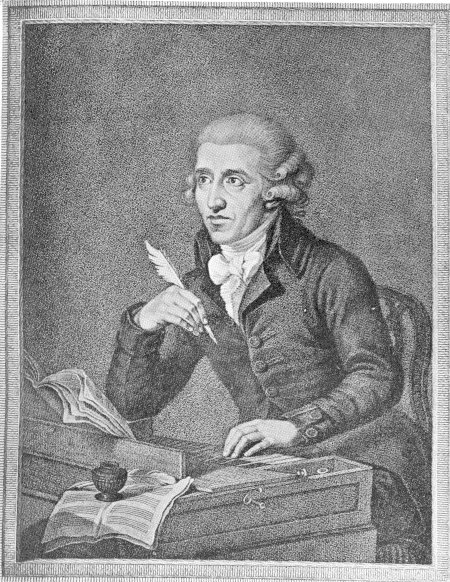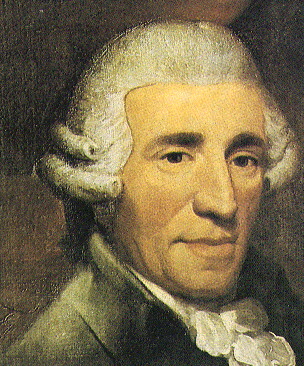
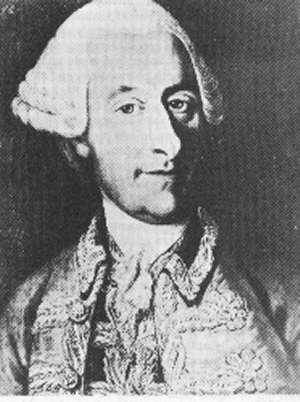
Haydn was born on March 31, 1732, in the town of Rohrau, Austria. He was raised essentially as a peasant, and born with a great voice.
At the age of eight, Haydn was recruited into the choir of St. Stephen's Cathedral in Vienna. He became an excellent singer and sight-reader. Here, Haydn also learned how to play several instruments. Some of them included the harpsichord, violin and organ. Slowly, Haydn�s reputation grew, and in 1758 he became the music director and composer for Count von Morzin.
In 1761, Haydn entered the service of Prince Paul Anton Esterhazy as vice-Kapellmeister of the Esterhaza orchestra. One year later, Nicholas Esterhazy succeeded his brother, Paul Esterhazy. Prince Nicholas played the baryton, and Haydn wrote for him approximately 200 trios with viola and cello as well as numerous Baryton duos. When Kapellmeister Gregorious Werner died, Haydn succeeded him, now fully presiding over an orchestra of about twenty-two players while conducting from the keyboard or violin. This orchestra became one of the best orchestras in Europe. The majority of Haydn�s 104 symphonies were composed during this period. Haydn became warmly known as �Papa� by the musicians of the Esterhaza orchestra.
Haydn met Mozart in 1781. They became very close friends. Mozart has said, "He alone has the secret of making me smile, and touching me to the bottom of my soul."
In 1802, Haydn retired from his official duties. He then died on May 31, 1809, in Vienna, Austria.
In addition to the farewell symphony and the other 103 symphonies, Haydn composed 83 string quartets, 24 operas, 52 piano sonatas and numerous other concertos and chamber pieces. Haydn is one of the three most recognizable classical composers of today.
There is a wonderful story that explains the origin of Haydn�s Farewell Symphony:
In the summer of 1772, while Haydn was working for Prince Nicholas Esterhazy, the Esterhaza orchestra became very tired and homesick because the Prince never gave them permission to go home like he usually did in the summer time. Haydn tried to tell the Prince that the musicians wanted to go home, but the Prince refused to let them go. Haydn knew that he could not convince the Prince by conversing with him, so he thought of whole new idea. Haydn was going to compose a symphony to let the prince know how the players felt.
He named this symphony, Symphony No. 45 in F-sharp minor, or, the Farewell Symphony.
Before this symphony starts, candles are attached to each musician�s music stand and lit before the audience is let into the hall. The first movement starts out fierce and angry. In the middle, there is a slight pause. It gets very sad, as if the musicians of the Esterhaza orchestra were remembering their families. Then there is another pause, and it gets angry and fierce again.
The Symphony�s nickname (farewell) comes from the extraordinary last movement. This movement is sneaky at first, and very fast, every instrument strains with sound: magnificent! All of the sudden though, the music stops. It becomes sad, tired, and lonesome. Little by little, the performers quietly snuff out their candles and leave the stage. The only two musicians left playing are two violins, playing a beautiful, melancholy, melody.
After Haydn and the Esterhaza orchestra had performed this symphony, it seems Prince Nicholas took the hint. Shortly after their performance, the Prince gave them permission to go home and see their families.