| POSITIONAL PLAGIOCEPHALY - MY BANDED BABY, NATHAN - |
| Check out these websites for more information:
http://www.cappskids.org http://www.torticolliskids.org http://www.cranialtech.com Support/discussion boards: http://health.groups.yahoo.com/group/Plagiocephaly/ http://www.cappskids.org/board/ http://cranialtech.com/cgi-bin/discussion.pl |
| Positional Plagiocephaly is caused when repeated pressure is applied to one side of the occiput (e.g. the back of the head) and a flat spot occurs. The side that is flattened will often be accompanied by a prominent forehead. It is also common to have misaligned ears and facial asymmetry. Facial asymmetry on the affected side can also include a jawbone that is tilted, and an eye that appears displaced, and mismatched in size. If left untreated, plagiocephaly can lead to a number of medical problems including respiratory and vision problems, migraines, difficulty chewing, TMJ, and sinus complications. There are several possible causes of Positional Plagiocephaly. The most common causes are: - In Utero Constraint - restrictions in the womb due to multiples or small pelvis - Prematurity - cranial bones are soft and easily deform - Congenital Muscular Torticollis - tightness of neck muscles - Overuse of seats - car seats, bouncy seats, strollers, and swings - Back Sleeping & limited Tummy Time - PLEASE continue back sleeping to prevent SIDS This condition is most commonly seen in infants that have been placed on their backs in car seats, bouncy chairs, strollers, and swings. I would like Mommies and Daddies to know how important TUMMY TIME and REPOSITIONING are, and to make more people aware of this condition. Alternating sleeping position, changing your child�s orientation to outside activity and use of a front infant carrier (like Baby Bjorn) are just some ways you can help your child. Use of a Boppy Noggin Nest pillow to cradle the child's head can help when used in the bouncy chairs and car seats. Some children that have Plagiocephaly may have Torticollis. Congenital Muscular Torticollis (CMT), also known as Twisted Neck, is a condition that is usually caused when one or more of the neck muscles is shortened or tightened on one side. This causes the baby�s head to tilt and/or to turn in one particular direction. If your baby tends to always look in one direction then it is very possible that CMT could be the cause. If you suspect that your child may have CMT it is important to have it diagnosed by a physician and to have it treated. Treatment usually consists of physical therapy to lengthen and loosen the affected muscles. FORMS OF TREATMENT (cited from cappskids.org) The most common forms of treatment are reposition therapy and helmet or band therapy. Some doctors argue that Positional Plagiocephaly will correct on it�s own as the child grows and becomes developmentally mature, resulting in less time spent on the back. This can be true in mild cases, but most parents that have children with moderate or severe cases are not willing to take that gamble and opt for treatment. It is commonly believed that aggressive reposition therapy is best utilized when a child is between the ages of 0-6 months depending on severity of the Positional Plagiocephaly. After six months (or sooner depending on the child), it is much harder to control the side that the baby sleeps on so reposition therapy may not be as affective. Helmet or band therapy is also best started at an early age, usually around 5 months. Though some bands and helmets can be used as late as 18 months, effectiveness is greater when the baby is younger. Because of this, parents along with doctors should make educated decisions based on the individual baby, the baby�s age and the degree of Positional Plagiocephaly and facial asymmetry. REPOSITION THERAPY Reposition therapy is simply the concept of repositioning the baby so that he does not rest on the flat spot. It is believed that by removing the external pressure, the flat area will �round out� as the head grows. (Before trying reposition therapy it is important that the baby be cleared of Torticollis. If the baby has Torticollis it is important that parents discuss this with the baby�s physician and utilize physical therapy to stretch the neck muscles). Some common practices of reposition therapy are placing a rolled up towel or blanket beneath the back of the flattened side to prevent the baby from rolling onto the affected side. Another common tactic is placing crib toys on the opposite side of the flattening to make the child look in that direction. Adding supervised "Tummy Time" while the child is awake and playing, is another important part of repositioning. When tummy time is first introduced to a baby, it is best done is short intervals of only about a minute or two at a time. As the baby gains muscle control and begins to enjoy tummy time, the intervals can be increased. This not only has the benefit of allowing an infant to strengthen many muscles that are not used when laying on the back, but it also allows the back of the head to have some time without external pressure pushing up against it. There are several different methods that can be used for reposition therapy. A little bit of creativity is also of great benefit in this area. However, always keep safety in mind and never place an item in the crib that could be harmful. CORRECTIVE HELMETS & BANDS The first corrective device offered for Positional Plagiocephaly was the Molding Helmet. The original molding helmet introduced in 1979 was designed with the basic concept that if you surround the asymmetrical infant head with a symmetrical (normal) mold, the skull will grow into the mold and take on the shape of the mold resulting in a normal shaped head. An alternative technique, Dynamic Orthotic Cranioplasty (DOC Band), was subsequently developed as a more proactive approach to treatment of Positional Plagiocephaly. In this technique, the device was specifically designed to apply gentle pressure to the area of the head where growth was not wanted, while leaving space where growth was needed. With this technique, the child is seen on a weekly to biweekly basis to have adjustments made to the band to ensure proper growth of the head and optimum correction of the deformity. Bands and Helmets come in several different designs but two things that they all have in common is that they are all light-weight and they are all custom made to fit the individual baby�s head. In order for the band or helmet to be custom fit there must be a casting done of the child�s head. For more information on the casting process and to see pictures of an actual casting, please visit http://www.cappskids.org/CastingProcess.htm NATHAN'S DIAGNOSIS My son, Nathan, was born on 5/20/05 with torticollis and plagiocephaly. During my last trimester, I complained of lower back, leg, and pelvic pain. At birth, the OB/GYN stated Nathan was lodged behind my pelvis, thus causing his head to be flattened. I brought up my concern for his head at every doctors visit. I was told that some babies are born with oddly shaped heads, and there was nothing to be worried about�they would add, �We�ll keep an eye on it�. At his 2 month visit, I insisted that there was something wrong, his eyes and ears appeared to be misaligned. I was told to try repositioning for a month (which I had already been doing). At Nathan�s 3 month visit, I insisted the pediatrician take a closer look. The Pediatrician called in one of her peers and they decided it would be in Nathan�s best interest if I took him for a CT-SCAN to rule out Craniosynostosis (a premature fusion of one or more skull sutures). The CT-SCAN came back OK, and the diagnosis was positional plagiocephaly. Nathan was evaluated at Cranial Technologies for treatment utilizing the Dynamic Orthotic Cranioplasty (DOC band). Photos and measurements were taken. Nathan was noted as having a trans-cranial vault asymmetry of 16mm � considered severe. I informed my insurance company of medical necessity. My insurance company denied coverage. We decided to go through with the treatment despite receiving the denial (unfortunately, many insurance companies do not cover this treatment). In Nathan�s situation, being born with this condition, all of the repositioning we had done hadn�t helped. We were told that his head and face would in fact get worse if we did not use a band or helmet. We had already noticed his jaw was tilted and he had started receiving therapy for his mouth. He also was receiving therapy once a week for the torticollis. TREATMENT AT CRANIAL TECHNOLOGIES If going to Cranial Tech, your first visit is the consultation (which is free). The clinician will take measurements and discuss treatment for your little one. They explain the whole process thoroughly. After the consult, you then decide if you want to go ahead with treatment. Treatment, is on average, $3000 � that is for everything�casting, band, fitting, adjustments, and all clinic visits. For the treatment to begin, you will need an RX or script from your little one�s pediatrician. Cranial Technologies will then help you with the preauthorization process with your insurance company. This may require a letter of medical necessity from your physician, medical photos, measurements, and description of the treatment. The patient coordinators at CT will guide you through this process. Pre-authorization can take as long as 3 weeks. If your insurance company doesn�t approve, like mine, you will need to decide if you want to go through with the treatment. You can always appeal the insurance company's decision after treatment has begun. The process begins with a detailed medical history, a photo study of your child, and an exact impression (casting) of the infant's skull, which is custom modified for your child. The DOC band is then made from the corrected model. A precise fit is necessary, followed by closely timed growth adjustments (we go every week for an adjustment, while older babies, over 7 months old, may be seen every two weeks). The DOC band has to be worn 23 hours a day, with an hour off for cleaning. The most effective correction period is while the child's skull is still malleable. Ages 3-6 months is the optimal time for treatment, when growth is fast. Correction can take place between 5-12 weeks. Good results are possible for the older child (12-18 mos), however, correction will take longer due to the slowing of growth. For more information on Plagiocephaly and Torticollis, please refer to the following links. If you have any questions, please don't hesitate to email me. - Cindy R. (Nathan's Mommy) *^*^*^*^*^*^*^*^*^*^*^*^*^*^*^*^*^*^*^*^*^*^*^*^*^*^*^*^*^*^*^*^*^*^*^*^*^*^*^*^*^ The information contained in Nathan's website should not be used as a substitute for the medical advice of your physician. Please contact your physician with any concerns or questions you may have. |
BEFORE & AFTER TREATMENT PHOTOS AND MEASUREMENTS |
 |
 |
 |
 |
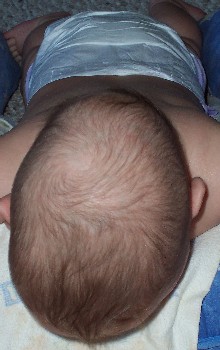
| Nathan's head before treatment 8/05 (3 months old) |
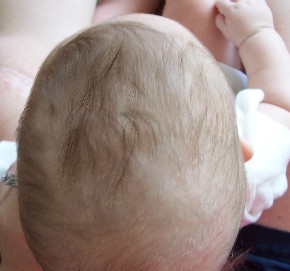
| Nathan's forehead bossing (right side) before treatment 8/05 (3 months old) |
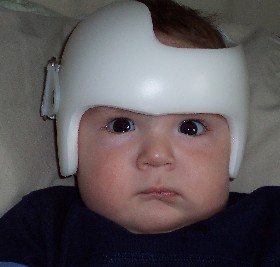
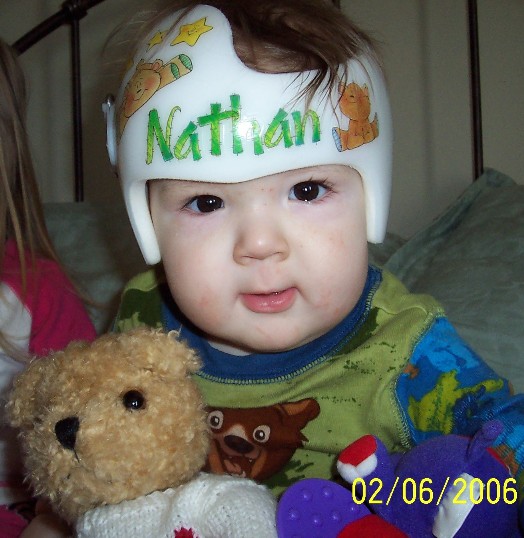
| Nathan's DOC band First day of treatment 9/05 (4 months old) |
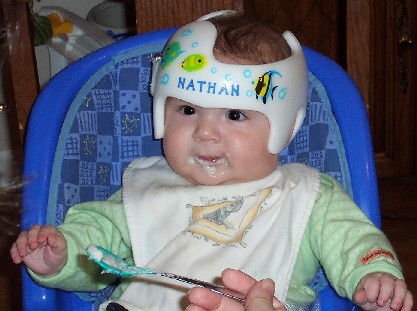
| Nathan's docorated DOC band 9/05 |
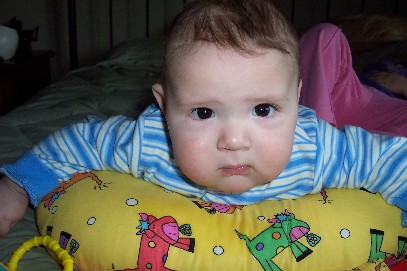 |
| Nathan doing "TUMMY TIME" 10/05 (4.75 months old) |
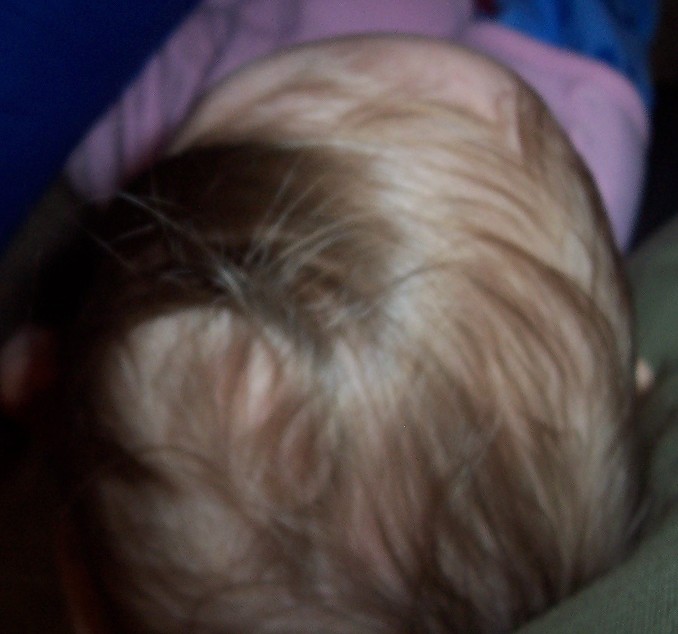
| Nathan's forehead bossing (right side) END OF TREATMENT 2/06 (9.25 months old) |

|
 |
|
   |
 |
| To sign a petition to be sent to The American Academy of Pediatrics on Infant Positioning and SIDS, please visit: http://www.petitiononline.com/0799/petition.html |
 |
| *^*^*^*^*^*^*^ Plagiocephaly Prevention Quick Tips ~ Alternate sleep position in the crib (head at top of crib, bottom of crib) -always place baby on back to prevent SIDS ~ Alternate position on changing table ~ Alternate which side you hold your baby during feedings ~ Alternate the hip or arm with which you carry your baby ~ Limit use of swings, bouncy seats, car seats, & strollers ~ Use of a front infant carrier -to "wear" baby (like Baby Bjorn, Snugli, etc.) ~ Rotate the position of toys in the crib, stroller, and car seat during play time ~ Provide lots of supervised tummy time Most infants who develop plagiocephaly have some form of neck dysfunction (torticollis). Identifying and treating neck tightness can prevent and correct the deformation. After an evaluation by a physical therapist, stretching exercises should be performed. *^*^*^*^*^*^*^ Abnormal Head Shape Overview ~ Plagiocephaly It's called a parallelogram deformity. If you look down on the infant's head, the head looks as if half of the head has been pushed forward, often accompanied by misalignment of the ears, facial asymmetry & bulging forehead. ~ Scaphocephaly A head with a long, narrow shape, and is particularly common in premature babies. ~ Brachycephaly The head flattens uniformly, causing a wider and shorter shape. Increased head height is also common in children with brachycephaly. *^*^*^*^*^*^*^ Insurance Help ~Links to Sample Appeal Letters Plagio group letters CAPPSKIDS letters Each state has its own insurance department to oversee all types of insurance for enforcing laws and regulations. Click here for your state's website info: Dept of Insurance *^*^*^*^*^*^*^ Other Helpful Links ~Torticollis exercises ~Early Intervention - The State provides services to infants and toddlers (ages birth through 3 years) with disabilities or who are at risk of developing disabilities in any of the following areas: � Physical � Cognitive � Communication � Social or emotional � Adaptive development ~Angel Flight -offers free flights to treatment ~CAPPS Awareness bands -Make your community aware of Craniosynostosis and Postional Plagiocephaly by wearing one of these colorful bands ~CAPPS Apparel -for parents and baby ~Plagio related books of interest for parents and children *^*^*^*^*^*^*^ UPDATES Insurance Update: ~UHC denied prauthorization on 9/08/05 ~We submitted a 25 page appeal letter on 10/05/05 ~UHC denied our appeal on 10/20/05 ~A hearing with UHC was scheduled for 11/4/05 ~UHC once again, denied coverage 11/7/05 -final appeal Nathan's Treatment: UPDATED 12/01/05 ~ Nathan's head is "rounding" quite nicely. However, his facial asymmetry is not changing after 10 weeks of treatment. Nathan will be going into a second band on Dec. 5 for treatment for 3 more months. This is a long process, but we are confident Nathan is getting the best care at Cranial Tech and we expect to see great results. Once again, United Health Care refuses to pay. UPDATED 2/28/06 ~ Nathan has seen considerable correction and has come from a 16mm cranial vault asymmetry (severe plagiocephaly) to 4mm (0-3mm is considered normal). Nathan GRADUATED from the DOC band today! We are extremely happy with the results and highly recommend Cranial Technologies. Legislation: UPDATED 3/6/06 ~ Letter sent to IL State's Attorney Richard Devine requesting help with insurance coverage for children being treated for Positional Plagiocephaly. ~ Letter sent to U.S. Senator Dick Durban of Illinois requesting the same. |
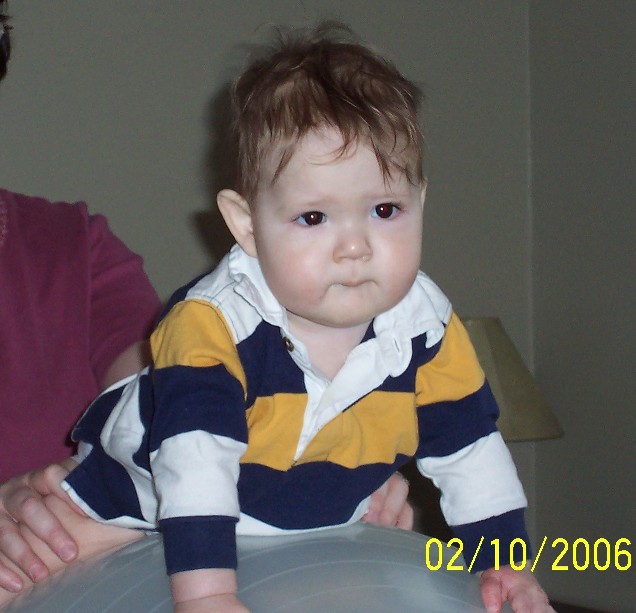 |
| Nathan doing Yoga Ball exercises 2/06 (8.75 months old) |
 |
| Nathan band free |
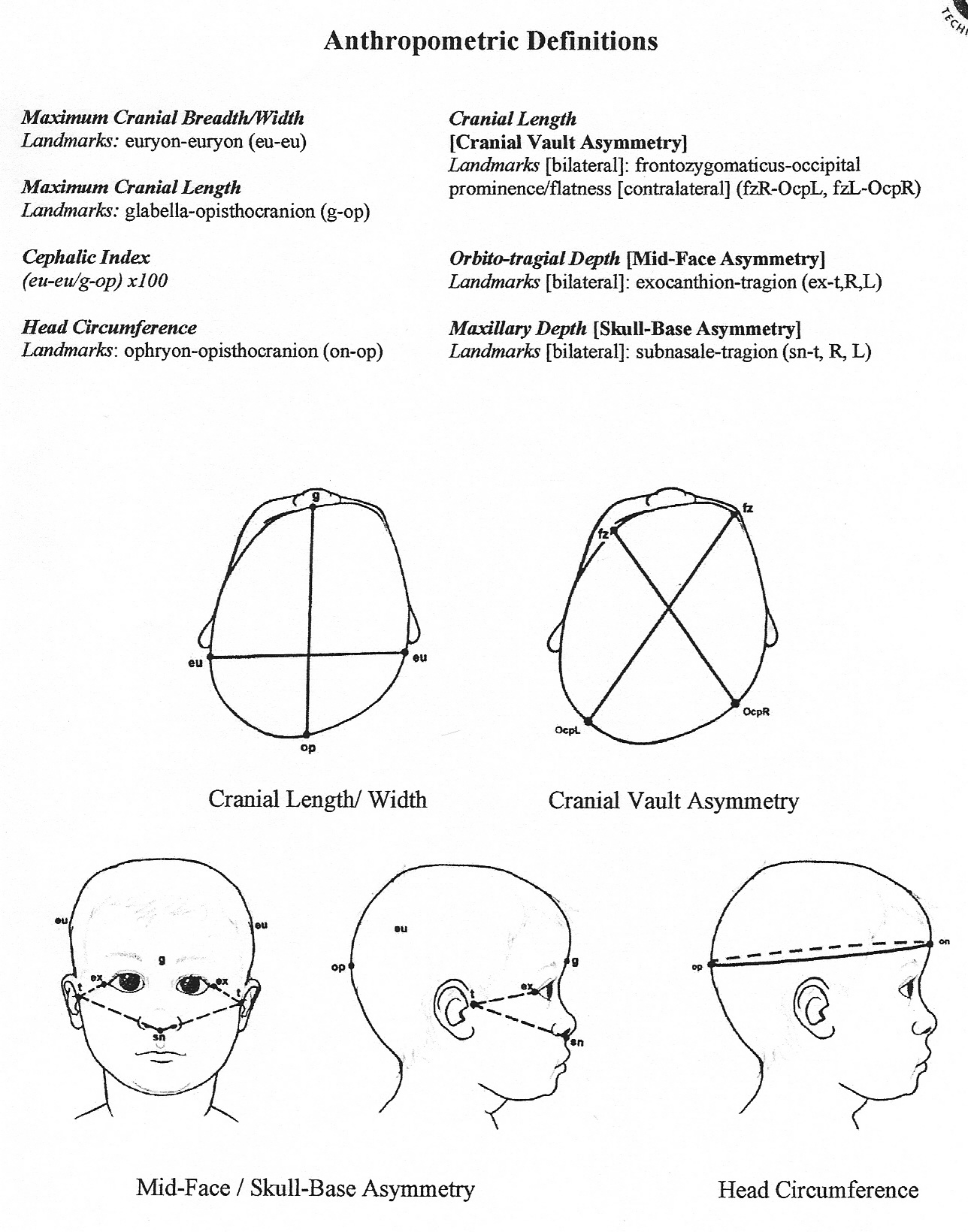 |
| Measurements
: Cranial Vault Asymmetry Mid Face-Asymmetry Skull-Base Asymmetry
9/6/05 16 mm 5 mm 8 mm 11/8/05 10 mm 3 mm 6 mm 2/28/06 4 mm 2 mm 3 mm *Normal Range 0-3 mm *0-3 mm *0-3 mm Cranial Width Cranial Length 9/6/05 94 mm 140 mm 11/8/05 102 mm 143 mm 2/28/06 111 mm 151 mm |
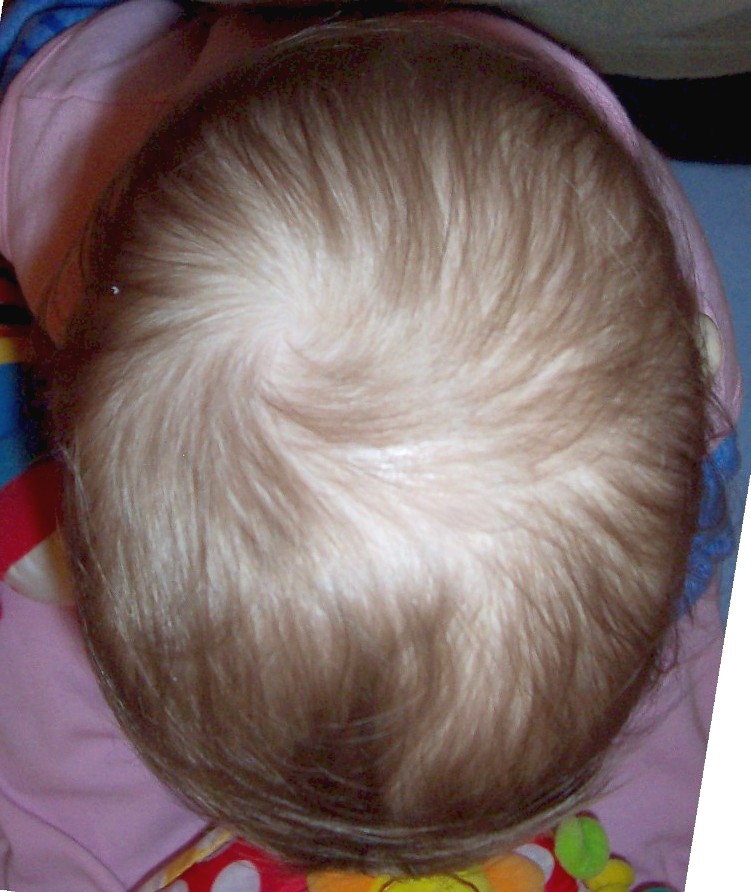 |
| Nathan - END OF TREATMENT 5 months of treatment 2/06 (9.25 months old) |
 |
 |
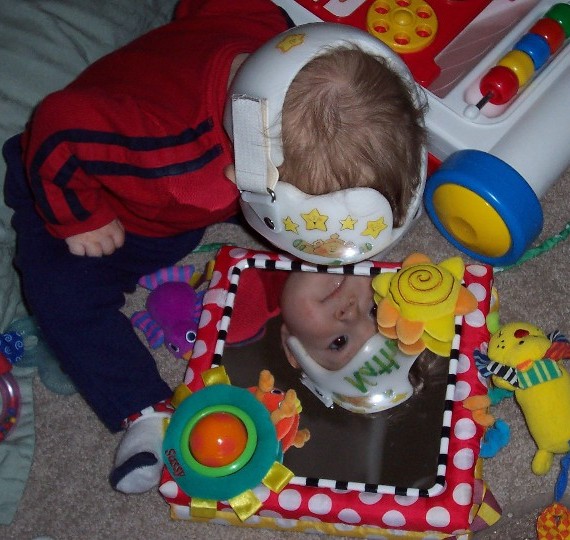 |
| Mirror Mirror on the floor ... |
| Nathan with Mr. Bear 2/06 (8.5 months old) |
 |
|